
Between Principles and Power: Reassessing Turkey’s EU accession
Introduction
18 min read · 3,525 words
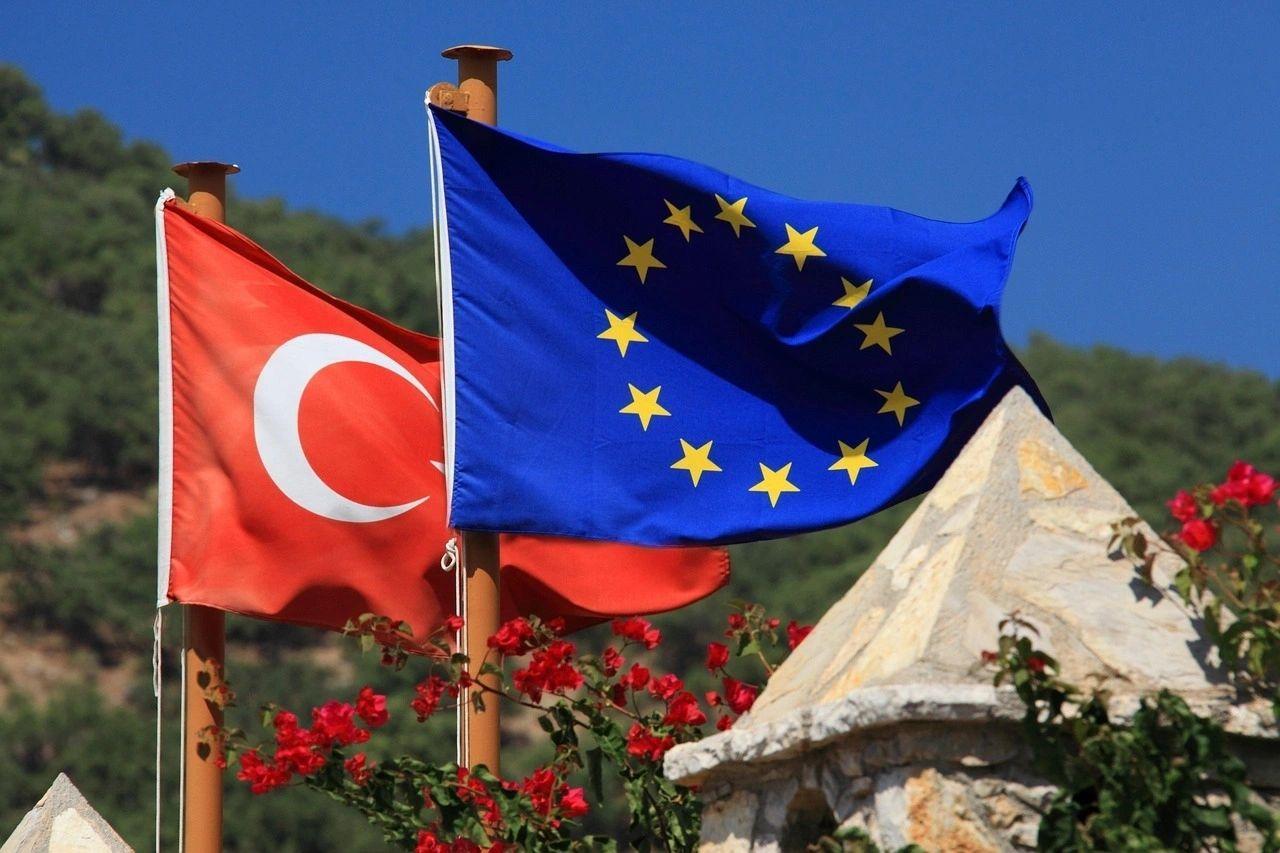
Over 38 years ago, in 1987, Turkey announced its application for membership in the European Economic Community, a move that marked the beginning of one of the most complex, drawn-out, and geopolitically-charged accession processes in the history of the European project. In 1999, the European Union formally granted Turkey the status of an “EU accession candidate” raising expectations both in Ankara and Brussels for a shared future rooted in economic cooperation, shared values and strategic alignment. With negotiations officially commencing in October 2005, many believed this would be the long-awaited path to the accession of Turkey as an EU member state.
Today, decades later, this path lies overgrown and partly abandoned. Out of 35 negotiating chapters only 16 have been opened and just one – Chapter 25 on Science and Research - has been provisionally closed. Effectively, the accession process has remained frozen since 2018, blocked by fundamental disagreements and conflicts with EU member states, especially Cyprus. Political rhetoric on both sides has shifted from hopeful convergence to cautious compartmentalization.
Yet despite, or perhaps because of, this stagnation, the EU-Turkey relationship has gained significant strategic importance in recent times. Russia’s invasion of Ukraine has drastically altered the security architecture of Europe, drawing Turkey’s geographic and military significance into sharp focus. As a NATO member with control over the Bosporus and Dardanelles straits, Turkey is an indispensable core of European security. At the same time, Europe’s dependence on secure energy routes, its struggle to manage irregular migration (see the 2016 Migration Deal), and its evolving approach to regional stability have all elevated Turkey from a distant candidate to a key, if complicated, partner. In 2024, bilateral trade has reached a record of € 210 billion, which sets the EU as Turkey’s top trade partner by far and sets Turkey as the EU’s fifth largest trade partner, showing the close economic ties and dependencies between Brussels and Ankara thanks to the customs union in place since 1999 (European Commission, 2025).
Meanwhile, Turkey continues to drift further from the democratic standards and legal norms that underpin the EU accession framework. Crackdowns on civil society, press freedom and political opposition, recently notably the imprisonment of Istanbul’s Mayor Ekrem Imamoglu, have led to condemnation of Turkey’s internal developments as incompatible with EU values.
As the EU redefined its enlargement doctrine and debates how to build resilience in an increasingly unstable global order, Turkey forces an uncomfortable question back onto the table: Can a country that is drifting from core European principles still be indispensable to the European project?
What is at stake for the EU?
The question of Turkey’s accession to the EU is not merely a technical or procedural matter – it cuts to the heart of the EU’s future identity, resilience, and geopolitical strategy. While the accession process remains stalled, the implications of Turkey’s potential membership or long term exclusion continue to carry significant weight for both sides. At stake is not only Turkey’s alignment with the European values and the Union’s legal framework but also the EU’s credibility as a geopolitical actor capable of managing strategic complexity in its neighborhood.
It is undeniable that integrating Turkey could serve great economic benefits to the Union. With a GDP of €1,220 billion, Turkey would step in as the EU’s fifth largest economy only behind Germany, France, Italy and Spain with the second largest population of the EU only after Germany (Statista, 2025). The already deep trade relationship between Turkey and the EU could further deepen, reduce trade friction and generate mutual growth. With a median age of 34.4 years Turkey’s population would be the youngest of all EU member states which currently have an average median age of 44.7 years (Statista, 2025). With Turkey’s accession the EU could therefore see an ease of its structural pressures due to demographic stagnation and labor shortages similar to that we have seen after the accession of Eastern European countries in 2004 and 2007. The positive impact of the free movement of Romanian and Bulgarian workers contributed to a long-term increase of the GDP of the other member states of 0,4 % (European Commission, 2011). Considering Turkey has almost three times the population Romania and Bulgaria have had in 2007, this effect could be even more staggering.
However, considering Turkey’s GDP per capita is well below the EU average, these economic disparities might lead to mass migration from Turkey to higher-income EU states, causing strain on public services and potentially increasing unemployment in low-skill segments in receiving countries. However, even if these effects might exist in some way, studies from previous enlargements show that these effects are often overstated (Dustmann et al., 2010). Also, Turkey would step in as one of the largest recipients of EU funds which could reduce available funds for existing members causing further internal disagreements in the Union.
Beyond economic factors, Turkey holds immense geopolitical importance for the EU. Neighboring Europe, the Middle East, and the Caucasus, Turkey commands access to critical transit corridors for energy, trade, and military strategy. Its control of the access to the Black Sea gives it a pivotal role in naval security, especially in light of the war in Ukraine. Turkey’s proximity to conflict zones in Syria, Iraq, and the Southern Caucasus also makes it an essential buffer state between the EU and regional instability. The accession of Turkey would mean a massive extension to the EU external borders coupled with new risks of instability, migration and terror but also more direct influence on regions of geopolitical importance. Apart from that, the accession would also solidify the EU’s strategic energy link to gas reserves in the Caspian Sea basin or the Middle East.
Turkey’s accession could also serve a symbolic function: it would affirm the EU’s identity as a truly inclusive and pluralistic union. Integrating a Muslim-majority country could strengthen the EU’s soft power and its appeal beyond its traditional Christian-European image. It would signal that EU membership is not limited by religion, geography, or cultural history but is based on shared commitments to democratic governance, human rights, and the rule of law. This argument, however, has been long met with skepticism within the EU, raising difficult questions about whether cultural cohesion and political integration are prerequisites for EU membership.
The benefits of Turkey’s accession are counterbalanced by significant risks and internal opposition within the EU. Chief among these is the fear that Turkey’s current political trajectory is incompatible with the EU’s foundational values. Democratic erosion, flawed judiciary independence and restrictions on media and academic freedom have raised alarms in Brussels. Continued violations of civil liberties, persecution of political opposition and non-implementation of ECHR judgements most certainly conflict with EU values. Were Turkey to become a member in its current state, it could pose a serious challenge to EU cohesion and undermine the Union’s normative credibility. An accession under these conditions would risk importing democratic deficits into EU decision-making, while some member states already face issues of flawed democracy. For now, the chance of democratic progression has faded with Erdoğan’s victory in the 2023 presidential elections.
Institutionally, Turkey’s size and assertiveness could shift the balance of power within the EU. It would have the biggest number of seats in the European Parliament and Council voting rights, potentially empowering coalitions that resist further integration or promote illiberal agendas. Accession would introduce a geopolitically divergent actor into EU foreign policy. According to the annual Turkey report of 2024, Turkey’s alignment rate with the EU’s Common foreign and security policy has slipped to an all-time low of 5 %, making it by far the lowest of all enlargement countries (European Commission, 2024). Therefore, various member states have had strong reservations about Turkey’s accession. Particularly Cyprus remains a staunch opponent unless Ankara normalizes its relations with Nicosia and recognizes the Republic of Cyprus – a condition Turkey has so far refused to meet, contradicting UN resolutions and EU policy.
In this context, especially the Cyprus issue as well as the worrying situation in the areas of democracy, rule of law and fundamental rights seem to be the dead ends for the accession process, as it has been previously underlined in the conclusions on Enlargement of the Council of the EU (Council of the European Union, 2024). According to Nacho Sanchez Amor, the European Parliament’s Turkey rapporteur, the accession process therefore has not faltered because of the EU, but as a result of the Turkish government’s systematic backsliding on democratic values and rule of law practices (Camlibel, 2025).
What is at stake for Turkey?
Turkey’s pursuit of EU membership has lost much of its former appeal, especially under President Recep Tayyip Erdoğan’s leadership and the current geopolitical climate. Once considered a strategic opportunity to boost prosperity and democratization, EU accession is now seen more ambivalently within Ankara. While traditional benefits like economic modernization, freedom of movement, and political prestige remain relevant, they no longer carry the same weight in the eyes of Turkey’s ruling elite.
In the early 2000s, EU accession catalyzed reforms and helped stimulate economic growth. The possibility of joining the EU brought credibility to Turkey’s market liberalization, enhanced investor confidence, and facilitated closer ties with European economies. It also promised visa-free travel and labor mobility for Turkish citizens, which remains attractive to younger and more educated segments of the population. EU structural funds and inclusion in further trade arrangements also represent material gains. Additionally, the EU provided a framework to advance human rights and institutional reform, and membership was seen as a way for Turkey to cement its identity as a European democracy.
Public opinion in Turkey still reflects lingering support for EU membership. A 2024 Pew survey found that Turks hold more favorable views of the EU (Pew Research Center, 2024) (46%) than of other global powers, and a 2024 Turkey Today poll showed that 53.5% of Turks believe EU membership would benefit the economy (Turkey Today, 2024) - though 36% oppose membership. These numbers suggest that, despite institutional stagnation, EU membership continues to hold symbolic and practical appeal for much of the Turkish population.
However, several shifts have changed Turkey’s strategic calculus. First, EU membership requires ceding part of national sovereignty - a demand incompatible with Erdoğan’s vision of centralized executive authority. The current presidential system, in place since 2018, prioritizes autonomy over alignment with EU norms. EU rules would limit Turkey’s ability to, for example, pursue unilateral economic policies, hand out state patronage, or crack down on opponents in ways that conflict with EU law. They would also force alignment with EU foreign policy, curbing Turkey’s flexibility to maneuver (such as striking deals with Russia or diverging on Middle East policy). Essentially, the current Turkish government may view the EU’s “rules-based” order as an unwanted check on its “one-man” style of governance. This loss of domestic control is politically unpalatable to the Turkish leadership.
Second, the EU’s allure has diminished, both due to its internal issues and to a changing world. Turkish commentators frequently note that the West is “far from a shining ‘city on the hill’” nowadays. The EU has been buffeted by crises – the Eurozone debt troubles, Brexit, the rise of anti-immigrant populism – which tarnish its luster. At the same time, a multipolar world has emerged: powers like China, Russia, and others offer alternative partnerships not conditioned on democratic values. China’s meteoric rise as an economic partner (through infrastructure investments, trade, and the Belt and Road Initiative) and Russia’s regional clout show Turkey that it has options besides a Western-centric path. Erdoğan has openly questioned the fairness of the current Western-led order (Ülgen, 2022) and entertained closer ties with BRICS nations, framing the global system as one that “satisfies no one except a minority”. In this context, aligning fully with the EU might limit Turkey’s ability to leverage relationships with non-Western powers or to pursue the independent “balancing” strategy it has followed. In short, the geopolitical leverage Turkey gets from being a swing player between East and West might be lost if it binds itself into the Western camp via EU membership.
Third, many Turkish leaders question the sincerity of the EU’s offer. After decades of negotiations and stalled progress, there is a widespread perception that the EU will never truly accept Turkey, regardless of reforms. Repeated rejections and European skepticism - sometimes voiced in cultural or civilizational terms - have bred disillusionment. This perception erodes domestic support for the reforms required to pursue accession.
In sum, while Turkey continues to benefit from economic and strategic ties with the EU, full membership no longer aligns with the government’s priorities. Ankara seems now to preserve candidate status largely for diplomatic flexibility. The result is a cautious balancing act: staying close enough to Europe to gain from cooperation, but distant enough to retain political and foreign policy autonomy.
Scenarios for the next years
As Turkey’s EU accession process remains frozen, several future scenarios could shape the trajectory of EU-Turkey relations. These range from pragmatic continuation of the status quo to a complete rupture or a highly unlikely revitalization of the membership process.
1. Prolonged Status Quo – (Most Likely)
In this scenario, Turkey and the EU remain in a state of diplomatic limbo. Turkey retains its formal candidate status, but accession talks remain stalled with no tangible progress (Modern Diplomacy, 2024). A recent report of the European Parliament explicitly stated the process cannot be relaunched in the current circumstances (Hess, 2025). At the same time, a likely development is Turkey’s potential withdrawal from the Customs Union. This would reflect a shift toward a more transactional relationship, prioritizing practical cooperation over normative alignment. As a result, engagement between the two sides would continue to focus primarily on areas such as migration management, trade, and regional security, while concerns over democratic standards persist unresolved.
This model is already in effect: the 2016 refugee deal and ongoing security coordination are examples. The EU seeks Turkey’s assistance on issues like migration and NATO alignment, while Ankara leverages these engagements to demand concessions—such as visa liberalization or financial aid. Neither side formally abandons the accession project, but neither genuinely invests in reviving it.
The advantage of this scenario is predictability. It allows both parties to avoid diplomatic fallout and preserve cooperation in essential areas. However, the downside is institutional stagnation. The EU loses leverage to promote reforms in Turkey, while Turkey increasingly drifts from the values and standards that EU membership requires. Over time, the symbolic nature of the accession process may further erode, reducing its utility even as a bargaining chip.
Despite this drift, President Erdoğan has recently reiterated Turkey’s desire for full EU membership. In July 2024, he stated that “Turkey wants full EU membership” (United24 Media, 2024) and that “Europe needs Ankara for its security”, adding that “only Turkey can save the EU from its current deadlock” (Duvar English, 2024). These remarks reflect not a commitment to reform, but an effort to maintain the appearance of engagement and reinforce Turkey’s geopolitical leverage. It could be interpreted as an attempt to frame itself as indispensable to the European project - signaling geopolitical relevance rather than a readiness to meet the EU’s democratic benchmarks.
At the same time, Turkey continues to act as an active interlocutor for major EU institutions. Recent meetings between President Erdoğan and leaders such as Ursula von der Leyen, António Costa, and Kaja Kallas reflect ongoing dialogue on key issues including economic cooperation, energy transition, and irregular migration. Bilateral ties with member states also remain strong: for instance, the 4th Italian-Turkish Intergovernmental Summit held in Rome on April 29th 2024 highlighted continued collaboration in areas such as security, energy, and the defense industry. These developments demonstrate that, even amid institutional stagnation, diplomatic engagement remains robust.
2. Reinvigorated Accession Process (Unlikely)
This scenario envisions a renewal of Turkey’s EU membership bid. For this to happen, significant preconditions must be met. Turkey would need to undertake substantial democratic reforms: restoring judicial independence, ensuring press freedom, and aligning its foreign policy with that of the EU. Cyprus-related disputes and tensions with Greece would also require resolution.
On the EU side, member states would have to overcome their skepticism and enlargement fatigue, accepting Turkey’s size, culture, and strategic implications. A geopolitical catalyst—such as a major war, a radical leadership change in Ankara, or a shift in EU leadership toward expansion—might prompt such a reconsideration.
While this outcome would offer mutual benefits—enhanced regional stability, economic integration, and democratic consolidation—it currently lacks political momentum. Erdoğan’s leadership shows no signs of the liberalization needed, and public opinion in key EU countries remains largely opposed to Turkish accession.
3. Formal Rupture – Ending the Candidacy (Least Likely)
This scenario involves either Turkey renouncing its candidacy or the EU formally terminating the accession process. While occasionally floated by hardliners on both sides, this path is seen as highly risky. It would trigger economic and diplomatic backlash, potentially degrading trade ties, halting EU funding, and escalating geopolitical tensions.
Turkey might drift further from the West, increasing reliance on Russia, China, or regional blocs like the Shanghai Cooperation Organisation. The EU would lose whatever leverage remains to encourage reform, and instability along Europe’s southeastern flank could grow.
Both Ankara and Brussels seem keen to avoid such a definitive split. The EU benefits from keeping the "door open" rhetorically, especially to engage Turkish civil society and pro-European constituencies. Turkey, meanwhile, preserves its candidate status to bolster diplomatic legitimacy and strategic options.
Conclusion
The EU-Turkey relationship today is defined less by progress toward accession and more by a fragile equilibrium of mutual dependency and political divergence. While the formal membership process remains stalled, both sides continue to engage in selective cooperation on critical issues such as trade, security, and migration. This pragmatic relationship underlines Turkey’s enduring strategic relevance to the EU, even as political and institutional conditions make full integration increasingly unlikely.
For the EU, Turkey represents both an opportunity and severe risks. Its large, young population and crucial geographic location could help address the Union’s demographic challenges, expand its geopolitical influence, and strengthen its economy. At the same time, Turkey’s authoritarian drift and strained relations with member states such as Greece and Cyprus pose serious risks to EU cohesion and credibility. Granting membership without democratic convergence could undermine the very foundations of the Union.
From Turkey’s perspective, the EU is no longer the central pillar of its foreign policy. Ankara prioritizes sovereignty, strategic flexibility, and a multipolar posture over alignment with EU norms. Nevertheless, maintaining candidate status preserves diplomatic leverage and cooperation benefits hence there is no interest for the Turkish government to withdraw from the process completely.
In this context, full accession in the near future appears to be implausible. What remains is a complex partnership that demands careful management. The EU must now decide whether to redefine this relationship within the context of a new framework for its accession policy – or risk losing influence over a neighbor it cannot afford to ignore.
Reference list
European Commission (2025) EU trade relations with Türkiye, Trade and Economic Security. Available at: https://policy.trade.ec.europa.eu/eu-trade-relationships-country-and-region/countries-and-regions/turkiye_en (Accessed: 24 July 2025).
Urmersbach, B. (2025) EU – BIP in Europa 2024, Statista. Available at: https://de.statista.com/statistik/daten/studie/188776/umfrage/bruttoinlandsprodukt-bip-in-den-eu-laendern/ (Accessed: 24 July 2025).
Espinosa, C. (2025) Europe median age by country 2024, Statista. Available at: https://www.statista.com/statistics/1559934/europe-median-age-by-country/ (Accessed: 24 July 2025).
European Commission (2011) Overall positive impact of mobility of Bulgarian and Romanian workers on EU economy, INTERNAL MARKET, INDUSTRY, ENTREPRENEURSHIP AND SMES - Overall positive impact of mobility of Bulgarian and Romanian workers on EU economy. Available at: https://ec.europa.eu/newsroom/growth/items/45561/en (Accessed: 24 July 2025).
Dustmann, C., Frattini, T. and Halls, C. (2010) UCL. Available at: https://www.ucl.ac.uk/~uctpb21/Cpapers/DustmannFrattiniHalls2010.pdf (Accessed: 24 July 2025).
Council of the European Union (2024) Council conclusions on Enlargement. Available at: https://data.consilium.europa.eu/doc/document/ST-16983-2024-INIT/en/pdf (Accessed: 24 July 2025).
European Commission (2024)Türkiye 2024 report - enlargement and eastern neighbourhood. Available at: https://enlargement.ec.europa.eu/document/download/8010c4db-6ef8-4c85-aa06-814408921c89_en?filename=T%C3%BCrkiye+Report+2024.pdf (Accessed: 24 July 2025).
Camlibel, C. (2025) Ap Türkiye Raportörü Amor: Turkey Artık ‘ab’ye Daha Az Aday’ ülke; avrupa’dan Kimse çalışanlarının soruşturma ve Tutuklanma Riski Olan Bir ülkeye Yatırım Yapmaz, T24. Available at: https://t24.com.tr/yazarlar/cansu-camlibel/ap-turkiye-raportoru-amor-turkiye-artik-ab-ye-daha-az-aday-ulke-avrupa-dan-kimse-calisanlarinin-sorusturma-ve-tutuklanma-riski-olan-bir-ulkeye-yatirim-yapmaz,48745?utm_source=pocket_shared%2F (Accessed: 24 July 2025).
Hess, A. (2025) European Parliament: Türkiye joining on hold, no progress since 2018, euronews. Available at: https://www.euronews.com/my-europe/2025/05/07/european-parliament-turkeys-accession-on-hold-no-progress-since-2018 (Accessed: 24 July 2025).
Brookings Institution (2021) Türkiye’s New Presidential System and a Changing West. Available at: https://www.brookings.edu/articles/turkeys-new-presidential-system-and-a-changing-west/
Duvar English (2024) Only Türkiye can save EU from deadlock, says Erdoğan. Available at: https://www.duvarenglish.com/only-turkey-can-save-eu-from-deadlock-says-erdogan-news-65717 (Accessed: 24 July 2025).
European Parliament (2025) Türkiye’s EU accession process must remain frozen. Available at: https://www.europarl.europa.eu/news/en/press-room/20250502IPR28215/turkiye-s-eu-accession-process-must-remain-frozen
Tocci, N. (2023) Türkiye and the EU: Scenarios for 2023 and Beyond, Istituto Affari Internazionali (IAI). Available at: https://www.iai.it/sites/default/files/feuture_1.pdf
United24 Media (2024) Türkiye wants full EU membership, Erdoğan says: Europe needs Ankara for security. Available at: https://united24media.com/latest-news/turkiye-wants-full-eu-membership-erdogan-says-europe-needs-ankara-for-security-6590
Ülgen, S. (2022) A New Path for Türkiye-EU Relations: Reset, Reflect, Readjust, Carnegie Europe. Available at: https://carnegieeurope.eu/2022/12/01/new-path-for-turkey-eu-relations-reset-reflect-readjust
Modern Diplomacy (2024) Analyzing Türkiye’s EU Membership Status. Available at: https://moderndiplomacy.eu/2024/07/07/analyzing-turkeys-eu-membership-status/
Pew Research Center (2024) How people in Turkey view international affairs. Available at: https://www.pewresearch.org/global/2024/10/16/how-people-in-turkey-view-international-affairs/
Turkey Today (2024) Survey shows divided Turkish opinion on European Union accession. Available at: https://www.turkiyetoday.com/nation/survey-shows-divided-turkish-opinion-on-european-union-accession-3204613