
EU Space strategy for security and defence
28 min read · 5,515 words
Introduction
Once a secondary concern in the European Union’s policymaking, space has now become central to Europe's resilience and technological leadership, as a driver of innovation and economic growth but also as a critical component of its security and defence policy. The functioning of economies and public policies all rely on space-related services and data, which play a key role in several fields, such as: telecommunications and internet access, by providing broadband access and enabling digital inclusion in remote or underserved regions, aiding monitor urban expansion, air quality and traffic patterns, helping supervising crop health, soil moisture, and land use changes, maritime and transportation monitoring. Space also contributes to achieving the EU’s political agenda, enabling the digital and green transitions, and enhancing its resilience: space-based assets are vital for national defence, empowering missile detection, secure communications and intelligence gathering.
Space’s crucial nature has been globally recognized since the Cold War, when, in 1957, the Soviet Union successfully launched and operated Sputnik, the first artificial satellite, into Earth’s orbit. This event marked a technological turning point in space exploration as well as a political watershed at the time. With the advance of space technology, anti-satellite weapons (ASAT) and in general offensive capabilities emerged in space. During the Cold War, both Washington and Moscow systematically tested ASAT technologies, while terrestrial tensions and escalations moved into the space domain.
The competition was not only about technological sovereignty but also national security and ideological dominance, leading to key achievements like artificial satellites and manned space missions. Since then, space and defence have continued to benefit from each other’s technological breakthroughs and know-how, the connection between the two being constantly growing.
Space quickly became a critical and competitive arena marked by military and technological supremacy and, recently, it has also attracted great interest from those who wish to, or are already starting to, commercialize it.
Space activities face two different kinds of menace. For instance, unintentional ones, like space debris, are a threat that is becoming increasingly concrete due to the ongoing hyper-congestion of outer space. Space debris refers to non-functional satellites, spent rocket stages, and other fragments resulting from collisions or explosions in space. As space activities grow, the accumulation of debris presents a rising risk to both operational satellites and crewed spacecraft. Both private and public actors are accountable for this.
As for private actors, an example is SpaceX, a private aerospace company that manages about 4,000 Starlink satellites and has plans to launch more to offer global internet connectivity. However, national space agencies also contribute to this phenomenon. For example in 2007 China’s anti-satellite missile test created thousands of pieces of long-lasting debris and even older defunct satellites from both the United States and Russia still orbit Earth, posing risks of collision. As a result, the risks of satellite collisions and space debris are rising. By 2030, some 50,000 satellites are estimated to be active in earth orbits, structurally changing the characteristics of this operational domain, making space surveillance and tracking a strategic worldwide issue, for North and South
America, Europe, but also Asian countries, notably China and Japan.
The other significant category is formed by intentional threats, which means hostile deployment of
counterspace measures, intended to interfere with rivals’ use of space. These are used to intimidate opponents, deny them access to their space systems, or gain informational advantages. They target orbiting space assets, the ground infrastructure that supports them, and the data linkages that connect them.
Over the past decades several major powers, such as China, India, Russia, the USA, and some EU member States like Italy, Germany, France and Spain, started developing space technologies for offensive or defensive (or both) purposes. Space’s potential has encouraged not only the States with a long space tradition, but also newcomers like the Middle East and North Africa countries to launch their own satellites. As a critical infrastructure, space assets have become a target of hybrid warfare. This type of warfare combines conventional and unconventional means, including cyberattacks and sabotage, and can be carried out by rival countries in a context of growing competition between major powers. In practice, space is increasingly seen as a potential arena for strategic conflict.
Satellites have now become a core asset for the societies and economies of most countries on Earth. Their communications often provide access to the Internet for most of the devices used by ordinary citizens, businesses and institutions, and could be further exploited for much more. Satellites can be hit in a variety of ways, despite existing treaties prohibit the transformation of space into a battlefield. First, space assets can be targeted by actions designed to block or disrupt signals and communications, as electronic warfare offers effective, non-destructive methods to interrupt critical operations without generating space debris.
Similarly, because of their connectivity function, space assets are vulnerable to cyber-attacks and, lastly, access to space can be endangered by kinetic, cyber or force attacks. It is noteworthy that, in 2022 alone, there were over 150 reported incidents of satellite interference worldwide, ranging from signal jamming to hacking attempts.
Space communication and remote sensing technology also played and are playing a fundamental role in the Russo-Ukrainian conflict, with Russia trying to disable space-based assets used by Ukraine prior to its invasion with a flood of cyber-attacks, to weaken Ukraine's command and control capabilities as the satellite network was being used by its government, army, and security services.
In such an era of escalating tensions, the European Union, concerned about the safety, security, and sustainability of the domain, has recognized the urgent need to reinforce its approach to space defence. Commissioner for the Internal Market Thierry Breton remarked at the 2022 EU Space Conference that “Space is a strategic area where big powers are now competing...Europe must defend its interests and freedom to operate in space.”
In response to both internal and external challenges, in March 2023, the European Commission and the High Representative of the Union for Foreign Affairs and Security Policy jointly released the EU Space Strategy for Security and Defence, the first initiative of its kind, aimed at developing a cohesive European vision for space in the context of defence.
The EU Space Strategy aims to establish a comprehensive approach to strengthen space security, with a focus on improving situational awareness, increasing the resilience of space infrastructure, supporting technological advancement, and encouraging responsible behaviour in outer space. Following this, during the State of the Union address on 13 September 2023, President Ursula von der Leyen outlined the Commission’s priorities for 2024, including the proposal for a European Space Law (EUSL). This initiative seeks to introduce harmonized EU-level rules to ensure the safety, resilience, and sustainability of space operations, reduce legal fragmentation among member states, and support the competitiveness of Europe’s space industry on the global stage.
This paper aims to analyse the evolution of the EU's Space Strategy within the context of security and defence, focusing on recent developments and their broader international consequences. It examines the integration of space into EU defence policies, highlighting the increasing strategic competition in the domain, external threats, and internal challenges. Additionally, it will consider the opportunities presented by the EU's new secure satellite constellation, IRIS², in ensuring connectivity and resilience of critical infrastructures and finally, it will address the challenges of space threat management and the potential consequences of space militarization on European collective security and its global geopolitical role.
1. Securing Europe in Space: The Strategy
Despite the increasingly contested nature of space, the proliferation of counterspace capabilities and the threat this poses to the vital protection and defence interests of the EU, most of its Member States did not make security or military uses of space a high priority for most of the post-Cold War era. However, over the past 10 years this has changed: the pace of development and use of space assets for defensive measures has increased in EU Member States, with the Union encouraging coordination and standardization of these efforts. In addition to that, many EU Member States have space assets that were created and are operated together with other members, such as the French-Italian secure communications satellite Athena-Fidus. As of now, 19 of the 27 Member States already have national space strategies.
The EU Space Strategy is only the most recent in a growing sequence of policy initiatives in the security field adopted by the European Union. In the previous years, there have been other relevant EU interventions addressing the issue.
First, in 2003, the publishing of a European Security Strategy represented the first time that the EU identified perceived threats to its stability in a single document and outlined how it intended to use the tools at its disposal to respond to them.
Furthermore, the 2016 EU Global strategy (EUGS), guided by the ambition to make Europe “stronger, more united, and more influential” on the global stage, provided a comprehensive framework for the EU’s foreign and surveillance policy. It promoted a rules-based global order centered on multilateralism closely tied to the United Nations, the strengthening of the Union’s strategic autonomy in foreign, shielding, and defence policy and the balancing of principles, democracy, human rights, with interests, stability, security, prosperity.
Additionally, in the same year, the EU released a Space Strategy for Europe, which aimed to enhance its role in space by fostering a competitive and innovative space sector while ensuring autonomy in accessing and using it. The strategy focused on expanding the use of programs like Galileo, Copernicus, and EGNOS, while also emphasizing supporting research, innovation, and the development of commercial space markets to address emerging challenges and opportunities in the sector.
A significant step has since been taken by the Strategic Compass for Security and Defence, which released in 2022 and updated with an official note in 2024, a practical plan of action to strengthen the EU by 2030, that acknowledges space as an increasingly competitive domain, recognizing its strategic importance and highlighting the need to boost the Europe's security and defence in space. The strategic compass’ objective, in particular, consisted in making the EU a stronger and more capable surveillance provider, stating that it needs to be able to protect its citizens and to contribute to international peace and security, aiming to enhance the EU’s strategic autonomy and its ability to work with partners to safeguard its values and interests. Specifically addressed was the Russian Ukrainian conflict, then more particularly tackled in the Compass’ update in 2024. The document provided a shared assessment of the strategic environment in which the Union was operating and of the threats and challenges it was facing. The document made concrete and actionable proposals, with a very precise timetable for implementation, being structured around four pillars: act, invest, partner and secure.
After that, the Member States premised the intention to continue promoting the preservation of a safe and secure space environment and the peaceful use of outer space on an equitable and mutually acceptable basis, recognizing it as a global common, committing to the mutually reinforcing role of transparency and confidence-building measures, aiming to reduce the risks of misperception, miscalculation, and unintended conflict escalation.
Of late, the EU, agreeing that additional measures are urgently needed to defend its strategic interests and to deter hostile activities in and from space, while privileging international cooperation and promoting responsible behaviors in space, also decided to strengthen its strategic posture and autonomy in the space domain and to make space systems and services more resilient, responding to
hostile activities or threats, and further developing space-enabled services for fortification and defence.
This outlook has been concreted in the EU Space Strategy for Security and Defence, released, as previously said, in March 2023. Sharing with prior documents to have detected a lack of operationalization of the identified challenges and required responses, the Strategy aims to reinforce European strategic autonomy in the space domain, with the goal of ensuring that the EU can act independently in important areas.
The strategy is built on fostering a shared understanding of space threats, including the annual production of classified threat analyses at the EU level to promote a common view of the space domain. A central goal is to enhance the resilience and protection of European space systems by proposing initiatives such as the development of an EU Space Law and the establishment of an Information Sharing and Analysis Centre (ISAC) to promote resilience practices. It also focuses on securing long-term autonomous access to space, reducing dependencies, and safeguarding space and defense supply chains.
A key element is the expansion of the space threat response mechanism, initially designed to protect the Galileo satellite navigation system, to cover all EU space systems and services. The strategy ensures timely access to Space Domain Awareness information through national space commands and organizes exercises with international partners to test response capabilities and solidarity mechanisms.
Regarding the use of space for security and defense, the strategy promotes the development of dual use services. Two pilot projects are highlighted: one to provide space situational awareness services leveraging Member States’ capabilities, and another to establish a new government Earth observation service as part of the evolution of the Copernicus program, complementing existing assets. The strategy also emphasizes strengthening synergies between space, defense, and security sectors, supporting collaboration with startups, and enhancing skills.
Finally, the strategy advocates for responsible behavior in space through active participation in multilateral forums, fostering space dialogues with third countries, particularly the United States and like-minded partners, and deepening cooperation with NATO.
Operationally, the EU Space Strategy foresees the establishment of short-term roadmaps for specific actions. This entails the identification of key milestones and metrics that can demonstrate progress. The strategy also encourages the development of space defence capabilities among EU member states. This plan introduces several innovations, notably a bold shift toward incorporating ‘hard power’ into outer space activities. This represents a departure from the EU’s traditional emphasis on scientific and civilian uses of space, moving instead toward prioritizing defence-related applications. That includes the modernization of Copernicus, the development and use of the IRIS² system, and the continued integration of Galileo’s Public Regulated Service, which already serves defence purposes.
Additionally, the involvement of the EU’s Single Intelligence and Analysis Capacity (SIAC) in producing annual space threat assessments, and the use of Space Domain Awareness (SDA) capabilities by member states, reflect a more structured approach to space awareness. The strategy also calls for aligning major funding programs, such as the European Defence Fund (EDF), Horizon Europe, and the EU Space Program, to strengthen defence capabilities in orbit. Lastly, the plan includes holding space military exercises, though their specific format remains undefined, and aims to significantly deepen space defence cooperation with the United States and NATO, an unprecedented step.
2. IRIS2: the new EU Secure satellite constellation
In the current context where cyber and hybrid threats are multiplying and concerns in the matter are growing, the need for both quantitative and qualitative advancements in the EU's governmental satellite communications capabilities is being prompted. This shift is aimed at achieving higher security standards, reduced latency, and greater bandwidth.
In response to growing cyber and hybrid threats, the European Union is developing IRIS², a multi orbital satellite constellation designed to secure autonomous governmental satellite communications and reduce dependence on non-European providers. With a €10.6 billion budget funded through a public-private partnership, IRIS² will consist of 290 satellites operating in both low Earth orbit (LEO) and medium Earth orbit (MEO). This infrastructure aims to deliver highly secure, low-latency, and resilient connectivity services for governmental, security, defense, and commercial applications.
The IRIS² Satellite Constellation is the European Union’s third flagship and, as a multi-orbital constellation, it will be capable of creating synergies with the other existing two, Galileo and Copernicus, reinforcing Europe’s strategic autonomy in space and digital connectivity. “IRIS2 establishes space as a vector of our European autonomy, a vector of connectivity and resilience. It heightens Europe’s role as a true space power”, said Thierry Breton, former Commissioner for Internal Market of the European Union. The program intends to incrementally roll out services starting in 2025, with full operational capability by 2030.
The new multi-orbital constellation will deploy 264 satellites in low Earth orbit (1,200 km altitude) and 18 in medium Earth orbit (8,000 km altitude), offering secure connectivity and high-speed broadband across the EU. It will serve governments, businesses, and citizens, ensuring coverage even in areas without terrestrial networks. By linking satellites across these orbits, the system enables fast, secure, and continuous communication without requiring thousands of satellites. An additional low Earth orbit layer will provide extra services.
As global satellite connectivity is rapidly becoming a strategic asset for stability, safety and resilience, the EU needs to urgently act in order to ensure guaranteed access in an unrestricted manner without third-party dependencies. The implementation of IRIS2 will follow an incremental approach with the initial governmental services provided through existing satellite capacity owned by Member States pooled and shared already in 2025. IRIS² full governmental satellite connectivity services, based on EU-owned infrastructure, will be delivered by 2030.
The system will support a wide range of government applications, including surveillance, crisis management, infrastructure protection, and security and defense. It will also enable various commercial uses like transport, banking, industrial activities, remote healthcare, and rural connectivity. Utilizing disruptive technologies such as 5G, the multi-orbital EU connectivity system aims to provide reliable, secure, and cost-effective satellite services globally. It will enhance high
speed broadband, eliminate connectivity gaps within the EU, strengthen cohesion among Member States, and extend coverage to strategic areas outside the Union, including the Arctic and Africa.
IRIS2could encounter some issues: the central one is certainly inviolability, which concerns both the command and control of the satellites and all the communications carried by the network. This will
be based in particular on inter-satellite communication using high-speed transmission. Data will be sent to just five points of presence on the ground, all located in Europe. This configuration will avoid dependence on an uncontrolled terrestrial infrastructure.
Moreover, in regard to concerns about the excessive production of space debris, the consortium plans to develop non-emissive satellites so as not to disrupt astronomical observations. The production of debris in orbit comes essentially from accidental collisions, which must be avoided at all costs because the presence of debris leads to exponential degradation of objects in orbit. This requires satellite command and control, and Europe has a great deal of experience in this area. On the other hand, there is some concern about the level of control exercised by the new players: as of now, for example, we know that 400 SpaceX satellites are currently out of order, which is quite worrying.
Within the same framework, Starlink already has 7,000 satellites and plans to deploy a total of 42,000 in low Earth orbit. Amazon is about to launch the first satellites of the Kuiper constellation, which is expected to have 3,200 satellites. The Chinese government has also begun deploying Guowang (‘national network’ in Chinese) at the end of 2024, which will comprise 13,000 satellites, and other projects of this scale, backed by private interests, are being developed in the country. So, IRIS² is not a mega-constellation, and its purpose is not purely commercial.
3. Europe’s Space Strategy Under Pressure: Strategic Autonomy at Risk
The implementation of the EU Space Strategy for Security and Defence is confronted by a complex interplay of external and internal challenges. These include intensifying geopolitical tensions, unresolved legal and regulatory issues, persistent technological dependencies, growing cybersecurity threats, and fragmented institutional coordination. Addressing these obstacles is essential for the European Union. Let’s move forward on a more precise overview:
3.1 Geopolitical Rivalry
One of the primary challenges that the EU Space Strategy is currently facing is the increasing geopolitical rivalry in space, mainly from major global powers such as the USA, China, and Russia, that have started to treat space as a fundamental part of their national security strategies, making significant investments in their space programs, particularly in military and dual-use technologies.
Let’s briefly analyse the profiles of these three countries:
a) China: over the past two decades, China has significantly expanded its space capabilities, pursuing a strategy that combines scientific exploration with strategic and military objectives.
From a scientific standpoint, China has achieved notable milestones through its Chang’e lunar program, which is part of a broader national strategy led by the China National Space Administration (CNSA). The Chang’e 3, 4, and 5 missions marked critical advancements: accomplishing China’s first soft landing on the Moon, producing the first spacecraft to land, in 2019, on the far side of the moon (a globally unprecedented achievement) and successfully returning lunar samples to Earth, with upcoming missions aiming to deepen geological understanding and demonstrate key technologies for a sustained human or robotic presence on the Moon.
In the meantime, the country has also invested systematically in developing space capabilities for military use, with a growing focus on space warfare. In 2007, China conducted an anti-satellite (ASAT) missile test, destroying one of its own defunct satellites in low Earth orbit. This action showcased both technological maturity and a willingness to assert military power in outer space. Beyond this, China's military space infrastructure includes a constellation of satellites for surveillance, encrypted communications, precision positioning and strategic early-warning functions. Additionally, emerging capabilities in electronic warfare and cyber operations are aimed at disrupting adversary satellites through jamming, spoofing, and cyberattacks on ground stations and command networks.
b) Russia: The Russian Federation has inherited a long-standing legacy in space exploration and military space operations.
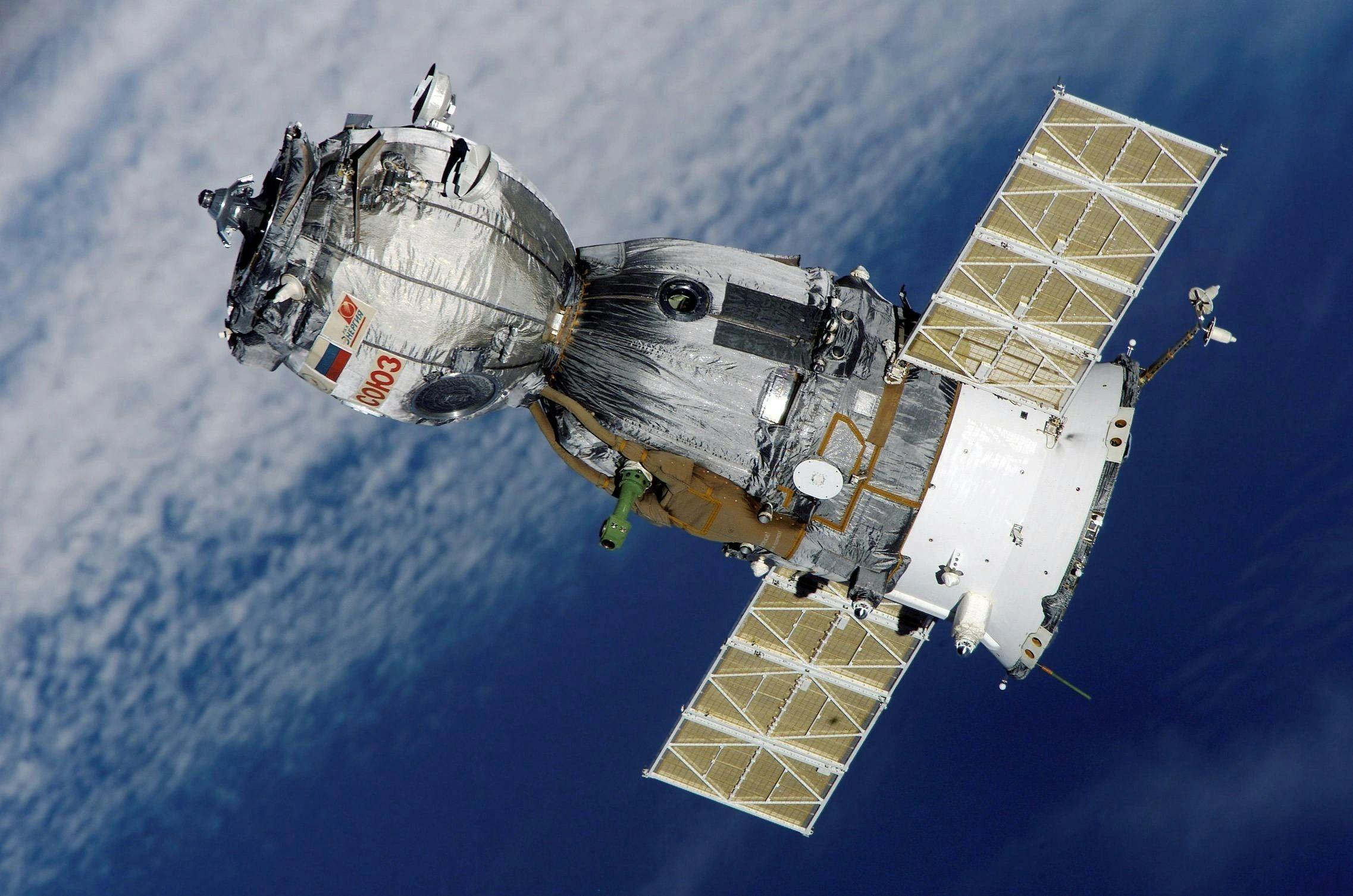
From a scientific and civil perspective, Roscosmos, Russia’s federal space agency, maintains a robust program focused on satellite deployment, planetary science, and human spaceflight. Russia has continued its participation in the International Space Station (ISS) since its inception and has contributed significantly to crew transport via the Soyuz spacecraft,
especially during the years when NASA lacked independent launch capability. In recent years, however, the country has aimed to reduce reliance on international collaboration.
In parallel, Russia has reaffirmed its role as a military space power, modernizing its space forces and integrating space into broader strategic deterrence. Since 2015, Russia has conducted anti-satellite (ASAT) tests, most notably the November 2021 direct-ascent missile test, which, destroying the Kosmos-1408 satellite, created thousands of pieces of debris. Russia also maintains a fleet of military reconnaissance and communication satellites, many of which serve dual civilian-military roles. There is growing concern in the international community about “co-orbital” systems, which may include satellites designed to manoeuvre near and potentially disrupt or disable other spacecraft, capabilities that blur the line between surveillance and offensive action.
c) USA: The United States has long been a dominant actor in space exploration and military operations, a position maintained through sustained investment, technological innovation, and a well-integrated civilian-military space strategy. The National Aeronautics and Space Administration (NASA) has led groundbreaking scientific missions, while the Department of Defense (DoD), through its various agencies has developed military space capabilities. Together, these entities form a robust space architecture that ensures the U.S. remains at the forefront of both peaceful exploration and space-based defense.
On the other side, NASA continues to lead in scientific exploration, with high-profile missions such as the Mars Rover program, and its long-standing commitment to the International Space Station (ISS). The United States also invests heavily in Earth observation and satellite systems. Moreover, the U.S. spearheads the Artemis program, a flagship initiative aiming to return humans to the Moon by the mid-2020s and establish a sustainable human presence on and around the lunar surface. The Artemis program focuses on scientific discovery, lunar resource utilization, and preparing for future missions to Mars. The Artemis Accords, first introduced in 2020, are a set of bilateral agreements between the U.S. and partner countries that establish principles for responsible and peaceful exploration of the Moon and beyond. These principles include transparency, peaceful cooperation, the safe and sustainable use of space resources, interoperability of systems, and the avoidance of harmful interference. Signatory countries commit to sharing scientific data openly, avoiding harmful contamination of celestial bodies, and respecting existing international space law, notably the Outer Space Treaty. To date, over a dozen countries have signed the Artemis Accords, reflecting U.S. efforts to build an international coalition supporting its vision of space exploration as a global endeavour.
Just like China and Russia, the U.S. military also deploys advanced anti-satellite (ASAT) capabilities, missile defence systems, and has focused on space situational awareness (SSA) to track and mitigate potential threats to U.S. space assets. The United States leads the development of space policy through the Space Policy Directive-4, which emphasizes the role of space in national security and sets a framework for the protection of space assets. This policy outlines a vision of space as a domain of military operations, stressing the need for space-based capabilities in combat readiness and deterrence. Moreover, U.S. investments in commercial space ventures like SpaceX, Blue Origin, and other private companies have made significant strides in reducing the cost of access to space while strengthening national capabilities.
3.2 Dependence on non-European space capabilities
Another critical point that represents a significant risk for the EU is its excessive dependence on non European space capabilities. This reliance undermines the EU’s strategic autonomy, its ability to make independent decisions and take actions without external influence
An example of this issue is the EU's reliance on non-European launch vehicles for putting satellites into orbit. Although the Ariane 6 launcher, developed by the European consortium Ariane Group, resumed operations in 2024, Europe has long depended on launchers from other countries for access to space. This dependence on foreign launch capabilities limits the EU’s full control over the deployment and operation of its space assets, representing a vulnerability especially in times of geopolitical tensions. Moreover, this reliance can affect the timing, cost, and security of European missions, thereby impacting strategic autonomy.
3.3 Legal and Regulatory Complexities
While technological development is advancing at a rapid pace, the international legislative framework on space is increasingly insufficient, fragmented, and struggling to keep pace with the evolving challenges of the space domain.
The most relevant examples of international space policy frameworks are five binding treaties, dated from the 1960s to the 1980s: the Treaty on Principles Governing the Activities of States in the Exploration and Use of Outer Space, Including the Moon and Other Celestial Bodies, commonly known as the Outer Space Treaty (1967), the Agreement on the Rescue of Astronauts, the Return of Astronauts and the Return of Objects Launched into Outer Space (1968), generally known as the Rescue Agreement, Convention on International Liability for Damage Caused by Space
Objects (1972), known as the Liability Convention, the Convention on Registration of Objects Launched into Outer Space (1976), briefly known as the Registration Convention, and the Agreement Governing the Activities of States on the Moon and Other Celestial Bodies (1979, but entered into force 1984), also called the Moon Agreement.
Although having been ratified by most countries, these frameworks are often not endorsed by leading spacefaring nations, rendering them ineffective. This has, however, not prevented other nations from advancing their national policy, funding, and procurement frameworks in the space domain. The main issue is the difficulty of establishing a unified legal framework that effectively addresses space activities. The EU is tasked with ensuring the protection of its space infrastructure while also maintaining international cooperation in areas such as scientific research and space exploration. Another challenge lies in the dual-use nature of space technologies: the EU must carefully navigate the civilian-military divide, ensuring that security measures for space systems do not infringe upon the rights of Member States in using space for peaceful purposes. Additionally, the application of EU competition law complicates the development of space defence capabilities, as any defence-related projects involving public-private partnerships or procurement may face scrutiny under regulations designed to ensure fair competition and avoid monopolistic behaviour.
Moreover, given that space activities are governed by multilateral treaties, the EU must ensure that its legal framework remains consistent with the principles of international law, particularly the non weaponization of space and the prevention of space arms races. This alignment is crucial to maintaining the EU’s credibility and role as a responsible actor in international space law, while still enabling the development of necessary counterspace capabilities for defence.
Finally, there is a lack of comprehensive regulatory mechanisms to address emerging space issues such as space debris management and space traffic management. While various entities, including the EU itself, are developing strategies to manage the problem, the absence of binding regulations across jurisdictions creates a fragmented regulatory landscape, complicating the EU’s ability to implement cohesive security measures that cover all space activities.
3.4 Cybersecurity Threats
Space systems, including satellites and ground stations, are highly interconnected with terrestrial networks, creating multiple entry points for cyberattacks that can manifest in several forms, including data injection, signal spoofing, and manipulation of satellite operations.
A primary concern is the disruption of satellite communications, which can have severe consequences on military, governmental, and commercial operations. For example, GPS jamming or signal spoofing can mislead navigation systems, while cyber intrusions can compromise the integrity of transmitted data. Such disruptions can affect everything from military logistics to civilian infrastructure.
Additionally, cyber espionage targeting sensitive data from military or commercial satellites represents a significant threat. Adversaries may seek to steal classified information or manipulate satellite operations to gain a strategic advantage.
3.5 Space debris
The increasing volume of space debris poses a significant threat to the safety and sustainability of the EU's space operations. Space debris refers to non-functional satellites, spent rocket stages, and other fragments resulting from collisions or explosions in space. As space activities grow, the accumulation of debris presents a rising risk to both operational satellites and crewed spacecraft. The collision of debris with functional satellites could lead to the loss of essential space capabilities for the EU, including communications, navigation, and Earth observation.
Many military and dual-use satellites rely on precise orbital positions to ensure effective operations. A collision with debris could disrupt these services, particularly in sensitive defence and intelligence gathering applications. Additionally, debris poses risks to the long-term sustainability of space activities, threatening not only the EU’s space assets but also the global space environment.
Conclusions
As the European Union forges ahead in a world increasingly defined by shifting power balances, technological disruption, and hybrid threats, space can no longer be treated as a peripheral asset. It is now a decisive domain, one that underpins not only Europe’s economic growth and innovation but also its strategic autonomy and security.
To rise to these challenges, the EU must accelerate the operationalization of its Space Strategy for Security and Defence, moving from vision to implementation with determination and unity. Initiatives like IRIS² mark a crucial step forward, but they must be complemented by a broader investment in resilient infrastructure, cybersecurity protocols, and intra-European industrial capabilities. Enhancing public-private partnerships, securing critical supply chains, and fostering a new generation of space professionals are all vital elements in this endeavour.
Moreover, the EU must assume a more assertive role in shaping international norms for responsible space behaviour, in the means of the adoption of safe, sustainable, and peaceful practices in space activities, minimizing space debris, ensuring transparency and cooperation among space actors, respecting international laws and preventing harmful or aggressive actions that could threaten the stability and security of the space environment. It has both the credibility and the obligation to champion global stability in orbit, ensuring that outer space remains a domain of peaceful cooperation - not confrontation.
A bold, coherent, and forward-looking approach will enable Europe not only to defend its interests but also to inspire the next chapter of space governance, one that reflects democratic values, technological leadership, and strategic resilience.
Bibliography
Bonsegna, N. The Evolving Strategic Importance of Space in Modern Military Operations. IARI – Istituto Analisi Relazioni Internazionali, 2024.
Clapp, Sebastian, and Clément Evroux. Briefing – European Parliament: EU Space Strategy for Security and Defence. November 2023.
Council of the European Union. European Security Strategy: A Secure Europe in a Better World. Brussels, 2009, pp. 27–43.
Council of the European Union. “Explainer.” January 31, 2025. https://www.consilium.europa.eu/en/policies/space-security-and-defence/
European Commission. IRIS² – Secure Connectivity. https://defence-industry-space.ec.europa.eu/eu-space/iris2-secure-connectivity_en
European Commission and the High Representative of the Union for Foreign Affairs and Security Policy. Joint Communication to the European Parliament and the Council: European Union Space Strategy for Security and Defence. JOIN(2023)9, March 10, 2023. https://www.eeas.europa.eu/eeas/eu-space-strategy-security-and-defence-0_en
European Parliamentary Research Service (EPRS). EU Space Strategy for Security and Defence. Briefing, May 1, 2023, p. 4. https://www.europarl.europa.eu/RegData/etudes/BRIE/2023/754598/EPRS_BRI(2023)754598_EN.pdf
European Union External Action. A Global Strategy for the European Union’s Foreign and Security Policy. June 2016. https://www.eeas.europa.eu/sites/default/files/eugs_review_web.pdf
Joint Communication to the European Parliament and the Council on European Union Space Strategy for Security and Defence. Brussels, March 10, 2023.
Marrone, A., and M. Nones. “Spazio e difesa: un legame crescente.” Executive summary, Istituto Affari Internazionali (IAI), February 2022.
Ogden, Theodora, Anna Knack, Melusine Lebret, James Black, and Vasilios Mavroudis. The Role of the Space Domain in the Russia-Ukraine War: The Impact of Converging Space and AI Technologies. February 2024.
“Athena-Fidus.” French–Italian military and civilian telecommunications satellite, launched in 2014.