
Georgia and the European Union: Between Aspiration and Integration
Introduction
21 min read · 4,140 words
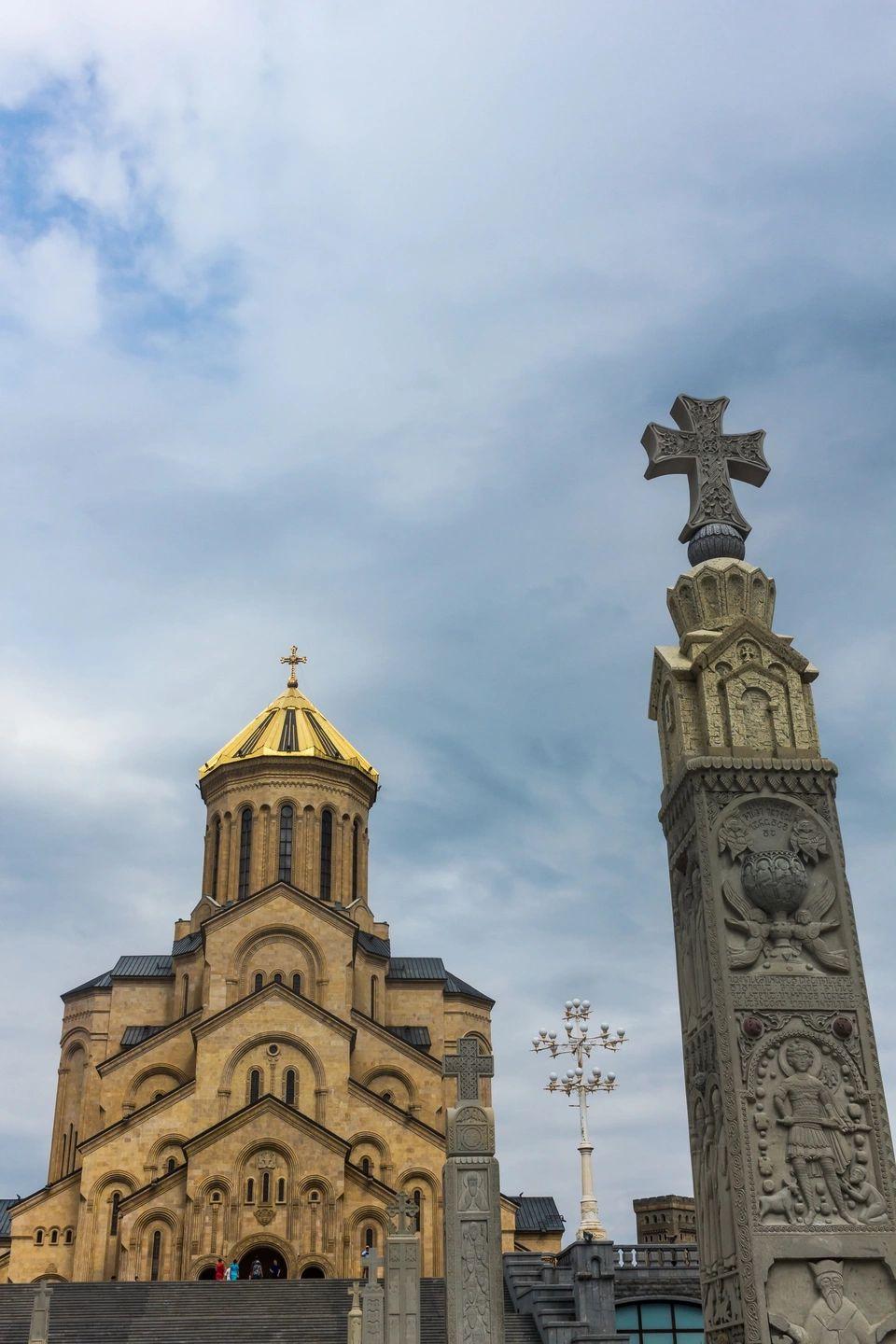
From the moment Georgia applied for EU membership in 2022 to the effective halt of its accession process in 2024, the country underwent profound upheavals that disrupted the once-ordinary calm of Tbilisi in just two years. What events unfolded so rapidly as to challenge Georgia’s European aspirations to the point of suspension? Is Georgia witnessing its own version of Ukraine’s EuroMaidan moment? The path toward EU membership has been fraught with serious challenges for Georgia, marked by democratic backsliding and growing concerns about media freedom and corruption. Despite early progress in building closer ties with Europe, the country is now torn between competing aspirations: on one side, pro-European Georgians who dream of democracy; on the other, an increasingly authoritarian government accused of leaning towards Moscow. This article aims to trace Georgia’s EU accession path while comparing it with two other countries that applied in the same period, examine what is at stake for both the European Union and Georgia, and conclude with a forward-looking reflection on possible scenarios in the years to come.
Georgia’s EU Accession Status
Georgia’s journey to the European Union began in the early 1990s, following the dissolution of the Soviet Union. The first formal step came in 1996, when Georgia signed a Partnership and Cooperation Agreement (PCA) with the EU, alongside Armenia and Azerbaijan. Over the years, Georgia took further steps to strengthen this relationship. In 2006, the country launched a five-year Action Plan under the European Neighbourhood Policy, followed by its participation in the Eastern Partnership initiative in 2009. A significant milestone came in 2014 with the signing of the Association Agreement, which included the Deep and Comprehensive Free Trade Area (DCFTA). This agreement not only facilitated trade but also required Georgia to align its legal and regulatory frameworks with EU standards. In 2017, Georgian citizens were granted visa-free travel to the Schengen Area, further consolidating public support for EU integration. Initially, Georgia planned to apply for EU membership by 2024, but the geopolitical upheaval caused by Russia’s invasion of Ukraine in February 2022 quickly altered the enlargement dynamics. Ukraine applied for EU membership on February 28, 2022, quickly followed by Moldova. The government of Tbilisi, although initially hesitant, relented after widespread protests that demanded more concrete actions to show solidarity with its neighbours. Responding to this pressure, the government submitted its application in March 2022. By June 2022, the European Commission assessed the three applications. It recommended candidate status for Ukraine and Moldova in recognition of their political will and their vulnerability amid increasing Russian aggression. Georgia, however, was deferred for not meeting the required 12 key reform priorities identified by Brussels (The Hague Research Institute, 2024). These reforms demand substantial progress in judicial independence, political polarization, corruption, media freedom, and civil society protections. Despite these initial setbacks, Georgia received its candidate status in December 2023. However, unlike Ukraine and Moldova, which were invited to begin accession negotiations in 2024, Tbilisi’s path has remained stalled largely due to its persistent internal political instability. This political crisis had seriously undermined Georgia’s path to the EU, leading to the explosion of two mass protests. The first wave of protests sparked as a reaction to the introduction of the so-called “foreign influence transparency” law in May 2024. This legislation required NGOs and media outlets receiving more than 20% of their funding from abroad to be registered with the Ministry of Justice and submit detailed annual financial declarations. The law was widely condemned by both domestic civil society groups and the EU as it risks stifling political dissent and independent voices, echoing Russia’s 2012 foreign agent law (Council on Foreign Relations, 2024). Although President Salome Zourabichvili vetoed the bill, calling it “anti-constitutional, anti-European and anti-democratic”, the Georgian Dream-led Parliament pushed it through. Tens of thousands of citizens took to the streets to express their outrage against the increasingly authoritarian government (The Guardian, 2024). The European flag they powerfully wave outside the Parliament in Tbilisi seems to cry their frustration in seeing how years of effort to the EU integration have started to unravel. To complicate the situation furthermore, on 17 September 2024, the Georgian Parliament adopted the “Family Value and Protection of Minors” bill in its third and final reading, amid an opposition boycott (Le Monde, 2024). This legislation aims to restrict what it terms “the propaganda of same-sex relationships and incest” in educational institutions, media, and TV broadcasting. On October 3, the Parliamentary Speaker Shalva Papuashvili signed the bill into law, marking a deeper departure from the EU’s democratic and human rights standards. The law triggered widespread backlash from both domestic and international institutions, denounced it as discriminatory and warned it would further endanger the LGBTQ+ community and fuel intolerance in Georgian society (OHCHR, 2024). The second wave of protest sparked as the hope that a new parliamentary election could eventually provide a resolution for the country’s deep political crisis had become forlorn. In October 2024, the currently ruling Georgian Dream party (GD) won the election for the fourth consecutive time (DW, 2024). The party has been in power for the last 12 years. Following the victory, its nominee for president, Mikheil Kavelashvili, a former Manchester City player, was accused of participating in an electoral process that lacked democratic legitimacy (Atlantic Council, 2024). Indeed, not only was he the sole candidate in the race, securing 224 votes in the Electoral Assembly that consisted mostly of GD party members, but the election was also boycotted by the opposition parties, who considered it a stark “constitutional coup” (Politico, 2024). The legitimacy of Kavelashvili’s presidency is fiercely contested by the former President Salome Zourabichvili too. She called the vote a “mockery of democracy” and vowed to remain in office beyond the end of her six-year term until, in her own words, “a legitimately elected parliament is formed” (The Guardian, 2024). On 28 November 2024, the European Parliament passed a resolution citing alleged irregularities in the electoral process. It called for a new vote within a year, and urged the EU and its member states to impose sanctions on responsible officials. This includes Prime Minister Irakli Kobakhidze, Tbilisi Mayor Kakha Kaladze, oligarch Bidzina Ivanishvili, and other high level officials within the ruling elite (European Parliament, 2024). Almost simultaneously, on 28-29 November, the Georgian government announced its decision to refuse any European budgetary support and to halt the EU accession process for four years, until at least 2028 (Al Jazeera, 2024), despite an article in its own constitution that sets EU integration as a national priority (Art.78). Mr. Kobakhidze insisted that EU negotiations have not been “suspended” but rather “delayed”. He accuses the EU of exploiting the accession negotiation process to “blackmail” Georgia, demanding reforms and imposing sanctions that are, in his words, "infringing our national dignity” (Georgia Today, 2024). In contrast, the government promoted its own alternative vision under the slogan “Only with Peace, Dignity, Prosperity to Europe”, which was widely criticized by civil society as a rhetorical cover for distancing Georgia from its European path (Civil Georgia, 2024).
What's at Stake for the European Union?
Despite Georgia’s progress towards EU accession has been trudging along at best, there are a great many interests on both sides still providing sufficient incentives to prevail in accession attempts. For the EU, Georgia shows grand strategic, economic, and normative value if the accession process is handled correctly. In terms of economics, Georgia is central to the Middle Corridor transport route linking Europe with Central Asia and China. Sitting on the cusp of Europe and Asia, Kote Abkhazi’s motherland would allow the European Union to bypass Russia heavily (EPRS, 2023). This geostrategic asset settles in nicely with the expansion of EU-Georgia trade, which doubled in a decade under the DCFTA (EU Neighbours East, 2023). Hence, Georgia represents a trade asset both in and of itself as a state and as a gateway. Beyond trade, energy diversification represents a key asset for the EU, particularly with the Black Sea Green Energy Corridor project, positioning Georgia as a future electricity exporter to the EU (DG ENER, 2023) in an era where the EU is consistently looking to pivot to sustainable energy. On a more realist note, Georgia’s location enables EU projection in the South Caucasus, providing a more concrete platform to counter Russian military presence and the Chinese Belt and Road Initiative (BRI) investments (Chatham House, 2022; Carnegie Europe, 2023). The said platform goes beyond purely material interests and especially echoes normative values, as integration would anchor EU democratic norms at a strategic frontier, reinforcing Brussels’ waning credibility of the enlargement policy (GMF, 2021). Far from purely conceptual principles, all of the above have transitioned into actions, the most notable of examples residing in the European Investment Bank’s €1.9bn financing of Georgian infrastructure projects since 2007, in order to facilitate rapprochement between Tbilisi and Brussels (EIB, 2024). Georgia’s accession isn’t merely symbolic; it’s a credible investment in Europe’s economic resilience, energy security, and geopolitical influence at its eastern flank, if the cards are played right and patiently.
However, over-enthusiasm should be curtailed with a clear understanding of the many risks that come from a precipitated or wrongly managed Georgian integration. To begin, internal dissent prevails where some EU members, such as Hungary, Austria, and the Netherlands, are sceptical about further enlargement without internal reform, explicitly fearing budget strain and political fragmentation (ECFR, 2023; Bruegel, 2024). Globally, these concerns embed themselves in a global enlargement fatigue of the EU, with genuine distress that adding a country with a GDP per capita around 20% of the EU’s average could exacerbate tensions over cohesion funding (Bruegel, 2024). Values-wise, democratic backsliding, media suppression, and the ‘foreign agents’-style law raise concerns about importing instability (Freedom House, 2024; Venice Commission, 2024). Outside pressure also prevails as the Russian occupation of Abkhazia and South Ossetia presents security liabilities for the EU (ECFR, 2025) in an already delicate situation with the Ukraine war. As a result, the European Parliament’s October 2024 resolution explicitly warned that Georgia’s trajectory could “freeze” its accession process unless reforms are restored and further pursued (EP, 2024).
As alluded to above, Tbilisi’s procedure further suffers from a varying degree of positions within the EU, from sceptics to supporters, in regards to perceptions of its accession. When it comes to the supporters, Lithuania, Poland, and the Baltic states, their common Cold War history frames Georgia’s accession as a security imperative to counter Russia and deepen Black Sea cooperation (Euractiv, 2023; GMF, 2023). Baltic leaders have especially lobbied jointly for fast-tracking Georgia’s negotiations, as they cite its strategic role in the Middle Corridor (GMF, 2023). Sceptics such as France and the Netherlands emphasize the previously mentioned weaknesses, such as governance reforms before expansion, as they are wary of importing instability (Carnegie Europe, 2022; Netherlands Parliament, 2023). Germany and Italy embody mixed positions, as they generally back enlargement in principle but condition it on EU institutional reform (ECFR, 2023). An overall observation easily shows us that support often correlates with proximity to Russia’s sphere, while scepticism is tied to concerns over rule of law and fiscal costs.
What's at Stake for Georgia?
All the same, a proper prospect of Georgian integration into Schuman’s vision must be grasped justly the various consequences such a project would entail for Tbilisi. Naturally, an integration into the Brussels administration would provide substantive economic, security, and institutional gains for Georgia. In terms of economics, the access to the EU single market could further expand trade beyond the 110% growth seen under the DCFTA between 2014 and 2023 ( EU Neighbours East, 2023; World Bank, 2022). On a security level, closer alignment with the EU strengthens deterrence against further Russian aggression, a very real danger in the minds of Georgians who distinctly remember 2008, while the EU would also help build resilience against hybrid threats (GMF, 2022). Institutionally, compliance with EU acquis supports reforms in the judiciary, anti-corruption, and education ( Transparency International Georgia, 2021). Building on the latter, education and mobility are also clear advantages deriving from a potential accession. Indeed, visa-free travel and Erasmus+ deepen cultural and human capital ties, and build a cohesive European identity (EU Neighbours East, 2023). Broadly, accession offers Georgia a pathway to embed democratic norms, strengthen economic resilience, and enhance national security in a volatile environment.
Nonetheless, many risks and challenges remain, with internal and external threats having the potential to derail Georgia’s EU accession, undermining both domestic stability and its European trajectory. Over the past few months, student protests have embodied many of the internal weaknesses of the Sakartvelo, with polarisation, contested elections, and contestation of power in the ruling party plaguing democratic institutions ( Chatham House, 2024). What's more, they embody the growing public disillusionment as failure to advance could erode pro-EU sentiment, especially among younger generations (NDI, 2024). Beyond this, Georgian foreign relations and its balancing consist of a very peculiar challenge. While Russia’s occupation of several regions, accompanied by threats of retaliation, create persistent security risks (ICG, 2023), Kavelashvili manages ties with Turkey, Azerbaijan, and China while aligning with EU policy, adding deep complexity to negotiations (ECFR, 2025). Finally, the aforementioned “foreign influence” law undermines NGOs and media, notably their independence, reducing reform capacity (TI Georgia, 2024).
Be that as it may, the last straw they consider is how the EU accession is perceived within the Georgian civil society, citizens, and experts. Generally, there is an overwhelmingly strong pro-EU sentiment, with 81% of Georgians supporting EU membership ( CRRC Caucus Barometer, 2024; EU Neighbours East, 2024). As alluded to earlier, Georgian youth are at the forefront of struggle, notable through mass protests as they frame EU integration as a generational cause (Reuters, 2024). Stepping back from youth activism into a more academia-based environment, international relations scholars in Tbilisi stress that EU membership is seen as the only credible path to sovereignty and stability (Chatham House, 2024). From a more business perspective, export-oriented SMEs cite DCFTA benefits but warn that political instability undermines investment confidence (Civili.ge, 2024). The general European optimism is best highlighted by the NDI 2024 survey which found 70% to believe EU membership would improve Georgia’s economy, a figure that has remained stable for a decade. Public and expert voices converge on the strategic necessity of EU membership, the greatest ambition is to now turn will into definite and lasting action in order to prevent exhausting civic patience and fervour.
Scenarios for the Next Years
Now that we’ve appreciated the various stakes encompassing the Georgian EU accession debate, we can trace three hypothetical scenarios.
In the best case scenario, Georgia sees full implementation of the 12 EU priorities, including judicial independence and anti-corruption measures (EEAS, 2022). Political stability rises as free and fair elections restore legitimacy and reduce polarisation (UNDP, 2025). Seeing this, the EU investment surges, as it expands infrastructure and energy cooperation, notably the Black Sea Green Energy Corridor (DG ENER, 2023). Furthermore, progressive integration through Erasmus+ initiatives and co-economic initiatives ensure that Georgian integration doesn’t lead to an economic shock. Concretely, the EIB pipeline of green transport projects could double under a stable political climate, accelerating EU market integration (EIB, 2024). As Georgia continues to rise, accession talks open, aligning Georgia’s timeline broadly with Moldova and Ukraine ( European Council, 2023). Further than Georgian incentives, this trajectory would confirm the EU’s credibility as a geopolitical actor and secure its influence more visibly.
Less optimistic, we may be able to propose a more moderate scenario. While incremental progress on acquiring chapters, it would be slow to reform in judiciary and anti-corruption (European Commission, 2024). Moreover, it is likely that we would see persistent political tensions with a continuing climate of polarisation and contested elections that prevent consensus on integration (NDI), 2024). As we’ve gathered above, this would lead to the EU withholding negotiations until key democratic benchmarks are met, testing public patience as support remains high but with growing protest fatigue. Such a climate would deeply echo Bosnia and Herzegovina’s long pre-negotiation phase, with Georgia potentially remaining a candidate for years without formal talks (EPRS, 2023). This “holding pattern” risks momentum on both sides and reinforces enlargement fatigue within the EU, undermining credibility.
The worst scenario would consist of a deterioration of the democratic environment, leading to a freeze or even reversal of the EU integration process. More concretely, a consolidation of power by the ruling party, along with further erosion of media freedom and civil society (Freedom House, 2024) would consist of major authoritarian concerns. Naturally, this would lead to an EU disengagement, as financial aid would be suspended, accession talks indefinitely postponed, while Georgia would most likely strengthen economic and political ties with Russia and China (ECFR, 2025). Consequently, a sharp decline in trust toward EU institutions, especially among youth (NDI, 2024) may entomb EU prospects, while also undermining Georgia’s sovereignty, weakening EU influence in the Caucasus, and embolden rival powers.
Conclusion
Georgia's EU bid now stands as a litmus test for Brussels' ability to act as a geopolitical union, rather than a mere economic club. For the EU, Georgia offers the chance to secure a democratic partner at the edge of a volatile region, anchoring stability in the South Caucasus while signalling that enlargement remains a credible tool of influence (EPRS, 2023). For Georgia, membership is not just a diplomatic ambition but the clearest route to sovereignty, security, and prosperity (Chatham House, 2024).
Yet credibility is fragile. The current stall risks confirming perceptions of double standards in EU enlargement, particularly when candidates see reform requirements as moving goalposts (ECFR, 2023). Georgia's case underlines that accession is not merely a checklist of acquis chapters - it is a strategic choice on both sides, demanding political will, trust, and consistent engagement (European Council, 2023).
If the EU is unwilling to fast-track talks, phased integration, such as sectoral participation, expanded Erasmus+, and youth-focused initiatives, could sustain momentum without lowering standards (CEPS, 2025). For a society where 81% still backs EU membership (CRRC, 2024), visible progress is the best safeguard against disillusionment. Handled wisely, Georgia's path could revitalize the EU's enlargement doctrine. Mishandled, it risks being remembered as a missed chance to anchor Europe's frontier.
References
Al Jazeera (2024) Georgia to suspend EU accession talks until 2028. Doha: Al Jazeera. Available at: (Accessed: 9 August 2025).
Atlantic Council (2024) Georgian protests escalate amid fears over mounting Russian influence. Washington DC: Atlantic Council. Available at: (Accessed: 9 August 2025).
Bruegel (2024) What enlargement could imply for the European Union’s budget. Brussels: Bruegel. Available at: https://www.bruegel.org/analysis/what-enlargement-could-imply-european-unions-budget (Accessed: 9 August 2025).
Carnegie Europe (2022) The European Union’s divided approach to enlargement. Brussels: Carnegie Europe. Available at: https://carnegieeurope.eu/2022/12/15/european-union-s-divided-approach-to-enlargement-pub-88620 (Accessed: 9 August 2025).
Carnegie Europe (2023) Black Sea security: why Georgia matters. Brussels: Carnegie Europe. Available at: https://carnegieeurope.eu/2023/04/20/black-sea-security-why-georgia-matters-pub-89437 (Accessed: 9 August 2025).
Centre for European Policy Studies (CEPS) (2025) A redynamised EU enlargement process. Brussels: CEPS. Available at: https://cdn.ceps.eu/wp-content/uploads/2025/01/a_redynamised_eu_enlargement_process_sceeus_2025.pdf (Accessed: 9 August 2025).
Caucasus Edition (2024) Georgia’s post-election protests are beyond the Maidan model. Tbilisi: Caucasus Edition. Available at: (Accessed: 9 August 2025).
Chatham House (2022) Why the EU needs Georgia. London: Chatham House. Available at: https://www.chathamhouse.org/2022/09/why-eu-needs-georgia (Accessed: 9 August 2025).
Chatham House (2024) Georgia’s precarious path to Europe. London: Chatham House. Available at: https://www.chathamhouse.org/2024/02/georgias-precarious-path-europe (Accessed: 9 August 2025).
Civil.ge (2024a) Letter to HR/VP Borrell re undemocratic behavior of Georgian authorities. Tbilisi: Civil.ge. Available at: (Accessed: 9 August 2025).
Civil.ge (2024b) Georgian SMEs voice concerns over political instability and EU trade. Tbilisi: Civil.ge. Available at: https://civil.ge/archives/578012 (Accessed: 9 August 2025).
Civil.ge (2024c) Protests continue against Georgian Dream government. Tbilisi: Civil.ge. Available at: (Accessed: 9 August 2025).
Civil.ge (2024d) Thousands gather in Tbilisi amid EU accession controversy. Tbilisi: Civil.ge. Available at: (Accessed: 9 August 2025).
Civil.ge (2024e) President Zourabichvili vows to stay in office beyond term. Tbilisi: Civil.ge. Available at: (Accessed: 9 August 2025).
Council of Europe, Venice Commission (2024) Urgent Opinion on the Law on Transparency of Foreign Influence. Strasbourg: Council of Europe. Available at: https://www.venice.coe.int/webforms/documents/default.aspx?pdffile=CDL-AD%282024%29020-e (Accessed: 9 August 2025).
Council of the European Union (2023a) Georgia. Brussels: Council of the EU. Available at: (Accessed: 9 August 2025).
Council of the European Union (2023b) European Council conclusions, 14-15 December 2023. Brussels: Council of the EU. Available at: (Accessed: 9 August 2025).
CRRC (2024) Caucasus Barometer: EUSUPP. Tbilisi: Caucasus Research Resource Centers. Available at: https://www.caucasusbarometer.org/en/cb2024ge/EUSUPP/ (Accessed: 9 August 2025).
DG ENER (2023) EU and Georgia strengthen energy cooperation. Brussels: European Commission. Available at: https://energy.ec.europa.eu/news/eu-and-georgia-strengthen-energy-cooperation-2023-12-14_en (Accessed: 9 August 2025).
DW (2024) Georgia: Ruling Georgian Dream party wins election. Bonn: Deutsche Welle. Available at: (Accessed: 9 August 2025).
EIB (2024) EIB support in Georgia. Luxembourg: European Investment Bank. Available at: https://www.eib.org/en/projects/regions/eastern-neighbours/georgia (Accessed: 9 August 2025).
EPRS (2023) Georgia’s EU path and the Black Sea region. Brussels: European Parliamentary Research Service. Available at: https://epthinktank.eu/2023/05/10/georgias-eu-path-and-the-black-sea-region/ (Accessed: 9 August 2025).
ECFR (2023) Catch-27: the contradictory thinking about enlargement in the EU. Brussels: European Council on Foreign Relations. Available at: https://ecfr.eu/publication/catch-27-the-contradictory-thinking-about-enlargement-in-the-eu/ (Accessed: 9 August 2025).
ECFR (2025) Frozen conflicts, Russian aggression and EU enlargement. Brussels: European Council on Foreign Relations. Available at: https://ecfr.eu/publication/occupational-therapy-frozen-conflicts-russian-aggression-and-eu-enlargement/ (Accessed: 9 August 2025).
EEAS (2022) The Twelve Priorities for Georgia. Brussels: European External Action Service. Available at: https://www.eeas.europa.eu/sites/default/files/documents/12%20Priorities.pdf (Accessed: 9 August 2025).
Euractiv (2023) Eastern EU members push for Georgia’s accession despite rule-of-law concerns. Brussels: Euractiv. Available at: https://www.euractiv.com/section/enlargement/news/eastern-eu-members-push-for-georgias-accession-despite-rule-of-law-concerns/ (Accessed: 9 August 2025).
European Commission (2023) SWD(2023) 697 Georgia Report. Brussels: European Commission. Available at: (Accessed: 9 August 2025).
European Commission (2024) Georgia Report 2024. Brussels: European Commission. Available at: (Accessed: 9 August 2025).
European Council (2023) Speech by President Charles Michel at the Bled Strategic Forum. Brussels: European Council. Available at: https://www.consilium.europa.eu/en/press/press-releases/2023/08/28/speech-by-president-charles-michel-at-the-bled-strategic-forum/ (Accessed: 9 August 2025).
European Generation (2023) Georgia at a crossroad. Milan: European Generation. Available at: (Accessed: 9 August 2025).
European Parliament (2024a) Joint motion for a resolution on Georgia’s democratic backsliding. Strasbourg: European Parliament. Available at: https://www.europarl.europa.eu/doceo/document/RC-10-2024-0070_EN.html (Accessed: 9 August 2025).
European Parliament (2024b) Joint motion for a resolution on Georgia: political crisis and foreign influence law. Strasbourg: European Parliament. Available at: (Accessed: 9 August 2025).
EU Neighbours East (2023a) Trade between Georgia and the EU doubles in 10 years. Brussels: European Neighbourhood Policy East. Available at: https://euneighbourseast.eu/news/stories/trade-between-georgia-and-the-eu-doubles-in-10-years/ (Accessed: 9 August 2025).
EU Neighbours East (2023b) Georgians reap the benefits of visa-free travel and Erasmus+. Brussels: European Neighbourhood Policy East. Available at: https://euneighbourseast.eu/news/stories/georgians-reap-the-benefits-of-visa-free-travel-and-erasmus/ (Accessed: 9 August 2025).
Freedom House (2024) Nations in Transit 2024: Georgia. Washington DC: Freedom House. Available at: https://freedomhouse.org/country/georgia/nations-transit/2024 (Accessed: 9 August 2025).
German Marshall Fund (2021) Georgia’s role in EU soft power projection. Washington DC: GMF. Available at: https://www.gmfus.org/news/georgias-role-eu-soft-power-projection (Accessed: 9 August 2025).
German Marshall Fund (2022) Security dividends of EU integration for Georgia. Washington DC: GMF. Available at: https://www.gmfus.org/news/security-dividends-eu-integration-georgia (Accessed: 9 August 2025).
German Marshall Fund (2023) Central and Eastern Europe’s case for Georgia. Washington DC: GMF. Available at: https://www.gmfus.org/news/central-and-eastern-europes-case-georgia (Accessed: 9 August 2025).
International Crisis Group (2023) South Caucasus: The risks of unresolved conflicts. Brussels: ICG. Available at: https://www.crisisgroup.org/europe-central-asia/caucasus/south-caucasus/321-south-caucasus-risks-unresolved-conflicts (Accessed: 9 August 2025).
Le Monde (2024) Georgia halts EU application, leading to protests denouncing a ‘betrayal’. Paris: Le Monde. Available at: (Accessed: 9 August 2025).
Matsne (2018) Constitution of Georgia. Tbilisi: Legislative Herald of Georgia. Available at: (Accessed: 9 August 2025).
NDI (2024) Public attitudes in Georgia. Washington DC: National Democratic Institute. Available at: https://www.ndi.org/publications/ndi-poll-georgians-support-eu-integration-despite-political-tensions (Accessed: 9 August 2025).
Netherlands Parliament (2023) Debate on EU enlargement and Georgia. The Hague: Tweede Kamer. Available at: https://www.tweedekamer.nl/kamerstukken/detail?id=2023Z23231&did=2023D50034 (Accessed: 9 August 2025).
ResearchGate (2024) Georgia’s progress in implementation of fundamentals of the EU accession process. Available at: (Accessed: 9 August 2025).
Reuters (2024) Young Georgians see homeland at turning point amid pro-EU protests. London: Reuters. Available at: https://www.reuters.com/world/europe/young-georgians-see-homeland-turning-point-amid-pro-eu-protests-2024-12-05/ (Accessed: 9 August 2025).
The Guardian (2024a) Georgia’s pro-EU opposition calls for protest over ‘rigged’ election result. London: The Guardian. Available at: (Accessed: 9 August 2025).
The Guardian (2024b) Georgia protests as PM Kobakhidze and President Zourabichvili clash. London: The Guardian. Available at: (Accessed: 9 August 2025).
Transparency International Georgia (2021) EU accession as an anti-corruption driver. Tbilisi: TI Georgia. Available at: https://transparency.ge/en/post/eu-accession-anti-corruption-driver (Accessed: 9 August 2025).
Transparency International Georgia (2024a) Foreign influence law and its impact on civil society. Tbilisi: TI Georgia. Available at: https://transparency.ge/en/post/foreign-influence-law-and-its-impact-civil-society (Accessed: 9 August 2025).
Transparency International Georgia (2024b) Road to dictatorship? Georgian Dream’s latest repressive legislative changes. Tbilisi: TI Georgia. Available at: (Accessed: 9 August 2025).
Transparency International Georgia (2024c) Detained citizens are being physically abused. Tbilisi: TI Georgia. Available at: (Accessed: 9 August 2025).
World Bank (2022) Deep and Comprehensive Free Trade Agreement: Georgia. Washington DC: World Bank. Available at: https://documents.worldbank.org/en/publication/documents-reports/documentdetail/099150006162229987/p17646407343700d30aa5c04f6f2b066b33 (Accessed: 9 August 2025).
X (2024) Rumeli Observer on Georgian protests [Twitter/X]. Available at: (Accessed: 9 August 2025).