
Legal Ambiguity and the IRGC in EU Migration Policy
By Laith Keyan Roubaie
10 min read · 2,099 words
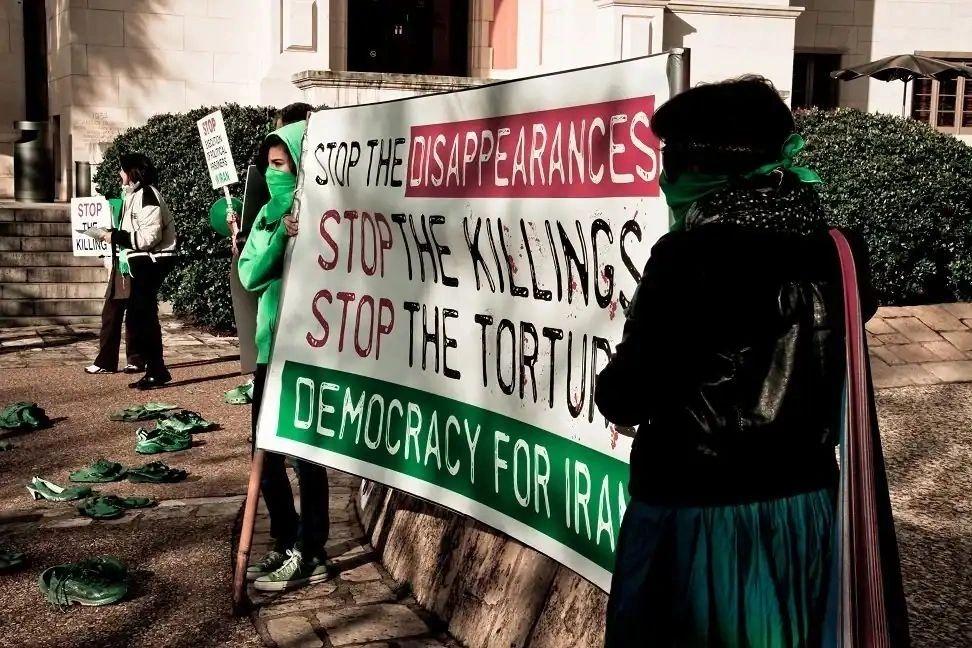
In December 2025, Iranian bazaaris, university students, youths, civil servants, and members of diverse social and religious communities mobilized in nationwide protest marches and strikes. These actions challenged the rule of the Islamic Republic and their armed proxy, the Islamic Revolutionary Guards Corps (IRGC). The subsequent crackdown resulted in the reported deaths of over 36,000 protestors, following the IRGC’s long-established pattern of using systematic repression and coercive force as a reaction to dissent (Iran International, 2026). The latest episode was not an anomaly, but a continuation of a governance model rooted in aggressive securitized control.
For many Iranians, repression is not an abstract political condition but a lived reality: since 1979, millions have left the country to escape political persecution, economic collapse, and religious authoritarianism. Today, the European Union is home to more than half a million first, second, and third generation Iranians across Sweden, France, Germany, Austria, Spain, and other member states. Migration has allowed refuge and has born new struggles, an end to repression and the beginning of complex asylum and integration systems.
Debate over designating the IRGC as a terrorist organisation largely unfolded within foreign policy circles, yet the consequences of delayed legal clarification did not only affect diplomatic arenas. They also impacted asylum interviews, credibility assessments, exclusion clauses, and municipal governance. Following the period of repression in Iran between December 2025 and January 2026, several EU Member States, including France, Spain, and Italy, formally designated the IRGC as a terrorist organisation (European Parliament, 2026).
This article will not assess the political merits of this designation. Instead, it examines how prolonged legal ambiguity surrounding the IRGC generated a butterfly-like effect on EU migration governance. It argues that the delayed decision had important repercussions for asylum systems and local authorities, and turned immigration services into the operational ‘front line’ whilst more higher up foreign policy remained unclear.
The IRGC in Europe: Heightened Danger to Iranian Migrants
EU legal ambiguity operated within a documented and continuous security environment. Iranian diaspora communities in Europe have not merely feared repression within their own country, but also the countries they seek refuge in
In March 2025, Brigadier General Mohsen Rafighdoost, the first IRGC minister, publicly admitted to ordering the assassinations of prominent Iranian dissidents in Europe during and after the early revolutionary years (Davar, 2025). He admitted to the killing of victims including former French prime minister Shapour Bakhtiar, German singer Fereydoun Farrokhzad, and French naval officer Shahriar Shafiq. Rafighdoost described the use of Basque separatist operatives, covert financing through a Bank Saderat account in Frankfurt, and commissions from European military procurement to fund assassinations. He further admitted to threatening French officials during negotiations related to Anis Naccache’s detention, linking diplomatic concessions to potential attacks on French interests.
These admissions were the first open acknowledgement by a senior official that assassinations in Europe were organized and financed at a state level. They demonstrate a structured architecture of transnational repression involving foreign operatives, European financial infrastructure, and diplomatic leverage.
Contemporary cases reinforce this continuity: in 2021, Assadollah Assadi, an Iranian diplomat, was convicted in Belgium for supplying explosives for a planned attack on an opposition rally in France (Boffey, 2021). The conviction confirmed that operatives linked to the Iranian regime remained active on EU soil years after the revolution.
In Sweden in 2019, Hamid Nouri was convicted for his involvement as a key figure in the mass executions of thousands of Iranian political prisoners that occurred in 1988. Despite this fact, in June 2024 he was released in a prisoner exchange (Pollard and Ahlander, 2024). In the exchange, the IRGC freed Swedish EU diplomat Johan Floderus and dual-national Saeed Azizi in return. The exchange exemplified ‘hostage diplomacy’, or the practice of detaining foreign and dual-nationals to gain political concessions, illustrating how judicial accountability can be manipulated through diplomatic bargaining.
More recently, the July 2025 arrest of ‘Ali S.’ in Germany on suspicion of conducting surveillance and gathering information on Jewish targets in Berlin further highlights ongoing operational presence by the Islamic Republic (Blackburn, 2025).
For Iranian diaspora communities, these episodes reinforce perceptions of the enduring presence of the regime. For migration governance, the implications are structural. Criminal courts recognized extraterritorial repression, and yet for much of this period, the IRGC lacked an EU-level definition of terrorism. This created institutional asymmetry: judicial systems acknowledged transnational violence while asylum and integration frameworks lacked an equivalent means of situating that repression within a formally recognized EU security framework.
The result was disjunction: protection systems operated without alignment between foreign policy, counterterrorism, and asylum law, even as documented repression unfolded within Europe.
The Direct Consequences of Legal Ambiguity for Migration Governance
The documented reach of repression provides the structural context within which asylum systems operate, and despite this, EU level designation continuously lagged behind this reality. In the absence of an appropriate legal classification recognising the regime’s structural organisation, national authorities were required to interpret risk, affiliation, and credibility independently. The consequences of this delay were most visible in asylum adjudication.
The problem is visible in F.G. v. Sweden (ECtHR, Grand Chamber, 23rd March 2016, appl. no. 43611/11). F.G; in this case, an Iranian national, sought asylum in Sweden on the basis of his conversion to Christianity. Despite apostasy and blasphemy from Islam being punishable by death under the Islamic Republic (IHRDC 2014), Swedish authorities rejected his claim, questioning the credibility and timing of his conversion and finding insufficient risk in his case. The Grand Chamber maintained that authorities must conduct a rigorous and forward looking assessment under Article 3 ECHR. In practice, such an assessment depends on a clear understanding of the structure and reach of repression in the country of origin.
A similar chain of events appears in S.F. and Others v. Sweden (ECtHR, 2011, appl. no. 52077/10). Iranian applicants argued that their dissident political activity exposed them to harm upon return to Iran. Swedish authorities rejected the claims, citing inconsistencies and insufficient proof of individual risk. The Court examined whether authorities had properly considered both information on the country of origin and the applicants’ personal risk under non refoulement standards. Where repression operates through state linked security structures and compulsory military service, the distinction between coerced contact and meaningful affiliation becomes clouded. Without formal EU recognition of the IRGC’s role within this architecture, national authorities independently assess whether contact signals complicity or victimhood, heightening interpretive fragmentation.
This interpretive pressure is not limited to Sweden. The 2024 AIDA France report describes the procedural framework through which OFPRA and the Cour nationale du droit d’asile (CNDA) assess credibility, including scrutiny of late emerging elements and evaluation of whether applicants’ activities would expose them to risk upon return. In cases involving sur-place political activism or online expression, authorities examine whether such conduct would realistically come to the attention of Iranian authorities. Where the transnational surveillance capacity of regime linked institutions lacks corresponding EU recognition, such assessments depend heavily on individual interpretation and understanding of operational reach.
German administrative jurisprudence similarly confronts questions of military service, desertion, and indirect contact with state security structures. Under the law of the Islamic Republic, military service is compulsory, and elements of that service may involve units linked to the Revolutionary Guards or security institutions. German courts have therefore had to determine whether completion of service, refusal, or desertion creates a risk of persecution upon return. In several decisions of the Federal Administrative Court (Bundesverwaltungsgericht), the standard applied requires proof that punishment for draft evasion or desertion would amount to politically motivated persecution rather than a lawful sanction.
In practice, this forces courts to assess the structure and function of Iran’s security apparatus. Does indirect contact with IRGC linked units imply complicity, or does compulsory service negate voluntary participation? In the absence of a EU-level designation situating the IRGC clearly within a terrorist or transnational repression framework, German courts, like their counterparts elsewhere, must independently reconstruct the institutional weight of such contact.
The consequence is not the abandonment of individualized assessment, but decentralized interpretation of structural risk. Without a shared EU benchmark recognising the IRGC’s role in repression, the legal meaning of military service, refusal, or affiliation is shaped through national doctrinal reasoning rather than cross pillar alignment. This reinforces the broader pattern identified in this article: delayed designation shifted interpretive responsibility down the rungs of bureaucracy, amplifying variability in how Iranian protection claims are evaluated across Member States.
Post Designation Alignment and Institutional Repair
The designation of the IRGC unfolded within an increasingly mobilized political environment across Europe. Since December, Iranian diaspora communities have organized long-lasting demonstrations in Paris, Berlin, Stockholm, and other European capitals. They called not only for accountability for repression inside Iran but for tangible action from EU member states. Among the most visible demands have been calls to close and shut down Islamic Republic embassies and diplomatic missions, which are commonly seen as extensions of regime security infrastructure.
These demands reflect accumulated frustration with years of institutional hesitation.
Designation provides a shared legal benchmark previously absent. It allows foreign policy, counterterrorism, and migration governance to operate within one harmonized framework. Updated guidance to asylum authorities can ensure that risk assessments reflect a unified understanding of repression architecture rather than inconsistent national or individual interpretation.
Integration governance similarly requires recalibration. Municipal authorities engaging with Iranian associations need clearer channels for coordination where credible concerns of intimidation arise. Designation should not securitize diaspora life altogether, but it should end assumptions of purely depoliticized engagement in contexts of documented transnational repression.
However, legal clarification cannot retroactively resolve legacy fragmentation. For years, asylum decisions developed under ambiguity. Institutional repair must therefore be proactive rather than symbolic.
Conclusion
When the EU does not clearly classify a central repressive actor such as the IRGC, legal ambiguity does not remain confined to foreign policy debate. It travels into asylum interviews, into credibility assessments, into evidentiary thresholds, and into municipal governance. In the absence of a harmonized legal benchmark, national authorities and institutes reconstruct structural risk independently, producing fragmentation rather than coherence.
For Iranian migrants, whose departure from Iran was shaped by repression, this ambiguity became personal. Claims grounded in real experiences of fear, surveillance, and coercion were assessed within fragmented legal frameworks rather than within a harmonized institutional understanding of the regime’s security architecture.
The eventual designation of the IRGC marked an important shift, responding both to documented transnational repression and sustained mobilisation by Iranian diaspora communities across Europe. Yet legal clarification alone cannot erase years of institutional misalignment. As this article has shown, asylum systems and local authorities bore the consequences of foreign policy delay, operating without cross pillar coordination between security, foreign policy, and migration governance.
Repair requires more than symbolic recognition. It requires structured coordination, updated asylum guidance reflecting the designation, and integration safeguards that protect civic space without securitising it wholesale. Where classification remains behind repression, migration systems absorb the cost. Ambiguity travels and its consequences are experienced by those fleeing.
The lesson extends beyond the IRGC. Timely legal classification must trigger structured coordination across EU policy domains. Designation decisions under the Common Foreign and Security Policy should automatically prompt updated asylum guidance, harmonized interpretation of affiliation and exclusion clauses, and improved information-sharing between security and migration authorities. Integration governance should similarly incorporate safeguards addressing intimidation and coercion within diaspora communities, without collapsing civic engagement into securitisation.
References List
Asylum Information Database (AIDA). 2024. Country Report: France – 2024 Update. European Council on Refugees and Exiles (ECRE).
Boffey, Daniel. 2021. “Iranian diplomat jailed for 20 years over France bomb plot.” The Guardian, February 4, 2021.
Blackburn, Holly. 2025. “Iranian spy suspect arrested in Germany over alleged surveillance of Jewish targets.” Associated Press, July 2025.
Davar, Faramarz. 2025. “Former IRGC Minister Admits to Directing International Assassinations.” March 13, 2025. (Insert publication link if hosted online; e.g., Abdi Media or Iran-focused outlet URL.)
European Court of Human Rights (ECtHR). 2011. S.F. and Others v. Sweden. Application no. 52077/10. Judgment of 15th May 2011. HUDOC:
European Court of Human Rights (ECtHR). 2016. F.G. v. Sweden. Application no. 43611/11. Grand Chamber Judgment of 23 March 2016. HUDOC:PDF:
European Parliament. 2026. “Resolution on the Designation of the Islamic Revolutionary Guard Corps (IRGC).” Brussels. (Insert official EP resolution link once available via europarl.europa.eu.)
IHRDC (Iran Human Rights Documentation Center). 2014. Apostasy and Blasphemy under Iranian Law. New Haven: IHRDC. https://iranhrdc.org/apostasy-and-blasphemy-in-iran/
Iran International. 2026. “Reports Indicate Over 36,000 Protesters Killed in December Crackdown.” January 2026. (Insert direct article link if available.)
Pollard, Niklas, and Johan Ahlander. 2024. “Sweden and Iran Carry Out Prisoner Swap.” Reuters, June 15, 2024.