
Russia’s Invasion and the 2025 EU Enlargement Package: Future Pathways for Ukraine and the Western Balkans
Abstract
12 min read · 2,437 words
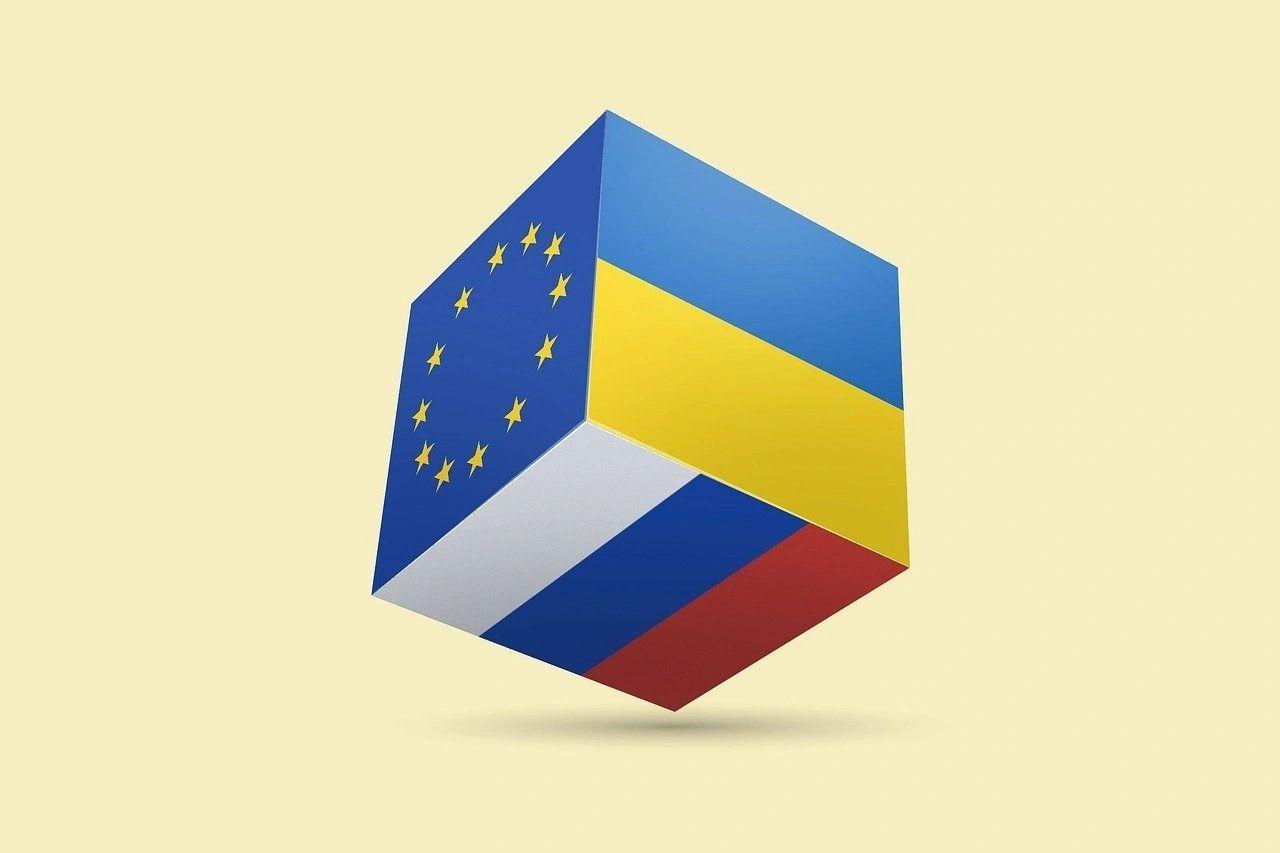
Russia’s invasion of Ukraine has reshaped the European Union’s enlargement agenda and its wider framework of cooperation. This article situates the 2025 Enlargement Package in that wartime context, arguing that enlargement has increasingly become a geopolitical instrument driven by security considerations. It examines the relaunch of accession, particularly Ukraine’s unprecedented candidacy during an active war, alongside the creation of the European Political Community and deeper cooperation with the Council of Europe and NATO. By contrasting frontrunners with cases of backsliding, the article highlights the gap between the EU’s geopolitical ambitions and its institutional readiness, with unanimity rules, veto politics, and absorption capacity emerging as key constraints.
I. Introduction
On 4 November 2025, the European Commission published the 2025 Enlargement Package. The Package is a set of documents outlining the Commission’s approach to integrating new Member States and includes an official list of current candidates. This year it covers Albania, Bosnia and Herzegovina, Georgia, North Macedonia, Moldova, Montenegro, Serbia, Türkiye, and Ukraine, with Kosovo as a potential candidate. It also contains country-specific reports that assess each partner’s progress over the past year and set recommendations and reform priorities. The Report proves that the EU's executive is serious about adding new members. The last country to join was Croatia back in 2013, and since then the EU contracted for the first time ever when Britain left in 2020. Since the start of 2024, eleven intergovernmental conferences have taken place: five with Albania, four with Montenegro, and one each with Ukraine and Moldova. Progress on reforms linked to the fundamentals has been noted particularly in these four countries, moving them forward on their EU accession path.
The geopolitical context helps explain this change of pace. Russia’s full-scale attack on Ukraine has reshaped the Union’s strategic outlook. As EU foreign policy chief Kaja Kallas put it "geopolitical shifts make the case for enlargement clear-cut. Enlargement is not a nice-to-have; it is a necessity if we want to be a stronger player on the world stage.", and Von der Leyen emphasized that “in times of geopolitical uncertainty, enlargement is more than a choice for peace”, it is an “investment in our collective security and freedom.” In response to Russia’s invasion, the EU has relaunched enlargement, notably by opening accession negotiations with Ukraine, while also promoting the EPC and deepening ties with
other regional organizations and partners, including the Council of Europe and NATO. As Ukraine’s Foreign Minister Dmytro Kuleba put it, “Ukraine acted as a true European integration locomotive for Moldova, Georgia, and the Western Balkan countries, as well as a catalyst for the historic process of the European Union expanding to Europe’s natural political borders.” The start of Ukraine’s accession process is historically significant. Ukraine is at war, and there is no precedent for such a case in previous enlargements. The EU’s decision to offer membership to Ukraine and open talks signals an ambition to use enlargement as a prime geopolitical tool. Beyond political rhetoric, this shift has also prompted a reassessment of the logic underpinning EU enlargement. This shift is a move toward “wartime” or “geopolitical” enlargement, in which security considerations increasingly outweigh the traditional market based logic of EU integration. Ukraine’s accession bid during an active war can be seen as a geostrategic test for the European Union, exposing growing tensions between strict conditionality and the political demands of decision making under wartime conditions. While enlargement has always contained a geopolitical element, Russia’s invasion has brought this logic to the forefront, raising questions about whether the EU’s existing governance framework is equipped to manage accession amid heightened security pressures.
This article argues that Russia’s invasion of Ukraine has transformed EU enlargement from a largely technocratic policy into a geopolitical instrument aimed at addressing immediate security challenges. While the 2025 Enlargement Package reflects unprecedented political momentum, particularly in the case of Ukraine, the EU continues to rely on legal and institutional arrangements designed for incremental, peacetime integration. This mismatch between geopolitical ambition and institutional readiness risks undermining the credibility of enlargement, unless accompanied by reforms that address unanimity-based decision-making, absorption capacity, and post-accession safeguards.
II. The European Political Community and Renewed Cooperation
Aware that, even with renewed momentum, enlargement may take years, the EU supported the creation of a new forum in response to the war in Ukraine: the European Political Community (EPC). The European Council swiftly endorsed the EPC in June 2022, at the same meeting granting Ukraine candidate status. While concrete outputs have been limited so far, it can assist candidate countries during accession and connect the EU with other European States. Alongside enlargement, the period following Russia’s invasion has seen institutional experimentation in Europe’s governance landscape. The EU has also deepened cooperation with the CoE and NATO. Both organizations have been revitalized by the war, strengthening bonds among Member States of the Union. Overall, the war in Ukraine has
had profound consequences for transnational cooperation across the continent through different forms of sovereignty pooling, and has again underlined the value of working together on the basis of shared democratic norms. This pattern demonstrates that the EU has responded to the slow and complex nature of enlargement by expanding parallel forms of cooperation, thereby supporting the argument that geopolitical urgency is being channelled through instruments that stop short of full institutional integration.
III. Challenges to EU Enlargement
Despite renewed momentum, European transnational cooperation, and EU enlargement in particular, faces major obstacles that extend beyond candidate performance and into the Union’s own decision-making structures. Recent events show how veto politics can slow or derail progress: Sweden’s entry into NATO was unnecessarily delayed for idiosyncratic reasons by Türkiye and Hungary, and the December 2023 decision to open EU accession negotiations with Ukraine turned into political theatre. Because Hungary opposed and could technically veto the decision, the European Council could agree to proceed only after Prime Minister Viktor Orbán temporarily left the meeting room, allowing the other 26 heads of state and government to give the green light. Under the EU’s enlargement rules, progress in each negotiation chapter requires unanimity among the EU-27, and the final accession treaty must also be approved unanimously, so from a political perspective the accession of a new Member State “is by no means certain.” Taken together, these constraints illustrate how the EU’s renewed geopolitical commitment to enlargement is being channelled through institutional mechanisms that were not designed for accession under wartime or high security conditions, thereby placing the credibility of the current enlargement push under strain.
On accession by Ukraine and the other countries from the Western Balkans and Eastern Europe, problems arise both on the candidates’ side and within the Union. As things stand, setting aside that public support for EU membership is low in most candidate countries, no candidate currently meets the Copenhagen criteria in full. Ukraine’s size and wartime context also make its accession uniquely heavy for EU absorption capacity and politics. On the Union’s side, the EU lacks the capacity to absorb and integrate new members under current arrangements. This reflects a stalemate in constitutional reforms, blocked by several Member States. It is therefore uncertain whether the EU can credibly enlarge to new members and, if it does, whether it would remain effective afterward. This tension is most visible in the contrast between the EU’s strong political mobilization around Ukraine’s accession and its continued reliance on institutional arrangements designed for incremental, peacetime integration. Unanimity requirements, limited centralized authority, and the absence of credible security guarantees expose the fragility of an enlargement process that is driven by geopolitical urgency but constrained by an unreformed constitutional framework. The accession framework is built on gradual compliance with detailed legal and institutional benchmarks, yet Ukraine’s candidacy unfolds under conditions that demand speed, flexibility and political discretion. This creates a structural mismatch: while the EU insists on preserving the integrity of conditionality, the geopolitical context increasingly pushes decision makers to prioritize strategic considerations over procedure. The result is an accession process that is formally based on merit but politically accelerated, raising questions about the long term credibility and consistency of the enlargement structure.
IV. Frontrunners for Accession: Montenegro, Albania, Moldova and Ukraine
Commissioner for Enlargement Marta Kos noted that “Montenegro, Albania, Ukraine, and Moldova stand out” for different reasons, but share one feature: “they advanced most on reforms over the past year.”
Montenegro is the first country highlighted by the Commission and is “on track” to achieve accession by 2026. It has made “significant progress,” closing four negotiation chapters in the last year, and has committed to provisionally closing further chapters by the end of 2025. Montenegro should continue reforms and build political consensus.
Albania has made significant progress, with preparations to open the final remaining cluster by the end of 2025 now “well advanced.” Continued efforts are still needed to meet the interim benchmarks under the fundamentals and to conclude negotiations. Albania is also “on track” to conclude negotiations by 2027.
For Moldova, closing the accession negotiations by early 2028 appears “ambitious but achievable.” The Commission finds that Moldova has met the conditions required to open clusters and is expected to meet the conditions to open the remaining three clusters. The goal remains to close negotiations by early 2028. Although Commissioner Kos stated that Moldova’s process is tied to Kyiv’s, and the Hungarian politically motivated blockade on Kyiv has effectively put accession on hold as well, the Commission says it may be achievable if Moldova accelerates the current pace of reforms.
The situation of Ukraine remains more uncertain. Kyiv strives to close negotiations by the end of 2028, although while the Commission says it is ready to support this effort, it warns: “an acceleration of the pace of reforms is required, notably with regards to the fundamentals, in particular rule of law.” Ukraine remains strongly committed to its EU accession path, having successfully completed the screening process and advanced on key reforms. Ukraine
has met the conditions required to open clusters: one, six, and two and the government is striving to close accession negotiations by the end of 2028. The Commission is committed to support this ambitious objective but considers that, to meet it an acceleration of the pace of reforms is required. These dynamics are particularly pronounced in the case of Ukraine. Ukraine’s accession process is unique not only because it takes place during wartime, but because it forces the EU to confront its own asymmetry as a global actor: a powerful regulatory authority with limited coercive and security capacities. Candidate status thus functions as both a political signal of solidarity and a substitute for the security guarantees the EU is currently unable to provide on its own. In this sense, enlargement performs a dual function. It signals long-term political commitment while compensating for the EU’s limited capacity to act as a hard security provider. However, using accession as a proxy for security risks overloading the enlargement process with expectations it was not designed to meet, particularly if institutional reform and defence integration do not advance in parallel.
The differentiated progress of these frontrunners supports the broader argument that, even under a geopolitical enlargement paradigm, accession remains constrained by legal benchmarks and political vetoes, with wartime urgency accelerating processes unevenly rather than uniformly transforming the enlargement framework.
V. Backsliding and Limited Progress: Serbia, North Macedonia, Bosnia and Herzegovina, Georgia and Turkiye
In Serbia the mass protests that have been taking place since November 2024 have slowed down efforts. Belgrade’s authorities need to “urgently reverse” the backsliding on freedom of expression and “avoid anti-EU rhetoric,” Commissioner Kos warned.
North Macedonia needs swift action to meet benchmarks and open the first cluster once conditions are met. Skopje is still required to adopt constitutional amendments, particularly regarding the treatment of minorities.
Bosnia and Herzegovina the political crisis in Republika Srpska and the collapse of the ruling coalition have “undermined EU accession progress, resulting in limited reforms.” To start talks, it needs first to adopt EU-aligned judicial reforms and appoint a chief negotiator.
Since Georgia‘s EU accession was effectively halted in 2024, “the situation has sharply deteriorated”. Georgia’s 2025 Report documents severe backsliding with erosion of the rule of law, severe limits on fundamental rights, and laws restricting civic space, expression and assembly. Authorities must urgently reverse course, pursue cross-party reforms with civic
engagement, and demonstrate resolute commitment to EU values to return to the accession path.
Türkiye remains a candidate country whose EU accession negotiations have been on hold since 2018, but at the same time, the Council and the Commission consider it a “key partner.” The EU has advanced relations with Türkiye engaging on shared priorities and the resumption of Cyprus settlement talks is a key element of cooperation. Nonetheless, deterioration of democratic standards, judicial independence, and fundamental rights has yet to be addressed and keep negotiations at a halt.
These cases of stagnation and backsliding further underline the central tension identified in this article: while the EU has elevated enlargement to a geopolitical priority, it continues to depend on conditionality and consensus based governance mechanisms that are ill-suited to managing divergent political trajectories under heightened security pressure.
VI. Conclusion
As the case of Ukraine illustrates, enlargement has become a central instrument of the EU’s response to war on the European continent. The 2025 Enlargement Package confirms renewed momentum and identifies both frontrunners (Montenegro, Albania, Moldova and Ukraine) and candidates marked by backsliding or limited progress (Serbia, North Macedonia, Bosnia and Herzegovina, Georgia, Türkiye). At the same time, the acceleration of wartime enlargement exposes the limits of an integration model that remains heavily legalistic and decentralized. While the EPC and deeper ties with the Council of Europe and NATO broaden the EU’s cooperative toolbox, the path ahead remains constrained by two linked deficits: candidates’ compliance with the Copenhagen criteria and the Union’s own absorption capacity, shaped by unanimity rules, veto politics and stalled institutional reform.
Bibliography
“2025 Enlargement Package Shows Progress towards EU Membership for Key Enlargement Partners.” European Commission - European Commission, 2025,
ec.europa.eu/commission/presscorner/detail/en/ip_25_2584.
“The 2025 Enlargement Package, from Albania to Ukraine.” The New Union Post, 4 Nov. 2025, newunionpost.eu/2025/11/04/eu-2025-enlargement-package/.
“2025 Communication on EU Enlargement Policy.” Enlargement and Eastern Neighbourhood, 4 Nov. 2025,
enlargement.ec.europa.eu/2025-communication-eu-enlargement-policy_en.
Fabbrini, Federico. “The Impact of the War in Ukraine on the Enlargement of the European Union: “Securing the Blessings of Liberty” and Its Challenges.” International and Comparative Law Quarterly, 8 Apr. 2025.
Kandyuk, Oleksiy. “Wartime Enlargement: How the War in Ukraine Transforms the Development of EU”. Athena – Critical Inquiries in Law, Philosophy and Globalization, vol. 4, no. 2, Jan. 2024.