
The bilateral turn: Europe and the G2 logic of the Trump-Xi summit
By Constantin Tremmel
12 min read · 2,426 words
Introduction
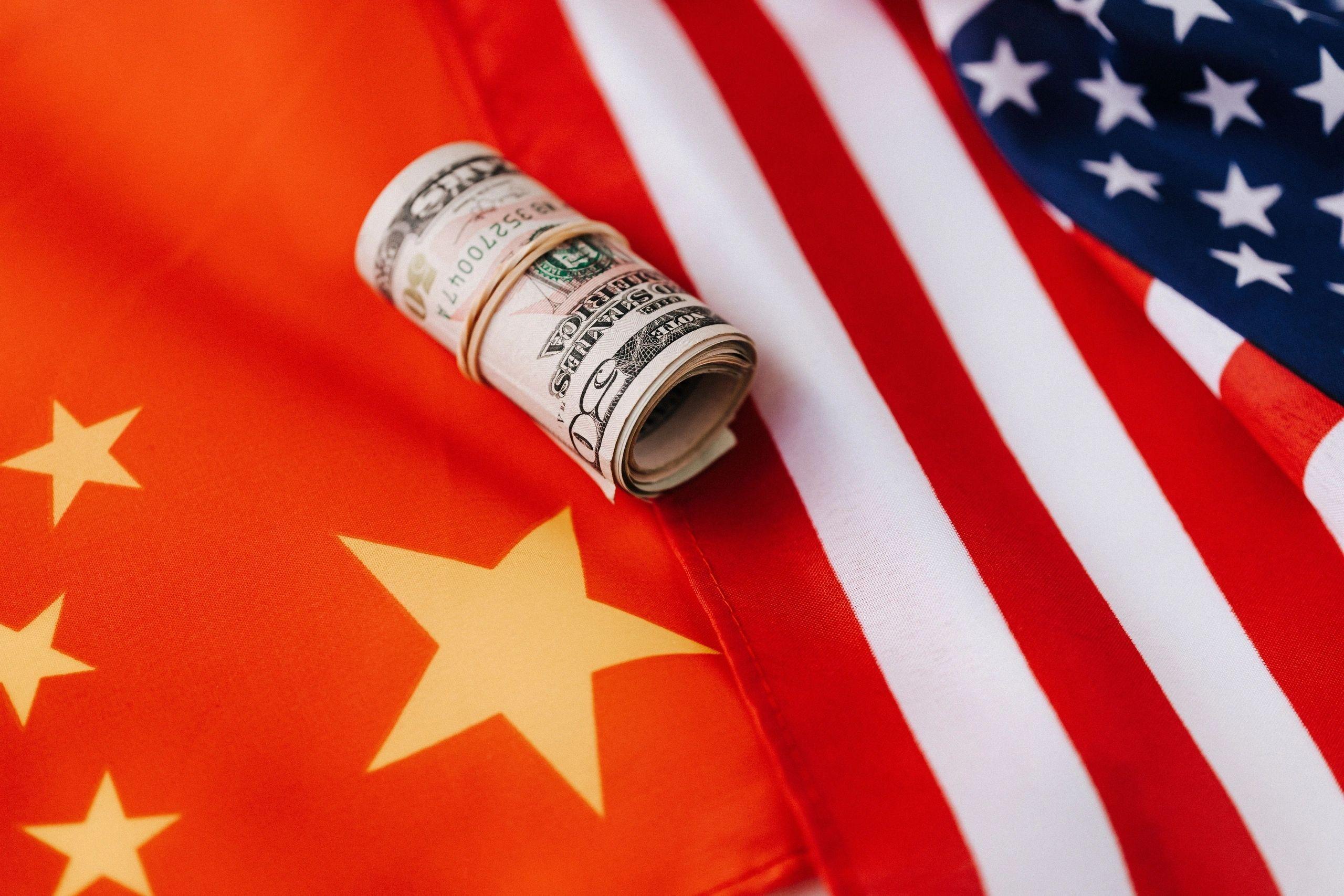
When Donald Trump arrived in Beijing on 14 May 2026 for a two-day summit with Xi Jinping, the choreography was unmistakable. With a banquet in the Great Hall of the People, an exchange of pleasantries about national renewal, and a joint statement describing the talks as “extremely positive”, the meeting had all the markers of a relationship that had moved beyond rivalry management into something more comfortable: co-ownership of the agenda (Dom & Blackburn, 2026). Chinese Foreign Minister Wang Yi that “achieving the great rejuvenation of the Chinese nation and making America great again can totally go hand in hand,” an extraordinary conflation of two nationalist projects that, for all their differences, converged on one point - both are being pursued without meaningful European input (Yi, 2026).
The summit’s formal outcomes were modest, however. No grand bargain emerged. The existing tariff truce remained in place, a framework for bilateral trade and investment boards was sketched out, and further escalation was prevented (Crawley, 2026). By conventional diplomatic metrics, Beijing produced little to write home about. But fixating on the deliverables misses the point. What was significant was the architecture of the summit: questions of technology governance, Taiwan’s status, energy security, and the rules of global trade were discussed bilaterally, between the two powers whose decisions Europe will ultimately have to absorb. Washington and Beijing may be moving toward a more managed form of great-power competition, one that leaves allies and middle powers with shrinking influence over the rules shaping trade, technology, and security.
This article argues that the G2 is not a future scenario to be avoided, it is an operative logic already producing facts on the ground. More troubling, Europe’s response so far (a succession of bilateral visits to Beijing accompanied by large business delegations, rhetorical concern from Brussels, and an absence of coordinated positions on the dossiers that matter) is insufficient.
The G2 as a practice
The term “Group of Two” was first proposed in 2005 by the American economist C. Fred Bergsten, who argued that the United States and China, as the world’s two largest economies and trading nations, should assume joint leadership in managing global economic challenges (Bergsten, 2009). The concept attracted serious commentary: Zbigniew Brzezinski, former US national security advisor, argued in favour of a G2, while former British Foreign Secretary David Miliband suggested one could emerge in the foreseeable future, though he proposed EU integration as a means of creating a G3 to prevent pure bilateral dominance (Junbo, 2009). The Obama administration’s Strategic and Economic Dialogue brought both states closest to institutionalizing the concept, exploring cooperation on global governance, trade, and climate (Bergsten, 2012). But it stopped well short of co-governance and Hillary Clinton stated there is no G2 (Landler, 2011).
Under Trump, the concept has migrated from aspiration to practice. In October and November 2025, Trump referred to his meetings with Xi explicitly as a “G2 summit”, not as analyst shorthand, but as presidential framing (Basu, 2025). The strategic logic behind the American side’s embrace of the format is to weaken the Chinese-Russian axis through selective accommodation, while implying an exclusive bilateral hierarchy that sidelines multilateral forums. For Beijing, the gain is different but equally concrete: the G2 format sidelines precisely the multilateral venues, the WTO, the G20, and the UN, where the EU has accumulated institutional leverage over decades.
What China extracted from the May 2026 summit was not primarily a set of concessions, but the normalization of the format itself. Xi secured American acknowledgement that “stability in China-US relations is a boon to the world”, language that directly counters the EU’s own framing of China as “partner, competitor, and systemic rival” (Sanger, 2026). Treasury Secretary Scott Bessent announced the creation of a “Board of Trade” and a “Board of Investment” to manage bilateral economic disputes and identify areas for commercial cooperation (Crawley, 2026). For European policymakers, those mechanisms are being watched closely, not only for their commercial implications, but for what they signal about the architecture of future US-China relations. An institutionalized bilateral channel on trade is, by definition, a channel in which Europe has no seat.
EU’s concrete exposure
The stakes for Europe are neither abstract nor distant. The EU finds itself in a structurally awkward position: still dependent on the United States for security guarantees, and simultaneously dependent on China for industrial supply chains and critical raw materials. That dual dependence means Europe bears the consequences of decisions made in both Washington and Beijing, while holding leverage over neither. The EU’s trade deficit with China reached a staggering € 360 billion in 2025, driven by Chinese industrial overcapacity that has depressed prices across European manufacturing sectors (Eurostat, 2026). The prospect of expanded US-China bilateral trade frameworks, including the proposed investment boards, could further disadvantage European exporters competing in third markets, as Beijing and Washington carve out preferential commercial arrangements between themselves.
Nowhere is European exposure clearer, or less discussed, than European exposure on Taiwan. The island sat near the top of the Beijing agenda: Beijing pressed Washington to scale back security commitments and revise official US policy toward the island, with Xi describing Taiwan as the most important issue in the bilateral relationship (Greene, 2026). For Europe, the stakes of a Taiwan crisis are not hypothetical. The island produces the advanced semiconductors that European industry depends on. A conflict scenario would disrupt maritime trade routes, trigger financial contagion, and sever supply chains with no short-term European alternative. Yet the EU has no formal position on Taiwan’s security status, no seat in any crisis-management mechanism, and no leverage in US-China negotiations on the issue. The EU’s diplomatic language, references to UNCLOS compliance and stability in the Taiwan Strait, carries no deterrent weight and commits to nothing. More fundamentally, EU member states cannot even agree on common parlance about Taiwan, let alone a common policy (Huang, 2025). That silence risks being read as acquiescence in Beijing.
Technology governance presents a parallel problem. Both sides used the summit to signal that bilateral AI governance consultations and chip trade frameworks would be progressed through direct US-China channels. For Europe, the risk is that bilateral US-China technology governance frameworks create facts on the ground that the EU’s own regulatory agenda, the AI Act, the Chips Act, and investment screening, will have to accommodate rather than shape. A Europe that sets the world’s most ambitious tech regulations but has no seat at the table where the actual governance bargains are struck is a regulator without leverage.
EU’s response and behaviour
Against this backdrop, Europe’s response has taken a striking form: a procession of bilateral visits to Beijing. In the first weeks of 2026 alone, Irish Micheál Martin, Finnish Prime Minister Petteri Orpo, and British Prime Minister Keir Starmer all made the journey to the Chinese capital, each accompanied by substantial business delegations, each returning with commercial announcements (Liboreiro, 2026). French President Emmanuel Macron had visited at the end of 2025. German Chancellor Friedrich Merz followed in late February, leading more than thirty executives from Volkswagen, BMW, Siemens, and Airbus (Zeneli, 2026). Spanish Prime Minister Pedro Sánchez was on his fourth visit in three years. Individually, each trip was presented as pragmatic statecraft, securing market access, attracting investment, and keeping communication channels open. Collectively, they represent something more troubling.
Beijing’s strategy toward Europe is well-documented in EU policy circles: engage member states bilaterally, sideline the Commission, exploit divergences between capitals (Barkin, 2026). Senior Chinese officials have reportedly told European visitors in recent months that they have “little interest in dealing with the Commission anymore” and will focus their energy on EU member states, a posture one French diplomat described as “very worrying” (Barkin, 2026). The bilateral visit wave plays directly into this dynamic. When Merz deliberately avoided using the term “systemic rival” during his Beijing trip, the terminological concession cost him little domestically but communicated to Beijing that the EU’s common position on China was an opening bid, not a floor (Godement, 2026). When Starmer secured £ 4.5 billion in combined export and market access deals and described Britain as seeking a “more sophisticated” relationship, Xi used the press conference to portray China as a reliable alternative to an erratic Washington, a framing that Starmer did not push back on (Honig, 2026; McCarthy, 2026).
The deeper problem is a category error. The visits blend commercial diplomacy, securing deals, market access, bilateral investment, with foreign policy, which involves shaping rules, establishing red lines, and accumulating leverage. Commercial diplomacy is legitimate and necessary. European governments have real economic interests in the Chinese market. But conducting it without coordination and without linking it to EU-level positions on the dossiers where G2 bilateralism directly threatens European interests, actively undermines the prospect of a common foreign policy. As the ECFR noted in its pre-Merz briefing, Beijing’s visits are less about bilateral outcomes and more about freezing the status quo with countries it fears may act more forcefully against China’s export surpluses and strategic overreach (Small, 2026). Europe’s leaders have shown up, one by one, and confirmed that the status quo is safe.
The EU does have a functioning model for coordinated external action under pressure. The Ukraine sanctions, negotiated painfully through the Council, imperfect and slow, but ultimately coherent, demonstrated that member states can align on a common position when the stakes are made explicit. No equivalent mechanism exists for China engagement. There is no requirement for prior coordination at EU level before a head-of-government visit to Beijing, no shared framework for assessing what bilateral commercial concessions are acceptable in light of EU-level positions, and no mechanism for ensuring that the sum of bilateral visits adds up to a coherent signal rather than a competitive undercutting exercise. Beijing is, predictably, taking full advantage.
Conclusion
The May 2026 summit did not create a new world order. It made existing practices more visible. Washington and Beijing are not partners, but they are increasingly capable of managing the international system’s most consequential dossiers, trade architecture, technology governance, Taiwan’s status, and energy security, through a bilateral channel that leaves Europe and others as an observer. The ECFR’s January 2026 polling across ten EU member states found that most no longer consider America as an ally “that shares our interests and values”, and that Europe faces the risk of being squeezed or simply ignored in a world increasingly shaped by others (Ash et al., 2026). That assessment is accurate. But the appropriate response is not the one Europe is currently pursuing.
The minimum threshold of credibility is modest: no head-of-government visit to Beijing without prior coordination at EU Council level on the key dossiers at stake. Not a veto, not a centralization of foreign policy, simply a mechanism to ensure that commercial diplomacy does not inadvertently substitute for, or undermine, a common external position. The EU already applies this logic imperfectly to trade through the Commission mandate and to sanctions through Council unanimity. Extending it to high-level China engagement is institutionally feasible. What is currently lacking is the political will.
The tributary powers of imperial China were not militarily conquered. They simply failed to coordinate and found themselves inside a system whose rules they had no hand in writing. Europe has the economic weight to be a rule-shaper rather than a rule-taker in the order that US-China bilateralism is producing. For now, it is not using it.
Bibliography
Ash, T.G., Krastev, I. and Leonard, M. (2026) How trump is making China great again-and what it means for Europe – european council on foreign relations, ECFR. Available at: https://ecfr.eu/publication/how-trump-is-making-china-great-again-and-what-it-means-for-europe/ (Accessed: 23 May 2026).
Barkin, N. (2026) Watching China in Europe-January 2026, GMFUS. Available at: https://www.gmfus.org/news/watching-china-europe-january-2026 (Accessed: 23 May 2026).
Basu, T. (2025) US–China G2 undermines multipolarity | east asia forum, East Asia Forum. Available at: https://eastasiaforum.org/2025/12/17/us-china-g2-undermines-multipolarity/ (Accessed: 22 May 2026).
Bergsten, C.F. (2009) Two’s company, Foreign Affairs. Available at: https://www.foreignaffairs.com/articles/americas/2009-09-01/twos-company (Accessed: 22 May 2026).
Bergsten, C.F. (2012) ASSESSING THE STRATEGIC AND ECONOMIC DIALOGUE, United States Senate. Available at: https://www.banking.senate.gov/imo/media/doc/BergstenTestimony52312SITF.pdf (Accessed: 22 May 2026).
Crawley, M. (2026) Analysis | trump claims ‘fantastic trade deals’ with China. here’s what we know about what the summit achieved | CBC News, CBCnews. Available at: https://www.cbc.ca/news/world/trump-xi-china-summit-analysis-9.7201162 (Accessed: 22 May 2026).
Dom, E.A.-M. and Blackburn, G. (2026a) China’s progress compatible with making America great again, says Xi, euronews. Available at: https://www.euronews.com/2026/05/14/trump-and-xi-start-high-stakes-bilateral-talks-in-beijing (Accessed: 22 May 2026).
Eurostat (2026) Trade in goods with China in 2025, News articles - Eurostat. Available at: https://ec.europa.eu/eurostat/web/products-eurostat-news/w/ddn-20260410-2 (Accessed: 22 May 2026).
Godement, F. (2026) Europe’s China dilemma: Friedrich Merz’s visit as an illustration, Institut Montaigne. Available at: https://www.institutmontaigne.org/en/expressions/europes-china-dilemma-friedrich-merzs-visit-illustration (Accessed: 23 May 2026).
Greene, C. (2026) Xi warns Trump over Taiwan during high-stakes China summit, Time. Available at: https://time.com/article/2026/05/14/xi-warns-trump-over-taiwan-during-high-stakes-china-summit/ (Accessed: 22 May 2026).
Honig, S. (2026) China in Europe: January 2026, Council on Foreign Relations. Available at: https://www.cfr.org/articles/china-in-europe-january-2026 (Accessed: 23 May 2026).
Huang, E. (2025) The Taiwan test: Why Europe should help deter China – european council on foreign relations, ECFR. Available at: https://ecfr.eu/publication/the-taiwan-test-why-europe-should-help-deter-china (Accessed: 22 May 2026).
Junbo, J. (2009) China says ‘no thanks’ to G-2, Asia Times Online :: China News, China Business News, Taiwan and Hong Kong News and Business. Available at: https://web.archive.org/web/20090531065554/http://www.atimes.com/atimes/China/KE29Ad01.html (Accessed: 22 May 2026).
Landler, M. (2011) U.S. is not trying to contain China, Clinton says, The New York Times. Available at: https://www.nytimes.com/2011/01/15/world/asia/15diplo.html (Accessed: 22 May 2026).
Liboreiro, J. (2026) EU-China relations enter ‘do no harm’ phase as Trump’s shadow looms, euronews. Available at: https://www.euronews.com/my-europe/2026/02/03/eu-china-relations-enter-do-no-harm-phase-as-trumps-shadow-looms (Accessed: 22 May 2026).
McCarthy, S. (2026) As Trump upends alliances, Britain says it needs a ‘more sophisticated’ relationship with China, CNN. Available at: https://edition.cnn.com/2026/01/29/china/starmer-xi-china-uk-intl-hnk (Accessed: 23 May 2026).
Sanger, D.E. (2026) Trump was flattering, xi was resolute. the difference spoke volumes. - The New York Times, The New York Times. Available at: https://www.nytimes.com/2026/05/14/world/asia/trump-xi-jinping-us-china.html (Accessed: 22 May 2026).
Small, A. (2026) Merz in Beijing: A chance to flip China’s ‘stability’ narrative – european council on foreign relations, ECFR. Available at: https://ecfr.eu/article/merz-in-beijing-a-chance-to-flip-chinas-stability-narrative (Accessed: 23 May 2026).
Yi, W. (2026) Briefing by Foreign Minister Wang Yi on China-U.S. Summit and Common Understandings.
Zeneli, V. (2026) Merz in China: Germany between De-Risking and Strategic Partnership, – The Diplomat. Available at: https://thediplomat.com/2026/02/merz-in-china-germany-between-de-risking-and-strategic-partnership/ (Accessed: 23 May 2026).