
The EU’s Soft Power Arm Wrestle in Africa
19 min read · 3,898 words
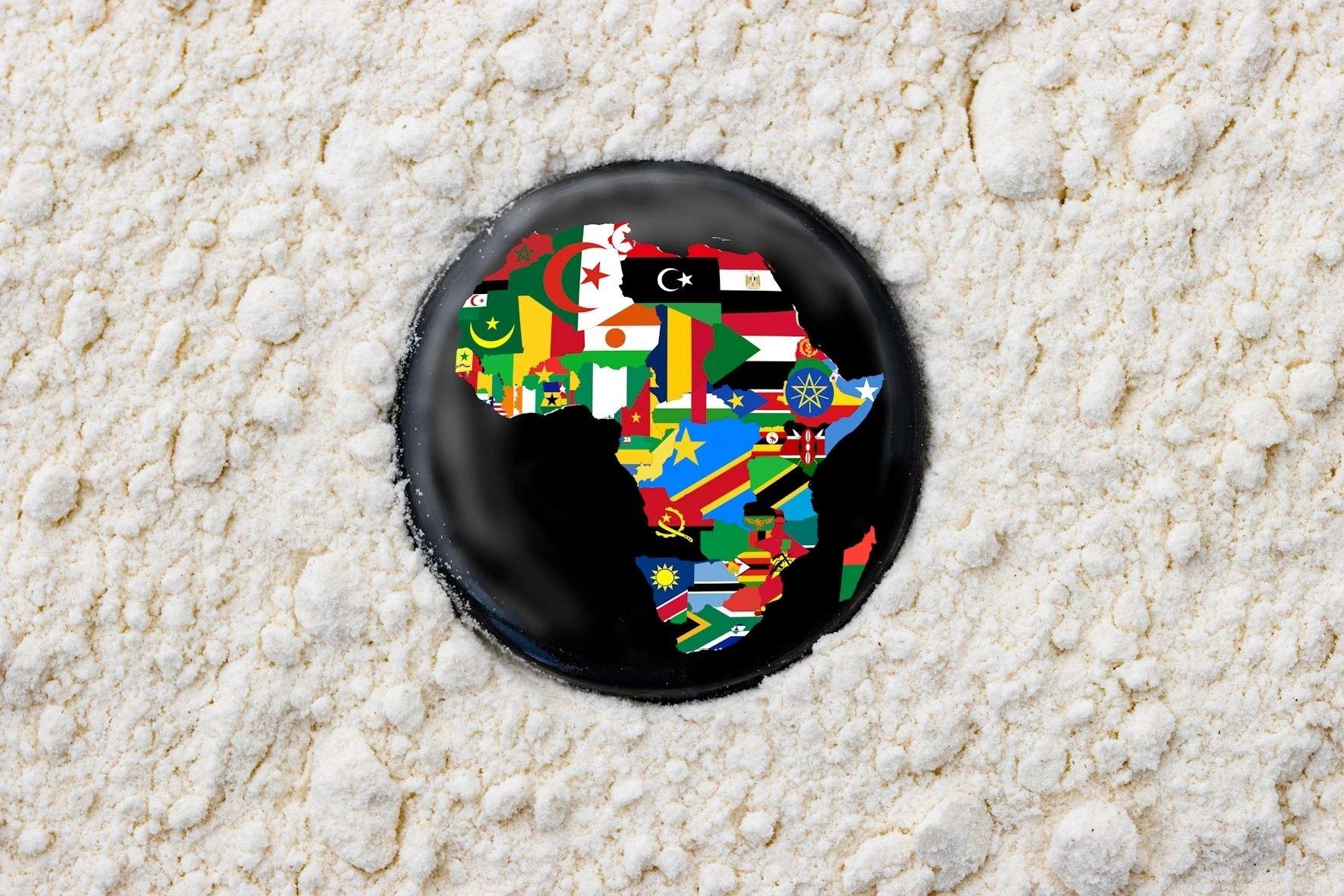
Africa has become a dynamic arena of multipolar soft power engagement. While the EU once occupied a dominant position anchored by values, aid, and trade, it now faces increasingly assertive competitors. China builds fast, Russia influences tactically, and India cultivates trust quietly. In contrast, the EU struggles to match speed, clarity, or narrative control. This article examines how the EU's soft power has weakened, what other actors are doing more effectively, and why credibility, rather than funding or legacy, is now the key to restoring relevance.
The EU’s Soft Power Legacy and Decline
Ever since its postcolonial transition, the EU has itself declared its soft power as championing democratic values, peace, and prosperity, particularly in Africa (Schmidt, 2012). Early on, the European Union swiftly moved in through the Lomé Conventions (1975-2000) and the Cotonou Agreement (2000-2023), both designed on paper to combine aid, trade, and democracy support. While the official framing of the Joint Africa-EU Strategy, or JAES (2007), emphasized “equal partnership”, “African ownership”, and “shared vision”, there exists a widening gap in rhetoric, outputs, and consequently, reception. Historically, Brussels has focused its soft power communication as being heavily entrenched in values such as democracy, the rule of law, and human rights, among others. Yet, African elites have increasingly observed this as conditional and asymmetrical (Floyd, 2019; Schmidt, 2012). More often than not, aid is tied to migration deals, as the 2015 EU-Africa Valletta Summit showed, or with governance benchmarks as detailed in Post-Cotonou clauses. What's more, Afripoli (2023) highlighted how the EU generally was resistant to African industrialization, undermining economic sovereignty for African states, and harming European credibility. While public discourse is very optimistic, partnership masks shortsighted strategic interests, and a cleavage is steadily chipping away at trust in the European Union.
Beyond these initial normative issues, structural changes and evolving frameworks have progressively seen the old continent’s influence diminish. The Cotonou Agreement, which lasted from 2000 to 2023, which contained a binding framework in aid, trade, and political dialogue, was replaced by the Samoa Agreement (2023), itself containing regional protocols and more focus on migration control, climate, and security. In regions marked by colonial imprint, these clauses reflecting EU priorities, ignoring or being detrimental to African ones (EP Think Tank, 2023), have further led to distrust and instability in EU-African relations. Moreover, the Global Gateway project was launched in 2021 (European Commission, 2023), while intended as the European Union’s answer to China’s Belt and Road Initiative (BRI), was very quickly warned by the European Center for Development Policy Management (ECDPM, 2023) of its lack of local consultation, visibility, and ownership, in particular when compared to China’s dealmaking model. An observation echoed by Caritas Europe (2022). Overall, the EU has failed to adapt and develop its tools to match competition, seemingly remaining more inwardly focused in its policy development.
The consequences of these disregards are clear to see. African publics increasingly challenge the EU’s advocated values, highlighting that Brussels cannot lecture Africa on democracy while pushing forward unequal policies. Beyond this, African nations rightly point out how the EU fosters neocolonial stances, often “paternalistic” in tone (DW News, 2024), lacking implementation, and disregarding African priorities as mentioned prior. The EU’s position is highlighted as out of sync with a multipolar Africa, and has seen its dominant position erode rapidly. Adding pressure on the EU’s position, China has exponentially risen as a solid alternative and redefined expectations, even if imperfect, with fewer conditions, faster delivery, and pragmatic respect.
China’s Strategic Moves in Africa
When considering Africa’s partnership with external powers, we have already alluded to China as undoubtedly one of the most influential actors on the increasingly multipolar landscape. While political instability does not play an important role in Chinese foreign direct investment (FDI) choices, the quest to access natural resources, the appeal of a large market size, and agricultural potential represent the major FDI drivers at the beginning of the Sino-African partnership (Sanfilippo, 2010). The 1999 “Going Global” strategy further encouraged Chinese enterprises to expand their operations internationally, helping position China as Africa’s largest bilateral creditor. Following its WTO accession in 2001, China’s rapid economic growth triggered a surge in demand for African exports. Between 2000 and 2022, China committed over $1.34 trillion in loans and grants to low and middle income countries (LMICs), with nearly $800 billion issued in the Belt Road Initiative (BRI)’s first decade alone (Custer et al., 2023). Launched in 2013, the BRI aims at making “systemic investments into Africa’s infrastructure” in a wide array of sectors ranging from roads, ports, railways, to telecom systems, contributing to bridging the African infrastructure financing gap estimated at $68-108 billion annually (AfDB, 2018).
However, while studies show that Chinese FDI brought a positive impact to African GDP growth and infrastructure development (e.g., Doku et al., 2017; Mandon and Woldemichael, 2022), they have also raised numerous concerns over the debt sustainability and the opacity of loan agreements. One of the most contentious issues is the “debt trap diplomacy” that describes the BRI as a “geopolitical and diplomatic offensive” (Godement and Kratz, 2015). While this myth of “predatory economics” to expropriate African economic assets (Rex Tillerson, 2017) has been widely discredited (L. Jones and S. Hameiri, 2020), it remains true that many African countries such as Angola, Kenya, Zambia, Cameroon, and Nigeria (World Bank International Debt Statistics, 2023) are under serious debt pressure.
Criticisms also highlight the negative environmental and social impact of BRI projects (Opitz-Stapleton et al, 2021), reporting cases in which the project contributed to exacerbating inequality or sidelining local communities (Calabrese et al, 2021b). Recognizing these challenges, Chinese President Xi Jinping announced a strategic pivot in 2021 towards “small and beautiful” projects for more sustainable and socially beneficial investments with clearer developmental returns (Li, 2023). This shift reflects both a maturing BRI model and the reduced lending appetite of Chinese banks amid slower domestic growth.
Unlike the Western approach, China’s growing soft power not only rises through economic engagement but also by increasing its diplomatic presence. This strategy, referred to by Xi as “soft power with Chinese characteristics”, relies heavily on education, cultural exchanges, and state media partnerships. One of the most visible tools of China’s cultural diplomacy in Africa is the Confucius Institute (CI) network. By late 2024, Africa hosted over 60 CIs, primarily based at universities. Through generous scholarships and promises of business collaboration, CIs frame Chinese language learning as a gateway to future opportunity (Huaxia, 2023). Whether this should be seen as a form of cultural colonization by subtly normalizing the norms and values of the CCP (Hubbert, 2019) or a “win-win” solution for African students (Wen Xu et al, 2022) remains a debatable subject.
Beyond language, China’s leadership training programs have expanded substantially. Starting from 2016, Beijing increased its annual scholarships for African officials from 200 to 1,000, intensifying its influence on the next generation of African leadership. While officially framed as “sharing development experiences”, such exchanges often emphasize cadre training, state-party integration, and propaganda techniques. Ethiopia is often cited as a case of policy convergence, with some Chinese scholars referring to it as the “China of Africa” for its adoption of aspects of the Chinese governance system. Still, these political exchanges raise concerns about democratic accountability, civil liberties, and political pluralism.
Other Contenders: Russia, India, and the United States
While the EU and China dominate coverage, the two are not alone in competing in Africa’s arena of influence. Russia, India, and the United States all deploy forms of soft power, be it diplomatic, developmental, or cultural, that increasingly attract African states seeking agency in a multipolar world. Hence, it further shifts the geopolitical fabric of the African continent.
Russia is the first major outsider diving into the power struggle. Its strategy is heavily dependent on anti-Western narrative and security combined with influence, although it faces very clear limits on the scope of its involvement. For the first pillar of Russian action, IAR-GWU (2023) documents Russia’s soft power strategy using media outlets and tools such as RT, Sputnik, and the cultural house to promote anticolonial messaging. Between 100 to 200 media consultants across Africa are actively managing narrative engagement (Institute for Global Engagement, 2024), with Putin very actively framing Russia as “the partner that never colonized Africa” (Le Monde, 2024). As to influence, Russia expanded scholarships and training for African officials extensively post Ukraine (Conflict Field Notes, 2023). While on security, the Wagner group is used as a foreign policy tool under “plausible deniability” (France24, 2023) in order to allow the Kremlin to operate under limited international scrutiny. However, limits compared to other nations are clear. Russia exempts sustained education or media development, straying away from institutions, and making their tactics primarily effective in more historically fragile regimes such as Mali, the Central African Republic (CAR), or Sudan.
India on the other hand opts for more cultural soft power and the leverage of development programs. As noted by King & Venkatachalam (2024), Bollywood, yoga, Hindi, and diaspora ties shape Africa’s perception of India, much like how American counterparts influence Europe as a continent. India has carefully curated its ties with African nations, with Mauritius, Kenya, and South Africa being key examples of long-term Indian presence and entrenched trust. Through the Pan-African e-Network and other initiatives, India trained thousands of African bureaucrats in Information and Communication Technology (ICT), law, and agriculture (MEA India, 2012; RIS, 2012). This resonates with India’s COVID diplomacy, with vaccine distribution and telemedicine to help countries develop with perceived Indian dominance (Journal of Asian and African Studies, 2024). Through these levers, India has successfully cultivated a nonthreatening and South-South aligned (King & Venkatachalam, 2024) soft power projection.
Finally, the USA showcases the final major approach of influential actors in Africa. At its tactics’ center lie a security heavy presence, public diplomacy, but also a narrative fragility strongly resembling the EU’s. In regards to security, the USC Center for Public Diplomacy (2023) declares that AFRICOM operates in over 20 countries, yet its policies combine both humanitarian and security goals. Compared to many approaches seen beforehand, the USA often distinguishes its presence as a “military first, development second” (CSIS, 2023). On the flip side, the White House attempts to implement public diplomacy operations, with USAID or Fulbright being among the most prominent, though they are respected but inconsistently supported due to domestic shifts (CSIS, 2023), as the Trump era cuts demonstrate exactly to what extent the USA policy may shift rapidly. This inconsistency is often damaging and weakens the long term credibility of the US in Africa (France24, 2023). In sum, global South analysts often frame U.S engagement as “reactive”, overly moralistic (post Iraq), and often momentary.
Accumulated, these actors exploit the EU’s blind spots, notably speed, familiarity, or non interventionist framing. Together, they reshape Africa’s partnership, with soft power policies needing to be increasingly more tailored, fluent, and consistent to outcompete other influences.
Djibouti: A Case Study in Military-Commercial Hybrid Strategy
China’s decision to establish a permanent naval presence in Djibouti marks a fundamental shift in its engagement with the Middle East and North Africa (MENA).
As several MENA countries are increasingly becoming more anti-Western and nationalist, China’s state led economic model and its relative lack of historical entanglements with the region represent advantages leveraged by Beijing to deepen its relationship and to position itself as a viable alternative to the Western powers. China’s military engagement in the Horn of Africa started in 2008 with an anti-piracy operation in the Gulf of Aden. These missions offered the People’s Liberation Army Navy (PLAN) the opportunity to test long range maritime capabilities far from home. In 2015, a series of high profile evacuations from Libya and Yemen revealed China’s lack of logistical and military readiness in crisis prone regions. In this context, Djibouti became the first model of this military-commercial hybrid engagement (BESA, 2018). Inaugurated in 2017, the military base is officially referred to by Beijing as “logistical and support facilities”, aimed at bolstering its peacekeeping, humanitarian, and evacuation missions. The base represents a new “pearl” in the so-called String of Pearls strategy, a network of ports and airfields across the Indian Ocean region designed to enhance China’s influence in vital maritime corridors, along with Sittwe (Myanmar), Gwadar (Pakistan), and Hambantota (Sri Lanka). Unlike other African countries, Djibouti’s value for China is not resource based, but geographic (Alam et al., 2020). Built only a few miles away from the Doraleh Multipurpose Port (also Chinese built), it gives the PLAN strategic oversight of one of the busiest shipping lanes in the world, where around 20 percent of global trade is estimated to pass every year.
Over the years, the intensification of their partnership has also been driven by Djibouti’s ambitious development plan, which aims to transform the country into a hub for the regional and continental economy (Vision Djibouti, 2035). By using Chinese financing, Djibouti rapidly addressed critical infrastructure gaps. Major projects financed by China include the construction of the Ethiopia-Djibouti railway (2013, $492 million) and the Ethiopia-Djibouti water pipeline (2013, $322 million). While these investments have substantially expanded Djibouti’s economic capacity, it has also increased the country’s debt distress, with China holding an estimated 77 percent of the country’s external debt (AXIOS, 2019).
Although Djibouti also hosts other military facilities (e.g., France, India, Japan, U.S.), China’s approach is unique in integrating commercial control, infrastructure development, and military presence, blurring the lines between development aid and strategic influence (SIPRI, 2019). Despite Beijing's insistence that the Djibouti base does not violate its longstanding principle of noninterference, this assertion is increasingly difficult to maintain. Instead, it should be interpreted more as a flexible policy tool, adjusted to suit China’s growing global interests.
The EU’s Credibility Challenge: Comparative Weakness and Strategic Reset
After carefully unraveling the various elements that comprise the African arena, what can we determine? Well, it is important to reiterate that the EU’s problem today is one of credibility, not capacity, and its relevance is highly strategic, not symbolic. Rather than treating Africa as a passive periphery, the European Union should treat its neighbouring continent as a highly competitive marketplace of influence. In saying so, comparative lenses are crucial to reveal structural weaknesses and ways forward.
First, EU initiatives (NDCI, Gateway) are too vague and acronym heavy. While they may seem on a great scale, China’s BRI is far more concrete, public, popular, and easily actionable. We have previously illustrated how China committed $1.34 trillion over 20 years to LMCs (Custer et al, 2023), with the BRI alone representing $800 billion of the total sum. By comparison, the EU’s Global Gateway announced allegedly €300 billion but with little public visibility (Caritas Europe, 2022). The EU is more focused on communication and dialogue platforms, resulting in little output, while China builds infrastructure and relations rapidly. As such, capacity-building projects such as initiatives found in the Erasmus+ programs should be further developed, and focused on concrete output, while treating African nations as equal partners.
Second, Brussels focuses too heavily on assiduously cautious operations, rendering them slow and tame while other actors act with speed and flexibility. As mentioned, the Ethiopia-Djibouti Railway was built in 42 months with Chinese support. India’s Pan-African e-Network reached 47 countries by 2015 (MEA India, 2012; RIS, 2012). On the flipside, the NDICI Global Europe rollout was fragmented and delayed ( ECDPM, 2025). Even Russia showed a very dynamic deployment of Wagner in CAR, Mali, within weeks of diplomatic breakdowns. While American projects are subject to domestic cycles, they rapidly implement designed policies (CSIS, 2023). The EU here is a victim of its model, with a decentralized authority arguably having greater chances at co-implementing swiftly through EU delegations and African representatives, fast tracking delivery.
Third, the EU needs to radically change its narrative discourse, specifically attempting to step away as far as possible from any possible perception that may be linked to its colonial past. African complaints on paternalistic EU messaging turn from problematic to threatening when competitors actively use this flaw to gain an advantage. Schmidt (2012) highlighted how the EU was perceived as conditional pressure, while Russia frames itself as an anticolonialist (Le Monde, 2024), India pushes on South-South solidarity ( King & Venkatachalam, 2024). To best counter this, the EU should consider repositioning itself, funding African policy voices, journalists, and public diplomacy networks beyond its already present attempts. The EU could very easily push for similar policies while depicting itself as a co-narrator, rather than a hierarchical figure.
Finally, the EU critically lacks internal alignment, particularly compared to China, Russia, and India, which continue to speak with one stable voice through the years. To showcase this divide, Germany wishes to focus on climate and vocational training (ISS Africa, 2025), Italy concerns itself with migration and energy (ISPI, 2024), while France persists in its Françafique hangover (Africa Practice, 2024). While the EU institutions push for green and rights initiatives, they are undercut by member-state deals. A careful understanding of which countries perform most in their policies, and coordinating a common European strategic doctrine for Africa, is a key factor to ensure that the EU can level the playing field for its presence.
Past the major comparative weaknesses, the EU needs to pivot its focus that reflects its strengths. Azimuth (2023) highlights paths forward, such as infrastructure building, regulatory infrastructure, such as digital rights, tax harmonization, amongst others, to sectors where it holds leadership, and the ability to transfer its knowledge practically. Furthermore, the EU should double down on its project policies, but also explore further investment in African systems (Floyd, 2019; Afripoli, 2023), both of which may be leveraged for both European and African interests. Echoing previous suggestions, localizing development expertise further could go a long way in ensuring the relevancy of European policies and in matching desired output with clear projections.
Overall, the EU’s soft power has seen a necessity to change the foundations on which it bases its ability to perform. In this new era, Africa, in all of its multipolar capacity, has an unprecedented ability to choose its partners and even play several sides at once. As such, it expects its opposites to listen and deliver, not just design and lecture. The EU holds a very diverse, strong, and clear ability to stabilise a possible world leadership position, the likes of which would inevitably need to pass through an ironclad European-African partnership.
Conclusion:
The EU's credibility crisis in Africa is not a passing problem; it is structural. In a geopolitical landscape defined by options, not dependencies, African states no longer passively receive influence; they select it. The EU's failure to adapt, on visibility, agility, narrative fluency, and coherence, has left space for actors with sharper messages and faster tools. Yet the EU still holds unique advantages: regulatory expertise, long term institutionalism, and democratic partnership models. To remain relevant, it must stop managing its legacy and start earning its future through co-creation, delivery, and humility. In Africa, soft power no longer flows from rhetoric but rather from relevance.
Bibliography
AfDB. (2018) Bridging Africa’s Infrastructure Gap: Policy Options for Financing and Accelerating Infrastructure Development. [online] African Development Bank Group. Available at: [Accessed 23 Jun. 2025].
Afripoli. (2023) Navigating partnerships: Analysing EU-Africa industrial policy relations. [online] Afripoli. Available at: [Accessed 23 Jun. 2025].
Africa Practice. (2024) The future of French soft power in Africa. [online] Available at: [Accessed 23 Jun. 2025].
All Azimuth. (2023) The Functioning of Normative Power in the Logic of the EU and China. [online] Available at: [Accessed 23 Jun. 2025].
AU. (2022) Agenda 2063: The Africa We Want. [online] African Union. Available at: https://au.int/en/agenda2063/overview [Accessed 23 Jun. 2025].
BESA Center. (2018) China's Military Base in Djibouti. [online] Available at: [Accessed 23 Jun. 2025].
Calabrese, L., Huang, Z. and Chen, Y. (2021b) Mapping Risks and Uncertainties of Chinese Development Finance. [online] ODI. Available at: https://odi.org/en/publications/ [Accessed 23 Jun. 2025].
Caritas Europe. (2022) The Three Problems with the Global Gateway. [online] Available at: [Accessed 23 Jun. 2025].
Conflict Field Notes. (2023) Education: Russia’s Soft Power in Africa. [online] Available at: [Accessed 23 Jun. 2025].
Council of the European Union. (2023) Partnership Agreement (Post-Cotonou / Samoa). [online] Available at: [Accessed 23 Jun. 2025].
CSIS. (2023) A Smarter U.S. Approach to Africa. [online] Center for Strategic and International Studies. Available at: [Accessed 23 Jun. 2025].
Custer, S., Tierney, M., Sethi, T. and Linnemayr, S. (2023) Tracking Chinese Development Finance: AidData 3.1. [online] AidData. Available at: [Accessed 23 Jun. 2025].
DW News. (2024) Africa in focus: How 'equal' is Africa's relationship with the EU? [video online] Available at: [Accessed 23 Jun. 2025].
ECDPM. (2023) Trouble in Paradise? The EU–Africa Partnership in a Geopolitical Context. Briefing Note 172. [online] Available at: [Accessed 23 Jun. 2025].
ECDPM. (2025) The NDICI–Global Europe Mid-Term Review in Sub-Saharan Africa: Lessons for the Future. [online] Available at: [Accessed 23 Jun. 2025].
European Commission. (2022) Africa–EU Partnership: A Joint Vision for 2030. [online] Available at: [Accessed 23 Jun. 2025].
European Parliament. (2023) After Cotonou: A new era for EU–ACP relations. [Briefing] Available at: [Accessed 23 Jun. 2025].
Floyd, T. (2019) ‘Strengthening EU Soft Power by Better Engaging with Africa’, in Khorana, S. and Garcia, M. (eds.) External Perceptions of the EU as a Trade and Investment Power. European University Institute. Available at: [Accessed 23 Jun. 2025].
France24. (2023) Trump eyes gutting US diplomacy in Africa, cutting soft power. [online] Available at: [Accessed 23 Jun. 2025].
Hubbert, J. (2019) China in Africa: Confucius Institutes and Soft Power. [online] Available at: https://www.tandfonline.com/doi/abs/10.1080/01419870.2018.1483889 [Accessed 23 Jun. 2025].
Institute for Global Engagement. (2024) Security, Soft Power and Regime Support: Russian Influence in Africa. [online] Available at: [Accessed 23 Jun. 2025].
IAR-GWU. (2023) Russian Soft Power Influence in Africa. [online] Institute for African Research, George Washington University. Available at: [Accessed 23 Jun. 2025].
ISPI. (2024) To Be a Game Changer in EU–Africa Relations, the Global Gateway Needs More Meaningful Engagement. [online] Italian Institute for International Political Studies. Available at: [Accessed 23 Jun. 2025].
ISS Africa. (2025) Redefining Power: Germany, Africa and the EU. [online] Institute for Security Studies. Available at: [Accessed 23 Jun. 2025].
King, K. and Venkatachalam, M. (2024) ‘India’s Development Diplomacy and Soft Power in Africa’, Africa Journal of International Affairs, 27(1). [online] Available at: [Accessed 23 Jun. 2025].
Le Monde. (2024) Putin builds on Prigozhin’s foundations in Africa. [online] Available at: [Accessed 23 Jun. 2025].
Ministry of External Affairs (MEA), Government of India (2012) Pan African e‑Network Project. New Delhi: MEA. Available at: (Accessed: 24 June 2025).
Research and Information System for Developing Countries (RIS) (2012) India and Africa: Development Partnership. New Delhi: RIS. Available at: (Accessed: 24 June 2025).
Sanfilippo, M. (2010) ‘Chinese FDI to Africa: What is the nexus with foreign economic cooperation?’ African Development Review, 22(S1), pp. 599–614.
Schmidt, S. (2012) ‘Soft Power or Neo-Colonialist Power? African Perceptions of the European Union’, Review of European Studies, 4(3), pp. 90–102. [online] Available at: [Accessed 23 Jun. 2025].
SIPRI. (2019) The Foreign Military Presence in the Horn of Africa Region. [Policy Brief] Available at: [Accessed 23 Jun. 2025].
USC Center on Public Diplomacy. (2023) AFRICOM and U.S. Public Diplomacy in Africa. [online] Available at: [Accessed 23 Jun. 2025].
World Bank. (2023) International Debt Statistics: Africa. [online] The World Bank. Available at: [Accessed 23 Jun. 2025].