
Climate Perspectives on the ECB’s Unconventional Monetary Policy
By Jas Levell
9 min read · 1,744 words
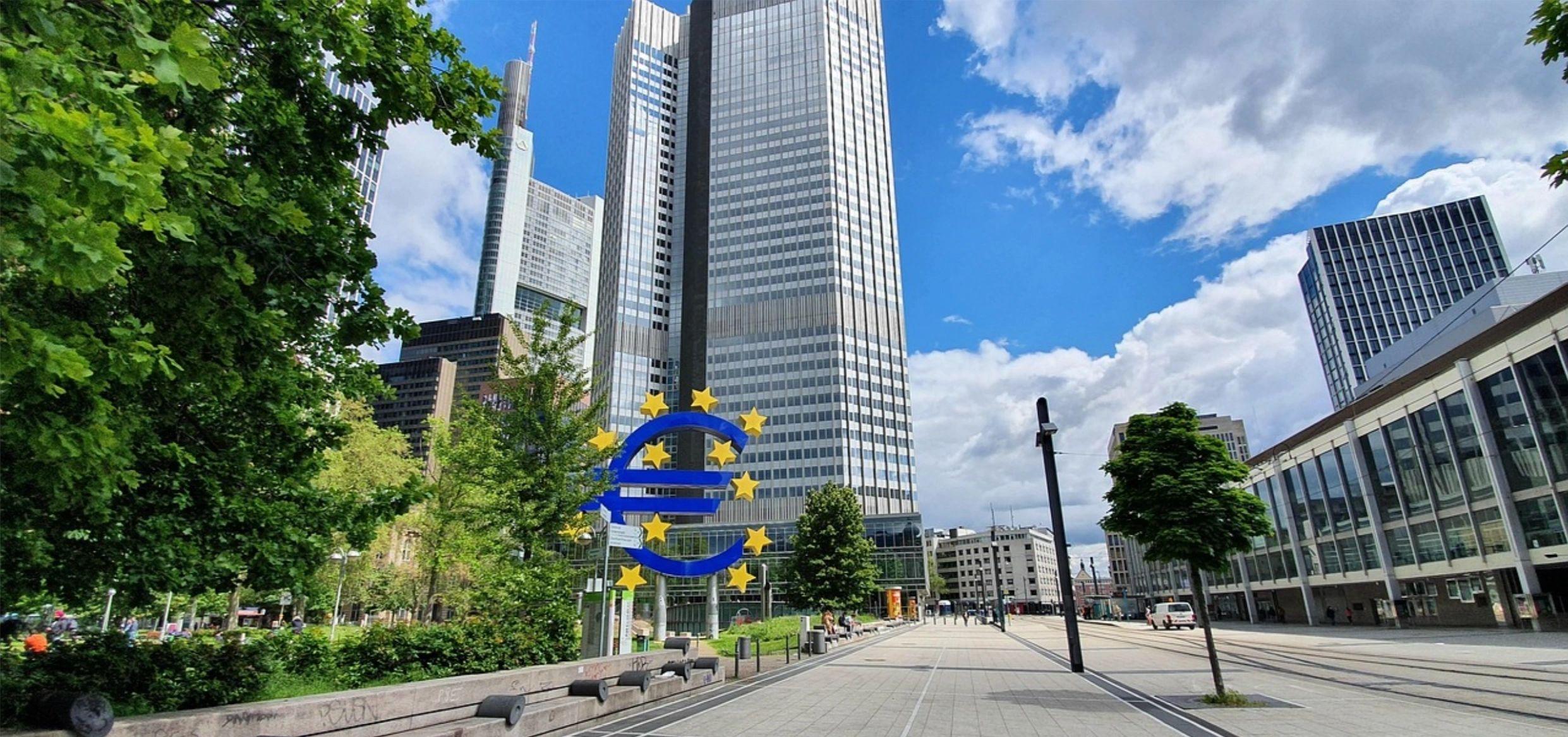
One of the key principles of the ECB’s Asset Purchase Programmes, in particular the corporate sector purchase programme (CSPP) and pandemic emergency purchase programme (PEPP), introduced in 2016 and 2021 respectively, was that of market neutrality. In theory, the concept meant the ECB should not favour any particular industry when buying corporate bonds as part of its unconventional monetary policy scheme. Given that the focus of these quantitative easing programmes was on inflation targeting and smoothing frictions in credit markets, it would make sense that the central bank’s balance sheet shouldn’t become tilted towards any specific sector. However, research has shown that the ECB’s bond portfolio was long overweight towards brown sectors, and far from market-neutral. This article aims to introduce what the key drivers of this were in the context of CSPP, and how the shifting stance of unconventional monetary policy and climate-focused initiatives might impact the green bonds market in 2026.
The ‘brown tilt’ of the ECB’s corporate sector purchases
A key finding from Papoutsi et al. highlighted that in reality, implementation of market neutrality corresponded to buying in proportion to bonds outstanding, rather than overall market share. Because of the structure of bond markets (broadly determined by which firms issue bonds, at what volumes), the ECB’s portfolio was, like the markets, heavily tilted towards brown sectors.
Focussing on CSPP, while services made up around 60% of the market portfolio and less than 10% of emissions based on year-end 2017 data, the sector accounted for less than 25% of the ECB’s holdings. Compare this to dirty manufacturing and utilities, which (combined) made up less than 20% of the market portfolio but almost 50% of emissions, and around 35% of the ECB’s holdings. For more detailed discussion and graphic representations, see Papoutsi et al. “How unconventional is green monetary policy?” 2022.
Clearly then, the ECB’s portfolio did not track overall market composition as the concept of market neutrality might have suggested.
Implementation of market neutrality is not neutral in its economic effect, because capital markets are already tilted. The main driver of this bias towards high-emission sectors is who issues bonds: industries characterized by large holdings of fixed assets, which can serve as collateral, generally have higher issuance volumes. CSPP eligibility criteria, however, didn’t have a distorting effect on the ECB portfolio. CSPP eligible shares had a 90% correlation with bond market shares, underscoring how, ultimately, buying in proportion to the bond market results in a portfolio biased towards the sectors with more tangible assets, which tend to be more carbon-intensive. Furthermore, the ECB’s bias based on the market value of public companies had a 96% correlation with the bias in sectoral emission shares, that is, the existing bias in capital markets towards carbon-intensive industries.
Demand from unconventional monetary policy as a potential driver for green bonds?
In 2017, the ECB was a key buyer in primary markets, making up between 20-40% of demand across non-financial corporate bonds. Since then, the ECB has largely slowed its purchase programmes (APP reinvestments were discontinued in July 2023, PEPP reinvestments ended in 2024), so while the ECB’s stock of holdings is still important, new demand from the central bank in primary markets has a much smaller effect than when it was an active buyer.
In efficient markets, with the ‘right’ carbon price set by policymakers, the true social cost of emissions is reflected in every economic decision. (For example, dirty manufacturing becomes more expensive, while cleaner alternatives become relatively cheaper.) In this world, price incentives align with climate goals, and the central bank does not need to introduce ‘climate tilts’ in its monetary policy, as these factors are already priced in. Then, the central bank should continue to focus on its core mandates of targeting low and stable inflation, and smoothing financial frictions.
As we have seen though, in reality, the negative production and consumption externalities generated by carbon-intensive sectors are not fully internalized, meaning emissions are (much) higher than where equilibrium analysis would determine their ‘socially optimal’ level to be. While other policy incentives, such as the EuGB Standards and various ESG taxonomies and frameworks (which have not been without significant criticism. See, for example, Lam and Wurgler), are beginning to have positive effects on sustainability-linked issuances, the bond market remains brown-tilted compared to the overall market structure (Kooroshy et al.; ECB.a). In this case, market neutrality as a target for asset purchase programmes remains biased towards higher-emission sectors, which would support the case for ‘green QE’ as an additional instrument to be factored into unconventional monetary policy.
A broader look at sustainable financing in primary markets and the role of the ECB
When it comes to pricing and public purchasing, Broeders et al. identify a carbon premium (i.e. higher yields for carbon-intensive firms) in European corporate bonds, statistically significant and increasing since early 2020, reflecting investors’ heightened awareness of their exposure to climate transition risk. They find that a one standard deviation increase in log-carbon Scope 1 and 2 emissions results in a 23 basis point (bp) increase in the average corporate bond spread (a sizeable effect, given the average option-adjusted yield spread per bond in the sample is 150 bps).
In the market for sustainability-linked bonds (SLBs), the concept of ‘greenium’ (green premium) considers the lower yields paid by sustainable issuers relative to comparable peers. For complete definition and guidelines around SLBs, see https://www.icmagroup.org/sustainable-finance/the-principles-guidelines-and-handbooks/sustainability-linked-bond-principles-slbp/. The idea is that investors are willing to pay a premium on the price of a green bond compared to that of a similar conventional bond, accepting lower returns in order to hold ESG-compliant assets. So, new issuances of green-labelled bonds should price inside of their ‘traditional’ peers. However, given the relative infancy of the market for SLBs, and lack of clear-cut definitions (greenwashing remains a prevalent concern among investors and market participants more broadly), empirical evidence in favour of greeniums has so far been mixed. A full-sample study over 2016-2023 by Pietsch and Salakhova identified a small but significant greenium on European green bonds, averaging around -3.7 bps. This is encouraging evidence for policies aimed at making green bonds cheaper to issue than conventional bonds. However, this estimated average greenium has proved volatile, reflective of wider changing economic conditions, and suggesting it is not determined solely by the characteristics of the issuer and specific bond.
Considering green bond issuance dynamics through the framework of unconventional monetary policy, combined with the ECB’s shifting tilt towards green financing (ECB.b), one particularly interesting study by Renghini et al. found that ECB purchases generate a greenium of -6 bps. According to the same study, the ECB’s corporate purchases stimulated the issuance of €0.818 bn in eligible green bonds over six consecutive quarters.
Over 2021 to 2024, the ECB’s own corporate bond portfolio saw a 38% reduction in its weighted average carbon intensity (WACI). However, the central bank’s efforts to gear investments towards more climate-positive performers only accounted for around 26% of the reduction, with most of the decline being attributable to issuers’ own emissions reductions (Giles).
Even with the winding-down of its corporate sector purchases, there is evidence to support the argument that the ECB and the incorporation of ‘green QE’ into its unconventional monetary policy can still have meaningful impact. As is often the case though, it seems the most effective way to really promote greener bond issuances will be with a coherent combination of policies reducing both the financial and fiscal frictions that issuers face.
An outlook for 2026
Despite a decline in European sustainable bond issuance in 2025 ($464 bn vs $476 bn in 2024 and the peak of $535 bn in 2021), green bond issuance is expected to pick up over 2026, particularly driven by rising energy security and infrastructure needs. However, it seems this will largely be driven by SSAs (sovereigns, supranationals and agencies), rather than the corporate issuers who have been the focus of this article when considering the scope of unconventional monetary policy and the ECB’s APPs (Rahill et al.; SEB; Leung).
Ultimately, the question of the impact of ‘green QE’ seems to be closely tied to the ongoing, broader debates on the transmission mechanisms of monetary policy within the Eurosystem, and their effectiveness. While the empirical evidence to date suggests that unconventional monetary policy can have a small, but significant, impact on sustainable bond issuance and pricing, the wider capital markets environment and regulatory frameworks must also support alignment with climate targets, from the perspectives of both investors and issuers.
Sources
Broeders, Dirk, Marleen de Jonge, and David Rijsbergen. “European Corporate Bonds Reflect Heightened Climate Transition Risk Pricing”. SUERF Policy Brief No. 878, May 2024, https://www.suerf.org/wp/wp-content/uploads/2024/05/SUERF-Policy-Brief-878_Broeders-et-al.pdf ECB.a. “Analytical Indicators on Carbon Emissions and Transition Risk.” European Central Bank, 2024, https://www.ecb.europa.eu/stats/all-key-statistics/horizontal-indicators/sustainability-indicators/data/html/ecb.climate_indicators_carbon_emissions.en.html
ECB.b. “Climate-Related Financial Disclosures of the Eurosystem’s Corporate Sector Holdings for Monetary Policy Purposes”. European Central Bank, Mar. 2023, https://www.ecb.europa.eu/pub/pdf/other/ecb.climate_related_financial_disclosures_eurosystem_corporate_sector_holdings_monetary_policy_purposes2023~9eae8df8d9.en.pdf
European Commission. “The European Green Bond Standard – Supporting the Transition.” European Commission: Finance, https://finance.ec.europa.eu/sustainable-finance/tools-and-standards/european-green-bond-standard-supporting-transition_en
European Environment Agency. “Green bonds in Europe”. 1 Jul. 2025, https://www.eea.europa.eu/en/analysis/indicators/green-bonds-8th-eap
Giles, Martin. “ECB Slashes Corporate Portfolio Carbon Intensity by 38%” The Financial Analyst, 18 Jun. 2025, https://thefinancialanalyst.net/2025/06/18/ecb-slashes-corporate-portfolio-carbon-intensity-by-38/
ICMA. “Sustainability-Linked Bond Principles (SLBP)”. 2024, https://www.icmagroup.org/sustainable-finance/the-principles-guidelines-and-handbooks/sustainability-linked-bond-principles-slbp/
Kooroshy, Jaakko, Allen Meng, Nitish Ramkumar, and Naman Sharma. “Tracing carbon-intensive debt”. LSEG, Mar. 2024, https://www.lseg.com/content/dam/lseg/en_us/documents/sustainability/tracing-carbon-intensive-debt-lseg.pdf Lam, Pauline, and Jeffrey Wurgler. “Green Bonds: New Label, Same Projects.” NBER, Sep. 2024, https://www.nber.org/papers/w32960
Leung, Kevin. “First Year of European Green Bond Standard Sets Stage for Growth.” Institute for Energy Economics and Financial Analysis (IEEFA), 9 Feb. 2026, https://ieefa.org/articles/first-year-european-green-bond-standard-sets-stage-growth
Papoutsi, Melina, Monika Piazzesi, and Martin Schneider. “How Unconventional Is Green Monetary Policy?” 30 Mar. 2022, https://ec.europa.eu/economy_finance/arc2022/documents/papers/how_unconventional_is_green_monetary_policy.pdf
Poggensee, Jannis. “The Pricing of Sustainability-Linked Bonds on the Primary and Secondary Bond Markets.” Journal of Asset Management, vol. 26, 2025, https://doi.org/10.1057/s41260-024-00390-z
Rahill, Timothy, Benjamin Schroeder, Nadège Tillier, and Coco Zhang. “Sustainable Debt Outlook 2026: Higher issuance with changing compositions”. ING, 5 Feb. 2026, https://think.ing.com/articles/sustainable-debt-outlook-2026-higher-issuance-with-changing-compositions/ Renghini, Matteo, Ignacio Requejo, and Marco Cucculelli. “Can QE Speed Up the Green Transition? Evidence on the Role of the European Corporate Bond Purchase Programme”. European Financial Management Association (EFMA) Annual Meeting (Lisbon) paper, 2024, https://www.efmaefm.org/0EFMAMEETINGS/EFMA%20ANNUAL%20MEETINGS/2024-Lisbon/papers/EFMA_2024_Can_QE_speed_up_the_green_transition_Complete_paper.pdf
SEB. “Europe’s Infrastructure Drive Set to Boost Green Bond Issuance in 2026.” SEB Research, 19 Jan. 2026, https://sebgroup.com/press/news/2026/europes-infrastructure-drive-set-to-boost-green-bond-issuance-in-2026
Wigglesworth, Robin. “Green bonds are bunkum”. FT, 16 Sep. 2024, https://www.ft.com/content/4796ae28-4dda-4ae4-9d37-525374864e7