
Climate Policy and Democratic Engagement: a struggling but vital dependency
The Climate Mandate Under Pressure
15 min read · 3,031 words
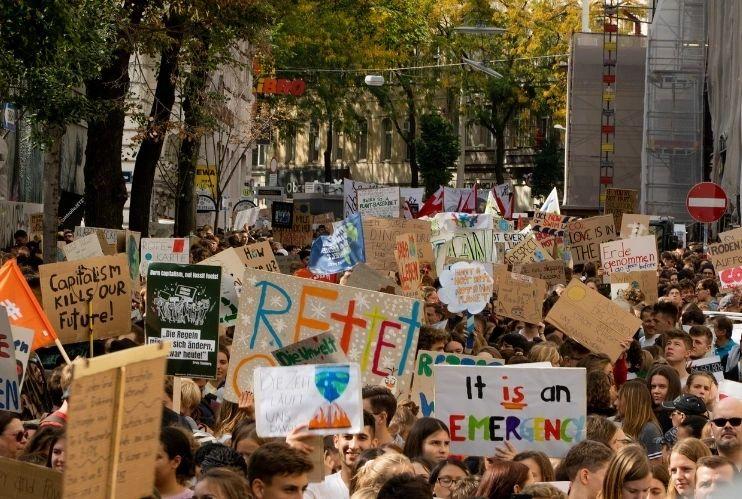
In our 21st century, it is undeniable that democratic support is at the centre of furthering any cause. Yet, the climate change fight has repeatedly struggled to keep up with expectations and landmarks supported by the general public. Climate concern remains high, with 81% of EU citizens seeing climate change as a serious problem (Eurobarometer, 2023) and 78% supporting climate neutrality goals (EIB, 2024). However, the climate inertia referred to above clearly marks a gap between democratic will and action. The citizens of the EU are not easily duped, and according to Bruegel (2025), only 35% of them believe the government will follow through on its promises. The EU’s retreat on the Green Deal Legislation (The Guardian, 2025) is very concerning proof that the citizens’ worries are very well founded. Therefore, the problem isn’t a lack of public concern, but rather the trust and legitimacy deficit stemming from the actions, or lack of, from all parties from all political directions throughout the EU.
As such, the EU’s recent parliamentary elections serve as a timely moment to reassess the climate mandate. The latter didn’t collapse electorally, but it fragmented. Green and liberal groups lost ground while right-wing parties gained major footholds (ECFR, 2024). These latest parties linked Green policy to elite control and cost of living pressure (Carbon Brief, 2024; Clean Energy Wire, 2024), a worrisome but truthful reality that climate concern is all too often dissociated from socioeconomic concerns and realities. Symbolically, the elections revealed a new era of political energy, where climate concern persists, but the coalition for action is fractured. Hence, this essay examines why this shift took place, and what democratic leadership must now aspire to to not only persist, but thrive.
Now more than ever, the green transition and climate initiatives globally hinge on democratic legitimacy, not solely targets and hollow timelines. The support for climate action must follow an introspection and be earned through trust, fairness, inclusion, and action; no longer may we rely purely on ideological concern. We will, as such, dive into how legitimacy is being strained, from technocratic alienation to identity based resistance and what must change for climate ambition to remain politically viable.
Beyond Consent: What’s Undermining Climate Legitimacy?
Considering EU citizens’ widespread public support of green policies, recentering democratic practice is crucial to foster legitimacy in policymaking. However, the technocratic gap undermines full democratic participation, neglecting social challenges like distributive justice, while populism and skepticism undermine the creation of an efficient and inclusive policymaking process by highlighting the weaknesses of the system without offering alternatives in response to the European green public sentiment. All these factors debilitate democratic responsiveness to climate issues while eroding environmental policy legitimacy, resulting in new obstacles to the creation of a functioning EU legislative framework.
The last decades have seen the growing loss of popularity of technocratic institutions, criticizing depoliticization in many fields ranging from monetary policy to AI. In this regard, environmental policy is not an exception, particularly when it comes to the intersection between social structures and sectoral knowledge. While science based evidence is pivotal to creating functioning and ambitious frameworks (Evans and Duwe, 2021), the climate policymaking process struggles to find a balance between environmental activism and technical committees. In a union that fosters diverse perspectives and opens up dialogue in an effort to grant a better future, it is important to inquire whether an expert driven approach doesn’t excessively tame the transformative potential of policymaking, reducing overall democratic gains (Buzogány, Parks, & Torney, 2025). Furthermore, EU policymaking is subject to disagreements due to its democratic nature: as inherently political topics are discussed, a technocratic system will not only appear as distant, it will cover up the political nuances of climate issues, overlooking social, emotional and democratic needs of the parties involved (Machin and Smith, 2014). By recognizing the different perspectives brought on by experts and citizens alike, it will be possible to build a system that values both and avoids the backlash produced by depoliticization.
To protect climate policy legitimacy is crucial to recognize the social and political impacts of different propositions: carbon pricing and energy transitions have been more demanding for some demographics than others, crystallizing the need for a fairer green transition. Distributive injustice tends to worsen already widening inequality between social groups, and, like any structural change, the climate policy revolution has created winners and losers, making many voters wonder if this process has only benefited wealthy entrepreneurs to the detriment of local actors and lower classes. Data from German voters highlights how, across parties, citizens are concerned with climate change but demand climate neutrality to be achieved via a socially just route (Germanwatch, 2024) since the tendency of associating environmentalism with elitism has severely impacted its climate policy legitimacy overall.
In particular, populist parties frame climate concerns as a top down moral imposition and preach deregulation for industries. Populist groups obtain support from penalized groups, such as losers of the decarbonization transition, by emphasizing the tradeoff between environmental protection and economic development and fuelling distrust towards environmental taxes. Moreover, a persistent pattern of skepticism towards climate change has been registered among populist parties in Western Europe: by politicizing “wedge issues”, they perpetrate their manichean narrative featuring a corrupt elite, in this case, urban climate activists and climate scientists, and the pure common people (GREEN Bocconi University, 2025).
Because of the populist climate agenda, or lack of thereof, many are currently concerned about the possibility of a “green backsliding”, as the European Commission advocates for a simplified regulatory framework and the PPE, which is the political home of 15 of the 27 commissioners, increasingly sides with far right groups when voting on bills concerning anti greenwashing, deforestation and pollution (Guardian, 2025).
Setting aside populist disbelief towards human caused climate change, on a continental level, growing skepticism is associated with denial, but this interpretation is often incorrect. Data shows that widespread skepticism towards carbon pricing diminishes significantly with targeted compensation, particularly payments to low income households (Germanwatch, 2024), once again reinforcing the need for a just transition. It appears evident that the object of distrust is not green policies but their implementation when they do not protect all social actors involved, starting with those more vulnerable to the consequences of the changes to be implemented. To put it in the words of Beata Javorcik, Chief Economist at the European Bank for Reconstruction and Development (EBRD): "If you do not take care of people who lose as a result of the shock, there will be a backlash" (Reuters, 2024).
However, it is not just about compensation for marginalized groups. Nine out of ten Europeans feel the need for climate action, but many consider adaptation measures more relevant than mitigation (Bruegel, 2025). This shift in mindset between 2020 and 2024 is further exacerbated by the absence of trust in political institutions: nearly half of those who do not trust the German Parliament emphasize adaptation over mitigation (Bruegel, 2025). This sentiment testifies to how important it is to enforce legitimacy in environmental policymaking: the negative outlook amongst many stems from a perceived distance from politics and distrust in the ability of governments to deliver concrete change.
The 2024 EU Elections – A Turning Point or Missed Opportunity?
Rather than a step back from the climate, the 2024 EU elections are better interpreted as a mark of a legitimacy crisis in climate politics. Voters do care, but they must believe in the decision makers to take their support and transform it into clear, respectful, and inclusive action. Following the elections, support must now be rebuilt under new conditions. We previously stated that the climate concern was very much alive in the EU, with statistics surpassing the 70% mark in support (Eurobarometer, 2023; EIB, 2024). Yet Le Monde (2024) reported that the green and liberal parties lost vote shares even among the pro climate voters, partly due to weak credibility.
Adding salt to injury, this legitimacy fallacy was identified and targeted by right wing parties. Parties like Identity & Democracy and the ECR used climate costs to position elites as disconnected from “ordinary people” (Tandfonline, 2025). Their messaging is clear: climate rules equate to price hikes, job loss, and loss of national sovereignty (Guardian, 2024). While right or far right parties clearly weaponized, with success, these climate concerns to gain seats in the elections (Reuters, 2025), it is far more concerning that the European Environment Agency (EEA, 2024) “Leave no one behind: Addressing environmental inequalities” report clearly confirms that implemented environmental policies are disproportionately disadvantageous to low income households if sometimes not outright repressive.
In this context, centrist and green parties overrelied on the “sacrifice framing”, asking voters to pay more or consume less (Green Alliance, 2025) despite the already strenuous times for low income households as inflation, debt, and other socioeconomic concerns ravage Europe as a whole. Sandrine Rousseau’s recent declaration on BFM TV that she “doesn’t give about farmers’ profitability” despite it being an extremely vulnerable group that has seen record suicide rates in France in the last 20 years (France 24, 2025) embodies this perfectly. As Pew (2024) observed, this approach, with its lack of narrative innovation and demanding tone, created a backlash in constituencies already facing economic precarity. To truly harness the climate change momentum, parties need to emphasize co benefits for all, health, jobs, resilience, and sustainable development (Time, 2024; PNAS, 2025).
In hindsight, despite the rise of new veto players, support for action remains, but it’s conditional. Climate mandate must be desirable beyond a 2050 perspective, beyond an ideological high ground. It must meet new tests of inclusion, fairness, and trust in delivery (Financial Times, 2024; Bruegel, 2025). Elitism in climate is insufficient, participatory legitimacy is now central ( OECD, 2024), and while elections didn’t kill the Green Deal, they do force us to rethink our approach to climate governance.
Rethinking the Climate Agenda: What Comes Next
How should the new environmental agenda be structured? As previously discussed, a democratic participatory approach needs to be at the heart of the EU climate strategy. It is pivotal to go beyond technicalities and adopt policy solutions that include and foster economic equity, social justice, and local voices. By avoiding what could be perceived as centralized enforcement, policymaking can be promoted as a collective effort in which the human component is treated as a solution, not a problem (Guardian, 2024). Economic equity can be ensured through the collaboration of workers and other social actors (ETUC, 2018), procedural justice can profit from polycentric environmental governance by embedding adaptability and fairness into climate action (De Ridder et al., 2023) and cohesion policy can nurture regional mitigation and adaptation strategies that are not only efficient but also supported by local communities (European Parliament, 2024), allowing for a steady progress to tackle long term climate neutrality goals.
The new climate agenda should be built upon innovative public involvement through citizens’ assemblies, participatory budgeting and national climate dialogues. Through discussions with experts in the field, who would be included as consultants in the process, and the recruitment of a diverse social body, citizens will develop a critical attitude towards climate issues in civic assemblies, enriching the discussion with innovative perspectives. These conferences are endorsed by the European Climate Foundation due to a lack of conditioning from political parties and misinformation (OECD, 2024). Allowing citizens to directly engage in budgetary decisions eases distrust in democratic institutions (European Parliament, 2024), helps counter populist climate narratives and educates on resource prioritization. The goal is to make the budgetary process democratic and transparent by including a collaborative approach in the definition of public infrastructures and services. By prioritizing public consciousness and support, participatory budgeting has the capability of restoring democratic engagement and trust in European institutions to achieve tangible results (ECNL, 2024). Climate projects funded through public budgeting in France, Spain and Portugal have successfully carried on advocacy and awareness activities in their communities as well as regional research, exploring localized and ingenious solutions to short term and long term needs. PB contributions have, overall, the potential to have a positive global impact rooted in regional practice (Cabannes, 2021). In the same spirit, supporting national long term climate strategies (LTCSs) is crucial to foster both regional mitigation and adaptation while forwarding the harmonization of long term climate action across the EU. For example, The Climate Recon 2050 project, through workshops and dialogue with experts, comparatively analyzed some national LTCSs, finding opportunities for collaboration and innovation in target regions. These types of outreach activities are an excellent opportunity to bring on the objectives of climate cohesion policies while tailoring action to local needs (Climate Recon 2050, 2022).
Lastly, the communication strategy has been a weakness of the current climate agenda. Positioning environmental action as a crisis response activates psychological defence mechanisms that, in the moment, keep the public attentive and participative, but in the long run are not as effective. Environmental psychologists assert that portraying climate measures as connected to positive visions like health and wellbeing is much more successful (Moberg, 2024). Because of this, it is imperative to merge “nightmare scenario” communication, which has worked well in some instances, for example, in the “Friday for Future” campaign, with a complementary positive approach, suited for reaching a broader range of people, not just the already convinced. A blended approach would allow activists to tailor communication strategies for different demographics and diverse information pathways, as while content permeated by negative emotions works well on social media, focusing on personal legacy (D + C, 2025) is more effective to set goals and ambitions for the future. Including both promotion and prevention oriented wording is more functional and comprehensive (CRED, 2009) in policymaking, permitting communication of subtler differences and details in projects and action plans. According to Per Espen Stoknes, engaging the public on climate issues requires strategies that overcome psychological resistance. In his book “What We Think About When We Try Not To Think About Global Warming”, he suggests five behavioural tactics to do that: leverage social influence on peers, use supportive reinforcement to balance threatening messages with positive solutions, make green choices the easy default, provide clear signals through tangible progress metrics and use inclusive storytelling to align climate action with diverse identities and values (Per Espen Stoknes, 2015). Stoknes’s approach could prove invaluable to enhance democratic support of green policies, moving beyond the traditional narratives while promoting inclusion and participation.
No Climate Transition Without Democratic Transition
Nowadays, European policymaking is no longer immune to democratic skepticism and, as the 2024 elections showed, climate policy fails to be an exception to this trend. Looking at the 2040 Agenda, it appears very clear that if the European Union wants to lead globally, it must first rebuild consent at home through approaches that foster climate policy authority and trust in national and European institutions. First, institutions must acknowledge that, to provide functioning legislative frameworks, purpose and compensation must be matched by legitimacy, inclusion and communication. This can only be done by engaging with public demands, sharing power with different stakeholders and establishing credibility on a European level. When we think about the strengths of our democratic system, institutions should not exclusively come to mind, but the concept of social capital, defined as the amount of participatory potential, civic orientation, and trust in others available to cities, states, or nations (Putnam 1993, 2000). Only by leveraging this social capital and promoting democratic engagement, the EU will be able to develop and implement an efficient and innovative climate strategy, maintaining its pioneering role in advancing green policies worldwide.
Bibliography
Bruegel. (2025). Europeans still want climate action, but don't trust governments to deliver. Available at: (Accessed: 22 July 2025).
Buzogány, A., Parks, L., & Torney, D. (2025). Democracy and the European Green Deal. Journal of European Integration, 47(2), 135–154. Available at: (Accessed: 22 July 2025).
Bocconi University. (2024). Green governance: Perspectives on the European Green Deal. Available at: (Accessed: 22 July 2025).
D+C. (2024). Media, scientists, and activists are all trying to make people understand the urgent need for climate action. Available at: (Accessed: 22 July 2025).
ECNL. (2024). Participatory budgeting tool: Build trust in institutions and consider the needs of communities. Available at: (Accessed: 22 July 2025).
Ecologic Institute. (2021). Climate governance in Europe: The role of national advisory bodies. Available at: (Accessed: 22 July 2025).
ETUC. (2018). Final FUPA guide. Available at: (Accessed: 22 July 2025).
European Climate Pact. (2024). How to talk to people about climate action. Available at: (Accessed: 22 July 2025).
European Investment Bank. (2024). 94% of Europeans support measures to adapt to climate change, according to EIB survey. Available at: (Accessed: 22 July 2025).
European Parliament. (2024). Participatory budgeting: A pathway to inclusive and transparent governance Available at:
(Accessed: 22 July 2025).
European Parliament. (2024). Study on climate governance in the EU: Implications for future policy. Available at: https://www.europarl.europa.eu/RegData/etudes/STUD/2024/752459/IPOL_STU(2024)752459_
EN.pdf (Accessed: 22 July 2025).
Germanwatch. (2024). Voters demand climate remains high on the political agenda. Available at: (Accessed: 22 July 2025).
Klimakultur. (2024). CSLN Handbook on climate governance and civic participation. Available at: (Accessed: 22 July 2025).
NOAA. (2024). Climate change communication: A guide for scientists and communicators. Available at: (Accessed: 22 July 2025).
Reuters. (2024). Green scepticism greater in the EU than its neighbors, EBRD finds. Available at: (Accessed: 22 July 2025).
ScienceDirect. (2023). Impact of climate governance on public perception in Europe. Available at: (Accessed: 22 July 2025).
SAGE Journals. (2021). Climate action and governance: A study on policy changes and public engagement. Available at: (Accessed: 22 July 2025).
Per Espen Stoknes (2015). “What We Think About When We Try Not To Think About Global Warming.”
The Guardian. (2024). Greenlash: Why the climate crisis is fueling backlash across Europe. Available at: (Accessed: 22 July 2025).
The Guardian. (2025). EU rollback on environmental policy and the deregulation of the European Green Deal. Available at: (Accessed: 22 July 2025).
The Guardian. (2025). Analysis of the EU 2040 target proposal: A shift in climate policy. Available at: (Accessed: 22 July 2025).
Westminster Research. (2024). Environmental technocracy: Ecological deliberation or embodied disagreement? Available at: (Accessed: 22 July 2025).
OECD. (2024). Reshaping climate governance through democratic innovation. Available at: (Accessed: 22 July 2025).