
Enlargement in the EU: implications for European identity
13 min read · 2,655 words
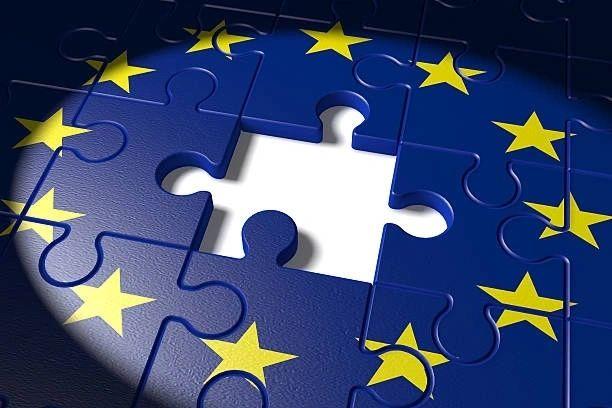
In its early stages, the European Union was composed of 6 members: Belgium, France, Germany, Italy, Luxembourg and the Netherlands. Over time, other countries progressively joined the founding ones, leading to a total of 27 countries in the current European Union (Directorate-General for Enlargement and Eastern Neighbourhood, 2019).
However, enlargement is far from being a resolved issue since it is back on the EU's agenda, today talking about the “Balkan Enlargement”. The EU has indeed recently recognized Albania, Bosnia and Herzegovina, Georgia, Moldova, Montenegro, North Macedonia, Serbia, and Ukraine as candidate countries for EU membership (Directorate-General for Enlargement and Eastern Neighbourhood, 2025). This accession process has already taken place in the past with the Central and Eastern European (CEE) countries' enlargement. Then, the question of the effect of enlargement on European identity naturally arises again. Identity is indeed an association of cultural habits, values, territory characteristics, feeling of belonging, and institutions. Although the EU is a union of distinct countries, it still shares common elements, such as a common history and cultural legacy which constitute the basis to what we call a “European identity”. Enlargement to a broader panel of countries, which sometimes share less common grounds, can make us ask ourselves: to what extent does the inclusion of new members challenge the foundations of European Identity, or better put, how does the inclusion of new members trigger a mutual reflexion of cultural and social habitus?
Conditionality
Before exploring deeper the issue of identity, it is essential to first understand how the EU addresses the question of legitimacy, in other terms, the criteria used to choose which country may join.
The formal conditions any country must meet before entering the EU are listed in the Copenhagen criteria, a core set of requirements established in 1993 at the Copenhagen European Council. It consists in a set of political, economic and legislative criteria defined in order to make sure that these candidates can function effectively as EU members. The process starts with the country’s application, and then the EU assesses the readiness for it to be a candidate. After that follows the negotiation process, in which the candidate discusses with the EU members about the adoption of current EU laws and policies, as becoming a EU member requires commitment to its rules and responsibilities. When negotiations are concluded with all conditions met, an accession treaty is drafted, and then ratified, by all EU members, officially granting membership (Enlargement and Eastern Neighbourhood, 2012).
In the light of this process, being part of the EU represents a huge scale transformation, where countries must as a consequence adapt to European standards. Indeed, the need for stable institutions guaranteeing democracy, and being capable of coping with competition and market forces within the EU for example, may be difficult to reach based on the country’s background. In the case of Balkan’s integration, the EU is proposing a “Stabilization and Association Process” to help those countries stabilize politically and economically for them to be able to eventually join the EU (European Union, n.d.). But still, are formal rules and principles sufficient to ensure that candidate countries successfully integrate into the EU?
Enlargement: a compromise for European Identity ?
We briefly went over the complex concept of European Identity in previous articles, such as “Lost and Found: The Core of European Values” (De Abreu Afonso, 2025), but let us take a slightly deeper look at it now to have a better understanding of the addressed issue. Even though multiple interpretations and definitions of European Identity exist, it can broadly be understood as a set of political and cultural elements that characterize the European community. It is crucial that those elements are shared. Mach emphasizes this concept in his paper: European identity is not natural or given, but it is socially constructed, and exists because people recognize themselves as part of Europe (Mach, 2011). It is defined through boundaries, distinguishing who is European and who is not, and arising from that: what defines “us”? What characterizes European Identity?
The link between enlargement and identity becomes clearer now. Enlargement does not blur identity, but it reveals that European identity is inherently fluid, contested, and politically constructed. As a consequence, the addition of new members forces a redefinition of the boundaries of European identity, and it requires the incorporation of new cultural elements into the European framework.
Furthermore, European membership is not just about formal rules, which we cited in the previous section, but also includes a set of implicit rules that are not “written on paper” (Dimitrova, 2020). These implicit rules consist of practices, norms, habits and behaviors that shape how institutions work in practice. They can take the form of political and legacy practices, power networks or administrative habits. To have a more concrete view of informal practices, let us consider public administration. The EU rules formally require merit-based recruitment and transparency. However, in practice, these rules are not always strictly applied, and in some countries government positions in ministries may still be distributed through personal connections or party networks.
Dimitrova (2020) points out the distinction between formal and informal rules for the process of institutionalization to happen. In simpler terms, if formal rules are not followed by a change in informal practices or are contradicted by them, then those rules remain “empty shells” and there is no real change induced by EU membership in those countries. In a sense, these informal rules are also part of what constitutes European identity.
Taking CEE countries’ enlargement as example, it required large adjustments to the EU values and institutions, and adoption of informal rule has not been straightforward in every CEE country. Actually, from Mach’s point of view, Eastern European’s concept of belonging to the EU is still rather unclear, particularly when political behavior challenges core European values (Mach, 2011). The outcome of enlargement was heterogeneous in CEE countries, showing positive results for some of them, and less for others. For instance, the enlargement experience of Estonia, Latvia, and Lithuania, also called the Baltic states, is generally considered successful. Even though the Baltic states faced challenges during their transformation period, they asserted their legitimacy in the EU as proactive members and influential actors (Palkova, 2024). Their accession to the EU is often considered as a “return to Europe” after their Soviet past. On the other hand, Hungary is often cited as a case of democratic backsliding. Since 2011, Hungary’s Fidesz party, led by Viktor Orbán, eliminated constitutional checks on executive power, curtailed the judiciary, limited media pluralism, and modified the electoral system to increase their power (Meyerrose, 2023). All these actions directly contradict EU core values. Recently, a recording of Peter Szijjarto’s (Victor Orbàn’s foreign affairs minister) conversation with Sergueï Lavrov (Russian homologue) has recently been published by the media, in which the former Hungarian minister shared sensitive information discussed during EU meetings (Hassan, , 2026). This event puts back on the table the question of identity and enlargement by strengthening the feeling that the eastern European countries are still divided from the west by a cultural gap.
EU’s response
We saw that enlargement was not necessarily “blurring” European identity, but rather reshaping it, its success depending on whether joining countries adopt both formal and informal EU norms. We can now ask ourselves what the EU can do in order to maximize enlargement’s probability of success, and how it should respond when the country is evidently backsliding.
Earlier in the article we mentioned the necessity of having both formal and informal practices in line with the EU’s acquis in order for the enlargement to be successful. Thus, we will consider the actual parameters that influence those practices, and how the EU can implement effective measures.
During accession, CEE countries complied with the EU’s rules because of strong incentives: membership benefits versus costs of non-compliance. In other terms, the possibility of joining the EU with all the advantages included by membership against sanctions. This means that enlargement works when the incentives are credible (Schimmelfennig, Sedelmeier, 2019). In order to maintain credibility, the EU should ensure that candidate countries believe that membership is attainable if accession conditions are met (Nikolaos Tzifakis, 2024). A weak or inconsistent conditionality reduces its effectiveness and diminishes enlargement’s probability of success. Furthermore, the reinforcement of credibility could also be achieved through the EU's behavior towards candidates. Acting as mentors in this path to joining, rather than a distant institution only imposing restrictions is a proof of a real interest towards the potential new members. This is exactly what can be observed, as mentioned above, with the “Stabilization and Association Process” implemented by the EU for Balkans enlargement, which provides support to the Balkans candidates for them to more easily meet the acquis.
On the other side, there is also the risk, as we pointed out earlier, of backsliding. Indeed, after joining, the EU’s pressure to adopt the rules disappears, and as a consequence there is some risk that the new member will not act according to the criteria in the long run. This is precisely what we talked about in Hungary’s case. The EU’s capacity to promote and protect democracy and governance effectiveness weakens once countries become members (Börzel, Dimitrova and Schimmelfennig, 2017). There obviously already exist some instruments to tackle risks of breach or persistent breaches, such as the Article 7 of the Treaty of European Union, which includes a set of preventive and sanction mechanisms (European Council, 2024). It gives the EU, among others, the power to suspend certain rights of a member state. However, according to Sedelmeier (2013) and Van Hüllen and Börzel (2015), the sanctions are insufficiently effective, which is an explanation for the backsliding tendency. As a consequence, it is crucial that credibility gets further strengthened in the post-accession period too (Börzel, Dimitrova and Schimmelfennig, 2017). More recent research also defends the idea that a successful enlargement wave requires to go beyond formal institutional reforms and must address deeper societal and political practices, in line with our previous analysis (Rabinovych, 2024).
In her article, M. Rabinovych proposes a series of reforms and measures that could be implemented, such as adding a deeper monitoring on effectiveness of conditionality and going beyond formal conditionality which is only focused on the legislative level. Additionally, addressing informal institutions directly would allow the EU to challenge informal power networks. Indeed, although certain members such as Poland, Hungary, Romania or Bulgaria formally committed to EU membership rules, the behaviour of decision-makers demonstrated a reduced dedication to adopting these requirements in practice, characterized by corruption and clientelism (Anghel, 2022).
Another measure to focus on would be to make conditionality continuous in order to continue monitoring even after membership is obtained. In other terms, the EU should continue monitoring after membership is granted and should link benefits like funds and integration to compliance. Additionally, not all countries are organized the same way and they have different structures and systems. Creating tailor-made policies to each country could enable the EU to make conditionality effective.
On the other hand, the voices and beliefs of the population matter, and are likely a key factor in achieving informal change. After all, informal practices live and evolve through the individuals themselves. Therefore, the EU should not neglect this dimension and should put greater focus on deepening a shared sense of culture. The EU already developed creative initiatives aimed at celebrating the richness of the union’s cultural diversity, taking the form of events and projects such as the European Heritage Awards ceremony or the European music festivals, among others (Culture and Creativity, 2019). However, stronger promotion of these events could be achieved, especially in candidate and newly acceding countries. Strengthening the promotion of such events, as well as facilitating travels to the joining countries in the years following accession and making them host celebrations could be an effective way to foster integration of the new member states among the European community.
Conclusion and thoughts
The findings that follow in this article are clear. No, enlargement is not inherently a threat to European Identity. Instead, it transforms it and redefines it. Enlargement actually can even be beneficial to the EU, as shown by the case of the Baltic states, which are now proactive strong EU members. Further, Balkan enlargement, enlargement policy’s new big step, can be considered as a way to strengthen and consolidate the European Union power, in a world today torn by global conflicts and dominated by few major world powers. However, enlargement results can also be rather mixed or inconclusive if not used thoroughly, as we observed in Hungary’s case. Then it is essential that the EU reforms its enlargement strategy in order to make the best use of this tool. It must address both formal and informal dimensions of integration and strengthen its capacity to ensure compliance. As we said: enlargement will only be successful if countries fully EU’s rules both in theory and in practice.
Citations
Enlargement and Eastern Neighbourhood. (2019). History of enlargement: From 6 to 27 members. [online] Available at: .
Dimitrova, A. (2020). The new member states of the EU in the aftermath of enlargement: Do new European rules remain empty shells? JOURNAL OF EUROPEAN PUBLIC POLICY, [online] 17(1), pp.137–148. Available at: [Accessed 11 Feb. 2026].
European Parliament (2018). Enlargement: how do countries join the EU? [online] Topics | European Parliament. Available at:
Schimmelfennig, F. (2001). The Community Trap: Liberal Norms, Rhetorical Action, and the Eastern Enlargement of the European Union. International Organization, 55(1), pp.47–80.
Enlargement and Eastern Neighbourhood. (2012). Conditions for membership. [online] Available at: [Accessed 9 Mar. 2026].
Börzel, T.A., Dimitrova, A. and Schimmelfennig, F. (2017). European Union enlargement and integration capacity: concepts, findings, and policy implications. Journal of European Public Policy, 24(2), pp.157–176. doi:.
Directorate-General for Enlargement and Eastern Neighbourhood (2025). Candidate countries and potential candidates. [online] Enlargement and Eastern Neighbourhood. Available at: .
European Union (n.d.). EU enlargement - European Union. [online] european-union.europa.eu. Available at: .
Mach, Z. (2011). The Identity of Europeans after the EU Enlargement. Cambridge Core, [online] pp.107–112. Available at: [Accessed 4 Apr. 2026].
Hassan, G. (2026). Des échanges téléphoniques éclairent la ‘collusion’ de la Hongrie avec Moscou. [online] Courrier international. Available at: [Accessed 4 Apr. 2026].
Meyerrose, A.M. (2023). Building strong executives and weak institutions: How European integration contributes to democratic backsliding. The Review of International Organizations, 19. doi:.
Nikolaos Tzifakis (2024). EU Enlargement Policy. [online] The 7Ds for Sustainability Extended. Available at: [Accessed 13 Apr. 2026].
Maryna Rabinovych (2024). EU Enlargement Policy Goes East: Historical and Comparative Takes on the EU’s Rule of Law Conditionality vis-à-vis Ukraine. Hague journal on the rule of law, 16. doi:.
European Council (2024). Mechanisms to uphold the rule of law. [online] Available at: [Accessed 14 Apr. 2026].
Palkova, A. (2024). The Baltic States twenty years after the EU’s ‘Big Bang’ enlargement: political, economic, and social transformations. Lituanistika, [online] 24(2024). doi:.
Sedelmeier, U. (2013). Anchoring Democracy from Above? The European Union and Democratic Backsliding in Hungary and Romania after Accession. JCMS: Journal of Common Market Studies, 52(1), pp.105–121. doi:.
Vera van Hüllen and Börzel, T.A. (2015). Why Being Democratic Is Just Not Enough: The EU’s Governance Transfer. Palgrave Macmillan UK eBooks, pp.227–241. doi:.
Anghel, V. (2022). Rule of Law or Rule of Norms? Informal Institutions and their Role for Democratic Resilience Working Paper. [online] doi:.
Schimmelfennig, F. and Sedelmeier, U. (2019). The Europeanization of Eastern Europe: the external incentives model revisited. Journal of European Public Policy, 27(6), pp.1–20. doi:.
Culture and Creativity. (2019). Events. [online] Available at: [Accessed 4 May 2026].
De Abreu Afonso, M.B. (2025). Lost and Found: The Core of European Values. [online] Available at: [Accessed 22 Aug. 2022].