
EU Climate Strengths and Flaws
16 min read · 3,111 words
With the United States’ seeming withdrawal from any climate-related organizations or agreements, there is a noticeable lack of leadership in the modern world spearheading the green transition. The EU is attempting to step up and provide a framework for its member nations to decouple their emissions from economic growth, serving as an example for other economies looking to rise to the occasion. In this article, we will examine the steps the EU has taken in the past decades and the different frameworks and systems used to achieve said goals, the systemic shortcomings of these mechanisms on a systemic level, examples of underregulated or misregulated industries, and the actions needed moving forward to address these shortfalls.
While modern-day media often paints a bleak picture regarding progress in the fight against climate change, it is essential to note that the EU stands as one of the most advanced examples of climate policymaking in the world. Generally, the EU’s strategy has focused on successful decarbonization, fostering green innovation through its legislative and institutional sectors, and strengthening its efforts with very substantive investments in innovation and research and development. In the past three decades, the European Union has undergone an important success story in its emission reductions. Between 1990 and 2021, EU greenhouse gas emissions decreased by approximately 30% despite a 60% increase in GDP (EEA, 2023a), demonstrating different paths to decouple economic growth from pollutant emissions. France and Sweden, in particular, lead the way in clean energy production, combining nuclear and renewables to create over 90% of their power (Maguire, 2025; Reuters, 2023). Further confirming this trend, the third and fourth phases of the Emissions Trading System (ETS) reforms have led to the EU making serious progress in expanding the scope and depth of the climate initiative, as reported by the EU Commission (2023a). In practice, this has translated into a large reduction in emissions from installations covered by the ETS that has been enforced since the start of the third trading period in 2013 with the European Environment Agency reporting that ‘Compared with 2005, stationary ETS emissions decreased by 43% in 2020’ (EEA, 2023b).
To ensure initiative and lasting impact, the European Union has developed a plethora of new institutional tools, combining political will with scientifically framed instruments. Amongst these, ETS, RED, EED, and NECPs provide a very wide framework in order to begin and develop a comprehensive response to climate change. The EU Emissions Trading System (ETS) previously evoked may be simply understood as a cap for total emissions in certain sectors in which companies operate, with the ability to buy or trade emissions allowances in order to create a market price for carbon, the aim being to progressively reduce emissions through market incentives. The Renewable Energy Directive (RED) sets binding targets for renewable energies across the EU, a first in international climate agreements, as other attempts mostly remained non-binding. Several versions of RED are subsequently put in place to raise the bar from 20% renewables for 2020 to a 42.5% target for 2030. However, large sectors are left uncovered by these policies, which led to the EU creating the Effort Sharing Regulation (ESR) to cover areas such as transport, agriculture, and waste. Like the REDs, it sets binding national targets for each Member State, with an allocation largely based on GDP per capita. Finally, the Energy Efficiency Directive (EED) and the National Energy and Climate Plans (NECPs) require states to shape their policies to achieve targets, with the former focusing on improving energy savings specifically. However, regulation alone is not enough, especially as economies cannot simply stagnate and restrain themselves, but rather need to pivot to new sustainable solutions that combine economic welfare with climate goals. To realize this future, programs aimed at sponsoring innovation have been set up by the European Union to incentivize sustainable development initiatives. Amongst the tools leveraged by the EU, Horizon 2020 and Horizon Europe have invested more than €175 billion to fund startup projects, sustainability transitions, and other green initiatives. As of January 2025, 91 new EU-funded projects targeting sustainability and climate resilience were launched (REA, 2025). With the combination of these measures, Brussels attempts to shape the economy of tomorrow.
Although the EU affirms very ambitious targets, followed by heavy policy creation, there clearly exists a divide between its strong intentions and results, primarily due to uneven execution. Indeed, the EU suffers from many failings in its climate strategy, from leadership on paper not translating into concrete action to global leadership suffering from domestic credibility gaps. Due to this inefficient approach, pushbacks against climate change action, along with increasing pressure from all political sides, have arisen. Aside from local-centric limitations stemming from EU policy mishandling, local inconsistencies contrast with the global leadership the EU has attempted to establish. The EU, and various states comprising it, promote themselves as 1.5°C leaders (European Commission, 2021), yet as has been noted above, the domestic policy doesn’t fully deliver (Climate Action Tracker, 2023). Alongside previously stated gaps and weaknesses, there exist several pressure points further destabilizing European credibility regarding climate leadership.
Biomass comprises over 60% of ‘renewable’ energy, but has disputed carbon neutrality (WWF Europe, 2021), calling into question how effective renewables and climate action genuinely are. Building off of this, it is important to note how forest-based offsets and LULUCF accounting allow countries to “hide emissions” (IPCC, 2022). To briefly cover, forest-based offsets are carbon-offset credits based on forest-related activities, be it through avoiding deforestation, promoting reforestation, or others, intended to compensate for emissions generated elsewhere. Meanwhile, Land Use, Land-Use Change, and Forestry (LULUCF) is a category in UN and EU accounting that tracks emissions and removals related to various natural sectors such as forests, wetlands, and others. LULUCF becomes problematic, especially when used to mask failure, with countries meeting overall targets on paper while failing in sectors like transport or construction. Finally, the Carbon Market Watch (2022) highlights the lack of third-party verification for offsets, undermining transparency and efficiency for policymaking, implementation, and measurement of results.
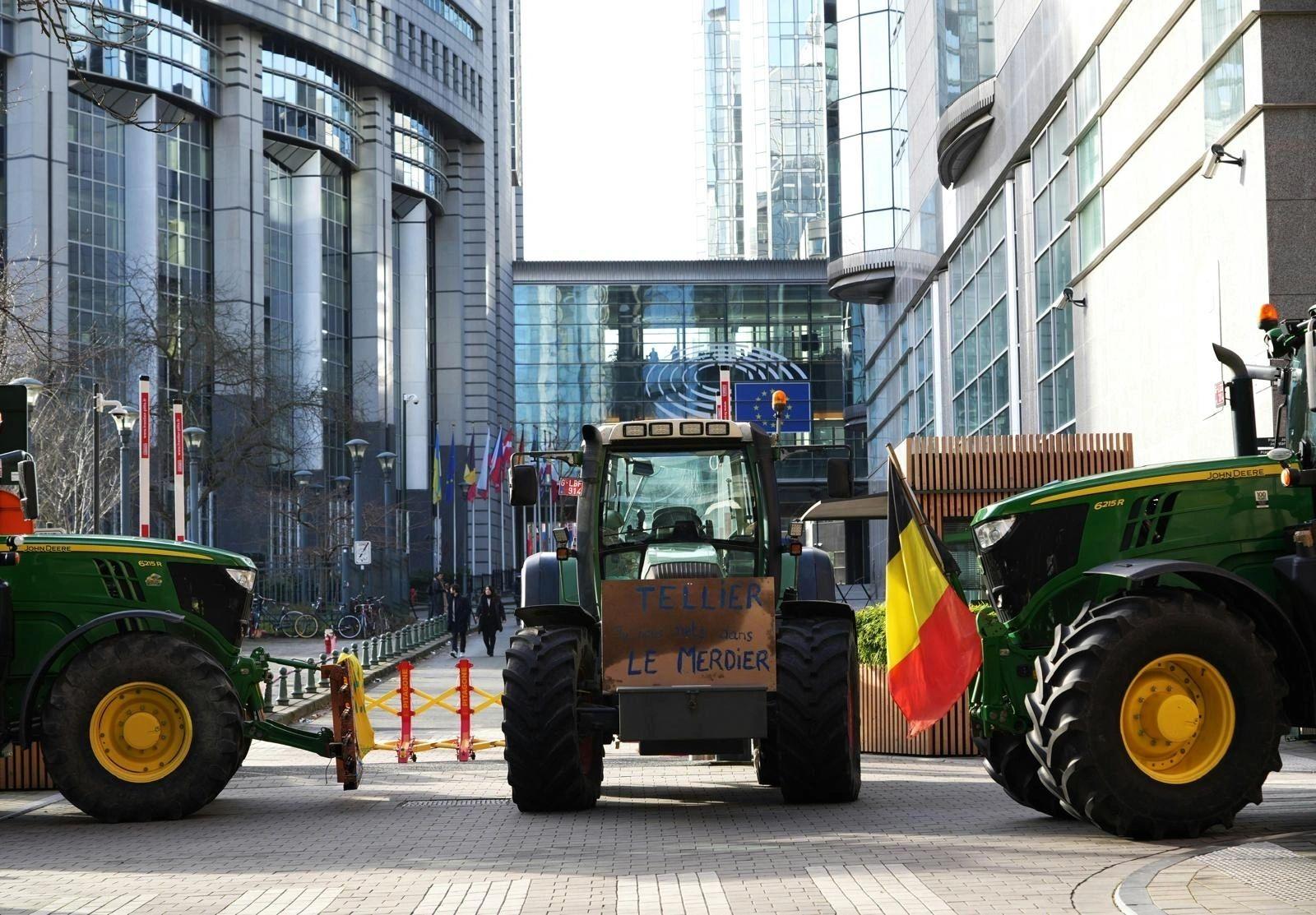
Agriculture remains a consistent point of tension within the EU. There have been constant back-and-forths between EU lawmakers looking to reduce the emissions from agriculture, which currently sit at roughly 10% of the EU’s total emissions, and farmers looking to keep costs low and remain productive. The EU has created the Common Agricultural Policy (CAP) framework as a means to both support and regulate the agricultural industry. While emissions did start to fall steadily after the fall of the Berlin Wall, in 2012, we started to see this trend reverse as emissions started to rise again (Matthews, 2021). It is projected that agricultural emissions will have fallen by a paltry 5% between 2017 and 2030, well below the reductions seen in other sectors. Some of the shortcomings of the CAP are that many countries adopt aspects of it that require the least change and investment, while ignoring the more impactful recommendations that would require more effort. This lack of ambition means that while the participation numbers may look good with 70% of EU agricultural land being covered by eco-schemes, the overall effects are rather lacklustre (Blažič et al., 2024). Additionally, the administrative burden placed on farmers to qualify for these programs and receive the rewards means that large, intensive farming conglomerates benefit disproportionately, while smaller family farms are unable to deal with the large amount of regulations imposed and paperwork required to be included in the programs, leading to them being mostly left out. Almost all of the CO2 generated from agriculture comes from fires set in order to create more arable land (Demogenes, 2023). While the EU has put in place certain regulations to discourage the act of crop burning by barring EU companies from selling agricultural products that have come from deforested or degraded land, it should go further to ban this practice, as it isn’t a necessary byproduct of agriculture. While the CAP does seek to remedy some of the negative impacts of the European agricultural economy, pushback from farmers and the underregulation of harmful practices continue to undermine the goal of reducing overall emissions in the sector.
As of 2023, the share of energy consumed in the EU that came from renewables is sitting at 24.5%. Recently, the EU revised its directive to achieve 32% of energy from renewables by 2030 to 42.5% (European Environment Agency, 2023e). While technological improvements and green investments have pushed the EU forward, fossil fuel subsidies continue to promote the use of carbon-intensive energy sources and hinder new renewable projects. While fossil fuel subsidies had stayed steady between 2015 and 2021, in 2022 they spiked due to Russia’s invasion of Ukraine. Governments facing domestic pressure due to high local energy prices increased fossil fuel subsidies to stave off inflation and prevent energy poverty. In 2022, renewable energy sources received €87 billion in subsidies while fossil fuels received €120 billion (Nardi and Vardakoulias, 2024), nearly a 38% increase. Not only do these subsidies take away money that could have been put towards renewable projects, but they also make renewables less competitive and make it harder for countries to gradually phase out fossil fuels. Some progress is being made, with roughly 43% of subsidies planned to be phased out this year (European Environment Agency, 2023d). However, this does not account for the remaining 53% of subsidies that, as of yet, don’t have an end date. This highlights a broader problem within the EU, where collectively the countries agree on working together to achieve their goals, but they will always bend to internal pressure to protect their own citizens at the expense of the collective goal. Phasing out fossil fuels will require massive infrastructure and energy grid investments, but the way to promote this is by ending the fossil fuel subsidies across the EU and ensuring that renewable projects are more competitive and economically viable.
Of the several crises experienced through the European Union’s policymaking, the first is the extent to which its ambitions have failed to materialize to the desired extent, notably due to structural limits. While we have mentioned, and rightly so, that the EU displayed consistently strong institutional ambitions, they often lack enforceable mechanisms, making them hollow policies. As reported by the European Commission (2021), the European Climate Law sets targets for European states but does not contain binding national contributions or penalties for those who consistently fail to meet these targets. The aforementioned NECPs are a positive advancement in principle, but are non-binding, inconsistent in quality, and their implementation is not consistently monitored (ECA, 2021), rendering their actual impact difficult to gauge and sustainably develop. Similarly, the ‘Do No Significant Harm’ principle, originally codified in the EU Taxonomy Regulation (European Parliament & Council, 2020), looks strong, but has been found by Lydgate and Oberthür (2021) to be legally vague and difficult, if not impossible, to properly enforce. These deficiencies have had a clear, quantifiable impact, with the Climate Action Tracker (2023) rating the EU policy as “almost sufficient” but always short of the 1.5°C pledge.
Beyond shortfalls in target delivery, Brussels’ policies suffer from unequal transitions, translating into structural injustices. Through these issues, climate action becomes increasingly difficult as it may enforce inequalities and social problems, leading increasingly to what may be perceived as a form of socio-economic segregation. According to Eurostat (2023), over 50 million Europeans, meaning over 10% of its total population, face energy poverty. Furthermore, EVs, rooftop solar, and retrofit subsidies are disproportionately taken up by higher-income households (CAN Europe, 2022), enforcing the perception of discrepancies in the impacts of sustainability-focused policies from one social class to another. Combined, these various failings lead to European climate policy appearing increasingly technocratic, shaped primarily by cost-benefit analysis while ignoring social needs and impacts. In other words, climate policy implementation suffers not only from a lack of enforceability but also from incomplete consideration as to what it genuinely leads to and how sustainable it is on various levels.
What’s more, the EU’s inefficiencies have translated into concerning, but understandable, public blowback and political fragility. The last few paragraphs have attempted to explain the structural failings of climate policy, but it is important to point out the various disagreements over climate initiatives, which are now leading to very dangerous situations. Greenwashing and inconsistency slowly but surely erode confidence in European climate directives. Public unrest illustrated by the Yellow Vest protests in France over fuel taxes (The Conversation, 2019), Dutch farmer protests over nitrogen cuts (Politico Europe, 2023), and the general growing resistance to green building rules. These protests become ever more understandable when European social classes like farmers suffer while the EU simultaneously engages in a free trade agreement with the Mercosur. The Union cannot be credible if it pushes for regulations that put its local populations at a competitive disadvantage while also promoting that very competition that is less sustainable and which requires imports on massive cargo ships, which are very detrimental to the environment. These elements merge with already mentioned worries of policy benefits seen as uneven, along with greenwashing risk, with renewables’ lifecycle emissions potentially negating expected benefits due to fossil-heavy supply chains, poor end-of-life planning, and general policy mishandling (IPCC, 2022 ; WWF Europe, 2021). These numerous fragilities are concerning as they harm the credibility of climate change actions, leading to growing distrust at best, climate-skeptic behaviour at worst.
While many holes and inconsistencies in EU policy remain, it is undeniable that the EU is pushing towards net zero at a level many other countries or organizations haven’t even attempted. While domestic pressure may delay or stall progress in certain areas, the bloc as a whole has made considerable progress. It can serve as a model for other unions and international organizations looking to make the transition to net zero and decouple emissions from economic growth. What remains to be seen is whether the political shift away from environmentalism across the US will spread to Europe and start to alter the EU’s position on climate issues.
References List
CAN Europe, 2022. Time to Scale Up Climate Action and Equity. [online] Available at: https://caneurope.org/ [Accessed 13 Jun 2025].
Climate Action Tracker, 2023. EU Country Assessment. [online] Available at: https://climateactiontracker.org/countries/eu/ [Accessed 13 Jun 2025].
Blažič, B., de Jong, B., Ferriz, M., Henningson, L., Hološková, A., Pępkowska-Król, A., Kurucz, Z., Luoni, F., Mateeva, I., Seny, G., Todorov, E. and Zámečník, V., (2024). The untapped potential of eco-schemes, An analysis of the use of eco-schemes across 12 countries and their impact on biodiversity Partnership for nature and people. [online] BirdLife International. Available at: https://www.birdlife.org/wp-content/uploads/2025/02/The-untapped-potential-of-eco-schemes-BirdLife_Nabu.pdf [Accessed 19 Jun. 2025].
European Commission, 2021. Regulation (EU) 2021/1119 – European Climate Law. [online] Available at: https://eur-lex.europa.eu/legal-content/EN/TXT/?uri=CELEX:32021R1119 [Accessed 13 Jun 2025].
European Commission, 2022. European Scientific Advisory Board on Climate Change. [online] Available at: https://climate.ec.europa.eu/eu-action/european-climate-law/european-scientific-advisory-board-climate-change_en [Accessed 13 Jun 2025].
European Commission, 2023a. EU Emissions Trading System (EU ETS). [online] Available at: https://climate.ec.europa.eu/eu-action/eu-emissions-trading-system-eu-ets_en [Accessed 13 Jun 2025].
European Commission, 2023b. Horizon Europe – Research and Innovation. [online] Available at: https://research-and-innovation.ec.europa.eu/ [Accessed 13 Jun 2025].
European Court of Auditors (ECA), 2021. Review of Climate Monitoring and National Plans. [online] Available at: https://www.eca.europa.eu/en/Pages/DocItem.aspx?did=59487 [Accessed 13 Jun 2025].
European Environment Agency (EEA), 2023a. Total Net Greenhouse Gas Emissions Trends and Projections in Europe. [online] Available at: https://www.eea.europa.eu/en/analysis/indicators/total-greenhouse-gas-emission-trends [Accessed 13 Jun 2025].
European Environment Agency (EEA), 2023b. The EU Emissions Trading System – Key Insights and Developments in 2023. [online] Available at: https://www.eea.europa.eu/publications/the-eu-emissions-trading-system-2 [Accessed 13 Jun 2025].
European Environment Agency (EEA), 2023c. Transport and Environment Report 2022. [online] Available at: https://www.eea.europa.eu/en/topics/in-depth/transport-and-environment-report-2022 [Accessed 13 Jun 2025].
European Environment Agency (EEA), (2023d). Fossil fuel subsidies. [online] www.eea.europa.eu. Available at: https://www.eea.europa.eu/en/analysis/indicators/fossil-fuel-subsidies [Accessed 20 Jun. 2025].
European Environment Agency (EEA), (2023e). Share of energy consumption from renewable sources in Europe. [online] www.eea.europa.eu. Available at: https://www.eea.europa.eu/en/analysis/indicators/share-of-energy-consumption-from [Accessed 20 Jun. 2025].
European Parliament & Council, 2020. Regulation (EU) 2020/852 on the establishment of a framework to facilitate sustainable investment (EU Taxonomy Regulation), Article 17. [online] Available at: https://eur-lex.europa.eu/legal-content/EN/TXT/?uri=CELEX:32020R0852 [Accessed 14 Jun 2025].
Enerdata, 2024a. Sweden Energy Report. [online] Available at: https://www.enerdata.net/estore/country-profiles/sweden/ [Accessed 13 Jun 2025].
Enerdata, 2024b. France Energy Report. [online] Available at: https://www.enerdata.net/estore/country-profiles/france/ [Accessed 13 Jun 2025].
Eurostat, 2023. Energy Poverty Statistics. [online] Available at: https://ec.europa.eu/eurostat/statistics-explained/index.php?title=Energy_poverty_statistics [Accessed 13 Jun 2025].
FS-UNEP Centre and EIB, 2021. Do No Significant Harm Handbook: A Handbook for Financial Market Participants and Policymakers. Frankfurt School – UNEP Collaborating Centre and European Investment Bank. [online] Available at: https://www.fs-unep-centre.org/wp-content/uploads/2021/11/Do-No-Significant-Harm-Handbook.pdf [Accessed 14 Jun 2025]
IEA – International Energy Agency, 2024. Electricity Generation by Source – Sweden. [online] Available at: https://www.iea.org/countries/sweden [Accessed 13 Jun 2025].
IEA and European Patent Office (EPO), 2021. Patents and the Energy Transition – Global Trends in Clean Energy Technology Innovation. [online] Available at: https://www.epo.org/news-events/news/2021/20210427.html [Accessed 13 Jun 2025].
IPCC – Intergovernmental Panel on Climate Change, 2022. Climate Change 2022: Mitigation of Climate Change – Contribution of Working Group III to the Sixth Assessment Report. [online] Available at: https://www.ipcc.ch/report/ar6/wg3/ [Accessed 13 Jun 2025].
Lydgate, E. and Oberthür, S., 2021. The European Climate Law: Successes and Shortcomings. Environmental Science & Policy, 122, pp.1–7. Available at: https://doi.org/10.1016/j.envsci.2021.06.008 [Accessed 13 Jun 2025].
Maguire, G., 2025. France flexes clean power clout as nuclear and solar output climb. Reuters, 23 May. [online] Available at: https://www.reuters.com/business/energy/france-flexes-clean-power-clout-nuclear-solar-output-climb-maguire-2025-05-23/ [Accessed 13 Jun 2025].
Nardi, G. and Vardakoulias, O., (2024). Fossil-fuel subsidies: a litany of broken promises. [online] Social Europe. Available at: https://www.socialeurope.eu/fossil-fuel-subsidies-a-litany-of-broken-promises [Accessed 20 Jun. 2025].
Politico Europe, 2023. Netherlands’ Farmer Protests and EU Nitrogen Targets. [online] Available at: https://www.politico.eu/article/netherlands-bbb-farmers-victory-eu-nitrogen-targets/ [Accessed 13 Jun 2025].
REA – European Research Executive Agency, 2025. 91 New EU-Funded Projects to Deliver Innovative Research in Sustainable Food, Bioeconomy and Natural Resources. [online] Available at: https://rea.ec.europa.eu/news/91-new-eu-funded-projects-deliver-innovative-research-sustainable-food-bioeconomy-natural-resources-2025-01-23_en [Accessed 13 Jun 2025].
Reuters, 2023. Swedish Parliament Passes New Energy Target, Easing Way for New Nuclear Power. Reuters, 20 June. [online] Available at: https://www.reuters.com/sustainability/climate-energy/swedish-parliament-passes-new-energy-target-easing-way-new-nuclear-power-2023-06-20/ [Accessed 13 Jun 2025].
The Conversation, 2019. Why the Yellow Vests Are a Warning to Europe’s Green Deal. [online] Available at: https://theconversation.com/why-the-yellow-vests-are-a-warning-to-europes-green-deal-129986 [Accessed 13 Jun 2025].
WWF Europe, 2021. Biomass and the EU Renewable Energy Strategy: Risking Biodiversity for False Carbon Savings. [online] Available at: https://www.wwf.eu/what_we_do/climate/renewables/ [Accessed 13 Jun 2025].