
EUDR as Soft Power: Can Europe Lead the Global Transition to Deforestation-Free Supply Chains?
15 min read · 3,047 words
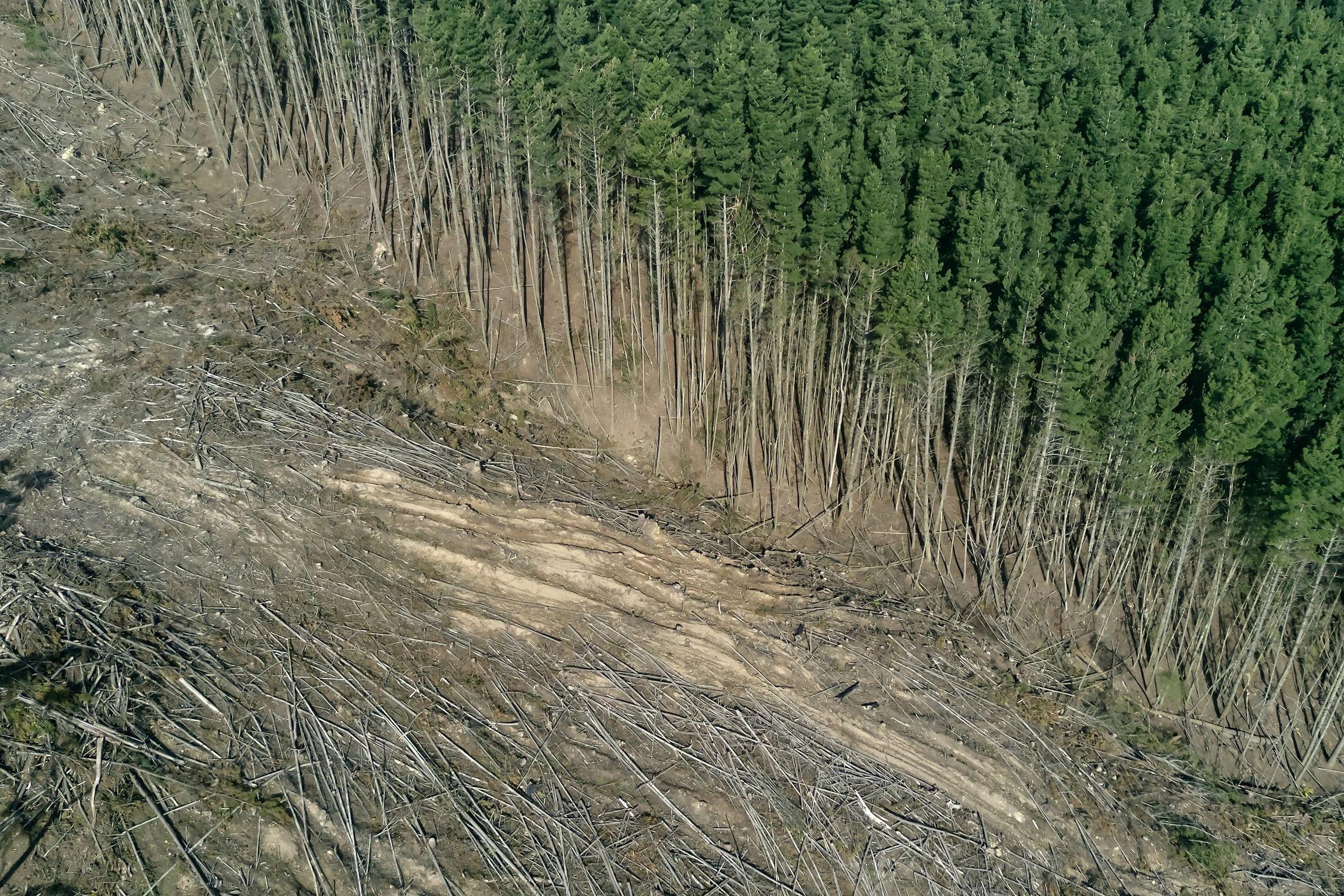
The EU Regulation on Deforestation-free Products () is the EU’s landmark anti-deforestation law, representing an ambitious attempt to leverage market access for environmental purposes. This article will assess the extent to which the EUDR can act as soft power, placing Europe at the forefront of the global fight against deforestation in supply chains.
What Is the EUDR and How Does It Work?
The EUDR is a regulation advancing the EU’s climate change agenda, specifically on deforestation. It ensures that a set of key products traded and consumed in the EU do not contribute to deforestation globally by laying down rules on the importing and trading of specified goods into the EU market, as well as the export from the EU of relevant products.
‘Relevant products’ are listed in Annex I of the EUDR. They involve products that contain, have been fed with or have been made using ‘relevant commodities’, namely cattle, cocoa, coffee, oil palm, rubber, soya, and wood. Relevant products and relevant commodities are banned from being placed on the EU market unless they: (a) are deforestation-free; (b) have been produced in accordance with the relevant legislation of the country of production; and (c) are covered by a due diligence statement. (EUDR, Article 3).
The EUDR distinguishes between an ‘operator’ and a ‘trader’ of these relevant products. (EUDR, Articles 2(15) and 2(17)). Generally, operators carry a heavier regulatory burden as they are responsible for establishing the due diligence process.
The consequences of non-compliance include seizure of commodities, suspension from trading on the market, fines, confiscation of products and/or revenue earned, exclusion from procurement processes, and even prohibition from placing the goods on the market. (EUDR, Article 25).
Regulatory Status and Simplified Procedure
As of the date of writing, the EUDR application date has been postponed by yet another 12 months, now set for 30 December 2026 for large companies, while small and micro enterprises have until 30 June 2027 for products not covered by the EU Timber Regulation (EUTR). ().
The EUDR simplifies requirements for Downstream Operators and Traders, and replaces the due diligence statement with a simplified declaration for small and micro operators.
Reasons for Delay and Tensions
Notwithstanding the finalization of the revision just last month, the regulation's journey has not been smooth but fraught with controversy. Originally scheduled to enter force in December 2024, implementation was delayed by 12 months following intense lobbying from producer countries and European importers alike. The postponement exposes deeper tensions: between environmental ambition and trade pragmatism, between European regulatory authority and accusations of neo-colonial overreach, between the urgency of forest protection and the economic realities facing smallholder farmers across the Global South. Indonesia, for example, is a leading producer and exporter to the EU of commodities like palm oil, cocoa, coffee, wood, and rubber and will be heavily impacted by the EUDR. (.
Criticism of the Regulation
While the principle of the European Union’s Deforestation Regulation, namely the reduction of global deforestation, remains largely accepted as a positive step, the rollout of the regulation has garnered criticism from all sides. Originally slated to be enforced at the end of 2024, it was subsequently delayed until the end of 2025 and has recently been further delayed until December 30, 2026, citing issues with the IT software. This has sparked backlash from environmental groups, MEPs from multiple parties, and even certain companies that had taken proactive steps in anticipation of the regulation. On the other hand, many members of the centre-right EPP oppose the legislation, arguing that it is too broad in its application, requires multiple entities to separately provide the same proof, and remains overly bureaucratic by not exempting countries where the risk of deforestation is already minimal. Additionally, many small business advocates argue that the bureaucratic complexity creates an administrative burden that rewards larger companies and unfairly disadvantages smaller producers that are unable to provide the necessary proof. The last front the regulation is facing criticism from is the affected countries themselves. Indonesia, along with other developing nations have argued that these rules unfairly discriminate against them and their farmers. With all this opposition, it is clear the EU must get this regulation right if it is going to succeed.
Environmental groups oppose the delayed implementation, as every year that the regulation is not in effect is another year of forest coverage across the world. Accompanying these delays are often amendments to simplify and water down the provisions in the legislation. Climate NGOs such as ClientEarth argue that the simplification reduces key safeguards and places accountability entirely on the first trader of these commodities rather than across the full supply chain. It argues that the delays have stopped the EU from reducing its deforestation impact by 29% and achieving 32 million metric tons of CO2 emissions savings by 2030 (). These delays also undermine the credibility of future legislation. If a precedent is set that inconvenient climate regulations can be pushed back, then the EU as a whole will have less credibility in climate negotiations, such as the COP and other similar conferences.
Certain businesses have also signalled their opposition to the delay in implementation. Large conglomerates such as Nestlé, Danone, Ferrero, among other large consumer goods giants, have formed a coalition asking for the EU parliament to pass the EUDR (). While it may seem surprising at first that large conglomerates are advocating for regulation, these companies have already invested substantial capital in ensuring their products comply with the EUDR. Any delay in its implementation would reward companies that haven’t taken the necessary steps to ensure their imports are deforestation-free. It also creates market and regulatory uncertainty over what requirements will persist into the future, and makes it difficult for companies to anticipate new regulatory action amid a shifting regulatory environment.
Many left-wing MEPs view the delay, blamed on IT issues, as a simple pretext for delaying the legislation at the behest of right-wing European parties, as well as the administration in Washington. Green MEP Marie Toussaint and Socialist MEP Delara Burkhardt have criticized Ursula von der Leyen as bowing to foreign interests at the expense of EU sovereignty and the ability to regulate within its borders (). While the EU commission rejects the idea that this is nothing other than a simple IT issue, it shows the internal division over the regulation within the EU parliament.
On the flip side, the other side of the European Parliament seems keen on delaying the legislation to neuter or overall kill it. The European People’s Party (EPP) has advocated for delaying the legislation, citing increased bureaucracy and undue burden placed on small and medium-sized enterprises within the EU. They argue for a simplified procedure in which only the first importer must certify a commodity is deforestation-free, and the inclusion of zero-risk country exemptions, where countries where the risk of deforestation is minute may have the bureaucratic burden lifted to facilitate commerce (). While the EPP still nominally supports the push against deforestation, the further right-wing parties make no such pretenses. While parties like the PfE, ECN, and ESR had previously been confined to the fringes of the EU parliament, their recent gains at the last election have given them increased power within the EU parliament (). The far right's apparent backlash against climate initiatives has given the EPP room to maneuver and substantially delay and alter proposed climate regulations ().
Many developing nations have also taken a stand, with 17 countries taking a stand against the new regulations. Countries like Indonesia, Brazil, Peru, Thailand, Nigeria and many more have complained that these anti-deforestation regulations unfairly discriminate against them and are fundamentally opposed to the principles of non-discrimination under the WTO (). The Indonesian government argues that these regulations disproportionately affect the small farmers and small and medium-sized enterprises in their country. They argue that a collaborative, multilateral agreement would support the region's farmers and protect Indonesia’s forests more fairly and inclusively compared to the current unilateral regulation. This criticism hints at what these countries view as the Global North implementing environmental regulations on the Global South without giving them the proper support to effectively implement them. There is also the possibility of collateral damage when it comes to who is affected. Under the regulation, certain agroforestry industries may be affected by the regulation, without falling under the spirit of ending true deforestation. This collateral damage can cause real harm to local producers who suddenly find their industry no longer able to access the European market ().
One aspect that the regulation has seen very little criticism from is consumers. While it may have been assumed that such regulations would lead to an increase in prices for consumers, a recent report by Profundo has found that it would only lead to a decrease of 0.1% in revenue for both large companies and SMEs and result in less than a 0.1% increase in price for consumers (). This reality makes it easier for the European consumer to get behind the regulation as it offers little in terms of inflationary pressure for a continent getting increasingly squeezed on prices and affordability.
EU Regulations as Soft Power?
Soft power, as coined by Joseph Nye, operates through attraction and persuasion rather than coercion. () The EU's regulatory approach arguably manifests this in the form of the Brussels Effect. The Brussels Effect is well-documented and understood. When the EU sets stringent standards for its market, foreign producers often comply globally rather than maintaining separate production lines. (). This effectively exports European norms worldwide. For example, GDPR transformed global data privacy practices, REACH reshaped chemical safety standards, and vehicle emissions requirements influenced automotive design far beyond European roads.
Recognizing the power of the European market, the EUDR extends this principle to environmental sustainability, specifically on deforestation. By conditioning market access on deforestation-free supply chains, the EU leverages its position as the world's second-largest importer of agricultural commodities to reshape production practices in the Amazon, Indonesian rainforests, and African cocoa-growing regions. This is regulatory power as geopolitical strategy. It attempts to achieve what cannot be through diplomatic negotiations alone.
The EUDR's revolutionary potential lies in three aspects:
First, it establishes traceability as a non-negotiable requirement. The regulation requires companies to demonstrate through geolocation data that commodities were not produced on land deforested after December 2020. This creates unprecedented transparency in notoriously opaque supply chains. While challenging to implement, this infrastructure, once established, enables verification of other environmental and social criteria beyond deforestation, such as labor conditions and pesticide use.
Second, it creates market incentives for sustainability. Countries classified as “low risk” under the EUDR face reduced due diligence requirements, while “high risk” jurisdictions face enhanced scrutiny. This system rewards countries that improve forest governance, creating a race to the top rather than to the bottom. Malaysia and Indonesia, for example, have increased efforts to improve forest monitoring and enforcement to gain favourable risk classifications. () ().
Third, it sets a precedent that wealthy consumer markets can share responsibility for environmental degradation in their supply chains. For decades, the burden of forest protection fell disproportionately on producer countries, many of whom are developing countries in the Global South. The EUDR acknowledges that European consumption drives deforestation abroad and imposes obligations on European importers. This represents a paradigm shift in environmental policy, from jurisdiction-based to consumption-based accountability.
The Way Forward
There are three categories of scenarios that may emerge following the EUDR’s full entry into force.
Strategic Retaliation
Producer countries could challenge the EUDR or retaliate with their own market access restrictions. Brazil and Indonesia have already voiced strong opposition; Malaysia threatened to restrict palm oil exports. () ().
Retaliatory measures might target European agricultural exports or manufacturing goods, where the EUDR becomes a trigger for trade tensions which are already fraught with difficulties in the era of the Trump administration. This scenario seems partially inevitable but unlikely to be sustained. Commodity-exporting countries depend on European market access and cannot easily find alternative buyers at equivalent scale and price points. For example, Palm oil is Indonesia’s second-largest export, worth USD 31 billion annually. ( It accounts for an estimated 4.5% of its GDP and about 16 million jobs. (. In 2023, the EU was the second top importer of Indonesian palm oil. ().
Market Abandonment
Producers, especially the smallholders and small-to-medium enterprises, could abandon the European market entirely, redirecting commodities to Asia, the Middle East, or domestic markets. This would reduce the EUDR's environmental impact while potentially harming European industries dependent on these suppliers.
This scenario is possible for specific products and regions, but improbable at the large scale. The EU remains the premium market for many commodities, such as cocoa, where prices and quality standards often exceed alternatives (). Moreover, the Brussels Effect predicts that sustainability standards established for European exports will diffuse to other production. Companies investing in traceability systems for EU compliance will maintain them for efficiency rather than reverting to opaque supply chains for non-EU buyers. The greater risk is that only large, well-capitalized producers can afford compliance, restructuring global supply chains toward consolidation rather than abandonment. ()
Adaptation to Eventual Compliance
The ideal scenario involves differentiated compliance. Large multinational traders and processors such as Cargill, Olam, Wilmar, etc, will invest in traceability technologies and shift sourcing toward verifiably deforestation-free regions. Middle-tier producers will face some pressure, but many will still adapt through NGO or government subsidies and risk-sharing arrangements. Smallholders will likely experience the most varied outcomes: some will be supported into compliance, others will be excluded or absorbed into larger operations.
Producer-country governments will respond strategically. Those seeing compliance as manageable, such as Costa Rica, will pursue low-risk classifications and use EUDR compliance as a way to gain a competitive advantage. (). Others will negotiate transition periods and technical assistance, while enforcement will remain slow domestically due to a lack of resources. It is therefore highly plausible that a patchwork landscape will emerge, where some supply chains become demonstrably compliant, others shift underground or toward non-EU or black markets, and many operate in grey zones of partial compliance.
Conclusion
The finalization of the EUDR’s implementation should bring some optimism. It is an interesting time to test the true influence and reach of the European Union and whether its regulatory authority can genuinely function as soft power or whether it generates resentment and resistance that further undermines European influence.
If the former transpires, the EUDR could indeed bring forth a new model of environmental leadership: wealthy consumer markets accepting responsibility for their supply chain impacts and using their purchasing power to drive global sustainability transitions.
The stakes extend beyond forests. Climate change, biodiversity collapse, and resource depletion will define this century. The EU cannot address these challenges through military power or economic dominance since it lacks both on a global scale. Regulatory soft power may be the EU’s most viable path to meaningful global influence.
All eyes remain fixed on the impact of the EUDR.
References.
Bradford, A. (2021, August). The European Union in a globalised world: the "Brussels effect". Geopolitique, 75-79. (Accessed: January 21, 2026)
Business For Nature. (2025). Business For Nature. [online] Available at: https://www.businessfornature.org/news/uphold-the-eudr [Accessed 21 Jan. 2026].
CBI. (n.d.). What makes Europe an interesting market for speciality cocoa? (Accessed: January 21, 2026)
Council of the European Union. (2025, December 18). Deforestation: Council signs off targeted revision to simplify and postpone the regulation [Press release]. (Accessed: January 21, 2026)
Council of the European Union. (2025). Document PE-60-2025-INIT. (Accessed: January 21, 2026)
Csaky, Z. (2025). The far right’s impact on the EU’s climate agenda. [online] Centre for European Reform. Available at: https://www.cer.eu/insights/far-right-impact-eu-climate-agenda [Accessed 21 Jan. 2026].
Epp Group. (2025). EPP delivers: Flawed deforestation regulation to be postponed. [online] Available at: https://www.eppgroup.eu/newsroom/epp-delivers-flawed-deforestation-regulation-to-be-delayed [Accessed 21 Jan. 2026].
European Commission. (2025). Implementation of the EU Deforestation Regulation. Green Forum. (Accessed: January 21, 2026)
European External Action Service. (n.d.). EU and Malaysia agree to strengthen their partnership and continue their joint efforts against deforestation. (Accessed: January 21, 2026)
European Newsroom. (2025). Strike two: EU deforestation law faces fresh setback as businesses warn of economic fallout. [online] Available at: https://europeannewsroom.com/strike-two-eu-deforestation-law-faces-fresh-setback-as-businesses-warn-of-economic-fallout/ [Accessed 21 Jan. 2026].
Igini, M. (2025). EU Deforestation Regulation Postponed By One Year, Again. [online] Earth.org. Available at: https://earth.org/eu-countries-approve-another-year-long-delay-to-deforestation-regulation/ [Accessed 21 Jan. 2026].
Indonesia Palm Oil Facts. (2024). Facts sheets. (Accessed: January 21, 2026)
Journalismfund Europe. (2025). From Denial to Delay, the European Far Right is Changing its Strategy on Climate | Journalismfund Europe. [online] Available at: https://www.journalismfund.eu/EU-climate-misinformation-far-right [Accessed 21 Jan. 2026].
Manzanaro, S.S. (2025). EU deforestation delay blamed on IT, but critics see Washington’s work. [online] Euractiv. Available at: https://www.euractiv.com/news/eu-deforestation-delay-blamed-on-it-critics-see-washingtons-hand/ [Accessed 21 Jan. 2026].
Mongabay. (2025, April). Indonesia strengthens forest monitoring with new tool to meet EU deforestation law. (Accessed: January 21, 2026)
Nye, J. S., Jr. (1990). Soft power. Foreign Policy, 80, 153-171. (Accessed: January 21, 2026)
Preferred by Nature. (n.d.). While caught in a perfect storm, Costa Rica's coffee sector may have a strong card up its sleeve: EUDR. (Accessed: January 21, 2026)
Rahman, M.R. ed., (2025). Indonesia leads 17 nations against discriminatory EU Deforestation Law. [online] Antaranews.com. Available at: https://en.antaranews.com/news/381788/indonesia-leads-17-nations-against-discriminatory-eu-deforestation-law [Accessed 21 Jan. 2026].
Regeneration International. (n.d.). EUDR smallholder inclusion. (Accessed: January 21, 2026)
Rijk, G. and Kuepper, B. (2025). Analysis of EUDR compliance costs - Profundo. [online] Profundo.nl. Available at: https://profundo.nl/projects/analysis-of-eudr-compliance-costs-/ [Accessed 21 Jan. 2026].
Sustainability Online. (2025). Coalition calls for urgent implementation of EUDR - Sustainability Online. [online] Available at: https://sustainabilityonline.net/news/coalition-calls-for-urgent-implementation-of-eudr/ [Accessed 21 Jan. 2026].
Sutrisno, A. (2025, April). Indonesia leads 17 nations against discriminatory EU deforestation law. Antara News. (Accessed: January 21, 2026)
United Nations Development Programme. (2019, May 8). Indonesia at-a-glance country guide. (Accessed: January 21, 2026)
van Noordwijk, M., Leimona, B. and Minang, P.A. (2025). The European deforestation-free trade regulation: collateral damage to agroforesters? Current Opinion in Environmental Sustainability, 72, p.101505. doi:https://doi.org/10.1016/j.cosust.2024.101505.
World Integrated Trade Solution. (n.d.). Crude palm oil imports from Indonesia in 2023. (Accessed: January 21, 2026)
World Integrated Trade Solution. (n.d.). European Union crude palm oil imports by country in 2023. (Accessed: January 21, 2026)