
Housing, Wages, and the Citizenship Paradox in Portugal
15 min read · 2,960 words
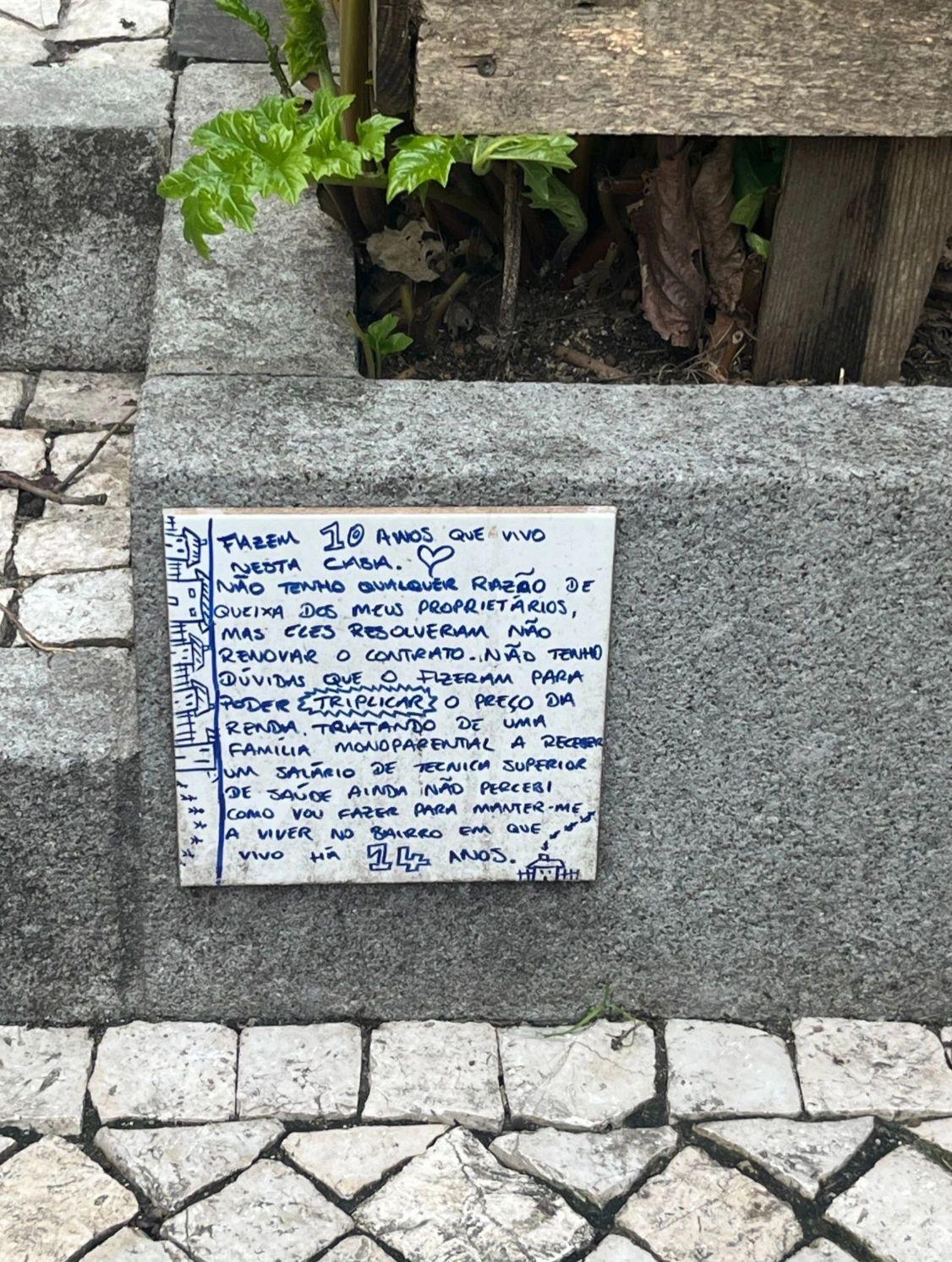
-Portugal’s story in the last decade has been one of redemption. Frequently presented as a European success story, this reputation has been earned thanks to the Portuguese government’s efforts to stabilize after a massive sovereign debt crisis, maintaining a relatively low unemployment rate, and also attracting record levels of foreign investments. As of 2025, the EU Commission’s economic forecast has the Portuguese unemployment rate at around 6.3%.
-However, the data reveals an evident contradiction. Despite the fact that key indicators may suggest a growing sense of economic stability, there is an evident crisis ongoing in the Portuguese economy, which indicates the contrary. The cost of living, specifically housing, has increased at an exponential rate, undermining economic stability and security for citizens. In the second quarter of 2025, housing prices increased by 17.2%, which is the highest increase recorded across the EU, which is significantly more compared to 15.5% and 15.1% for Bulgaria and Hungary, respectively. During the second quarter of 2025, the average annual increase in housing prices was about 5.4%, making Portugal a clear outlier.
-This would not be a problem if wages were rising at the same time, allowing the increases in living costs to be sustainable. This is where the core problem of the crisis arises. Portuguese wages are among the lowest in the eurozone, with median gross hourly earnings of €6.2, only higher than those in Bulgaria (€4.1), Romania (€5.6), and Hungary (€5.7). When looking at purchasing power standards (PPS) (which eliminate price level differences between countries), Portugal was second-to-last in the EU with 7.4 PPS, only above Bulgaria, which has 6.7 PPS. The result is a significant alteration of the relationship between economic growth and lived experience
2. Central Thesis
Portugal’s housing crisis is the result of the relationship among three structural phenomena: sustained housing price inflation driven by supply constraints; stagnant wages relative to rising house prices; and policy responses that fail to address the crisis’s underlying causes. These three phenomena are further reinforced by Portuguese legislative reforms. Collectively, these forces create a framework in which access to housing/social stability is increasingly influenced by income level and legal status rather than by labor-market participation.
3. Why This Research Matters
-This article aims to give a more comprehensive understanding of how economic and legal systems interact to shape access to basic resources
-In general, the media tends to attribute rising prices to either foreign investment and demand or to insufficient infrastructure. While both are extremely relevant, this reasoning fails to explain how housing affordability is affected by the interactions among capital flows, legal frameworks, and labor markets in relation to citizenship and migration.
-Portugal provides the ideal example for demonstrating these relationships in a real-world setting. It has factors common to the southern eurozone: low wages, increasing dependence on foreign investment, and rapid infrastructure changes driven by tourism and real estate.
-A 2023 survey, conducted by researchers at Universidade Lusófona, reported that around 41 percent of the population reported that current income, despite rising, was insufficient to cover rising living expenses.
4. The Pricing Explosion: A Housing Crisis in Data
The scale and consistent increase in price growth over just under a decade reveal a housing crisis driven by structural failure to meet demand and persistent undersupply.
Price Growth
House prices have risen by more than 170% since 2016, while wages have increased by about 40% over the same period. Hence, creating a divergence ratio of more than four to one. Moreover, between 2015 and 2024, the Portuguese housing market recorded one of the most extreme periods of price growth in Europe, with the European Commission assessing the Portuguese Housing market as overvalued by 25 to 35% relative to local economic benchmarks. The steepest difference in the EU is by a significant margin.
Current Price Levels (2025)
When examining current price levels, we can observe a clear distinction between the Portuguese Housing market and those of other EU member states. The Portuguese median transaction price accumulated to €2,065 per square meter in the second quarter of 2025, a 19% year-on-year increase. In Lisbon, the median asking price reached €5,914 per square meter in November 2025, up 4% year-on-year, while in Porto, the figure came to €3,908 per square meter, up 5.9% year-on-year. Making it evident that most of the increase in housing prices is due to significant increases concentrated in tourist-intensive areas such as Lisbon, Porto, and other coastal areas. The housing platform, Idealista, recorded a 3,000 per square meter in November 2025, up 7.8% year-on-year.
Supply-Side constraints
Now focusing on the supply side. The increase in demand was not met with an equal reaction on the supply side of the market. Hence, it amplifies the effect of price increases. The national infrastructure building rate dropped below 1% of the total housing stock per year after the 2011 crisis, and has yet to recover to the pre-crisis level. Only 13,244 new housing units were completed in the first half of 2025, a 4.9% increase, which would be considered sufficient in many housing markets but remains well below the pre-millennial level and well below par to meet demand. However, looking forward, building permits for new housing have increased by 28.8% year-on-year in the first half of 2025, showing a restored investor confidence in the Portuguese housing market. Nonetheless, this increase provides no short-term supply relief.
The Rental Market
The decline in new housing construction and the rise in housing prices have also had devastating effects on the rental market. This is of great importance as over a quarter of the Portuguese population pays rent, according to Eurostat. Median rents rose 10% year-on-year in the first quarter of 2025, with rents reaching 8.22 euros per square meter across the Portuguese Housing market. The quantity of new rental/lease agreements fell by about 10.4%, with the Grand Lisboa sub-region recording a median rental value of 13.06 euros per square meter for new leases in 2024. The alignment of these phenomena (Rising prices, rising rents, declining contracts) confirms a structural shortage of supply. Data released by the Portuguese CB showed that the mortgage default rate reached a low of 0.2 in 2025. Showing financial soundness and investor confidence, veiling the supply-demand mismatch that is continuing along an established trend.
5. Wages vs Housing: Affordability Crisis.
As stated before, the increase in housing prices is not matched by a proportionate increase in wages. One can observe that while housing prices have increased by over 170% over a decade, Portuguese wages remain among the lowest in Western Europe, with the median and mean gross monthly salary in 2025 estimated to be at around 1,320 and 1,495 euros, respectively, according to INE (Instituto Nacional de Estatistica), underscored by the 60% of Portuguese taxpayers earning under 1,000 euros a month. These factors have led Lisbon to rank first in the EU on the home price-to-income ratio, a position it did not hold a decade ago during the Portuguese economic recession. While it is true that minimum wage has risen nominally by 45% since 2019 (From 600 euros to 870), accounting for inflation, the real gain amounts to only a 21% increase. Comparing this minimum wage increase to housing inflation exceeding 170% in the same period, workers earning at the Portuguese income level are losing ground in absolute terms. According to a survey conducted by BCG (Consumer Sentiment Survey), over 50% of Portuguese people said their income was insufficient to live on. When comparing Portugal's gross average earnings to the EU27 average, Portugal stands at 1,976 euros, compared to 3,417 euros for the EU27.
This variation makes the housing crisis not strictly a real estate story, but a labor rights and inequality story. Opening doors to critiques of economic policy, tourism dependence, and the limits of minimum wage increases without proportionally increasing housing supply.
6. The Citizenship Law Reform
We now have enough information to reach a clear understanding of the constrained supply and limited domestic purchasing power in Portugal. This scenario allows foreign demand to assume a significant role in spurring market activity. It must be made clear that foreigners are not the cause of this housing crisis, but rather amplify the problem, intensifying its effects.
In 2024, Portugal reached a record level of foreign residents, with 1.5 million representing 15% of the national population. This phenomenon has become the political lens through which the housing crisis has been viewed, with the government’s response taking the form of new legislation. As recently as April 1st,2026, the Portuguese Government introduced notable changes to national law. The most impactful change is the increase in the residency requirement from 5 to 10 years, hence doubling the time required for non-EU residents to attain long-term legal stability.
Other changes include restrictions on birthright citizenship, requiring children born in Portugal to foreign parents to meet stricter residency requirements, reflecting an attempt by the Portuguese Government to tighten access to citizenship. In December 2025, the Portuguese Constitutional Court rejected several provisions regarding controls on immigration, but parliament resubmitted the rejected legislation, which was then approved by a two-thirds majority. Under this legislation, the residency clock starts on the date the permit is issued, rather than on the application date. A change that causes substantial delays for many applicants.
Nonetheless, none of these reforms addresses the structural drivers of the housing crisis. None of them increases housing supply, reduces prices, or improves affordability. They alter the legal framework through which migrants have to navigate a market that is already undersupplied.
We have now discussed how foreigners interact with the Portuguese housing market, but we need to make clear that there is a structural divide between two distinct types of migrants. Those who enter the Portuguese market primarily as capital-bearing investors and those who are active participants in the domestic labor market.
Labour Migrants
Portugal had approximately 138,000 new long-term or permanent immigrants in 2024; of those, 44% were labor migrants. Of the formal workforce, foreigners account for 24% of it. Bringing the total number of social security contributors to more than one million. The growth rate of foreign workers has been exponential, rising from 166,000 in 2017 to 534,000 in 2022. Foreign workers contributed 2.2 billion euros to the social security system while receiving only 380 million euros in benefits, resulting in a net surplus of approximately 1.82 billion euros as of 2024. This contribution from foreign workers funds 17 percent of national pensions and retirement benefits, according to the European Commission's Migration and Home Affairs portals. A study by the Jornal de Negócios (Portugal’s leading daily business and financial newspaper) estimates that, without immigration, the Portuguese tax burden would need to rise to 43% of GDP to maintain fiscal sustainability. Portugal is also renowned in Europe for its very old population; it is the second-oldest nation in the EU, and the ratio of workers to pensioners could fall to one-to-one by 2040 without sustained labor force growth from foreign workers. Foreign workers at the domestic wage level or even lower, sometimes paid under the table, meaning that, like a Portuguese citizen, they face the full cost of the housing market, which has grown faster than the income it generates. Approximately 19% of non-EU immigrants live in overcrowded conditions in Portugal, compared to 8% of native Portuguese residents. It is common practice for landlords to require several months’ rent in advance, which effectively excludes lower-income tenants and those without established savings or secure legal status.
Capital Bearing Migrants
As stated before, the current state of the Portuguese housing market allows foreign investment to enter and take over, given the economic conditions. Non-EU buyers paid an average of 451,000 euros per property in 2025, compared to 225,00 euros for domestic buyers. Most of whom are individuals from the U.K. or the United States who, thanks to higher incomes, can take advantage of Portugal's lower housing prices. Foreign buyers now account for 50% of prime-market property transactions. Foreign buyers' entry into supply-constrained markets increases the overall price ceiling and floor, raising costs for all participants in the market regardless of income level. In Lisbon alone, foreigners accounted for 33% of all property purchases in 2023, and Portugal received 13.2 billion euros in foreign direct investment.
The Policy Paradox
The citizenship law reform extends the period of legal instability for the foreign workers whose fiscal contributions are indispensable to Portugal's pension sustainability, while simultaneously failing to restrict access for two whose market activity most directly drives the affordability crisis.
7. Government Response
The systematic limitations of the Portuguese government’s program to increase housing supply reveal a lack of scale, an insufficient pace, and a clear failure to address demand factors. Current policies are unlikely to resolve the immediate affordability crisis facing workers receiving a domestic wage.
The Construir Portugal Supply Programme
The program aims to increase housing infrastructure supply (across both public and private sectors) by easing licensing requirements, reducing VAT on construction, and creating new urban expansion zones. It plans to deliver 33,000 homes, of which 70% will come from the rehabilitation of existing infrastructure, with the remainder being brand-new houses as part of the Portuguese government's Recovery and Resilience plan instituted in 2025. A European Investment Bank loan of around 1.34 billion euros has been secured to fund 12,000 affordable housing units in both Lisbon and Porto by 2030. The reduced VAT, which has been reduced to 6%, which is the minimum possible rate allowed by the Portuguese government, on residential construction and rehabilitation, is intended to stimulate investment for private developers. While the new licensing system stipulates that if a municipality does not respond within 120 to 200 days, construction proceeds automatically.
Structural Boundaries
Only approximately 2% of Portugal's total housing stock is social housing, far below the EU’s average of 8%, severely limiting the government's ability to intervene directly to alter the market for families at higher risk of poverty/social exclusion. The most significant problem in responding to this housing crisis is the time-scale mismatch. Housing prices respond to demand conditions in months, while full-scale construction projects take years to complete. The current output of housing units across all of Portugal reached 13,244, well below crisis-level demand. While the government has been pushing for new housing projects and has recently approved a couple, they will not reach the market before 2028 at the earliest. The market currently needs about 150,000 more homes to rebalance, and that target becomes increasingly more unrealistic as prices continue to grow at 17-19% annually. Combining this with residential and labor costs increasing by 4.5% and 8.3%, respectively, as of October 2025 compared to the previous year, leaves Portuguese policymakers facing an insurmountable mountain to climb.
Addressing Demand Factors.
The Portuguese government has not introduced transaction taxes that distinguish between owner-occupiers, investors, and non-resident buyers. This tool has become common practice in Ireland, Canada, Denmark, and Singapore. It has also not enacted any legislation to prevent the practice of landlords requiring multiple months of rent in advance, leaving low-income and migrant tenants exposed to systematic exclusion from the market. The 2025 budget raised the rent deduction ceiling to 900 euros and cut the income tax rate to 10%. These measures improve market incentives but do not address the supply-demand imbalance or the exclusion of tenants who earn wages at the domestic wage level, or even below it, if they are foreign. Without demand-focused interventions, such as differential taxation, tenant protection enforcement, and support for low-wage workers, current policy measures are stabilizing the market for future buyers while failing to implement policies to help those currently excluded from it.
10. Conclusion
This housing crisis did not occur abruptly. It was a buildup over time, through a decade of supply failure, wage stagnation, and a development model that treated the built environment as an investment vehicle rather than a social foundation. From the data provided, it is clear that the market is not running above equilibrium. The numbers describe a structural condition in which the relationship between labor-market participation and access to housing has fundamentally been severed. The government’s response has been neither sufficient in size nor in the allocation of government spending. The Constuir Portugal program, the EIB loan, the VAT reduction, and the licensing reforms are all instruments intended to help a supply shortage in the upcoming years in a crisis that compounds monthly. A market that requires 150 thousand more homes to rebalance the market cannot be simply addressed by a program that plans on influxing only 33 thousand units by 2030, where the majority of which are rehabilitations of existing stock.
All the while, the demand side, differential taxation, tenant protection, and support for low-wage renters remain almost entirely unaddressed. The citizenship law reform of 2026 encapsulates this perfectly. When confronted with a crisis of affordability, the state’s legislative response was to extend the period of legal instability for foreign workers. The same foreign workers contribute a net surplus of €1.82 billion annually to the social security system while also funding 17% of national pensions. This legislation does not affect capital-bearing buyers whose purchasing power most directly drives price inflation. It solved nothing while penalizing the people least responsible for the conditions that the legislation was designed to address.
To clearly address the structural problem found in Portuguese society, the government must reorient its focus completely. They must address the problem at the root of its causes: Supply reform on a grand scale, instruments that distinguish between different types of tenants and owners, legal protection for the more financially exposed tenants, and, most importantly, a development model that does not treat housing as a commodity first and a social good second. Until this occurs, the divergence between what Portugal produces economically and what its workers can afford to live on will continue to widen.