
New Green Hydrogen, Old Colonising Habits
By Sofia Rufino
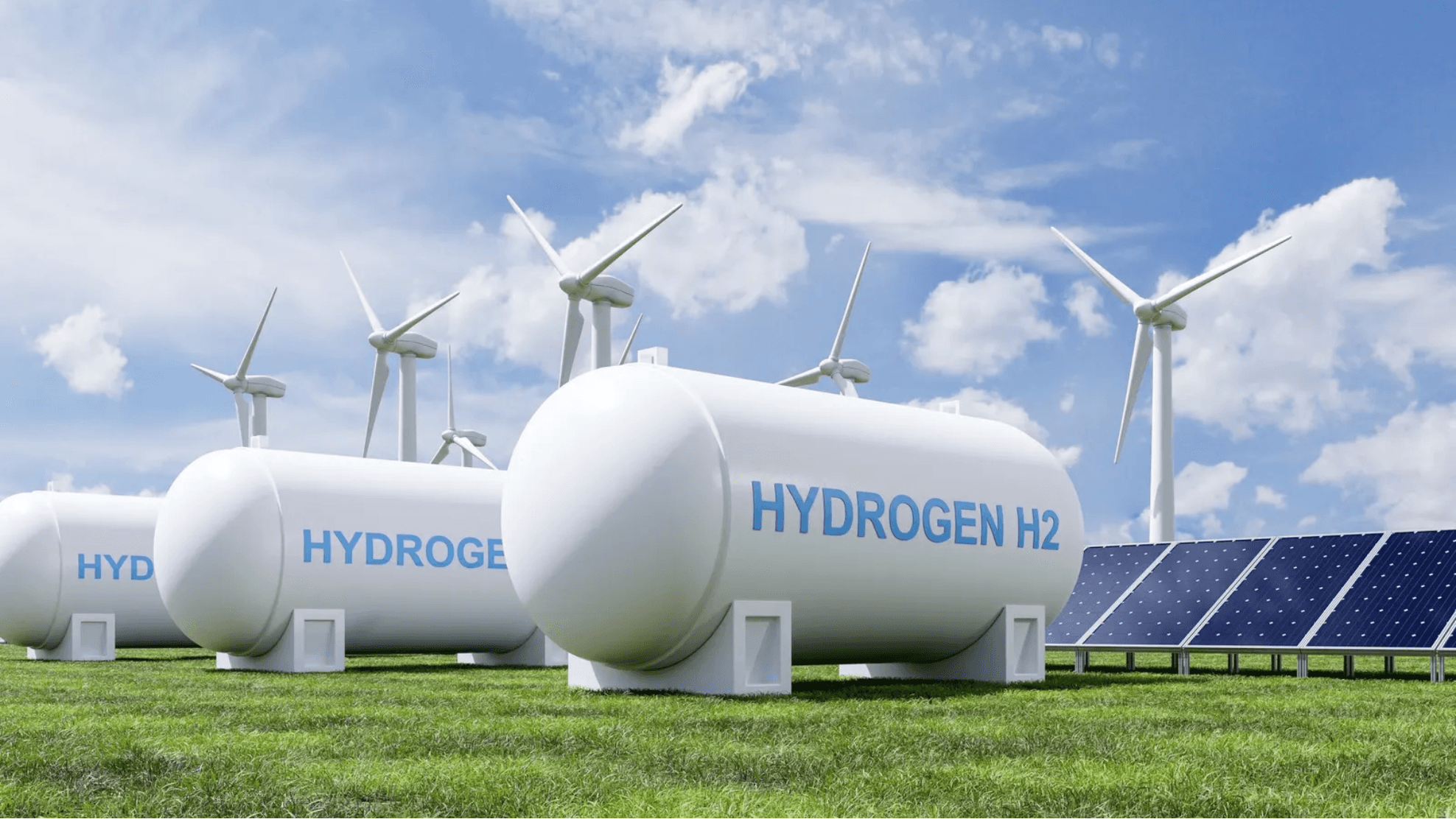
Clean hydrogen is gaining traction as a tool to decarbonize sectors that are hard to electrify directly, such as heavy industry, shipping, and long-distance transport. Since producing it requires large amounts of renewable electricity, industrialized regions like Europe face limits on domestic production and are increasingly turning to imports. This trade follows a clear geographic pattern: roughly three-quarters of bilateral hydrogen deals pair Global North countries as importers with Global South countries as exporters, reproducing familiar asymmetries in global energy relations [1].
This dynamic has a precedent. The original Desertec initiative proposed supplying up to 20% of Europe's electricity from Saharan solar and wind farms. It ultimately failed but left behind a legacy of European-centric planning that gave little weight to the interests of local African communities [2]. The EU's current strategy, formalized under REPowerEU, revives this model in a new form, targeting 10 million tonnes of renewable hydrogen imports by 2030, with North African solar and wind resources central to meeting that goal [2].
This strategy has also been shaped by significant fossil fuel industry influence. Although presented as a green transition away from Russian gas, REPowerEU's development involved repeated meetings between European Commission President Ursula von der Leyen and CEOs of major oil and gas companies: BP, Shell, TotalEnergies, and Eni among them [3]. An industry task force of oil and gas experts was later established to advise the EU on gas purchasing, infrastructure bottlenecks, and investment priorities, effectively giving fossil fuel interests a hand in directing public funds. Around €10 billion has been earmarked for new gas and LNG infrastructure framed as closing "missing links," diverting resources away from more direct measures like home insulation programs for energy-poor households [3].
Hydrogen's role in this plan has expanded sharply: the EU's green hydrogen target has quadrupled to 20 million tonnes by 2030, with half expected to be imported, mostly from Africa. However, the feasibility of this target is questionable on both economic and physical grounds. As production depends on intermittent solar and wind, costs rise steeply. In Algeria, for example, a proposed green hydrogen project is estimated to cost eleven times more per unit of energy than fossil gas. The scale required is similarly extreme: replacing Algeria's current gas exports with hydrogen would demand roughly 500 GW of solar capacity, over a thousand times the country's existing capacity, with major implications for land and water use [3].
These constraints open a further risk. Since genuinely green hydrogen currently makes up less than 1% of global production, the EU's ambitious targets create an opening for "blue" hydrogen, made from fossil gas with carbon capture and storage to fill the gap. Rather than a clean alternative, blue hydrogen can emit up to 20% more greenhouse gases over its lifecycle than burning fossil gas directly, undermining the climate case the hydrogen strategy is built on [3].
Taken together, the EU's hydrogen partnerships in Africa sit between two competing narratives: officially, a cooperative energy transition, driving a "green transformation", industrialization and economic independence for the Global South; structurally, a pattern that concentrates demand and decision-making in Europe while shifting production, environmental costs, and resource pressure onto African partner countries reinforcing “green colonialism”.
Country Case Studies
Tunisia illustrates how quickly these partnerships can accelerate once signed. In mid-2024 alone, the country signed a wave of memoranda of understanding, including the H2 Notos project with TotalEnergies, Eren Groupe, and Verbund, targeting up to 1 million tonnes of hydrogen per year at full scale, and a separate deal with Saudi Arabia's ACWA Power for 600,000 tonnes annually. Six further agreements with UK, French, Belgian, and German companies followed within weeks. This export infrastructure is being built around the SoutH2 Corridor, a pipeline network intended to link North Africa to Italy, Austria, and Germany by 2030, with Tunisia's national strategy targeting 6 million tonnes of exports annually by 2050. Yet Tunisia faced roughly a 50% domestic energy deficit in 2022, and new renewable capacity is being directed toward export rather than closing that gap. Germany's development agency, GIZ, has funded and shaped Tunisia's hydrogen framework since 2020, giving it substantial influence over national energy policy. The resource demands are considerable: the plan envisions 248 million cubic meters of desalinated water per year by 2050, equivalent to the annual consumption of roughly half the population, and a 500,000-hectare "Hydrogen Valley," twice the size of Greater Tunis, on land used by local communities for farming and pastoralism. Third sector groups, including the Stop Pollution Movement and the Tunisian Forum for Social and Economic Rights, have organized protests specifically targeting the GIZ energy cluster in Tunisia, framing German influence as the more relevant target than the Tunisian government itself [4].
South Africa presents a similar pattern with a domestic twist. President Cyril Ramaphosa and German Economy Minister Robert Habeck have both promoted green hydrogen as a source of growth and jobs, with South Africa aiming to capture up to 10% of the global export market. The flagship project, Boegoebaai in the Northern Cape, led by Sasol, targets an initial 9 GW of renewable capacity, expandable to 80 GW by 2050 to produce green ammonia for export. Analysts have noted a structural risk: Germany could benefit twice, first by importing low-cost hydrogen, then by selling South Africa the expensive electrolyser technology needed to produce it. Financially, 97% of Just Energy Transition Partnership (JETP) funding arrives as hard-currency loans, shifting long-term debt and market risk onto the South African state, while infrastructure is being built in Special Economic Zones that reduce public tax revenue. Environmental assessments are being fast-tracked through Strategic Integrated Projects, raising concerns about community consultation, marine ecosystems, and land use. The most cited contradiction, acknowledged even by Germany's own JETP envoy, is that this renewable power is being earmarked for export at the same time South Africa experiences frequent, severe blackouts [5].
Namibia rounds out the picture with a partnership explicitly framed as strategic. Signed at COP27 and backed by €1 billion in EU and European financial institution commitments, the EU-Namibia agreement rests on six pillars, including renewable value-chain integration, infrastructure funding, and regulatory alignment. The mismatch in priorities is notable: the EU is primarily seeking energy security, while Namibia's stated goals are economic diversification and job creation. Only about 35% of rural Namibians currently have electricity access, yet the country's exceptional solar and wind resources are being directed toward export production. Land- and water-intensive hydrogen production also threatens fragile arid ecosystems and risks land-use conflicts, and the partnership framework does not clearly address what happens if Namibian hydrogen becomes uncompetitive on global markets, leaving local financial systems exposed. Critics point to an underlying asymmetry: the agreement's neutral, technical language obscures a negotiation between a major economic bloc and a country that lacks comparable capital, technology, and legal expertise [2].
A shared theme runs across all three cases: agreements negotiated with limited public transparency, domestic energy deficits left unaddressed while renewable capacity is committed to export markets, and environmental and social costs, land, water, and ecosystem pressure, concentrated in the exporting country while the higher-value technology and long-term industrial benefits remain with the European partner.
"Green Colonialism" and the Case for "Green Transformation"
Beyond individual country cases, researchers and activists increasingly place these hydrogen partnerships within a broader analytical framework known as "green colonialism", a term used across academic, activist, and policy circles to describe how energy transition projects, whether wind farms, lithium mining, conservation zones, or green hydrogen, can reproduce historic patterns of resource extraction and unequal power. The concept overlaps with related terms such as climate colonialism, energy colonialism, and green extractivism, and draws on justice frameworks that assess who participates in decision-making (procedural justice), who benefits financially (distributive justice), whose rights are recognized (recognitional justice), and who bears responsibility for repairing harm (restorative justice) [1].
Within this framework, three mechanisms recur across hydrogen deals. The first is domination: decisions are typically negotiated through memoranda of understanding between private corporations and national elites, with limited input from local populations, as seen in Oman, Namibia, Morocco, and Egypt. This is compounded by a technological monopoly. Western firms held 72% of international hydrogen patent families between 2011 and 2020, which keeps exporting countries dependent on foreign expertise and confined to lower-value roles in the supply chain, all under a dominant narrative that frames the trade as serving universal decarbonization goals even when it primarily benefits the Global North [1].
The second mechanism is accumulation. Projects tend to prioritize raw energy export over domestic industrial development, with high-tech infrastructure imported rather than built locally, limiting job creation and value addition, as observed in Brazil and Colombia. This is often financed through "de-risking" arrangements in which Global South governments borrow heavily from institutions like the European Investment Bank or World Bank to absorb investment risk on behalf of foreign capital, a pattern that has notably increased national debt in Namibia and Chile. Underlying this is a growth model that depends on high-consumption lifestyles in the Global North, which stands in direct tension with calls for degrowth [1].
The third mechanism is appropriation, most visibly through land and resource allocation. Solar farms, electrolysers, and associated infrastructure require vast areas of land, often under weak or privatized tenure systems: Oman has allocated roughly 50,000 km², about one-sixth of its total territory, while Mauritania's Aman project spans 8,500 km², nearly four times the area of Tokyo. Egypt and Morocco have set aside up to 4% and 2% of their national land area, respectively. Exporting countries also risk becoming "sacrifice zones," absorbing environmental burdens such as brine disposal from desalination or subsea CO₂ storage for blue hydrogen, in order to supply clean energy elsewhere [1].
Not all researchers view these partnerships solely through this lens. An alternative framework, "green transformation," draws on Karl Polanyi's ideas about restructuring capitalism to describe how the energy transition could instead enable emerging economies to industrialize and diversify. In this view, disrupting incumbent fossil-fuel industries creates an opportunity for latecomer economies to "leapfrog" into higher-value positions within global value chains, rather than remaining raw material suppliers. This is still a developing area of research, drawing largely on work from institutions such as UNIDO, IRENA, the World Bank, IDOS, and ECDPM [1].
Three strategic responses are commonly proposed to shift hydrogen trade from the "colonial" pattern toward genuine transformation. The first is ensuring a voice: securing early, informed consent from local communities before land, water, or agricultural resources are committed, strengthening the social contract by requiring developers to reinvest locally, for instance, sharing renewable electricity to address domestic energy poverty or funding local healthcare and job training, and expanding certification standards, including EU schemes, beyond carbon metrics to cover human rights, land tenure, and domestic energy access.
The second is obtaining a stake in the value created. Local content requirements can mandate domestic sourcing and manufacturing, as seen in South Africa's use of its platinum reserves for electrolyzer production, Argentina's 50% local content target, and Egypt's tax incentives for firms sourcing over 20% of components domestically [1]. This can be paired with public ownership models, moving away from purely private-led development toward state equity, comparable to Norway's approach to energy resources, so that profits are retained for domestic development rather than flowing entirely abroad.
The third is fostering autonomy through downstream industrialization and technology transfer. This includes building local research capacity, such as the Namibia Green Hydrogen Research Institute, and relaxing intellectual property constraints to develop domestic technical expertise [1]. It also involves using renewable energy locally to produce higher-value goods rather than exporting raw hydrogen, for example, converting hydrogen into green ammonia and fertilizer domestically in Brazil, Argentina, Morocco, and Egypt, or processing iron ore into high-value hot briquetted iron in Mauritania, where the processed product sells for over $750 per tonne compared with roughly $18 per tonne for raw iron ore [1].
Where Green Transformation Falls Short
Weighing these two frameworks against each other raises a further question: can the mechanisms proposed under "green transformation" actually resolve the injustices described as "green colonialism"? A closer look suggests the answer is mixed, with real trade-offs rather than clean solutions.
Some mechanisms of green colonialism have no straightforward fix within the green transformation approach. If the underlying problem is treated as a structural feature of capitalism itself, no policy adjustment within the existing global economic system can fully remove it. Other aspects can be mitigated, but only at a cost. Blue hydrogen illustrates this well: it offers real economic opportunities for fossil-fuel-rich countries like Algeria, since it builds on existing gas infrastructure and expertise, but it carries environmental risks and exposes these countries to "stranded asset" risk if global demand shifts away from fossil-based fuels sooner than expected. Similarly, the high capital costs of hydrogen infrastructure can be addressed through stronger government involvement in financing and planning, but this brings its own risk, increased state control can reinforce authoritarian or populist governance and, paradoxically, reduce rather than expand local community participation in decision-making. In short, green transformation offers real pathways for industrial upgrading, but it does not automatically undo the underlying power imbalances that define green colonialism.
A second issue is one of scope. Genuine transformation requires more than hydrogen trade agreements; it requires connecting energy, industrial, and financial policy into a coherent development strategy. Historical precedent shows that shifts in energy markets can trigger industrial relocation. Japan, for instance, relocated much of its aluminium industry after the oil crises of the 1970s [1]. Whether a similar "renewables pull" effect is occurring today, drawing energy-intensive industries toward the Global South because of cheap renewable power, remains largely anecdotal. Some signs exist: car manufacturers have begun sourcing low-carbon aluminum from Saudi Arabia and Norway, produced using solar and hydropower respectively. But these are isolated cases, not yet evidence of an industrial shift occurring at meaningful scale [1].
Finally, even where hydrogen offers low- and middle-income countries a path to industrialize without relying on fossil fuels, geopolitics presents a significant obstacle. Building green industries in the Global South would mean relocating energy-intensive production away from where it currently sits, reshaping economic power along the way, a shift that established industrial powers are unlikely to accept passively. The European Union has already introduced targeted industrial policy to protect their own industries through the transition, including the EU Clean Industrial Deal. This suggests that the ultimate direction of the global energy transition will depend not only on what Global South countries are able to negotiate or build domestically, but equally on the industrial policy choices made in the Global North.
Policy Recommendations: Toward a Fairer Model
Given these tensions, what would a more equitable path actually look like? Activists, scholars, and third sector groups have converged on a set of concrete proposals, moving from broad political vision down to specific policy demands.
At the broadest level, many activists call for a pan-African, decolonial movement built around defending land and water sovereignty. The core argument is one of sequencing: renewable power generated on the continent should first close the gap for the roughly 600 million Africans currently without electricity access, before any surplus is directed toward European export markets [4].
Translating this vision into practice points toward a strategy of domestic green industrialization and energy democracy, built around four pathways. Using green hydrogen locally to add value rather than exporting it raw, for example, manufacturing green steel domestically. Developing local value chains, such as leveraging South Africa's domestic platinum reserves to build an indigenous electrolyser industry, rather than remaining dependent on imported European or Chinese equipment. Prioritizing new solar and wind capacity for the national grid to address domestic energy poverty before allocating any excess power to hydrogen exports, reinforcing energy democracy. And finally, financial reparations, specifically, debt cancellation and climate reparations from the Global North, to fund green development on terms set by African governments themselves rather than by external creditors [5].
Additionally, it would be recommended to scrap the current, arguably unrealistic 2030 hydrogen import targets in favor of prioritizing direct electrification and renewable growth aimed at local needs. Removing fossil fuel lobbies from advisory roles in public energy policy, to prevent the kind of conflict of interest seen in the EU's own REPowerEU process. Redirecting public funding toward insulation, energy efficiency, and ending energy poverty, rather than continuing to subsidize fossil gas and LNG infrastructure [3].
Scholars such as Franziska Müller have proposed formalizing these ideas into a multi-dimensional "Hydrogen Justice" framework, intended to convert the current extractive model into a genuinely equitable partnership [2]. This framework rests on four principles: prioritizing local needs first, so that domestic energy access, regional grid expansion, and industrial development take precedence over export volumes; ensuring procedural and recognition justice, through guaranteed community consultation, land rights protections, and transparent decision-making; addressing financing equity, through clear accountability mechanisms, fair cost-sharing, and legal safeguards that protect host countries from market volatility and environmental liability; and guaranteeing local value creation, by directing investment toward domestic infrastructure, technical capacity, and job creation rather than the export of unprocessed energy commodities.
Taken together, these recommendations reflect a consistent rationale: the technical case for green hydrogen production in Africa is not in question, but its current trajectory, export-first, foreign-financed, and shaped disproportionately by Northern industrial and fossil interests, is what critics identify as the problem. The proposed alternative is not to reject hydrogen cooperation outright, but to restructure it so that African countries capture a proportionate share of its value and control over its terms.
References:
[1] Dejonghe, M., & Van de Graaf, T. (2025). Green colonialism or green transformation? The equity implications of clean hydrogen trade. Political Geography, 120, 103338. https://doi.org/10.1016/j.polgeo.2025.103338
[2] Skládalová, D. (2024, February 28). Unmasking green colonialism in EU-Namibia hydrogen deal. EJIL: Talk!. https://www.ejiltalk.org/unmasking-green-colonialism-in-eu-namibia-hydrogen-deal/
[3] Sabido, P., & Mikolajczak, C. (2022, May 24). EU hydrogen targets—a neo-colonial resource grab. Social Europe. https://www.socialeurope.eu/eu-hydrogen-import-targets-a-neo-colonial-resource-grab
[4] Ammar, S. (2024, August 14). Green hydrogen: Africa is not Europe’s battery. African Arguments. https://africanarguments.org/2024/08/green-hydrogen-africa-is-not-europes-battery/
[5] Kalt, T., & Lekalakala, M. (2023, January 18). The green hydrogen frontier – Neocolonialism, greenwashing or just transition? Heinrich Böll Stiftung. https://za.boell.org/en/2023/01/18/green-hydrogen-frontier-neocolonialism-greenwashing-or-just-transition/