
Prospects in the Bulgaria-Türkiye Energy Relationship
11 min read · 2,246 words
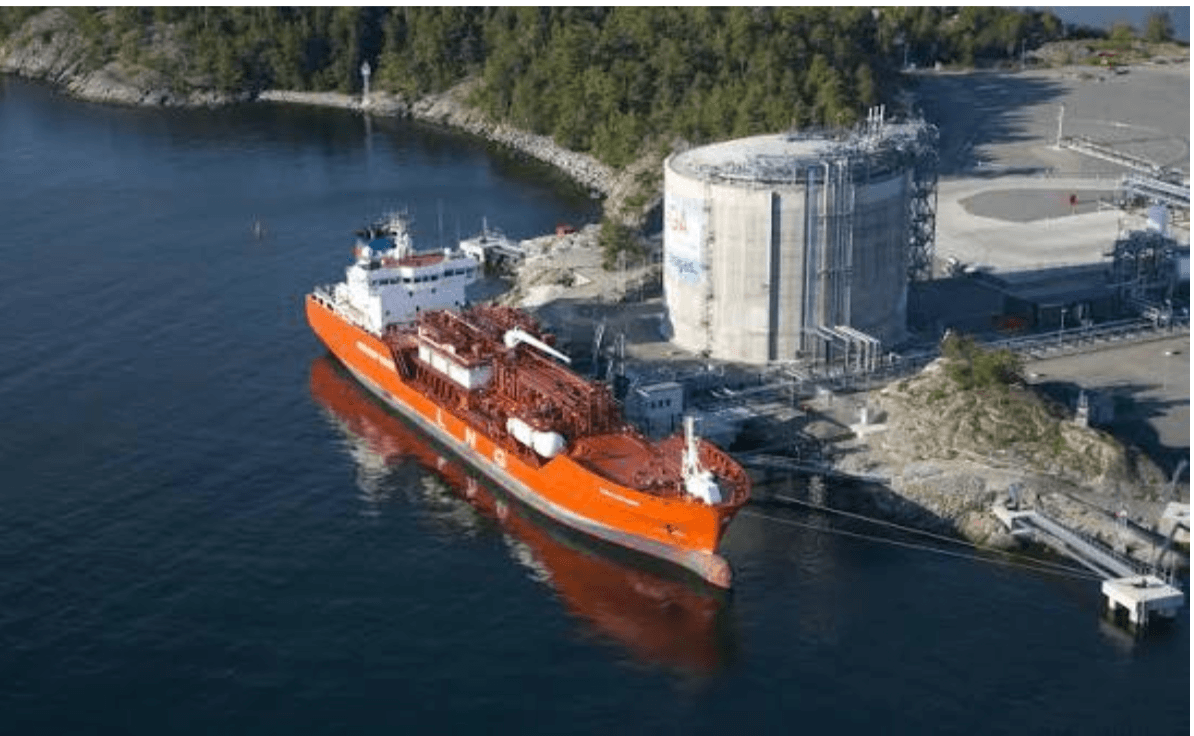
On the 6th of July 2026, during a meeting between Bulgaria’s newly elected Prime Minister, Rumen Radev, and Turkish President Recep Tayyip Erdoğan a 15 month suspension of an agreement between the Bulgarian state energy company, Bulgargaz, and their Turkish counterparts, BOTAŞ, was announced. The agreement, signed during the tenure of Galab Donev’s caretaker government in January, 2023, gave Bulgaria the ability to utilize Turkish energy infrastructure to unload, regasify, and import up to 1.5 billion cubic meters of Liquified Natural Gas (LNG) annually for a period of 13 years (Ministry of Energy of the Republic of Bulgaria).
During the recent political crisis, it has turned into a source of domestic controversy in Bulgaria, with various political actors alleging unused capacity, unfavourable payment terms, and unclear responsibility for the execution of the contract. Rumen Radev, who in his previous capacity as President was responsible for the appointment of the Galab Donev cabinet, has defended the agreement as being a necessary measure following the uncertainty created after the abrupt cessation of deliveries by Gazprom in April 2022 (Bulgarian National Television). Furthermore, he has accused recent Bulgarian governments of mismanaging the agreement for political purposes, promising to improve its functioning while campaigning for the April parliamentary elections.
The suspension of the Bulgargaz-BOTAŞ agreement, as well as the prospective re-negotiation of the contract’s conditions, provided an early political victory for the Radev government. More importantly, the decision has the potential to contribute to the expansion and deepening of the historically complex energy relationship between Bulgaria and Türkiye. This article aims to briefly survey the historical trajectory of this relationship, before analysing the short-comings of the 2023 Bulgargaz-BOTAŞ agreement and examining potential remedial action that can be taken during the course of upcoming negotiations. The article will conclude with a brief note on the implications that a change in the energy relationship between the two states, whether toward greater or lesser cooperation, may have on EU energy policy toward Türkiye.
Bulgarian-Turkish Energy Relations: Competition and Cooperation
Bulgaria and Türkiye have developed an energy relationship guided by the countries’ geographic proximity, an expanding economic relationship and the shifting geo-politics of the Black Sea region. Throughout the Cold War, despite their differing alignment, trade in energy products was one of the items exchanged between the two countries (Kalinova). The transaction was, however, mostly limited to the Bulgarian export of electricity, in exchange for valuable hard-currency reserves. This trade was enabled via the building of the “Maritsa East-Babaeski” transmission line, which created a permanent link between the Bulgarian and Turkish electrical grids.
Following the end of Communist rule in 1989, and the subsequent period of economic liberalization, trade in energy products expanded both in scope and intensity (Bishku). Specifically, mineral fuels, petroleums, and refined petroleums have been one of the main traded categories between the two countries (World Bank). In addition, the export of electricity to Türkiye continued, with projects approved for the expansion of electricity transmission lines to achieve greater capacity. Yet, these projects have until recently remained the most prominent examples of inter-state cooperation on the development of shared energy infrastructure. Additionally, cross-border energy investments have remained limited, with few examples of significant cooperation between Bulgarian and Turkish energy companies occurring during the preceding decades.
The limited nature of the historical relationship can be understood within the context of both countries’ energy strategy. Consecutive Bulgarian and Turkish governments have attempted to embed their respective countries in the broader European energy value chain, historically attempting to do so as an intermediary in the transport of Russian gas. While this has led to a degree of cooperation between the two countries in the development of pipeline projects, such as the Turk Stream/Balkan Stream route, it has been largely predicated by geographic factors, rather than government initiative (Sakal and Pastarmadzhieva). In fact, the ambition of both Bulgaria and Türkiye to establish themselves as regional “gas hubs” has led to significant competition (Kovacevic). This inter-state rivalry may have played a significant role in Bulgaria’s historic preference toward developing common infrastructure with Greece, rather than Türkiye, for example through the long-running plan to develop an interconnecting pipeline. Additionally, both countries looked to develop their respective sections of the proposed pipelines through cooperation with Russia, only collaborating on operational details. This tendency is best exemplified by the cancelled South Stream project, which would have led to a direct connection between Russia and Bulgaria, only involving Türkiye due to crossing the country's Exclusive Economic Zone (EEZ).
The Russian invasion of Ukraine in 2022 has fundamentally altered the positioning of the parties within the relationship. Bulgaria, a country which has historically relied on Russian crude oil and natural gas, found its energy supply endangered by the deteriorating EU-Russia relationship. In particular, the decision of Gazprom to end gas deliveries to Bulgaria in April, 2022, led to fears of an energy crisis. Unlike Bulgaria, Türkiye didn’t impose sanctions on Russian energy, and has further benefited from its developing LNG infrastructure, as well as pipeline connections with one of the primary non-Russian gas suppliers, Azerbaijan. Thus, Bulgaria’s disadvantageous position arguably contributed to attempts to expand the energy relationship, in an effort to avoid short-term crises and diversify away from Russia.
The agreement between the state energy companies, Bulgargaz and BOTAŞ, is a meaningful example of this trend. The deal gave Bulgaria access to Turkish LNG terminals and Floating Storage and Regasification Units (FSRU), allowing Bulgargaz to purchase LNG on the market, transport it by tanker and unload it in Türkiye. Following the regasification of the LNG, it is transmitted through the Turkish national grid before entering Bulgaria. With a capacity of 1.5 billion cubic meters annually, this agreement can cover up to 50% of Bulgaria’s recent annual gas demand depending on ensuring LNG supply, while minimizing exposure to Russia.
Issues and Remedies
Despite the nominally positive terms of the Bulgargaz-BOTAŞ agreement, it has been the subject of domestic criticism. Perhaps the most pertinent critique of the current contract is that Bulgargaz reportedly paid a flat fee of 512,000 euros per day, regardless of its utilization of Turkish energy infrastructure (Malakchiev and Tsvetanova). This condition is particularly questionable as Bulgargaz has only utilized 19% of the agreed import capacity over the between 2023-2025 according to ICIS (Sabadus). Meanwhile, Bulgargaz had accumulated an estimated 360 million dollars in debts to BOTAŞ by July 2026, according to Prime Minister Rumen Radev (Gospodinova).
The low utilization of the capacity purchased has been partly ascribed to the method by which the agreement was negotiated, with it not being preceded by a competitive tender to ensure a stable supply of LNG from global producers throughout the contractual period. Moreover, the 13 year duration of the contract reduced Bulgarian flexibility to re-negotiate or terminate the contract, with it being reported that approximately 1.5 billion euros may be required as payment for contractual damages (Kinsight). The signing of the contract has further been scrutinized due to allegations of negligence, with an ongoing criminal investigation into the possibility of mismanagement by involved officials (Reuters). Additionally, domestic critics have argued that a caretaker government lacked the political legitimacy to sanction such a long-term agreement.
Ultimately, due to the terms of the agreement being largely undisclosed, it remains difficult to differentiate between legitimate criticisms and political speculation. Still, the information provided during ministerial hearings and from other official state sources generally suggests that unused capacity has remained a key issue since the contract’s signing (Dimitrov). Therefore, the suspension of the agreement and its renegotiation provide for a mutually favourable outcome by giving both parties the opportunity to rebuild trust and mend the agreement’s inefficiencies.
Unsurprisingly, the most widely suggested remedial action has been discarding the flat fee in favour of payment exclusively during periods when capacity is utilized. To incentivize Turkish approval, the current payment can be substituted with a smaller fixed daily charge supplemented by a variable rate, increasing depending on the intensity of use. Additionally, Bulgargaz may look to transition to a ‘delivered-at-border’ tender system, requiring bidders to transparently present the total price including transmission fees, although this change may not necessarily lead to lower prices. Importantly, any contract re-negotiation should include an officialized and transparent mechanism for the settlement of debts owed by Bulgargaz to BOTAŞ. In particular, the Bulgarian negotiators could propose a restructuring of debt repayments or partial debt forgiveness on the basis of the renegotiated contract terms.
Certain proposals during the re-negotiation process may appear difficult to accept for BOTAŞ, who nominally hold legal leverage in the ongoing negotiations. However, refusal to meaningfully engage in re-negotiation efforts can lead to steep reputational costs, impacting relationships with other natural gas companies in the EU.
Additionally, Bulgargaz may similarly have avenues for pursuing legal action in the case of early termination. Specifically, Bulgargaz has currently reserved half of the commercially-allocated capacity at the Strandzha-Malkoclar interconnection for the transmission of natural gas, while the residual capacity remains in the hands of BOTAŞ, who can make it available to third parties. The arrangement may be potentially in breach of EU competition law by giving BOTAŞ privileged access to Bulgarian entry, although a previous inquiry by the European Commission into this issue concluded without finding infringements in December, 2024 (Bulgarian National Radio). More importantly, Bulgargaz could consider pursuing arbitration or other similar actions based on the failure to execute certain contractual terms, although the feasibility of this approach remains difficult to assess due to the confidentiality of the terms, as well as a lack of publicly available evidence of breach, misrepresentation or other grounds for such an action. Ultimately, an amicable re-negotiation of the agreement remains of interest to all parties involved.
Implications for EU Energy Policy
The 2023 Bulgargaz-BOTAŞ agreement, and subsequent developments hold a number of lessons for EU energy policy. Although there is little insight into the initial negotiation process between Bulgaria and Türkiye, the perception of an impending emergency certainly shaped their outcome. With the Alexandroupolis LNG terminal in Greece yet to be opened, few avenues remained for Bulgaria to insure its gas reserves against the possibility of future supply disruptions. In this sense, an approach on the EU level to better support national natural gas reserves, for example through greater coordination of internal energy flows or the common sharing of gas reserves, could have strengthened Bulgaria’s negotiating position. While increases in gas storage targets and burden sharing requirements do aid in strengthening the bargaining position of member states, the experience of Bulgaria in 2023 is indicative that the measures already introduced may not be entirely sufficient. Therefore, the European Union could consider expanding the degree of central control over a portion of national emergency oil reserves, as well as finance gas storage mechanisms to complement current state-level tools.
Perhaps the most important question stemming from the signed agreement, however, remains unanswered. Namely, the viability of Türkiye’s role as an intermediary for EU states looking to build non-Russian channels for the supply of their energy needs. Thus far, the experience of the 2023 Bulgargaz-BOTAŞ agreement provides few concrete answers to this question. While Türkiye evidently seems interested in deepening its energy relationship with Bulgaria, including through the signing of long-term agreements, their subsequent execution had led to suspicions of Turkish opportunism in response to energy market uncertainty. The ongoing negotiations, therefore, may come to serve as a significant moment in determining not only the future of the Bulgaria-Türkiye relationship, but the level of involvement that Türkiye can expect to achieve in the EU energy sector.
References
Malakchiev, Atanas, and Kamelia Tsvetanova. “Energy Ministers of Bulgaria, Turkiye Discuss Expanding Cooperation.” BTA, 26 June 2026, https://www.bta.bg/en/news/balkans/1156287-energy-ministers-of-bulgaria-turkiye-discuss-expanding-cooperation.
Bishku, Michael B. “Turkish-Bulgarian Relations: From Conflict and Distrust to Cooperation Over Minority Issues and International Politics.” Mediterranean Quarterly, vol. 14, no. 2, June 2003, pp. 77–94, https://doi.org/10.1215/10474552-14-2-77.
Bulgarian National Radio. “EU Finds No Competition Violation in Botas Deal.” Bnrnews.Bg, 21 Dec. 2024, https://bnrnews.bg/en/post/121691/eu-finds-no-competition-violation-in-botas-deal.
Bulgarian National Television. “Rumen Radev in ‘Panorama’ - 30.01.2026.” YouTube, 30 Jan. 2026, https://www.youtube.com/watch?v=z911roprXbU.
Dimitrov, Luka. “Individual News - ICIS Explore.” ICIS Explore, 6 May 2025, https://www.icis.com/explore/resources/news/2025/05/06/11098287/opinion-bulgaria-needs-new-strategy-to-renegotiate-13-year-gas-deal-with-turkey-its-current-approach-has-led-to-financial-losses/.
Gospodinova, Sofia. “PM Says Bulgaria Owes USD 360 Mln to BOTAS, Settling It ‘Will Not Burden Bulgarian Finances.’” Www.Bta.Bg, BTA, 7 July 2026, https://www.bta.bg/en/news/bulgaria/1162546-pm-says-bulgaria-owes-usd-360-mln-to-botas-settling-it-will-not-burden-bulgari.
Kalinova, Evgenia. “Калинова, Е. България и Турция От Двете Страни На ‘Желязната Завеса’ (Края На 40-Те -Края На 50-Те Години) -.” В: Дриновски Сборник. Том XV. Българска Академия На Науките - Харкивски Национален Университет „В. Н. Каразин“. София-Харков, 2022, с. 180-189. ISSN 2218-0567 DOI 10.7546/DS.2022.15 На Статията - DOI 10.7546/DS.2022.15.20 УДК 327(091)(497.2:560)»194/195».
Kinsight. “Bulgaria’s Backdoor Route to Reintroduce Russian Gas to the EU via Erdogan.” Capital.Bg/En, Capital.bg, 3 Aug. 2023, https://www.capital.bg/en/energy/2023/08/03/4514487_bulgarias_backdoor_route_to_reintroduce_russian_gas_to/.
Kovacevic, Aleksandar. Towards a Balkan Gas Hub: The Interplay between Pipeline Gas, LNG and Renewable Energy in South East Europe. Oxford Institute for Energy Studies, 2017. JSTOR, http://www.jstor.org/stable/resrep31074. Accessed 15 Aug. 2026.
Ministry of Energy of the Republic of Bulgaria. “‘Bulgargaz’ and BOTAŞ Signed an Agreement Granting Access to the Gas Transmission Network and the LNG Terminal.” Government.Bg, Ministry of Energy of the Republic of Bulgaria, 3 Jan. 2023, https://me.government.bg/en/news/bulgargaz-and-bota-signed-an-agreement-granting-access-to-the-gas-transmission-network-and-the-lng-terminals-in-turkey-3129.html.
Reuters. “Bulgaria Prosecutors Investigate Gas Deal With Turkey.” Reuters, 9 July 2025, https://www.reuters.com/business/energy/bulgaria-prosecutors-investigate-gas-deal-with-turkey-2025-07-09/.
Sabadus, Aura. “INSIGHT: Bulgaria Weighs Swapping BOTAS Gas Debt for Regional Electricity Corridor - Sources.” ICIS Explore, 21 July 2026, https://www.icis.com/explore/resources/news/2026/07/21/11225156/insight-bulgaria-weighs-swapping-botas-gas-debt-for-regional-electricity-corridor-sources/.
Sakal, Halil, and Daniela Pastarmadzhieva. Energy and Environment in Turkish-Bulgarian Relations. 2021.
World Bank . “Bulgaria Product Exports and Imports to Turkey 2023 | WITS Data.” Worldbank.Org, 2023, https://wits.worldbank.org/CountryProfile/en/Country/BGR/Year/2023/TradeFlow/EXPIMP/Partner/TUR/Product/All-Groups.