
The “Greta Effect”: How Youth Climate Activism Shapes Policy Agendas
By Federica Marini
10 min read · 1,967 words
Introduction
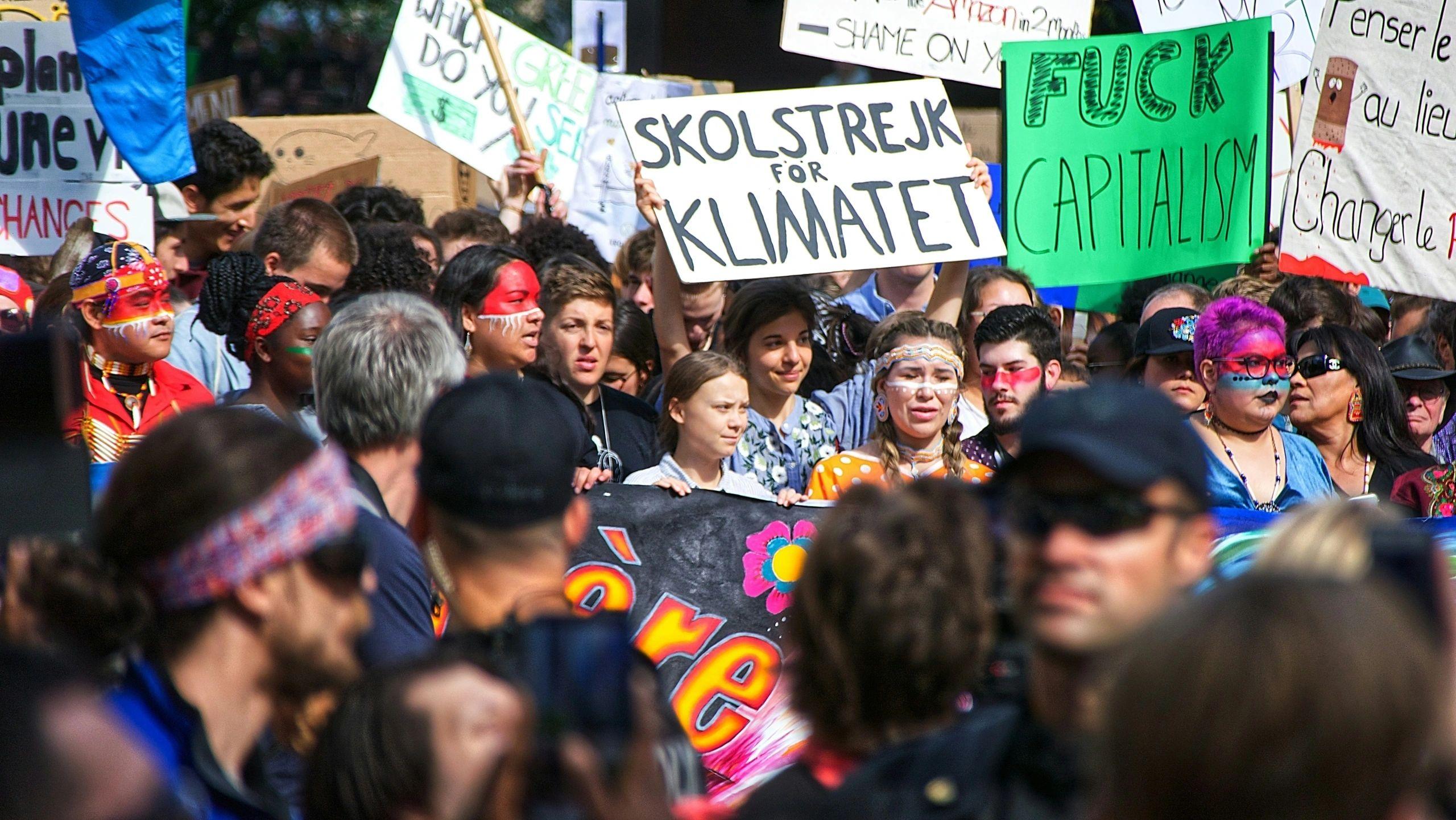
Climate change is one of the most urgent global policy issues, yet political responses continue to fall short of delivering the action that scientists deem necessary. Within this gap between necessary action and currently implemented policies, new actors have emerged who are pushing for climate change to be higher on public and policy agendas. Youth activists like Greta Thunberg have been urging the general public and those in power to properly address climate change, pushing the limits of how social actors can engage with the multilevel governance structures of climate policy.
While not a policymaker herself, Thunberg’s activism has influenced the agenda-setting phase of the policy cycle by holding politicians accountable for their inaction. Widely recognised as a beacon of hope, she has been invited to speak at major global forums, such as the UN Climate Action Summit (2019) and successive COP meetings, where she does not hold back in calling out older generations for threatening our future on this planet. Thunberg successfully reframed climate change as not just an environmental issue, but one of moral responsibility and intergenerational justice. In her persistence, she has established herself as a key actor in the ongoing fight for adequate and proportionate climate action and policy.
Greta Thunberg’s profound influence on global climate awareness has been coined the “Greta Effect”, exemplifying how youth activism can influence formal decision agendas even without direct institutional power. This raises the central question of the case: Can activists like Greta Thunberg be considered policy entrepreneurs within climate policy?
Agenda-setting and the Multiple Streams Framework (MSF)
Agenda-setting in public policy refers to the process by which a government or policy-making body prioritises a list of issues to address, while others either fade from salience or never gain public attention and resources. Scholars choose different perspectives to explain this; some focus on the role of institutions and suggest that policy agendas are relatively stable (with incremental changes) but occasionally experience radical change due to shifts in institutional values and/or public opinion on a topic. Others argue that the alignment of factors for policy change (a problem that needs fixing, a targeted policy solution, and a receptive political climate) explains how an agenda is set. The latter explanation introduces Kingdon’s Multiple Streams Framework, the lens through which the case of activists as policy entrepreneurs will be analysed.
In the Multiple Streams Framework (MSF), three streams - problem, policy, and politics - operate in their own spheres until they converge at a critical moment to open a “policy window”, a rare and short-lived opportunity for substantial change to be implemented. Kingdon first highlights the significance of how unfavourable conditions are identified and defined as problems. This can happen through a couple of channels: indicators of the condition’s magnitude, a focusing event, or feedback on existing policy. Closely related is the policy stream, made up of ideas and solutions to various problems, all of which are constantly being tested against criteria of feasibility, cost, and value alignment. Lastly, the political stream captures the political context at the time – characterized by elections, party values, and shifts in national mood – all of which have the power to influence public opinion of what constitutes a legitimate policy issue, and the perceived magnitude of these issues.
A key actor in this framework is the policy entrepreneur, defined as someone who invests their resources to push for policies that will solve the problem that they have identified. Kingdon explains that their motivation comes from: (1) a deep concern about certain problems; (2) pursuit of self-serving benefits (such as credit for future accomplishment); (3) promotion of their policy values; and (4) their pleasure in participating. Entrepreneurs have to stay updated on current events in all streams to find opportune moments where a coupling of solutions to a perceivable problem is needed, and people are counting on policymakers to enable the process. Thus, for Kingdon, agenda-setting is less about the objective importance of issues but more about the timing, framing, and strategic coupling – a process that is inherently political and socially constructed.
Building on this approach, Reardon deepens the explanation for how certain issues reach prominence by emphasizing the role of policy networks and institutions. She examines how the structure of networks (degree of openness, density, centralisation/fragmentation) systematically affects which problem indicators gain awareness, and whether or not these problems reach decision agendas. Her results show that more open and inclusive networks welcome a plurality of actors and ideas, but are much less able to secure (decision) agenda access. On the other hand, centralised and less accessible networks tend to reproduce institutionalized patterns of reasoning that condition which problems are worth solving, making for a more resistant context to change. Actors within these closed networks have more control over which stories, narratives, and evidence get mobilised towards decision-makers. Reardon’s account confirms Kingdon’s idea that the success of policy entrepreneurs relies on their credibility in and access to relevant power centers, showing how prevailing institutional and political contexts can constrain the potency of policy entrepreneurs.
The “Greta Effect”: Theoretical Applications
Through the Multiple Streams Framework (MSF), the “Greta Effect” provides a meaningful example to discuss whether or not prominent activists can be considered policy entrepreneurs. According to the MSF, participants usually specialize in one of the three streams: problem recognition, proposal formation, or politics. Within this framework, activists take the role of the impetus of problem recognition, dedicating their time and resources towards pushing a certain issue to the top of policy agendas. Since activism typically begins at a grassroots level, youth activists have the most direct impact on the public agenda. By educating the public on the existence or magnitude of an issue, they are able to influence the general sentiment surrounding it and inspire collective action. It is through this mechanism that the concerns of the public can reach political and policy agendas. As observed through her role in catalysing the global youth climate movement, Thunberg has primary power in the problem stream, but her effective presence in the policy and politics streams should not be underestimated.
Problem
Greta Thunberg’s impact first emerged within the problem stream, where issues are identified and framed. Her activism, grounded in scientific evidence, transformed climate change from an abstract scientific issue into a moral and generational crisis. When she was 15 years old, she embarked on a school strike for climate action, which led to the development of Fridays for Future, a now global youth-led climate movement that has captured media and public attention. This mobilisation of civil society has inspired a worldwide sense of urgency towards issues related to the climate. Sabherwal et al., in their 2021 paper, measured the tangible impact of Thunberg’s activism on a nationally representative U.S sample (N=1,303) (Sabherwal, 2021). In this study, they found that familiarity with Thunberg predicted greater intentions to take action about global warming. In addition to this, familiarity also predicted stronger collective efficacy, a belief that like-minded and valued individuals can bring about institutional change when working together.
Policy
In the policy stream, Thunberg acts as a critic of the existing policy solutions by highlighting the gap between scientifically defined targets and the weak effect that current policies have. Her refusal to compromise has changed the way that people perceive the legitimacy and effectiveness of proposed and implemented policies. The Sabherwal paper also links Thunberg’s visibility with an increase in action: voting, donating, contacting officials, attending protests, which pushes policy proposals onto the table by public demand.
Politics
Over the years, Thunberg has had multiple interventions at some of the most decisive climate events, among some of the most powerful actors in the global climate governance scheme. Her reception and impact after her 2019 UN General Assembly speech have led her to be known as a ‘political icon of crucial importance for the climate movement to mobilise globally, independent of UNFCCC climate summits as uniting events’ (Olesen, 2022). COP26 showed how political receptivity rose: governments and institutions were pressured publicly, and youth voices became visible stakeholders. Even without political authority, Greta’s activism mobilised public sentiment, affecting the political mood.
Can Greta Thunberg be considered a policy entrepreneur?
Greta Thunberg’s persistent activism shows a clear example of how a non-state actor can influence the agenda-setting phase of the policy cycle. Thunberg acts as a policy entrepreneur through the problem stream, constantly redefining the urgency of climate action in her appeals towards policymakers to prioritize environmental issues. Diverging from Kingdon’s general definition, Thunberg presents a new type of policy entrepreneur: a youth activist who does not wait on standby for the right circumstances to make their move, but who is constantly using their voice to put visible public pressure on policymakers to do more.
In this sense, the scope of Kingdon’s definition is limited when it comes to informal policy entrepreneurs like Greta Thunberg. Thunberg is a symbol of commitment to climate action and closely held values of care and justice; however, she is not motivated by self-serving benefits (she rejects being called a hero) and does not get pleasure from her participation in climate forums and discussions. The role of an activist is ideally temporally bound, with the hope that the problem under consideration ceases to exist in the future. Kingdon also supposes that during the “softening phase”, mixed reactions prompt entrepreneurs to revise their proposals accordingly. However, when it comes to climate change, there is very limited will to compromise when there is so much at stake.
Finally, the “Greta Effect” challenges the inclusion of access to power centers in the criteria of a policy entrepreneur. While in her earlier years of activism, she had a symbolic place at COP and other crucial international decision-making arenas when it comes to climate change, her more recent shift towards intersectional climate justice has noticeably cost her both access to formal policy networks as well as coverage in the public agenda. The censorship and demonization of her activism, now that it touches on other systemic injustices, has exposed just how fragile access to power centers and the capacity to act as a policy entrepreneur are. Although Thunberg’s weakened access to power centers puts her credibility at stake, she demonstrates that by investing in collective hope and power, agenda-setting power can emerge from activists who mobilise public legitimacy rather than leveraging institutional access.
Conclusion
Greta Thunberg and the ever-growing youth climate movement prove that the capacity to influence policy can still be impactful even without formal access to power. Through public engagement and intergenerational movements like Fridays for Future, youth activists have shaped global and national discussions on climate change, opening up the network to include all stakeholders. The “Greta Effect” redefines the role of the policy entrepreneur in contemporary governance, extending it to activists who generate political engagement and momentum from the ground up.
Bibliography
Wahlström, M., & Uba, K. (2023). Political icon and role model: Dimensions of the perceived ‘Greta effect’ among climate activists as aspects of contemporary social movement leadership. Acta Sociologica, 67(3), 301-316. (Original work published 2024)
Olesen, T. (2020). Greta Thunberg’s iconicity: Performance and co-performance in the social media ecology. New Media & Society, 24(6), 1325-1342. (Original work published 2022)
Sabherwal A, Ballew MT, van der Linden S, et al. The Greta Thunberg Effect: Familiarity with Greta Thunberg predicts intentions to engage in climate activism in the United States. J Appl Soc Psychol. 2021; 51: 321–333.
Kingdon, J. (2003 [1984]), Agendas, Alternatives and Public Policies. (2nd edition). Harlow, UK: Pearson Education Limited, pp. 196-208.
Reardon, L (2018), ‘Networks and problem recognition: advancing the Multiple Streams Approach’, Policy Sciences, 51:457–476
Uldam, J., Lundgaard, D., Latz, S., & Askanius, T. (2025). Imagining Change in Crisis: Climate Imaginaries in Activist Agenda-setting. Ephemera: Theory & politics in organization, 25(1), 137-182. https://ephemerajournal.org/contribution/imagining-change-crisis-climate-imaginaries-activist-agenda-sett ing