
A Brief History of Europe
12 min read · 2,315 words
Summary
Since antiquity, Europe’s history has been marked by significant conflict between its peoples, characterized by complex political dynamics and power struggles. This article aims to highlight key events where conflict and unity revealed themselves to be deeply intertwined, eventually leading to the birth of the European Union.
A Brief History of Europe
What is Europe, and where does its history begin? What led to the creation of the European Union, and how did so many different countries and cultures find common ground to become the continent we know today? The history is complex, with roots that extend beyond what is immediately apparent.
From what we know, Europe as a continent has long been a centre of gravity for the arts, culture, economy, and trade. In recent centuries, its global presence led to the creation of new countries, and since the EU was officially formed in 1993, many nations have sought to join. However, a long and complex history preceded it.
Europe: From Myth to Culture
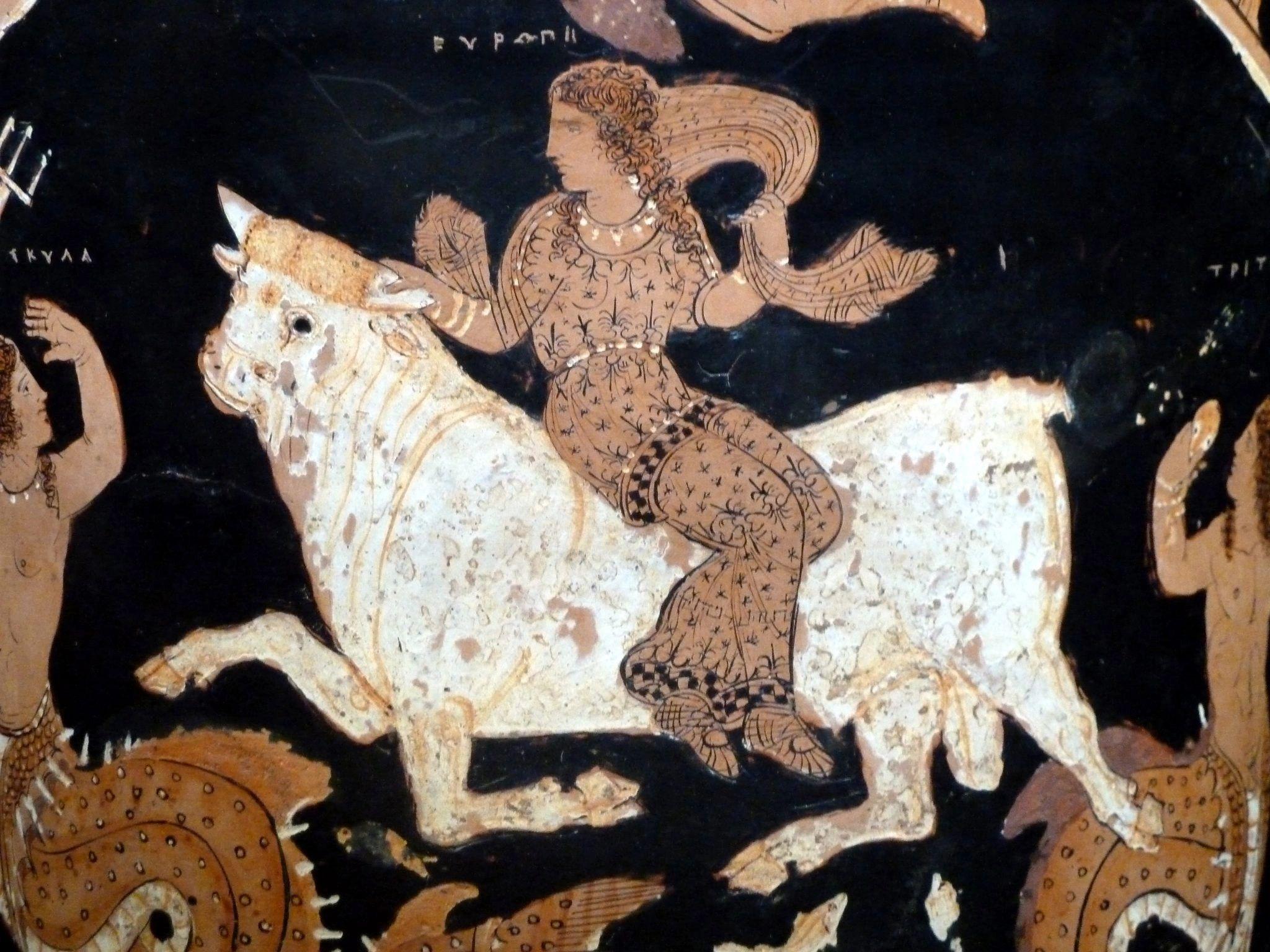
Since the seventh-century BC, the people of what is now Greece referred to their geographical area as “Hellas.” Every region above and to the west of Hellas became part of Europe, separating it from the east of Eurasia (Rietbergen, 2020). The name Europe originates in the myth of Europa, mentioned in the works of Hesiod and Aristotle. In Homer’s Iliad, Europa is a Phoenician princess abducted by a love-struck Zeus, who made her the first queen of Crete. They had three sons—Minos, Rhadamanthus, and Sarpedon—who became the judges of the underworld (Rietbergen, 2020; Mikkeli, 1998).
This article will highlight key moments where conflict and unity were intertwined, leading to the birth of the European Union. From antiquity, there has been a recurring desire to bring the continent to a coherent political front: from the Roman Empire’s use of a common identity as a geopolitical tool, to the rise of a shared sense of belonging under the concept of Christianitas in opposition to the Islamic world. Ultimately, it was only with the imperial and colonial movements that the first glimpses of what we now call Europe began to emerge. It is hard to pinpoint the origins of a European culture and identity. Still, it is evident that through its rich history, the name Europe began to comprise a common notion of culture. As Rietbergen (2020) puts it, “Europe is not a defined space, but a space that has defined itself."
Conflict and Resolution: From the Roman Empire to the EU
After the fall of the Western Roman Empire, its last Emperor, Romulus Augustulus, abdicated in 476 AD and was succeeded by Odoacer, who was later assassinated in 493 (Castronovo, 2019). Fast forward to 800 AD, Charlemagne founded the Holy Roman Empire to combat the fragmentation created by small states, each governed by a different noble. As Latin Christianity became the empire's official religion and Latin the language of the Church and diplomacy, a greater sense of cohesion emerged across a large portion of European territory (Benz & Hogg, 2025). A significant step in this process was the creation of a strong network for knowledge dissemination through the first universities, such as those in Paris, Bologna, and Oxford (Bodi, 2023). Economically, the revival of commercial exchanges, led by the Italian Maritime Republics and the Hanseatic League, created a dense trade network across the Atlantic and Indian Oceans.
This, however, was just the beginning. The late Middle Ages were crucial in forming the contemporary concept of Europe. The 13th century brought highs and lows, as dynastic wars (Nexon, 2009) and plagues like the Black Death (Belich, 2022) generated years of chaos and poverty. Political fragmentation remained strong, leading to catastrophic events like the Hundred Years' War, which involved not only major powers like France, England, and the German territories but also civil wars within those realms (Nexon, 2009). Public trust in institutions was low, poverty was increasing, and wars brought destruction.
The 15th and 16th centuries were theatres of great change. With the fall of Constantinople in 1453 and numerous new geographical discoveries, European nations began a race for colonialism and sea exploration (Link, 2023). The Treaty of Tordesillas (1494) between Portugal and Spain effectively divided the non-European world between them. The formation of entities like the East India Company in 1600 (Robins, 2012) ushered in a flourishing era of new markets and monopolies.
Even though the Renaissance (14th–17th centuries) did not directly cause the European Union, it laid significant groundwork for its emergence. By reviving classical Greek and Roman traditions, the Renaissance gave Europeans a sense of shared heritage beyond kingdoms and borders. Humanism, with its emphasis on reason and education, shaped Enlightenment ideas about democracy and rights that are central to the EU today (Nida-Rümelin, 2023). Intellectuals like Erasmus dreamed of peace through unity, and the printing press spread ideas across Europe, forming intellectual networks that fostered cooperation (Nauert, 2009). This legacy made European integration a reality centuries later[1].Yet, many conflicts lay ahead. The devastating Thirty Years' War (1618-1648) pitted Catholics (led by the Habsburg dynasty in Austria and Spain) against Protestants (Germany, Denmark, Sweden, and later, France, which opposed the Habsburgs despite being mainly Catholic). The Peace of Westphalia (1648) reinforced religious tolerance and established the principle of state sovereignty: each state within the empire was free to choose its own religion and govern itself without external interference (Deák, 1990). While aimed at peace, this created a Europe of independent, competing states, exacerbating the problem of fragmentation.
Later, the birth of national realms led to an escalation of power struggles, culminating in the Napoleonic Wars and, eventually, the Colonial Wars (Hulat, 2023). Simultaneously, the Enlightenment (c. 1685–1815), a cultural wave influenced by global exploration, championed reason, empirical evidence, and the scientific method. During this stage, many of the ideas we now cherish began to emerge, and the possibility for a united Europe founded on reason and dialogue became apparent.
In the mid- to late 19th century, we witness a rise in movements for national independence, such as in Italy with Garibaldi in 1861 (Dini, 2011) and Germany with von Bismarck in 1871 (Retallack, 2008). The industrial revolution reshaped the modern family and household (Carmichael et al., 2023). The Revolutions of 1848 across Europe—including the creation of the Frankfurt Parliament (Mattheisen, 2008), challenges to the Habsburg dynasty in Italy, Hungary, and Vienna (Deák, 1990), and the February Revolution in France (Traugott, 1988)—profoundly influenced political awareness, even when failing to achieve their democratic goals. Political ideologies like socialism and liberalism embedded themselves in the social fabric, strengthening the will for lasting peace (Sombart, 1898). Nevertheless, these shifts, fueled by imperial rushes, generated massive conflicts.
The 20th century brought two brutal wars, World War I and World War II (Hamilton & Herwig, 2003; Duignan & Gann, 1995), which paradoxically set Europe on a path toward unity. Europe was split between the Allies (USA, UK, France, Soviet Union, and China) and the Axis (Germany, Japan, and Italy), creating an atmosphere of destruction.
On April 25, 1945, US and Soviet troops met at the Elbe River, splitting Germany in half: the east under the USSR and the west divided among the American, British, and French. This division, described by Churchill as an «Iron Curtain», was physical and cultural (capitalism vs. communism). The Berlin Wall became its symbol until it fell in November 1989. With the dissolution of the Soviet Union in 1991, the Cold War ended, setting the stage for a new political era in Europe (Tugambekova, 2011; Bisiach, 2008).
But before the Maastricht Treaty established the European Union, a crucial step was taken in 1952, when six countries (Belgium, West Germany, France, Italy, Luxembourg, and the Netherlands) founded the European Coal and Steel Community (ECSC). Its main objective was to pool resources and prevent their use in future wars. Then, in 1957, the Treaties of Rome established the European Economic Community (EEC), aiming to create a common market based on the free movement of goods, people, services, and capital.
The European Union
In the following years, the EEC expanded and strengthened its institutions. The aim was no longer just economic but political, capable of defending shared values such as democracy, human rights, and the rule of law. The final step was the Treaty on European Union, signed in Maastricht on February 7, 1992, and effective as of November 1, 1993, after a lengthy ratification process (Tondi, 2023).
This treaty transformed the EEC into the European Union (EU), a more aspirational political project structured around three "pillars":
The European Communities: The EEC (renamed the European Community), ECSC, and EURATOM.
A Common Foreign and Security Policy (CFSP): To give Europe a unified global voice.
Justice and Home Affairs (JHA): For cooperation on immigration, asylum, and crime.
A major innovation was the commitment to creating an Economic and Monetary Union (EMU), including a single currency. The euro was introduced virtually in 1999 and as physical currency in 2002, symbolizing unity and reducing trade barriers.
The Maastricht Treaty was just the beginning. The Treaty of Amsterdam (1999) enhanced the European Parliament's authority, while the Treaty of Nice (2003) restructured the institutional framework to facilitate the accession of new member states (Tondi, 2023).
In 2004, ten nations from Central and Eastern Europe joined the EU in a "big bang" enlargement, followed by Romania and Bulgaria in 2007, and Croatia in 2013. The Lisbon Treaty (2009) further updated the Union, giving legal force to the Charter of Fundamental Rights and establishing new leadership positions (Merola, 2018). The 2008 financial crisis and the Eurozone crisis tested European solidarity, necessitating new economic governance mechanisms.
A dramatic turning point came with Brexit: the United Kingdom voted in 2016 to leave the EU and formally departed in 2020, the first nation to do so. Even so, the EU has moved forward on global issues, from the Green Deal for climate neutrality to enhanced defense and energy security following Russia's 2022 invasion of Ukraine. From Maastricht to the present, the EU has evolved from an economic community to a political union of 27 states, remaining the most ambitious integration project in modern history (Anziutti, 2023).
Currently, Europe faces significant challenges, from foreign conflicts and internal divisions to the rise of far-right movements, volatile relations with global powers, migration, and climate change. Future articles will explore these issues, focusing on how European identity influences the stances taken by the EU. This article has mentioned highly debated historical moments (colonialism and imperialism) that have led to current debates on identity and responsibility. These subjects are too complex to address in this brief overview but will be addressed in the future.
[1] It is worth mentioning that this era gave rise to long-lasting misconceptions and large-scale consequences, a subject we will develop in future articles.
Citations
Anziutti, R. (2022) European federalism: birth and evolution of an unfinished project. Tesi di Laurea in European union law, Luiss Guido Carli, relatore Robert Schuetze, pp. 63. [Bachelor's Degree Thesis]
Bisiach, G. (2008). «25th of April 1945-meeting on the Elbe between Russians and Americans» One minute of History. archivio.quirinale.it, accessed 18 Aug. 2025.
Belich, J. (2022) The World the Plague Made : The Black Death and the Rise of Europe. New Jersey : Princeton University Press.
Benz,E.W., Hogg,W.R. (2025). The Alliance between the Church and the Empire. https://www.britannica.com/topic/Christianity/The-alliance-between-church-and-empire, accessed 18 Aug. 2025.
Bodi, G. (2023). The Birth of the Universities. Giornale Indipendente Giano News. https://www.giano.news/2023/11/06/la-nascita-delluniversita-in-europa-prima-parte/ accessed 22 Aug. 2025.
Castronovo, V. (2019). Dal Tempo alla Storia. Rizzoli Education.
Carmichael, S., Martykánová, D., Mátay, M., & Moses, J. (2023). Household and Family in Modern History (ca. 1800–1900). In Open Book Publishers (pp. 209–218). https://doi.org/10.11647/obp.0323.20
Deak, I. (1990), Beyond Nationalism: A Social and Political History of the Habsburg Officer Corps, 1848-1918. New York; online edn, Oxford Academic 2023, https://doi.org/10.1093/oso/9780195045055.001.0001, accessed 18 Aug. 2025.
Dini, O. (2011), L'Indipendenza, l'unità d'Italia: la costruzione di uno Stato, in: Zannetti, F. Scienziato e patriota nel Risorgimento. Italia: Polistampa.
Donald J. Mattheisen (2008), Liberal Constitutionalism in the Frankfurt Parliament of 1848: An Inquiry Based on Roll-Call Analysis, Cambridge University Press.
Duignan, P., Gann, L. H. (1995). World War Two in Europe: Causes, Course, and Consequences. Stanford University, Hoover Institution on War, Revolution, and Peace.
Gommers, Peter H. (2001). Europe - What's in a name?. United States of America: Leuven University Press.
Hamilton, R. F., Herwig, H. H. (2003) The Origins of World War I. Cambridge University Press.
Link, A. (2023). The Fall of Constantinople and the Rise of the West. University of Erlangen-Nuremberg.
Merola, M.M. (2018). Policy and Foreign: The treaty of Lisbon. https://startingfinance.com/approfondimenti/il-trattato-di-lisbona/, accessed 22 Aug. 2025.
Mikkeli, H. (1998). The Mythological and Geographical Roots of Europe. In: Campling, J. (eds) Europe as an Idea and an Identity. Palgrave Macmillan, London. https://doi.org/10.1057/9780333995419_1
Nauert, C. (2009). The social program of Desiderius Erasmus. https://plato.stanford.edu/entries/erasmus/, accessed 19 Aug. 2025.
Negro, P. del (1999). Annals of the history of Italian universities. Università di Bologna. centri.unibo.it
Nexon, D. (2009). The Struggle for Power in Early Modern Europe: Religious Conflict, Dynastic Empires, and International Change. Princeton: Princeton University Press. https://doi.org/10.1515/9781400830800
Nida-Rümelin, J., Winter, D. (2024). Humanism and Enlightenment. In: Werthner, H., et al. Introduction to Digital Humanism. Springer, Cham. https://doi.org/10.1007/978-3-031-45304-5_
Retallack, J. (2008). Imperial Germany 1871-1918. Oxford University Press.
Rietbergen, P. (2020). Europe: A Cultural History. Reino Unido: Taylor & Francis.
Robins, N. (2012).The Corporation That Changed the World - How the East India Company Shaped the Modern Multinational. Pluto Press.
Sombart, W. (1898). Socialism and the Social Movement in the 19th Century. G.P. Putnam’s Sons.
Tondi, L. (2023) The Treaty of Maastricht and the European Community. https://library.weschool.com/lezione/trattato-di-maastricht-riassunto-parametri-di-maastricht-unione-europea-comunita-europea-17403.html, accessed 20 Aug. 2025.
Traugott, M. (1988). The Crowd in the French Revolution of February, 1848. The American Historical Review, 93(3), 638–652. https://doi.org/10.2307/1868105
Tugambekova, D. (2011) What was the Composition of the country's supreme soviet of the XII congress. https://e-history.kz/en/news/show/8585, accessed on 15th August 2025.