
An Opportunity for Identity: Greenland & the US Threat
By Aidan Cross
18 min read · 3,576 words
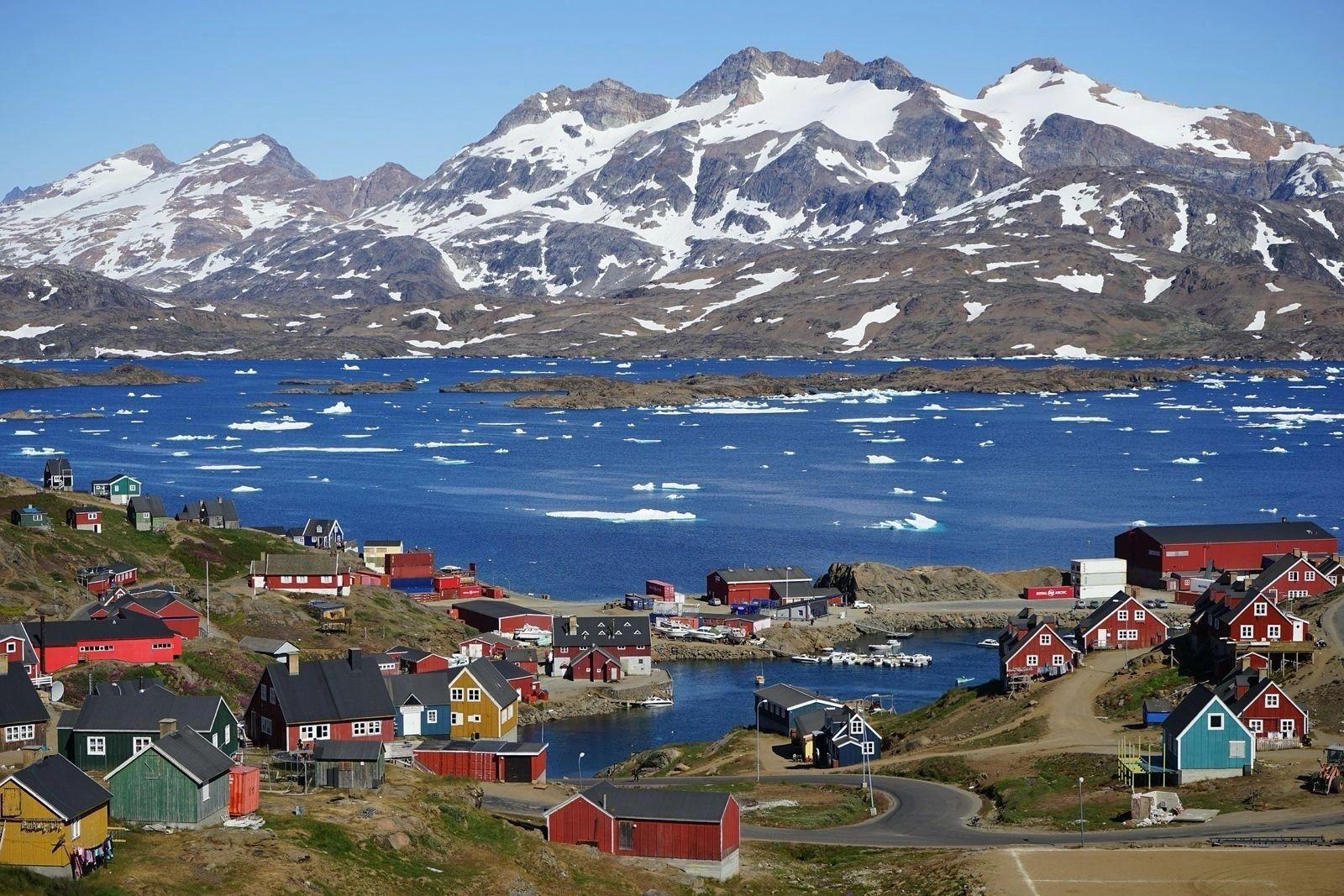
In January of this year, the European continent was shaken by what was once an inconceivable crisis. The United States, a long-time ally of Europe and an integral component of European security, was now actively displaying an intention to annex Greenland, a sovereign territory of the Kingdom of Denmark, and likewise refused to rule out the use of military force against a NATO ally (Breuninger, 2026). While this was not the first time that the US had indicated a wish to take over the territory, it was during the start of 2026 where the rhetoric of senior figures in the United States became more visceral and assertive on fully annexing it, irrelevant of the wishes of Denmark or the Greenlandic population (Bryant, 2025). For the ‘sake of US and International Security’, the United States took a combative and threatening position towards Europe as it declared that ‘it must have Greenland’ (Levison & Russel, 2026). In a matter of weeks, US President Donald Trump and his administration had shattered a foundational principle of the post-war order which Europe has grown accustomed to, that Western allies, particularly America, do not threaten one another.
Europe’s response in the immediate aftermath best expressed the shockwave that went through the continent’s capitals, a mix of both unsteady panic but also a realization that this was one redline that should not be crossed. Denmark’s NATO allies, Germany, France, Sweden, Norway, the Netherlands, Finland, and the United Kingdom were quick to dispatch military personnel to Greenland to support the Danish-led Operation Arctic Endurance, aiming to both counter American accusations of Greenland not being well-protected, and to act as a sign of European-wide solidarity (Harvey, 2026). This, expectedly, coincided with a series of statements from European governments, including a significant joint-statement from seven heads of government which declared that Greenland “belongs to its people” and is not for the US to annex (Al Jazeera Staff, 2026). What was perhaps the most notable of all these reactions however, was the historic decision of Denmark’s official defence intelligence assessment move towards designating the US, alongside nations like Russia and China, as a potential security risk (Cole & Croucher, 2025).
From these reactions, it is clear that Europe is conscious that this was no longer a drill nor any kind of typical Trump antic that could be laughed away within a few days. Instead, it has become clear that there is an active effort within the US to pursue policies which are a direct threat to Europe’s security and wellbeing (The Associated Press, 2026). Considering that this administration has already demonstrated a willingness to act against convention, expressed as recently as its actions in Venezuela, the question for Europe now is not whether we should take the US as a serious threat even if we reach some ‘kind’ of solution to the crisis, but rather, what must we do now to protect Europe, beyond just a military buildup (Bryant, 2026; Langrand, 2026).
The Context: Greenland is a Breaking Point for a Continent Under Pressure
Greenland may have been the most direct crisis facing Europe, but it comes at a time where the continent faces pressures on various flanks, both at the border and abroad. Its eastern flank continues to grapple with the consequences of Russia’s now years-long invasion of Ukraine, resulting in a conflict that exposed Europe’s deficiencies in its defence industry, having long relied on now increasingly unreliable American security guarantees. Questions have already been raised about how Europe must rearm itself, and there has been little consensus beyond the acceptance that rearmament is needed, and better coordination is necessary, if the continent is ever going to avoid being consistently susceptible to blackmail from the global superpowers (Paqué, 2026; Reuters 2025).
Yet beyond the physical pressure, there exists another front which Europe must shore up, or risk destabilizing consequences. The reality of the Greenland crisis is that it profoundly exposed the ideological assault happening within the Western alliance on the foundations of a rules-based order, where both Russia and the United States are now united on a willingness to engage in the redrawing of borders (Messmer, 2026). Such an assault has already fundamentally shifted the geopolitical context as we have known it for the past decades, and therefore we find ourselves in a dangerous time, one which poses great risks to a Europe that is devoid of a united purpose or identity.
An Unreliable US: Not an Anomaly, but the Arrival of the Inevitable
Prior to any recommendations of what must be done in Europe to better prepare the continent for what lies ahead in, as Canadian Prime Minister Mark Carney described, the ‘new world order’, the reality of the relationship between Europe and the US must be established and understood (World Economic Forum, 2026). The US, under present leadership, is simply not a reliable ally, and the fact that this situation is even possible, makes them an unreliable partner irrelevant of who is in the White House. While this may be a more acceptable realization following the Greenland saga, it is by no means a new conclusion. Alarms had already been sounded when the idea was first raised about purchasing Greenland in 2019, but such were dismissed as little more than the eccentric fantasy, typical of Trump, and would eventually be restrained by both America’s robust institutions and longstanding alliances, which was a conclusion that held some merit after his first administration came to an end (Pengelly, 2019).
However, the decision to turn a blind-eye to such intentions has proven to be severely misguided. This once brushed off eccentrism has now turned into a governing doctrine, underpinning a National Security Strategy that exhibits a return to the Monroe, or ‘Donroe’, Doctrine of American dominance in its hemisphere (The White House, 2025). We saw the immediate push from the Trump administration to stake a claim on Greenland, with Vice President JD Vance visiting the territory uninvited, and then followed by the more recent behaviour of presidential advisor, Stephen Miller, who in a hysteric interview, stated that the US ‘should have Greenland’, despite the fact that the US already has bases there (Margaritoff, 2026).
With the likes of Stephen Miller given a more centre stage on matters of foreign policy, we have witnessed a more aggressive worldview take shape within the US, where international law is viewed as nothing more than a minor constraint to be ignored, while multilateral institutions and alliances are tools for American supremacy, and where they are not, they are to be discarded (Yang, 2026). This is no longer representative of a difficult partner, but a categorically different force, one which has unilaterally redefined the basis of engagement in terms acceptable to itself and only itself. As a consequence, Europe must abandon any delusions about returning to what once was, and instead chart its own path, build its own presence and identity beyond the past structure that was wholly dependent on a reliable US.
The Opportunity in an Upset Order
In the context of such a severe upset in the way that Europe has understood world affairs, and the crises that have spawned from it, we have historically seen that in these historical situations, a shared, ever developing threat may provide a powerful catalyst for a stronger, more unified collective identity. Much like the time of the Cold War, when the Soviet Union and the threat it posed shaped a transformative generation of European cooperation, the Greenland crisis and the subsequent US threat has the possibility of bringing about this very same result, should our leaders learn the right lessons.
Spoken frankly, the Greenland crisis offers Europe a moment of unified moral clarity. With a near-unanimous condemnation across Europe, irrespective of political allegiances, geographic divides or historic rivalries, we have already seen the continent move as one to uphold its sovereignty. Coinciding with this, when Danish Prime Minister Mette Frederiksen declared that any attack on Greenland would mean that “everything stops”, meaning the entire security architecture set up by the United States since the end of the Second World War, she was not detailing the position of Denmark, but a ‘European’ one, confirmed by the lack of pushback from her counterparts (Blackburn, 2026).
Europe, for its own sake, cannot allow any infringement of its territorial sovereignty from any irrational action, irrelevant of whether that actor has been a long-standing ally, or a well-established threat as this represents something greater than a territory threat, but a deeper one which undermines what the EU came to “install” as the new order of the 21st Century: peace, solidarity, freedom. This is by no means a radical position to take, nor is it anti-American for it is a principle which the US itself in its current and prior states has adopted. In reasserting our own redlines on the principle of sovereignty, clearly and collectively, where not one nation should have its territory annexed or infringed upon, is not aggression against anyone. On the contrary, it serves as the beginning of a mature foreign policy for Europe, and one which can invoke a sense of unified purpose and pride.
Clarity on Identity: Two Different Projects
But to better understand what that foreign policy should look like, we must fundamentally understand that the US and Europe, while long accepted as part of the same overall project, have not been pursuing the same path for some time now. While the recent actions undertaken by the US administration has provided more overt examples of this de-alignment, this has just been the consequence of the direction the nation has taken in recent years. The US is a nation whose citizens see freedom from the state as a priority over ensuring those in need are cared for, and with unilateral dominance and individual self-reliance is regarded as common sense policy (Pew Research Center, 2012). Europe, in comparison, is a continent in which solidarity, shared rules and collective responsibility holds a much greater sway, and remains embedded in the foundational texts of the European from the Treaty of Rome to the Lisbon Treaty (Lamo de Espinosa, 2005).
It should of course be stated that it is difficult to accurately compare the two projects pursued by Europe and the US, where one is a continent of sovereign nations and the other a single federation of culturally similar states. Indeed, the diversity of the EU has meant that the internalization of these shared values converge at differing paces depending on the various differences between European nations, and therefore any worthwhile shared identity must be honest about this reality (Mader et al., 2018). Yet, even in this context, public opinion across the continent has noted that key social issues have seen both broad and growing support in the past decades, and that the Union’s core and founding values remain important and must continue to be defended (Caughery, O’Grady & Warshaw, 2018; European Parliament, 2026). From this, the divergence from the US and the values it has sought to adopt reflects two genuinely different answers to two questions, that is, what is the purpose of a society and a nation, and how should one act on it. Europe is not without an answer to these questions, but the task now is to actively build an identity around it.
A Chance for a European Identity
In most recent decades, European identity, as in how it is both viewed on the global stage and amongst its own citizens, could be best described as occupying the role of a junior, but loyal, partner to the United States. Defined less as its own centre, and more an identity shaped by external factors, particularly as something that is reactive, rather than proactive.
Yet, the Greenland crisis provides the tools to (re-)formulate or rather, re-instate, our own identity, anchored on positions and institutions which are European-centred, serving the interests of the continent. This would not solely focus on commercial views, rather, values and identity ones. Former Danish PM and NATO Secretary General Anders Fogh Rasmussen, on this point, made a valid suggestion within this thought, recommending the strengthening of NATO’s ‘European pillar’ to allow for the “reduction of dependency on external partners.” (Ryan, Louise Kelly & Jarenwattananon, 2026). Such would allow Europe to define itself not as a mere aspect of an American-led order, but its own civilizational and political project charting its own path. Rather than existing as some old world that the Americans seek to dictate policy to and mould to their liking, a European identity based on a community of nations committed to sovereignty, pluralism, the rule of law and a genuine commitment to mutual defence of allies (Henely, 2026). Each contributing to a stronger identity as one continent, rather than just a gathering of nations. (On this regard, much could be said in terms of Europe’s own struggle in re-claiming a center stage, while also reflecting and reshaping the sort of leadership wanted and needed, as a consequence of conscious reflection of its role and impact on worldwide wars, progress and lack thereof. This will be addressed in a future article).
For this to take place, it will of course require a great deal of effort. It will require the acceleration of work already underway in shoring up European defence autonomy and the construction of a capable defence capacity, alongside strengthening military coordination that already exists, in order to make the continent properly self-sufficient. This is in no way a fantasy, Europe is entirely capable of establishing itself as a competent force within its own continent, and truth be told a strong identity will be dependent on citizens having confidence that Europe can hold its own against any adversary who may threaten its sovereignty (Messmer, 2026). It should by no means be limited to the military sphere, as investments in European institutions and displaying a political will to act as its own centre will be essential to building a European public that will understand itself as European, and be proud of it.
However, the case for a stronger and more unified Europe cannot rest solely on strengthening its ability to defend itself, as to view the world as it is in these forms alone would only concede to the framing of those who see global affairs as a mere competition of economic and military power. Europe’s advantage in the formation of a unified identity comes from the fact that in the modern day, Europe’s contributions have not been armies or the use of such. Instead, the strength of this continent, particularly in the case of the EU, is in the political will that has existed to willingly organize itself around the guiding principles of peace and diplomacy, to be upheld by multilateral institutions that represent the interests of its citizens.
It is then from this perspective that the Greenland crisis, as much as it became an issue of security and territorial sovereignty, serves also as a crisis where Europe must decide what kind of force in the world it wants to be. With the US proactively undoing the rules-based order and Russia continuing to engage in efforts to redraw established borders through military might, Europe needs to grapple with the choice about whether it will accept this reframing of the world, or instead choose to represent a vehement commitment to the ideals of multilateral diplomacy and international law, where disputes can be resolved without the threat of annexation (EEAS, 2021).
For a feasible European identity to come into being, we must see the continent adopt these two perspectives. An identity must be based on a credible capacity to defend itself from external aggressors, while simultaneously refusing to abandon its principles of peaceful engagement and negotiation. These are not mutually exclusive matters, but are in fact a necessary combination in forming a European identity. One will find it difficult to align themself with a military without purpose, or a purpose without a military.
Conclusion: Lessons to be learned after the crisis
Emotions may have calmed surrounding the possible threat of the US annexing Greenland, and the more aggressive rhetoric may have somewhat subsided, but even still, Europe must not allow itself to consider this crisis to have been just a bumpy episode in an otherwise reliable relationship. This was not something to be simply weathered before eventually filing it away once the immediate pressure has dissipated. Donald Trump may have walked back his more concerning statements on the use of military force in late January, but the underlying dynamics and impact remain unchanged (Stokols & Nerozzi, 2026). The personnel surrounding him, the guiding ideology adopted by his administration and the domestic political incentives that have shaped the attitude and decisions taken in the past year or so remain in place. Europe should be under no illusion that this American pressure will not return in varying forms. There are only so many times that one can call the US President ‘daddy Trump’ in order to stall his more destructive decisions, and we shouldn’t allow ourselves to be the continent that needs to resort to such acts just to maintain our security (Bedigan, 2026). As a result, what is required is not a mere crisis response but a strategic reorientation.
A decision must be made clearly and collectively across the continent, stating that Europe is no longer willing to outsource its security, its values or, above all, its identity to any external power. We should also not accept the words of NATO Secretary-General Marke Rutte that we cannot defend ourselves without such (Jack, 2026). The solidarity shown throughout the Greenland crisis serves as a foundation, but an identity must be built upon it to ensure that the continent will be able to prosper in this ‘new world order’, and not just survive.
Bibliography:
Al Jazeera Staff. (2026). European leaders hit back at Trump’s US takeover designs on Greenland. [online] Al Jazeera. Available at:
Bedigan, M. (2026). NATO chief explains his odd nickname for Trump: ‘Do you have some daddy issues?’. [online] The Independent. Available at:
Blackburn, G. (2026). US attacking NATO ally to annex Greenland would be end of ‘everything,’ says Danish PM. [online] Euro News. Available at:
Breuninger, K. (2026). Trump weighs using U.S. military to acquire Greenland: White House. [online] CNBC. Available at:
Bryant, M. (2026). Danish state could face legal action over deal that gives US powers on its soil. [online] The Guardian. Available at:
Bryant, M. (2025). Why is Donald Trump talking about annexing Greenland? [online] The Guardian. Available at:
Caughey, D., O’Grady, T & Warshaw, C. (2018). Policy Ideology in European Mass Publics, 1981 - 2016. [online] Massachusetts Institute of Technology. Available at:
Ciobanu, C. & Dazio, S. (2026). White House says military ‘always an option’ in Greenland as European leaders reject US takeover. [online] The Associated Press. Available at:
Cole, B. & Croucher, S. (2025). NATO Ally Says Trump’s US Poses Security Threat. [online] Newsweek. Available at:
EEAS. (2021). Multilateralism and Diplomacy for Peace. [online] European Union External Action. Available at:
European Parliament. (2026). EU survey: rising concerns push demand for more European action. [online] European Parliament News. Available at:
Jack, V. (2026). Europe can’t defend itself without the US, NATO’s Rutte warns. [online] POLITICO. Available at:
Harvey, L. (2026). European nations send additional troops to Greenland as US annexation threats escalate. [online] CNN. Available at:
Henley, J. (2026). Rubio’s Munich speech was an offer of friendship - but on white, Christian, Maga terms. [online] The Guardian. Available at:
Lamo de Espinosa, E. (2005). ¿A Difference that Makes a Difference? The US and Europe on Values and Culture. [online] Elcano Royal Institute. Available at:
Langrand, M. (2026). US intervention in Venezuela: is the international system powerless? [online] Geneva Solutions. Available at:
Levison, J. & Russel, L. (2026). Why Trump has insisted the US ‘needs’ Greenland. [online] Sky News. Available at:
Mader, M., Scotto, T., Reifler, J., Gries, P., Isernia, P. & Schoen, H. (2018). How political are national identities? A comparison of the United States, the United Kingdom, and Germany in the 2010s. [online] Research & Politics. Available at:
Margaritoff, M. (2026). Stephen Miller Says Might Makes Right In US Takeover: ‘They Cannot Defend Greenland’. [online] Huffington Post. Available at:
Messmer, M. (2026). US intentions towards Greenland threaten NATO’s future. But European countries are not helpless. [online] Chatham House. Available at:
Paqué, K. (2026). Euroviews. Europe is permanently vulnerable to blackmail - it must rearm. [online] Euro News. Available at:
Pengelly, M. (2019). Trump confirms he is considering attempt to buy Greenland. [online] The Guardian. Available at:
Pew Research Center. (2012). The American-Western European Values Gap. [online] Pew Research Center. Available at:
Reuters. (2025). Europe must urgently rearm, EU’s Von der Leyen says. [online] Reuters. Available at:
Ryan, E., Louise Kelly, M. & Jarenwattananon, P. (2026) Former NATO chief on Europe and U.S. relations. [online] Available at:
Stokols, E. & Nerozzi, D. (2026). Trump steps back from the brink on Greenland. But the damage has been done. [online] POLITICO. Available at:
The White House. (2025). National Security Strategy of the United States of America. [online] The White House. Available at:
World Economic Forum. (2026). Davos 2026: Special address by Mark Carney, Prime Minister of Canada. [online] World Economic Forum. Available at:
Yang, M. (2026). ‘I don’t need international law’: Trump says power constrained only by ‘my own morality’. [online] The Guardian. Available at: