
Between Democracy and Far-right Movements
Introduction
53 min read · 10,527 words
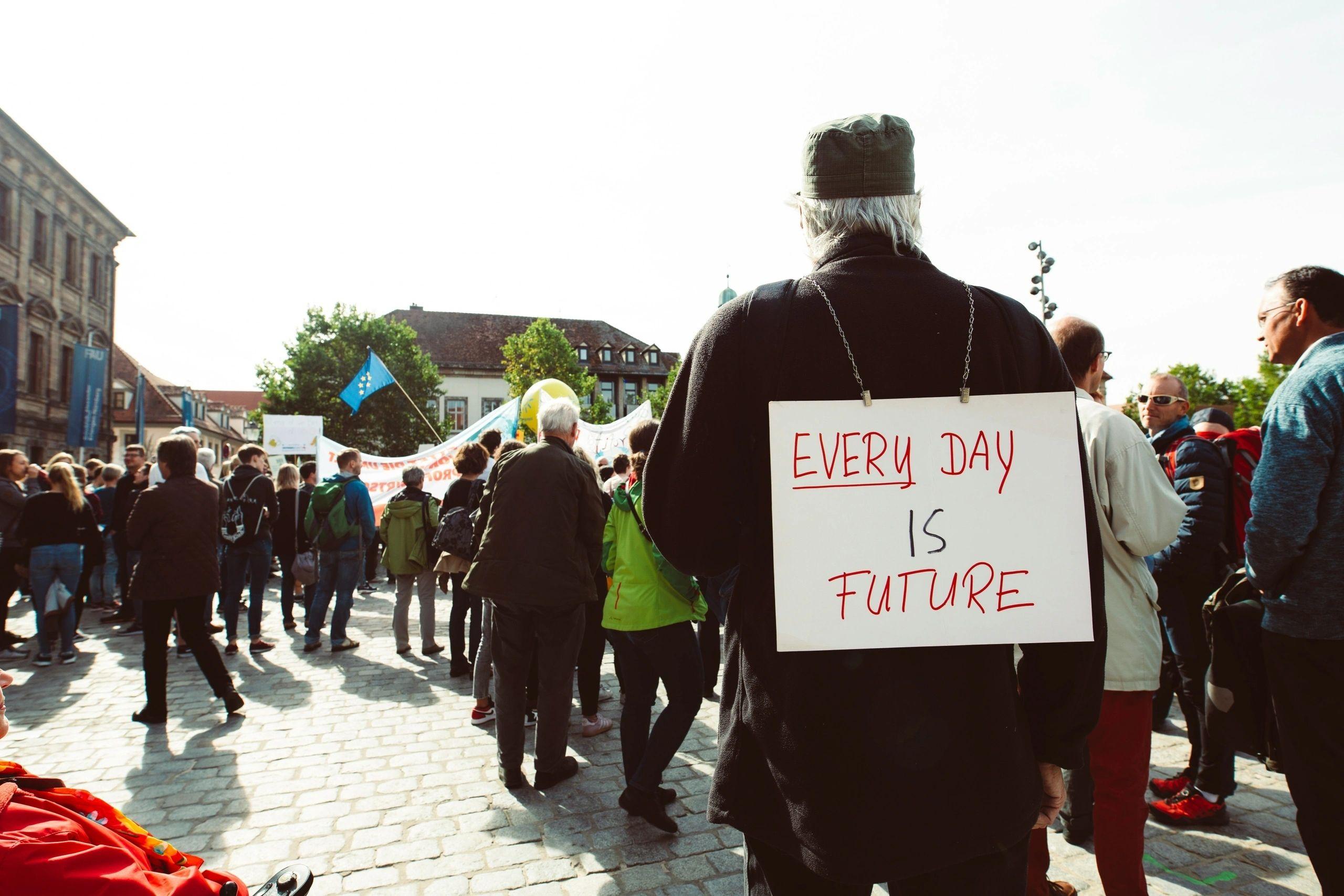
For at least the past decade, the rise of far right movements has become a concern for many European citizens. This crescendo reveals a separatist tendency we cannot ignore, with a variety of factors weighing democracy down. In this article, we analyse this recent proclivity from its political meaning, to its cultural significance, and why it represents a threat and failure of the democratic endeavour of the EU.
“Far right” and “populism” have become blanket terms to describe groups on the right of mainstream politics, ranging from far-right parties to neo-nazi groups. But the concern is greater than an ideological persecution.
The main differences between right-wing and other political views, like centre or centre-left parties, mainly lie in policy-making and their overall approaches to social issues, from identity, immigration, EU integration, and minority rights (SWP, 2025). If we take a closer look at far right parties they tend to focus on nationalism, sovereignty, stricter immigration controls, and skepticism of EU integration. Radicalist movements on the right have specific traits that represent a direct threat to democracy. Predominantly worrisome are the propensity to elevate the “nation” towards a sanctified realm, achieving a degree of essentialism that results in chauvinism, xenophobia, an anti-establishment position, dogmatic mindsets, authoritarian models of governance, and populism (Rodríguez-Aguilera, 2014) as a political approach focused on the division of society into the “pure” and “impure”, “the people” and “the elites”, the “nation” and “the establishment”. This allows these parties to position themselves as defenders of traditional values and national identity against the claimed threats globalization and multiculturalism pose (ibid.).
Brief Historical Background
Democracy seems to have been one of the greatest human achievements of the past century introducing a sense of intrinsic dignity within each and every person, where it once belonged to just a few. Democratic parties focus on inclusive governance, strengthening democracy, expanding citizen participation, upholding civil rights and the rule of law. They support EU integration, multicultural societies, and policies that avoid inequalities, address climate change, and promote international cooperation (European Union, 2024). However, people are not always satisfied with their leaders, including in democratic contexts, and “where mainstream parties fail to represent, populist parties can successfully mobilize supporters” (Brause, 2022).
Populism and political extremism is not new, and it emerged strongly with economic nationalism post World War I (Rodríguez-Pose, 2022). But after World War II, far-right movements in Europe were strongly stigmatized due to their connections to both facism and Nazism. In Western Europe, most were viewed as fringe movements for several decades after and were usually banned or excluded from coalitions (Internationalist Standpoint, 2024). In Eastern Europe, authoritarian and nationalist behaviours persisted, but explicit far-right movements became a lot more visible after 1989 (Ibid.).
The rise of far-right parties in more recent years can be attributed to events like the post-2008 financial crisis and the 2015 refugee crisis, eventually leading to the normalization and acceptance of such parties. The financial crisis caused economic hardship, austerity, and rising inequality which created the conditions for anti-establishment appeals and anti-immigrant sentiment (Wiulsrød, 2022). The inefficiency of the Economic and Monetary Union (EMU) and its lack of control of the situation caused Europe to be much more affected by the crisis than the US (Ibid.).
This economic scenario became momentum for radical right parties, using “ the economic crisis as a tool to their advantage in order to gain voters and create more Euroscepticism” (Ibid.).
Another event we can link is the refugee crisis of 2015, that created a surge of asylum seekers from both Africa and the Middle East, increasing concerns surrounding welfare, security, and identity which resulted in more support for parties that promised ‘national protection’ and stricter immigration policies (Steinmayr, 2017). By the 2010s and 2020s, far-right parties in and outside of Europe began gaining a lot more traction. In Europe, they began forming coalitions and even entering government in countries like Austria, Italy, Hungary, Slovakia, Sweden, and Finland showing a significant shift from marginalization to mainstream ideals/influence (Internationalist Standpoint, 2024).
The Independence Party (UK), Dansk Folskeparti (Denmark), Slovenska demokratska stranka (Slovenia), Golden Dawn (Greece), Front National (France), Five Star Movement (Italy), became the public’s favorites, affecting national to international politics in the European Parliament, and the European Elections in 2014 were the clear confirmation of the quick emergent populism and far right movement within the EU (Lazaridis et al., 2016).
This shows a broader trend that has been growing across Europe where far-right populists gained a significant amount of support and momentum to the point of outperforming ‘traditional’ parties in both national level and European parliamentary elections. (Statista, 2025).
Identity of Politics
The political relevance of identity has now more than ever become central to understanding social conflict, polarization, and the appeal to certain populist movements. Two recent studies, Bonomi et al. (2021) and Metten & Bayerlein (2023), suggest frameworks to introduce the concept of the identity of politics in modern democracies.
Bonomi et al. argue that political identity is dynamic and is shaped by the most salient divides within society, economic or cultural divides. Which divide becomes salient greatly depends on the broader context and elite framing. During times of economic hardship, class-based divides usually dominate political conflict, whereas during periods of migration or social transformation, cultural divides become more significant (Bonomi, Gennaioli and Tabellini, 2021). These shifts determine whether citizens interpret insecurity through identity based or material based lenses, ultimately this shapes how individuals perceive allies and adversaries in society. When cultural conflict dominates, individuals tend to increasingly identify with moral or national groups, and therefore their beliefs shift to match that of the extremes of their chosen group’s stereotypes (Ibid.). As group identities begin to consolidate, individuals begin to evaluate political issues through the lens of the group they support. This results in affective polarization where opposing groups are seen not as just politically mistaken but as morally threatening (Tajfel & Turner, 2001). Having such emotional sorting amplifies individuals’ distrust and erodes compromise, weakening democratic deliberation (Bonomi et al., 2021). Due to this polarization is deepened, aligning attitudes and beliefs more closely across issues, subsequently pushing politics to focus less on redistribution and more on symbolic boundaries between “us” and “them” (Ibid.) While Bonomi et al. emphasizes the structural dynamics of identity formation, Metten & Bayerlein extend this understanding by revealing both the emotional and psychological mechanisms that maintain such attachments.
Metten & Bayerlein go on to extend this perspective by highlighting the role of existential anxiety, ontological insecurity about social change and national continuity. With their research, they demonstrated that such anxieties leave citizens vulnerable to right-wing populists crisis narratives that promise “protection and restoration of threatened identities”, regardless of whether the individuals ‘threatened’ are directly affected by globalization. This results in a powerful form of “group mobilization” rooted more in fear, uncertainty, and symbolic threat rather than in material loss (Metten & Bayerlein, 2023).
When looked at together, these studies show that political competition is increasingly driven by identities that can be emotional, cultural, or existential rather than strictly being economic. The structural and emotional dimensions reinforce one another, in other words existential anxieties heighten the salience of cultural divides, identity attachments intensify, which then deepens the emotional insecurity. This feedback loop explains why polarization and populist mobilization have become self-perpetuating features of contemporary democracies. Understanding how identity shapes different areas like political parties, policies, and voting behaviour is fundamental to explain and understand the rise of polarization, the appeal of populism, and the challenges faced by democratic institutions both in Europe and beyond (Bonomi et al., 2021; Metten & Bayerlein, 2023).
Populism: democratic erosion and other threats
“Populism cannot be reduced to its content as an ideology or movement because it is a political practice that constitutes popular subjects against an enemy”. (De la Torre, 2022)
Mudde defines populism as a “thin-centered ideology” that divides society into two antagonistic and homogeneous groups: the “pure people” versus the “corrupt elite” (Mudde, 2004). Under this view, populism claims that politics should express the “general will” of the people and is fundamentally moral in nature, with the “elites” seen as inherently corrupt or illegitimate (Hanso, 2018). When stating “thin-centered ideology”, Mudde emphasizes that populism does not offer a full worldview but rather it attaches itself to broader ideologies, such as socialism or nationalism, making it both adaptable and strong as a mobilizing force within society (Mudde and Rovira Kaltwasser, 2018).
That being said, Mudde is clear that the radical right is not solely defined by populism. According to Mudde, the populist radical right also includes nativism, which is the belief that each country should be exclusively inhabited by its “native” people rather than others and that non-native groups pose a fundamental threat (Mudde, 2007). He also states it is characterised by authoritarianism, which is the prioritization of law and order and strong, punitive leadership (Ibid.).
In this sense, the “people” invoked by the populist radical right is not just morally ‘pure’ but also ethnically and culturally exclusive. The “us vs. them” binary of populism leads to a monist view of society, which undermines pluralism, essential for liberal democracy (Antonini et al., 2025). Populists claim exclusive moral legitimacy, in doing so often dismissing opposition, media, and minorities as outside the ‘real people’ (Mudde and Rovira Kaltwasser, 2017). Mudde argues that while populism could serve as a “corrective” to certain unresponsive elites as it politicizes neglected issues, in reality, when in power it almost always threatens liberal democracy (Kyle and Mounk, 2018). Populist leaders weaken checks and balances, attack judicial independence, restrict the media, and undermine minority rights, thus transitioning liberal democracies toward "illiberal democracies” or autocratic regimes instead (Ibid.). Although populism is pro-democracy, it is anti-liberal democracy. It values majority rule while rejecting the protection of minorities and institutional constraints that are fundamental for a ‘true’ liberal democracy, placing the theory against the pluralistic sense with which modern European democracies act on today (Hanso, 2018; Mudde and Review of Democracy, 2023). This theoretical understanding of populism is necessary so that the rise of far-right movements in Europe today can be analysed as it clarifies how these actors claim democratic legitimacy while simultaneously undermining the liberal, pluralistic foundations of European political systems.
According to Rodríguez-Pose (2022), there are three common and intertwined characteristics within populist parties: nationalism, defining anything outside the borders as an enemy and a threat; anti-immigration discourse, focused on the dangers it represents to a nation’s identity; and anti-elite discourse based on the premises of dividing society into two groups: the “elite” people as corrupt members who do not partake in the same values and culture as the “pure” and virtuous people of their society. This means that the drive force for the political discourse is antagonism: by eliminating pluralism and creating an anti-democratic political atmosphere, by excluding dialogue, the other is alienated and becomes the “existential enemy” (De la Torre, 2022).
Levitsky and Ziblatt propose the argument that modern democracies are most often eroded not by sudden coups, but rather by gradual breakdowns of democratic norms and institutions from within. This happens in increments, with each step, such as restricting press or bending norms, seemingly small or legal, that overall produces a significant decline in democratic quality without directly appearing like a ‘coup moment’.
Erosion of already predecided democratic norms, seen with the undermining of mutual tolerance and institutional restraint is an example of a democracy weakening from within. Leaders use legal reforms and executive decrees to gather power, co-opt media, silence critics, and selectively enforce laws which collectively creates an ‘image’ of legality while undermining accountability (Altavilla, 2020). Most of the constitutions allow executive power to increase during crises so even “democratically elected presidents can easily concentrate power and threaten civil liberties” (Levitsky & Ziblatt, 2018) further implying how dangerous it is if someone of a more authoritarian side has access to such power. Polarization, or extreme partisan divides, further encourage supporters to tolerate abuses of power if in the end their side benefits (Breen, 2024), making resistance to authoritarian drift even more difficult.
Another common erosion tactic used by far-right parties is manipulating elections. This is done by suppressing voter turnout through restrictive laws, redrawing electoral districts, or controlling the access to media regarding elections (European Union Agency for Fundamental Rights, 2025). The accumulation of these reduce the chances of fair competition between parties.
In the 2014 presidential elections in Romania, for example, the government failed to increase the number of polling stations abroad despite diaspora voter numbers being high and evidence that the facilities available were insufficient to accommodate all the voters (Oltean, 2015). This led to thousands of Romanians abroad facing waiting times as long as nine hours, overcrowding, and not being able to vote even after having travelled long distances (Stavila, 2014). Although the official reasoning to why this occurred was said to be technical and logistical limitations, the public and other opposition parties accused the Ponta government of obstructing diaspora voting (Ibid.). This conclusion was made as diaspora voters had a history of major support for reformist and anti-establishment candidates, not Victor Ponta’s party. This allegation against him and his party was further supported by electoral data from previous years, when in 2009, votes from abroad tipped the balance in favour of Traian Băsescu against the Social Democratic candidate (Stavila, 2014).
Controlling or politicizing the media is also a tactic that can be used by such parties. Governments sensor, co-opt independent media, restrict the press’s freedom, and disable or absorb civil society organizations that stand in their way (Musgrave, 2021). This results in the public losing access to independent information and because of this, people can no longer properly challenge or judge a government (Bolt, 2025).
In Slovakia, under Robert Fico, Slovakia’s public broadcaster was replaced with a new entity, STVR. Normally, public broadcasters have independent boards that choose their managers and directors but Fico’s government took away that independence and picked the leaders themselves (Cameron, 2024). Therefore they became capable of controlling what the media says, greatly reducing critical reporting and public accountability behaviour (Ibid.).
Far-right parties have also become increasingly represented in national governments across Europe and in doing so it has given them direct influence over key democratic institutions like electoral commissions, legislature, and the judiciary system. These institutions are meant to be impartial and hold the government accountable. But far-right leaders take control of important democratic institutions so that they can no longer act independently (SWP, 2025). To ensure the governments are not held accountable, they place loyalists, those who choose to support the government, not those who are neutral or qualified, and weaken or even remove groups that are meant to keep the government's actions in check (Ibid.). This is done to ensure their actions face minimal resistance from both opposition and the public, thereby maintaining power more easily. This type of dynamic can be seen in Poland with the Law and Justice Party (PiS). Starting in 2015 it began appointing their own people and passed laws to increase the number of judges needed for decisions, making it difficult to reach judgment without pro-government appointees (Csaky, 2024). The PiS took control of the Constitutional Tribunal, filling the judicial system with allies; reaching about 30% of new judges being the new appointees who entered through a body controlled by PiS (Schmitz, 2024). The judges who did object to this were either punished or suspended. The judicial overhaul was greatly condemned by the EU and this led them to freeze billions of euros in European funds for Poland (Ibid.).
Such governments also often scapegoat minorities, immigrants, or LGBTQ+ communities, passing laws that greatly restrict their rights and fuel divisive cultural conflicts for political gain (Passuello, 2024). Under Prime Minister Giorgia Meloni, Italy’s far-right government, and previous recent governments, has imposed stricter immigration policies making the reception of asylum seekers by the public much more difficult and intensified racism and xenophobia (Reidy, 2022; Hoque, 2024). Meloni’s coalition campaigned on a strict ‘anti-migration’ platform, promising a naval blockade to prevent asylum seekers from reaching Italian ports. These policies were described by experts as highly “abusive” and “hostile” towards migrants and refugees. Violent attacks on migrants in Italy have put a focus on anti-migrant rhetoric and the different standards present regarding Ukrainian refugees versus those from the Middle East and Africa, non-Ukrainian migrants face denial of humanitarian protection and harsher conditions (Reidy, 2022). The policy proposals included sending asylum seekers to countries outside the EU and dismantling internal reception capacity (Tranchina, 2022).
Reasons for far-right surge in contemporary Europe
“No overarching explanation of this phenomenon has yet emerged – or is likely to ever do so” (Rodríguez-Pose, 2022)
Despite that, there are many factors we can single out to assess this increase in the far-right. For one, there has been widespread voter dissatisfaction with current policies of non-right parties stemming from economic stagnation, high inflation, rises in costs of living, and the perceived disconnect of mainstream parties from everyday citizens has greatly fueled this support for the far-right (Mahle, 2024).
Some general explanations can be found, specifically, a general discontent from voters. The Responsible Party Models (APSA, 1950) defines that the archetype for a party's action implies a direct response to what citizens desire, guaranteeing, then, informed votes and fairly attributed seats in parliament. But voters' disillusionment has been growing and simple answers to real problems become more appealing.
In Politics as a Vocation, Weber (2004) warns of the risk of a political class detached from their people. That is the current state of politics, and, that warned that a key risk for modern democracy was that a political class would arise, disconnected from voters and the common people, and that leads to a reaction, This creates a representation gap: voter’s political preferences are not embodied in mainstream parties, leading to reassessment of their options: “the gap acts as a trigger” to chose parties, often populist ones, that offer alternatives to the issues people feel the most connected with (Guenther & Nunnari, 2005).
As such, recent far-right proclivity is a revolt against political elites (Velasco, 2020). That can be referred to as the “revenge of the ‘places that don’t matter’”, where people that feel left behind with rising unemployment, whose leaders allow the decline of their demography, economy and industries, fight back by voting and expressing “their discontent, resentment, and anger with a system they perceive as offering them no future” (Rodríguez-Pose, 2022).
In societies where discontent grows each day, voters’ sense of alienation of the indifferent society they inhabit, whose transformation is too fast to track, becomes a determining factor: their detachment from their surroundings grows and, as indirect consequences of the lack of response felt by citizens, urges them to protect religious, cultural, ethnic identities to face the arrival of migrants in immigration-stressed regions of the world (ibid.).
The way culture and economy interact becomes very apparent in this scenario. The article “The European Trust Crisis and the Rise of Populism” (Algan et al., 2017), finds that rising unemployment, economic crisis and insecurity regarding a techo-centred globalization, reveals fundamental deficiencies in the European project, as well as the recent high-progressive shift in values based on urban-multiculturalism, which creates lack of trust in national and European institutions.
Interestingly, the article (ibid.) analyses the economic decline not as a result of the rise in populist voting, but as something simultaneously unfolding. The aspect globalization, or hyperglobalization since the 1990s (Rodrick, 2021) international economic integration, leading to bigger disparities and unfair redistribution of wealth within societies upon the global market competition, resulting in attempts to concentrate voters on populist parties by appealing to instability derived from economic shocks (economic dislocation, “us-them” discourse, nationalist driven economy strategy).
For example, looking at the aftermath of the COVID-19 pandemic, which worsened the already present economic hardship and public frustration regarding the government's actions, we see this phenomenon happening. The economic shock across Europe was especially present in countries with vulnerable economies or ones with major tourism sectors like Italy, Spain, Greece, and Portugal. The cause of this being major government restrictions at a national level, the closure of industries, and tourism bans caused massive declines in GDP. As seen in Roth and Jonung’s (2025) findings, the total inflation-adjusted economic production of all Euro-using countries shrank by 6.5% in 2020 because of the pandemic, showing a decline in economic activity, not just in ‘money’ terms (Muggenthaler, Schroth and Sun, 2021). Consumer confidence dropped, as did economic sentiment, reaching record lows. At the same time, unemployment rates rose, disproportionately affecting the younger population in Europe and those in precarious jobs like short-term contracts or freelance workers (Roth and Jonung, 2025). The ‘recovery’ from this was slow and uneven with much of Europe rebounding because of fiscal and monetary interventions, like the EU’s 750 billion emergency programme and loosening of budget rules (Talani, 2020). Despite these apparent solutions the EU had presented, many European citizens felt marginalized and raised concerns regarding long-term stagnation and what the future would look like for them. The pandemic exposed pre-existing vulnerabilities and divisions present in European countries which generated a “way in” for far-right parties to exploit the situation for their benefit (Celi, Giuseppe et al., 2020).
The invasion of Ukraine and migration pressures also played a part in the growing anxieties. The invasion caused increases in both energy and food prices (Destatis Statistisches Bundesamt, 2023) while millions of refugees arrived, putting Europe’s social safety nets to the test and greatly straining public resources. Europe’s social safety nets include a range of different benefits designed to protect its people. An example would be unemployment benefits which financially assist those who do not have work, covering the loss of income while supporting job seekers (European Commission, 2024). These social safety nets Europe has are funded and administered at a national level and are designed to protect people during periods of vulnerability. The reaction to the solutions proposed to counter the effects of the invasion on other countries in Europe generated the sense that mainstream politicians were virtually unable to protect their citizens from global uncertainty which created discontent among Europeans, and once again, functioned as an opening for parties that promised stricter responses on immigration, security, and economic protectionism (Tejeda, 2025).
Another way these parties are gaining influence is by criticising the EU’s Green Deal and climate policies arguing that policies unfairly burden businesses, farmers, and households. A policy they are defining as a ‘threat to locals’ is stricter emissions reduction targets, like the aim to cut CO2 emissions by about 55% by 2030 and then by 90% in 2040 as this will negatively affect small businesses and manufacturers (Jones & Youngs, 2025; Kamran, 2025). Another policy the far-right is endorsing is the ban on the sale of new petrol and diesel cars by 2035 (Weise & Camut, 2025) which they argue ‘punishes’ consumers and manufacturers, exposing the potential reliance Europe has on Chinese electric vehicles, furthering this point of ‘threat to locals’. We can observe two countries that are challenging the EU’s standards in emissions and see specifically what they do not agree with and why: Italy and Hungary.
The Italian government, under Fratelli d’Italia has so far challenged various Green Deal policies. Italy was a major player in the blocking of Green Claims Directive (whose aim was to regulate environmental product claims) arguing that it would overburden small to medium businesses (Gabrielczyk, 2025). It has also slowed its implementation of renewable energy and energy storage projects because of its ‘high costs’ and bureaucratic delays, affecting the whole of the EU’s emission targets by 2030 (Reuters, 2025). In April of 2025, in response to President Trump’s 20% tariffs on European goods, Business and Made in Italy Minister Adolfo Urso requested the immediate suspension of some of the EU’s Green Deal rules, like those that mandated rapid industrial emission reductions (ANSA, 2025).
Under Prime Minister Viktor Orbán’s Fidesz party, Hungary has also taken quite a few steps to delay the enforcement of climate policy. For one, the Hungarian Constitutional Court overturned several key parts of its Climate Protection Act, stating the law was inadequate in protecting the rights and well-being of future generations (Mathilde, 2025). The government also postponed the closure of lignite power plants (which are a significant source of greenhouse gas emissions) from the scheduled 2025 to 2029, arguing that shutting them down so quickly would threaten energy security and local communities (European Parliament, 2025). The EU expects countries that are receiving money from the Just Transitioning Fund to be following a certain set of rules. So, the Hungarian government's delay in closing the coal plants goes against what the EU both expects and requires in turn risking EU funding and its commitment to the environmental and social goals the funding is promoting (Matczak et al., 2025). This lobbying by Hungarian leaders against Green Deal provisions is connected to their fear regarding rising energy costs and the growth of regulatory burdens on national industries (Schaffhauser, 2024).
Both Italy and Hungary’s far-right governments are convinced that the EU’s climate targets and regulatory regime will be disadvantageous to their national economies, creating costs that hurt farmers, manufacturers, and citizens equally. All of these combined supposedly creates a risk that the national energy independence of each country will be undermined. Their resistance is representative of wider far-right criticism that climate policy should be moving slower and with more flexibility for national circumstances.
We lastly mention that an aspect contributing to this rise is related to the fact that other mainstream parties often dismiss the oppositions of populist right-wing parties when they first come into play, ignoring the party itself and the problems they claim to be going to solve (Berman, 2021). This posture, however, may result in the slow rise of populist movements, like the recent Portuguese far-right party’s success, Chega, now constituting over 20% of the parliament (RTP, 2025).
So, the fact remains that there are several factors playing a part in the rise of the far-right in Europe. As we addressed the more immediate aspects of this phenomenon in the contemporary Western world, related to the socio-economic and political aspects of the issue, we would now like to develop this article in another direction. Economy, after all, does not suffice to explain the rise of far-right populist movements, because “a key role of politics is to manage grievances, economic and otherwise”, and the populist wave flooding Europe “ suggests a failure of democratic politics to handle those grievances effectively”, and identity, we will uncover, is at the core of that failure (Velasco, 2020).
Identity Collapse: Between Democracy and Far-right Movements
“Identity can’t be compartmentalised” (Maalouf, 2011). Identity politics, however, acts in opposition to this view, narrowly focusing on some aspects or stances on politics (on immigration, for example) to drive antagonism. By doing so, it builds exclusive identities, defining the culprits and proposing simple solutions (Rodriguez-Aguillera, 2014). As put by Velasco (2020), “to be electorally successful, parties have differentiated their ‘product’ from that of their competitors”, essentially using identity as a means to drive voters to the box.
But identity is a complex mesh of values, beliefs, cultural and social influence, personal lived experience and historical or familiar traditions that define who we are. Identity can be observed from philosophical, anthropological, psychological, political, and so many other perspectives.
For example, psychologically speaking we refer to the “revenge of the ‘places that don’t matter’”(Rodríguez-Pose, 2022) as coping mechanism for a need individuals have with the deprivation and frustration of being unheard by their leaders (Spruyt et al., 2016; Guenther & Nunnari, 2005). These coping strategies “depersonalize experiences (e.g., Hogg, 2005) by representing the perceived personal vulnerability in such a way that the responsibility is put outside of the individual” (Spruyt et al., 2016). Because populist parties refer constantly to homogenous masses, “they”, the corrupt elite, become responsible for all problems the individual feels as a result of current politics, and “we”, the people, suffer the consequences: here the vulnerability diminishes as the group enlarges (Ibid.).
Populism, strategically used by far-right parties, appeals to “people centrism” (cf. Rooduijn and Pauwels 2011), which makes it a “politics of hope” that rescues from the failed systems in place, it is as called by Canovan, a “redemptive” type of politics grounded in promises of a better tomorrow where “the people” prevail (Spruyt et al., 2016).
“Fukuyama reminds us that philosophers from Aristotle to Hegel placed the desire to be treated with respect at the centre of human motivation: ‘identity politics is everywhere a struggle for the recognition of dignity’” (Velasco, 2020).
Laclau (2005) stated that for this antagonism to be successful, there is the need to make every disagreement be forever incompatible. To draw a picture of this “us vs them” problem in democracy, there is a concept in anthropology we would like to introduce.
This highly divisive mindset is rooted in mechanisms of identity functions like schismogenesis. This term was coined by anthropologist Gregory Bateson (1935, 2000) when observing the Iatmul people in Papua New Guinea. The term comes from Greek “σχίσμα” (skhisma) and “γένεσις” (genesis), meaning creation of division into opposites. "Naven", the title of the book where he explains in depth the concept, is a ceremony where men and women changed their normal behaviour, incorporating the others' dressing, emotional and behavioural manners in order to invert current day to day schismogenesis, i.e. “a process of differentiation in the norms of individual behaviour resulting from cumulative interaction between individuals", potentially leading to great conflict and polarization (Bateson, 2000).
Bateson (Ibid.) called out for the tendency for social relationships to consequentially be affected by a positive feedback loop: if individual A is culturally expected to behave assertively and individual B is culturally expected to behave submissively, with time they will become more and more assertive or submissive, respectively. To this he calls “progressive changes”, a chain of events complementary to that of schismogenesis (Ibid.).
Furthermore, he adds the concept of symmetrical schismogenesis, i.e. if one group boasts, and the other boasts back, this feeds into competition (Ibid.).
Fundamentally, then, when the positive feedback loop is not cut off, it leads to disruption: “schismogenesis, unless it is restrained, leads to a progressive unilateral distortion of the personalities of the members of both groups, which results in mutual hostility between them and must end in the break-down of the system” (ibid.).
It seems to us that the fact identity politics relies on antagonism or schismogenesis-like mechanisms to rise in popularity, corroborates the conclusion made by scholars like Diana Mutz and Velasco (2020), stating that the threat populism comes to combat is much more centered in immaterial aspects related with values and other unmeasurable social and interpersonal factors than economic reasons (this latter would most likely lead to mass left-wing populist movements, which is not the case of the current political scenario, see Velasco, 2020).
We cannot categorically pin-point one motive for this happening. As we have been demonstrating thus far, there are many. But the one we wish to highlight, however, is the identity collapse lived through in the west, which fell into the strategic populist structure of turning “all social interactions into politicized confrontations” (De la Torre, 2022)”.
Works like “Goliath's Curse: The History and Future of Societal Collapse”, by Luke Kemp (2025), point toward the fall of the Western world as we know it. As we will unravel later in the article, this does not necessarily mean something bad. But prior to this future collapse, there is the present struggle leading to it.
Bauman (2017), sociologist, defined the West’s current state as retrotopia. In his observation, we currently struggle with relating with the future, due to the catastrophes we project onto it, resulting from past decisions we made. Bauman (ibid.), suggests some of the motives for this as the ones we have mentioned before: the failure of the state to fulfill its responsibilities (mainly and broadly, security), leading to senses of impotence. But he adds several important notes we aim to highlight: the predicament of an Hobbesian world, where the lack of state authority and the instability reflect onto a violent and insecure reality, tending to an “all on all” warlike state; the settling of an individualistic mentality where once people building towards a collective good, fed by neoliberal traditions of individual responsibility, resulting in a lacking sense of community and belonging, feeding competition within society; a return to tribalism, where neighboring states or communities close up on themselves, feeling the need to defend themselves from the insecurities (leading to national or ethnic identity-driven groups). Functioning in a schismogenesis-like mentality, the tribe defines who to “support” and who to “kill”, another way of referring to what is happening with the nationalist tendency of, not exclusively, but mostly associated with, the “us-them” far-right discourse.
According to Smith (2007), nationalism is not reappearing in the full sense, as it had never disappeared, it was merely hidden under a thin coat of social democracy and liberalism after the Third Reich. For Smith (2007), the common factor in all nationalism movements is the ideological motive being used to reach autonomy and unity in accordance with what some consider to be “the nation”. He is not the only one to believe the threat of authoritarian, nationalist movements.
As Applebaum also states “given the right conditions, any society can turn against democracy, if history is anything to go by, all of our societies eventually will” (2020). For the historian, the disdain political parties display towards one another, believing they are the right fit for the job, the voice of the nation, the ones entitled to rule, is evidence of democratic failure; politics being professionalized and reserved for a selected few, far from ordinary people’s reach leading to lack of representation; and another change to nowadays emergence of these movements, is that political conversation shifted from encounters in the real world to the internet in which there are no real ties and affinities and, most certainly, there is a distortion from reality (Ibid.).
These are all points we have mentioned before. But Applebaum (ibid.) mentions also that the fast-paced change of the world, especially a globalized one like ours, can fuel a romanticized viewing of the past, a nostalgic feeling, which is then used to trigger the sensation of loss and need to revitalize that past.
This “retrotopian” state (and the associated factors), is why populism as a “politics of hope” has been so successful by far-right movements: as a response to a collective collapse. This relies heavily on the nostalgia of the past, where the past becomes the ideal world, the utopia to rescue, where order was (Bauman, 2017).
Reality and perception are different things, and nostalgia feeds off of this difference.
Nostalgia comes from the Greek “nostos”, meaning “return home” and “algia”, meaning “longing” (Elgenius & Rydgren, 2022).
Even though it is often underestimated (ibid.), nostalgia of a great and forsaken past is a strong card far-right parties use in current Western politics (Campanella & Dassu, 2019). In their book, Campanella and Dassù (Ibid.), define nostalgia as “a combination of paranoia and melancholy that idealizes the past, while denigrating the present”. Creating a near-mythical narrative around the past, it fuels the already volatile tendency we have to privilege perception over reality. That is also the case for analysis made in studies regarding the perception of the representation gap amplifying the support of populist parties, where right leaning voters “consistently perceived all parties in parliament to be more liberal on immigration than themselves” (Guenther & Nunnari, 2005). According to Rodriguez-Pose (2022), populism’s success is due to perception, rather than reality. In fact, he states that contrary to logical reasoning, it is in the places with less migrants people fear migration the most, leading to anti-system voting, for example, and the more inequality rises, the less people trust the state and arguments invalidating false beliefs or perceptions, leading to further isolation and less democratic dialogue.
In fact, far-right movements depend on the emotional landscape of politics. Because populist communication is heavily reliant on dramatic performance (De la Torre, 2022), it is in fact, effective because it resonates with something that already exists in voters themselves (Akkerman et al., 2014; Axelrod, 1967; Elchardus & Spruyt, 2016; Hawkins et al., 2012; Rooduijn, 2014; Stanley 2011, Zaller 1992; Spruyt et al., 2016).The emphasis on glorious past achievements and status, while constant criticism to present lower-than-desired conditions of the nation, often caused by the low-status undesired immigrants (Wildschut et al., 2021), creates the typical divisive discourse of populist movements. Nostalgia becomes an “emotional weapon” (Campanella & Dassu, 2019).
This is particularly worrisome. Because nostalgia invokes emotional responses of longing (Elgenius & Rydgren, 2022) of a common past, nationalism, then, acts as “social solidarity” (Calhoun, 2007), where politics and power take advantage of culture to build its strengths, and where culture and ethnicity are used to support political claims on identity and unity, relying on the memory of past events of selected time periods of prosperity (Elgenius & Rydgren, 2022).
Bauman (2017), also reminds that there has been a lack of attention towards “the losers” in rich societies, and that participatory democracy is now twisted into a system where more money equals more power. But he adds to that an interesting note: people are reacting against the expectations based on perception of deprivation more than factual deprivation. The fact that there may be instigated to revolt in cases where expectations set from inherent privilege are frustrated, when younger generations of wealthy families find a lack of opportunities in the job market, for example. But often there is still a difference between the real deprivation (the habitual ones, and new ones that, incrementally, give rise to a feeling of injustice), or relative deprivation, the feeling of being deprived of something when compared to certain social norms that are not universal nor absolute, changing from time period to time period. This, referencing Alexis de Tocqueville, means there is a disconnection from inequality as a measurable statistic from material possession, or the endemic feeling, subjective sense of the deprivation itself. It is the mismatch between the continuing to rise curve of expectations in a period of decline, creating a gap between those expectations and reality, as it has happened in other periods of History. However, Bauman (ibid.) states that there is, adding to that, the fact of extreme individualism and lack of solidarity, a different solidarity than the “nationalist solidarity” fueled by nostalgia (Calhoun, 2007).
Picking up from Verhaeghe's thoughts (2016), Bauman (2017) reminds that people are currently seeking to extract the most amount of benefit from a given situation, fueling competition. That paired up with the distance and disconnect of the virtual, liquid modernity of social relations, weakens social connections and commitments (Ibid.).
Lastly, this ties back to other points we made thus far. Success of the collective means the less opportunities to rise for the individual, leading to the failure of the self. As a collateral damage, people are bound to perceive the deprivation not as a mere personal experience, but as a whole, universal state of deprivation (possibly leading to a more successful ideological endeavour). This, in his view (ibid.), is an unnegotiable condition of the political status, a somewhat similar description of the psychological explanation of coping with the indifferent leaders (Spruyt et al., 2016), leading to the understanding of one’s situation as a mass problem, creating the “us”-”they” mentality.
As such, Bauman attributes the return to tribalism as a side effect of the globalization of power and information, that is, the broadening of horizons of what is possible to reach, by means of interdependence and comparison at the same time. These horizons no longer have barriers, and the idea of proximity is obscured by distance. Thus, he suggests that this <<new existential status of the feeling of deprivation is an answer, or at least a significant part of an answer, to the question of whether the rapid growth of “objective” inequality, however measured, will lead to the emergence of a “revolutionary situation”>> (Ibid.).
This explanation reveals what we have been trying to highlight. The rise of far-right movements has to do with a set of factors that go through economic instability, to immigration crisis due to refugees seeking shelter in Europe, to climate change, and others. However, there is a latent values crisis that allows for the others to set and determine the political actions to take.
As we drew on previous article (de Abreu Afonso, 2025), the European Union is failing what it promised, “we claim solidarity (Publications Office of the European Union, 2022) without serious, long-term commitments and strategies for issues like migration, for example (Onghena, 2015)”. The lack of viable solutions has, then, reflected be it on the migrants, as on EU’s citizens, as we demonstrated in previous chapters of the article.
Here, an important thing happens. Values, as reflections of society as a whole and of its individuals, as (Durkheim, 1893, 1897; Weber, 1905) and as “arbitrators of meaning” in society (Wu et al., 2016), belong to communities, not the individuals. But, the individual is free when he interacts and reflects on those values in a critical, active manner (Dyczewski, 2016; Kraatz et al., 2020). Because values are not fixed and because they also define identity, identity is, therefore, not fixed.
“Our identity is founded on the most basic, agreed-upon values we uphold individually and collectively; exploring them is essential for freedom (Dyczewski & Slawik, 2016)” (de Abreu Afonso, 2025).
With this, we want to argue that the surge of the far-right might not be a crisis of identity and values based on ill-intent or intrinsic evil, not because of socio-economic circumstances alone, but as a reaction to an identity crisis within the EU, which failed to fulfill the more urgent needs of security and stability for its citizens and, simultaneously, be the peace-keeper and solidarity member of global politics landscape which it ought to be by its own standards.
As such, the far-right movements are mere indicators of this failure, because populism asserts certain values that, as many others, show our “society’s behaviours, their motivations, convictions and stances, and how these change throughout time” (de Abreu Afonso, 2025). Because values can conflict with rules, law, essentially, they are inherently unstable (Selznick, 1957). What we live now in Europe makes it clear.
However, this is not a once and for all defined destiny.
“Status” competition through domination is a major root cause of inequality (Kemp, 2025b). Kemp’s book (2025a) analyses that even though there’s a tendency to egalitarian social arrangement, there is still 10-25% of people who tend to authoritarian regimes. This usually has to do with a response to threats (economic instability, diseases, violence, for example). Not exclusive to Kemp’s discourse, as other scholars refer to this (Rodrick, 2021), but he mentions that a good story is enough of a factor to have us witness a rise in right authoritarian leaning parties, authoritarian leaning, as pharaohs being Gods, or the need to trust Elon Musk’s genius to leave the Earth lest we perish (Kemp, 2025b).
Fundamentally, inequality/equality is a great point of the collapse: Kemp’s (2025a) historical analysis of dozens of societies through more than 300 years of History, sees that egalitarian societies would collapse if the signs of inequality surge, from aztecs to romans.
Still present today, from climate change, to nuclear war, where a small portion of society (certain corporations) or a small number of countries (87% of the power is held by the US and Russia), the agents of doom, in Kemp’s words, can dictate the future of all. According to Kemp (2025a), collapse is usually an historical account of the fall of the elite’s, and after, there is often great benefit to others. Even though the imminent danger of violence remains, however, because usually a small percent of people try to recreate a new empire. Kemp’s conclusion is that the collapse itself is not the problem, rather the attempts of recreating a new sort of empire after.
This means that this failure, this identity crisis, may open up the possibility of a future for democracy different, possibly better, than the one we have now, a system yet to be defined.
The creation, or proposition, of another system, one that takes the greatest ideals of the European Union, and focuses on those rather than the material value of life as the measure of success in society, focusing on the other values of solidarity, freedom, and equality, can be the answer for the values crisis, as it would be as good of an answer for people’s anxieties as what populism tries to do.
The future of democracy
Because we are not experts on the subject matter, this final section is merely drawing some possible solutions presented by other scholars (almost as an epilogue), we select as directions for the future of democracy in the EU, besides the need to address the identity crisis driven by a values crisis we highlighted in the previous section.
Stagnation and decline of the economy is connected to discontent among the people. Rodriguez-Aguillera (2014) suggests that addressing the urgent needs of the ‘places that don’t matter’ is a concrete and viable solution.
Economic and territorial cohesion policies are fundamental measures needed to address the socioeconomic causes driving the support for far-right parties in Europe. By targeting inequalities people face and regional imbalances that extremists exploit, these policies function as preventative strategies against the spread of the far-right (Faludi, 2007). These policies were put in place in an attempt to mitigate the factors that fuel frustration, status anxiety, and political polarization that far-right movements exploit (Faludi, 2006). This is achieved by reducing regional inequalities and improving economic opportunities across all areas (Ibid.). The aim of economic cohesion is to reduce disparities in employment, income and competitiveness between regions, while territorial cohesion is intended to balance development to ensure no areas, especially rural, post-industrial, or marginalized regions, are left behind in terms of service, infrastructure, and economic prospects (Faludi, 2007; Davoudi, 2005). The EU’s Cohesion Policy deploys large-scale investment funds, such as the European Regional Development Fund (ERDF) and the European Social Fund Plus (ESF+), to ensure support for job creation, digitalization, social inclusion, and sustainable development throughout all regions (Interreg, 2025).
Research shows that the root socioeconomic causes of far-right support lie in the economic risks to social status, such as unemployment threats or rising housing costs (Abou-Chadi, 2025). The people at risk of losing their economic and social standing are drawn to far-right parties, who promise a return to a perceived past social order that secures their ‘privileged place’, even if such parties do not actually propose effective solutions for the economic problems the public is facing (Ibid.) There is also a need for “investment policies to go beyond static criteria (rich vs. poor) and adopt more dynamic ones (thriving vs. declining)”, focusing on low/negative growth regions, investing efficiently and tailoring policy to specific needs, not with universal measures (Rodriguez-Aguillera, 2014).
Feelings of political exclusion and limited upward mobility, paired with regional socioeconomic disparities creates the perfect scenario for far-right narratives to blame globalization, immigration, or ‘elites’ for economic insecurity (United Nations Development Programme, 2016). Promoting economic and territorial cohesion counters these dynamics as they foster inclusive growth, ensuring equitable access to jobs, education, and infrastructure, thus diminishing feelings of both social and economic marginalization (Cotella, 2006). This movement of the far-right could be interpreted as a last call for survival, then, for mainstream parties, who should focus on listening to voters’ needs (Rodriguez-Aguillera, 2014).
Fundamentally, then, this article highlights that there has been an incompatibility between the systems implemented and the ideals and values of the democratic endeavour, which promised to strive for equality, but has miserably failed. The main argument then becomes one of identity and misalignment in the intentions upon creation and results of the European Union project. Because values are relative, and priorities differ subjectively (Schwartz, 2006), and function in relative terms that we see, then, is a rise of importance in “material values (that focus on enlarging the material aspects for comfortable living, neglecting other things like health or family), [and] sociocentric values (in relation to nations, religions, politics, family, where individuals decide, and may sacrifice for, according to the development of the group)” (de Abreu Afonso, 2025).
The need to address the far-right and the failure of democracy, lies in the “hobbesian” identity failing the democratic intention of equality and freedom set out by the EU, based on freedom of movement, privacy, thought, religion, assembly, expression and information, cultural diversity, diversity, equality, democracy, rule of law, human rights and the inviolability of human dignity (ibid.; ; ). The Union promotes these values in providing security and justice, and is dependent on things such as focusing on citizens’ peace and well-being, combating crime (de Abreu Afonso, 2025). But it has committed to other goals such as fostering solidarity and sustainable economic development, to which it has failed to fulfill (ibid.).
Where inequality rises, freedom also disappears, because equal power distribution in the electorate diminishes (Bauman, 2017), and this article highlights how interconnected all these events are. As such, economic demonstrations of this failure are precisely that, demonstrations, and political repercussions are precisely that, repercussions.
The need we face exceeds addressing economic inequality. The effective change relies on other means beyond economic ones to achieve that equality, which have failed, based on a democratic, capitalist system which eventually led to the techno-feudalism Yannis Varoufakis (2023) talks about; a system that replicates feudalism, but in place of property, there is cloud capital, and control of digital infrastructures.
Lastly, the focus on identity. Velasco (2020), suggests the future of democracy relies on implementing systems that do what they set out to do, reflecting people’s real values (not those based on the perceptions of reality), which is dependent on political leaders that people can identify with; and the need to fight populist identity politics with “the right kind” of identity politics founded on liberal democratic values.
In essence, what rests in between the future of Democracy and a democratic European Union and radical right movements is identity.
Bibliography
Abou-Chadi, T. (2025). Threats to Social Status and Support for far-right Political Parties. Equitable Growth. Available at: https://equitablegrowth.org/threats-to-social-status-and-support-for-far-right-political-parties/.
Agenzia ANSA. (2025). Against Tariffs We Ask EU for Deregulation Shock - Urso - TopNews - Ansa.it. Available at: https://www.ansa.it/english/news/2025/04/03/against-tariffs-we-ask-eu-for-deregulation-shock-urso_d2561023-c8c6-426b-b9ec-3da05b9b43f3.html.
Algan, Y., Guriev, S., Papaioannou, E., & Passari, E. (2017). The European Trust Crisis and the Rise of Populism. Brookings Papers on Economic Activity, 309–382. http://www.jstor.org/stable/90019460
https://www.jstor.org/stable/90019460?read-now=1&seq=1#page_scan_tab_contents
Akkerman, Agnes, Cas Mudde, and Andrej Zaslove. 2014. “How Populist Are the People? Measuring Populist Attitudes in Voters.” Comparative Political Studies 47:1324–53
Antonini, M., Achilli, A., Gallucci, D., Heering, M.S., Rullo, M., Melacarne, C. and Fabbri, L. (2025). Re-Constructing ‘Populism’ as a Signifier of the Changing Meanings of the Political World: the Italian Case. Societies, 15(4), p.98. doi:https://doi.org/10.3390/soc15040098.
Applebaum, A. (2020). Twilight of democracy: The failure of politics and the parting of friends. Penguin UK.
Axelrod, Robert. 1967. “The Structure of Public Opinion on Policy Issues.” The Public Opinion Quarterly 31:51–60.
Bateson, G. (1935). 199. Culture Contact and Schismogenesis. Man, 35, 178–183.
Bateson, G. (2000). Steps to an ecology of mind: Collected essays in anthropology, psychiatry, evolution, and epistemology. University of Chicago press.
Becker, M. (2024). The Creeping Integration of Far-right Parties in Europe. Stiftung Wissenschaft und Politik (SWP), No. 39. doi:https://doi.org/10.18449/2025C39.
Bauman, Z. (2017). Retrotopia. Wiley.
Berman, S. (2021). The causes of populism in the west. Annual Review of Political Science, 24(1), 71-88.
Bolt, M.E. (2025). Caged In: How the Growing Politicisation of Public Service Media and the Repression of Journalists Threaten Media Freedom in Europe. Liberties EU. Available at: https://www.liberties.eu/en/stories/rolreport2025-blog-mediafreedom/45336.
Bonomi, G., Gennaioli, N. and Tabellini, G. (2021). Identity, Beliefs, and Political Conflict. The Quarterly Journal of Economics, 136(4), pp.2371–2411. doi:https://doi.org/10.1093/qje/qjab034.
Brause, S. D., & Kinski, L. (2022). Mainstream party agenda-responsiveness and the electoral success of right-wing populist parties in Europe. Journal of European Public Policy, 31(2), 295–323.
Altavilla, C. (2020). How Democracies Die. ReVista. Available at: .
Breen, J. (2024). Democratic Erosion and the United States Supreme Court. SSRN Electronic Journal, 2024(2). doi:https://doi.org/10.2139/ssrn.4398320.
Calhoun, Craig. 2007. Nations Matter: Culture History and the Cosmopolitan Dream. London: Routledge.
Cameron, R. (2024). Slovakia’s Populist Government to Replace Public Broadcaster. www.bbc.com. 24 Apr. Available at: .
Campanella, Edoardo, and Marta Dassù, Anglo Nostalgia: The Politics of Emotion in a Fractured West (2019; online edn, Oxford Academic, 20 Feb. 2020), , accessed 3 Nov. 2025.
Celi, G., Guarascio, D. and Simonazzi, A. (2020). A Fragile and Divided European Union Meets Covid-19: Further Disintegration or ‘Hamiltonian moment’?. Journal of Industrial and Business Economics, 47(3), pp.411–424. doi:https://doi.org/10.1007/s40812-020-00165-8.
Cotella, G. (2006). ECONOMIC GROWTH AND TERRITORIAL COHESION IN CEECs: WHAT CHANCES FOR LOCAL DEVELOPMENT? Geographical Journal, 58(4), pp.259–274. Available at: https://www.researchgate.net/profile/Giancarlo-Cotella/publication/260068398_Economic_Growth_and_Territorial_Cohesion_in_CEECs_What_Chances_for_Local_Development/links/5536b22f0cf2058efdea9206/Economic-Growth-and-Territorial-Cohesion-in-CEECs-What-Chances-for-Local-Development.pdf.
Csaky, Z. (2024). The Difficulties of Restoring Democracy in Poland. Centre for European Reform. Available at: .
Davoudi, S. (2005). Understanding Territorial Cohesion. Planning Practice and Research, 20(4), pp.433–441. doi:https://doi.org/10.1080/02697450600767926.
de Abreu Afonso, M. B. (2025, October 21). Lost and Found: The Core of European Values. Voyce EU. https://voycecommunity.eu/our-work/f/lost-and-found-the-core-of-european-values
De la Torre, C. (2022). The complex constructions of the people and the leader in populism. Polity, 54(3), 529-537.
Destatis Statistisches Bundesamt. (2023). EU-Monitor COVID19: Economic Consequences of the Pandemic - Statistisches Bundesamt. Available at: .
Dyczewski, L, and Sławik, Z. “VALUES – THE CORE OF CULTURE.” Politeja, no. 44 (2016): 143–70.
Elchardus, Mark, and Bram Spruyt. 2012. “The Contemporary Contradictions of Egalitarianism: An Empirical Analysis of the Relationship between the Old and the New Left/Right Alignments.” European Political Science Review 4:217–39
Elgenius, G., & Rydgren, J. (2022, December). Nationalism and the Politics of Nostalgia 1. In Sociological Forum (Vol. 37, pp. 1230-1243).
Evans, G. and Mellon, J. (2016). Social Class: Identity, Awareness and Political attitudes: Why Are We Still Working class? British Social Attitudes, 33. Available at: https://research.manchester.ac.uk/en/publications/social-class-identity-awareness-and-political-attitudes-why-are-w/.
Faludi, A. (2006). From European Spatial Development to Territorial Cohesion Policy. Regional Studies, 40(6), pp.667–678. doi:.
Faludi, A. (2007). Territorial Cohesion Policy and the European Model of Society1. European Planning Studies, 15(4), pp.567–583. doi:https://doi.org/10.1080/09654310701232079.
Gabrielczyk, T. (2025). Italy and Germany block central green deal legislation - European Biotechnology Magazine. European Biotechnology Magazine. Available at: .
Guenther, L., & Nunnari, S. (2025). Do Political Representation Gaps Cause Populism? Evidence from the 2025 German Election.
Hanso, H. (2018). Mudde: Populism Is Based on Morals. International Centre for Defence and Security. Available at: https://icds.ee/en/mudde-populism-is-based-on-morals/.
Hawkins, Kirk, Scott Riding, and Cas Mudde. 2012. “Measuring Populist Attitudes.”Political Concepts Committee on Concepts and Methods Working Paper Series 55:1–35.
Hoque, N. (2024). Trapped by Italy’s Policy Paradox, Asylum Seekers and Other Migrants Can Fall into Exploitative Farm Labor. migrationpolicy.org. Available at: https://www.migrationpolicy.org/article/italy-migrant-farmworker-exploitation.
Internationalist Standpoint (2024). The Rise of the far-right and the Battle against It - Internationalist Standpoint. Internationalist Standpoint. Available at: https://www.internationaliststandpoint.org/the-rise-of-the-far-right-and-the-battle-against-it/
Interreg (2025). Commission Proposes Changes to Align Cohesion Policy with EU’s Evolving Strategic Priorities - Interreg EU. Interreg.eu. Available at: https://interreg.eu/news-stories/commission-proposes-changes-to-align-cohesion-policy-with-eus-evolving-strategic-priorities/.
Jones, E. and Youngs, R. (2025). Confronting Backlash against Europe’s Green Transition. Carnegie Endowment for International Peace. Available at: https://carnegieendowment.org/research/2025/09/climate-backlash-europe-green-transition-farmers-protests?lang=en.
Kamran, H. (2025). How Europe Plans to Cut 90% Emissions by 2040 and What It Means for Investors. Iigcc.org. Available at: https://www.iigcc.org/insights/how-europe-wants-to-cut-90-emissions-by-2040-and-what-it-means-for-investors.
Kyle, J. and Mounk, Y. (2018). The Populist Harm to Democracy: an Empirical Assessment. Institute.global. Available at: https://institute.global/insights/geopolitics-and-security/populist-harm-democracy-empirical-assessment.
Laclau, Ernesto. 2005. On Populist Reason. New York: Verso.
Lazaridis, G., Campani, G., & Benveniste, A. (2016). The rise of the far right in Europe (Vol. 138). London: Palgrave Macmillan Limited.
Levitsky, S. and Ziblatt, D. (2018). How Democracies Die. London: Penguin.
Kemp, L (2025a). Goliath's Curse: The History and Future of Societal Collapse. Alfred A. Knopf.
_____ (2025b). Collapse for the 99%. Planet: Critical. Available on
Maalouf, A. (2011). On identity. Random House.
Mahle, M. (2024). Rise of the Far Right in Europe: Political and Economic Implications. Steptoe. Available at: https://www.steptoe.com/en/news-publications/stepwise-risk-outlook/stepwise-risk-outlook-deep-dive-rise-of-the-far-right-in-europe-political-and-economic-implications.html.
Matczak, P., Takacs, V., Mączka, K. and Bodnar-Potopnyk, O. (2025). Are Poland and Hungary Pushed toward or Pulled by Energy transition? a Narrative Analysis of experts’ Views. Energy Policy, 200, pp.114557–114557. doi:.
Mathilde (2025). Hungary’s Constitutional Court Declares Climate Law Inadequate | the Good Lobby. The Good Lobby. Available at: .
Mudde, C. (2004). The Populist Zeitgeist. Government and Opposition, 39(4), pp.541–563. doi:https://doi.org/10.1111/j.1477-7053.2004.00135.x.
Mudde, C. and Review of Democracy (2023). Democracy Cannot Really Function If It Is Not liberal. Interview with Cas Mudde | Review of Democracy. RevDem: the Review of Democracy. Available at: https://revdem.ceu.edu/2023/12/08/cas-mudde-interview/.
Mudde , C. and Rovira Kaltwasser, C. (2017). Populism: a Very Short Introduction. Oxford University Press, pp.1–20, 79–96. Available at: https://www2.daad.de/medien/mudde_rovira_kaltwasser_2017_populism.pdf.
Mudde, C. and Rovira Kaltwasser, C. (2018). Studying Populism in Comparative Perspective: Reflections on the Contemporary and Future Research Agenda. Comparative Political Studies, 51(13), pp.1667–1693.
Muggenthaler, P., Schroth, J. and Sun, Y. (2021). The Heterogeneous Economic Impact of the Pandemic across Euro Area Countries. www.ecb.europa.eu, (5). Available at: .
Musgrave, K. (2021). Tipping Point: Democratic Erosion and the Assault on Press Freedom. Available at: https://www.cima.ned.org/wp-content/uploads/2021/10/CIMA_V-Dem-Report_web_150ppi.pdf.
Oltean, O. (2015). ROMANIAN MIGRANTS’ POLITICAL TRANSNATIONALISM, ALTERNATIVE VOTING METHODS AND THEIR EFFECT ON THE ELECTORAL PROCESS. EuroPOLIS, 9(2). Available at: https://migrationcenter.ro/wp/wp-content/uploads/2017/07/Articol_Oltean_Romanian_migrants_pol_transnationalism_-europolis9.2.15.1_page-87_116.pdf [Accessed 2 Nov. 2025].
Passuello, C. (2024). The Rise of far-right Movements in the EU: Human Rights at Stake in the Old continent? – Global Campus of Human Rights. Gchumanrights.org. Available at: .
Reidy, E. (2022). What a far-right Government in Italy Means for Asylum Seekers and Migrants. The New Humanitarian. Available at: https://www.thenewhumanitarian.org/analysis/2022/09/28/italy-far-right-asylum-seekers-migration.
Reuters (2025). Italy Could Struggle to Meet 2030 Green goals, Study Shows. Reuters. 6 Sep. Available at: .
Rodrik, D. (2021). Why does globalization fuel populism? Economics, culture, and the rise of right-wing populism. Annual review of economics, 13(1), 133-170.
Rodríguez-Pose, A. (2022). The rise of populism and the revenge of the places that don’t matter. Origins and Alternative Policy Responses, 79.
Rodríguez-Aguilera, C. (2014). Geographical Overview | EU’s Mediterranean Countries the Rise of the Far Right in Europe. Panorama.
Rooduijn, Matthijs. 2014. “Vox Populismus: A Populist Radical Right Attitude among the Public?” Nations and Nationalism 20:80–92.
Rooduijn, Matthijs, and Teun Pauwels. 2011. “Measuring Populism: Comparing Two Methods of Content Analysis.” West European Politics 34:1272–83.
Roth, F. and Jonung, L. (2025). The COVID Pandemic and Public Support for the Euro. CEPR. Available at: https://cepr.org/voxeu/columns/covid-pandemic-and-public-support-euro.
Schaffhauser, T. (2024). Hungary Takes on the EU Presidency: Facing International Climate Policy Challenges - greenpolicycenter.com. greenpolicycenter.com - a Magyar Zöldpolitikai központ. Available at: https://www.greenpolicycenter.com/en/2024/06/28/hungary-takes-on-the-eu-presidency-facing-international-climate-policy-challenges/.
Schmitz, R. (2024). Poland’s Judiciary Was a Tool of Its government. New Leaders Are Trying to Undo That. NPR. Available at: https://www.npr.org/2024/02/26/1232834640/poland-courts-judicial-reform-donald-tusk.
Schwartz, S. H. (2006). Les valeurs de base de la personne: Théorie, mesures et applications [Basic human values: Theory, measurement, and applications]. Revue française de sociologie, 42, 249-288.
Selznick, P. 1957. Leadership in administration: A sociological interpretation. New York: Harper & Row, Publishers.
Smith, A. D. (2007). Nations and Nationalism in a Global Era , Polity, p.51-2.
Spruyt, B., Keppens, G., & Van Droogenbroeck, F. (2016). Who supports populism and what attracts people to it?. Political Research Quarterly, 69(2), 335-346.
Stanley, Ben. 2011. “Populism, Nationalism, or National Populism? An Analysis of Slovak Voting Behaviour at the 2010 Parliamentary Election.” Communist and PostCommunist Studies 44:257–70.
Statista. (2025). Topic: Populism in Europe. Available at: https://www.statista.com/topics/3291/right-wing-populism-in-the-european-union/#topicOverview.
Stavila, A. (2014). How the Diaspora Vote Became the Decisive Factor in the Election of the First non-ethnic Romanian President - Globalcit. Globalcit. Available at: https://globalcit.eu/special-eudo-citizenship-news-report-how-the-diaspora-vote-became-the-decisive-factor-in-the-election-of-the-first-non-ethnic-romanian-president/.
Steinmayr, A. (2017). Did the Refugee Crisis Contri- Bute to the Recent Rise of Far-Right Parties in Europe? Ifo DICE Report, Ifo Institute - Leibniz Institute for Economic Research at the University of Munich, vol. 15(04), pp.24–27. Available at: https://www.ifo.de/DocDL/dice-report-2017-4-steinmayr-december.pdf.
Tajfel, H., & Turner, J. (2001). An integrative theory of intergroup conflict. In M. A. Hogg & D. Abrams (Eds.), Intergroup relations: Essential readings (pp. 94–109). Psychology Press.
Talani, L.S. (2020). The EU Economic Response to the COVID-19 Crisis | Feature from King’s College London. www.kcl.ac.uk. Available at: . Tejeda, G. (2025). Right-Wing Parties in Europe Get a Boost from Recent Political Developments - the Soufan Center. The Soufan Center. Available at: https://thesoufancenter.org/intelbrief-2025-june-6/.
Tranchina, G. (2022). The New Italian Government Poses a Human Rights Challenge. Human Rights Watch. Available at: https://www.hrw.org/news/2022/09/28/new-italian-government-poses-human-rights-challeng.
United Nations Development Programme (2016). PREVENTING VIOLENT EXTREMISM THROUGH PROMOTING INCLUSIVE DEVELOPMENT, TOLERANCE AND RESPECT FOR DIVERSITY United Nations Development Programme a Development Response to Addressing Radicalization and Violent Extremism. Available at: .
Varoufakis, Y. (2023). Technofeudalism. London: The Bodley Head.
Verhaeghe, P. “Neoliberalism has brought out the worst in us”, The Guardian , 23 abr 2016; ver thedailycall.org/?p=86957 .
Weber, M. (1905/1958). The Protestant ethic and the spirit of capitalism. New York: Scribner’s.
________ (2004). The vocation lectures. Hackett Publishing.
Weise, Z. and Camut, N. (2025). Let’s Kill the Green Deal together, far-right Leader Urges EU’s Conservatives. POLITICO. Available at: .
Wildschut, T., Sedikides, C., & Smeekes, A. (2021). Nostalgia and populism: An empirical psychological perspective. Zeithistorische Forschungen/Studies in Contemporary History, 18(1), 125-132.
Wiulsrød, K. (2022). The Economic Crisis and the Rise of Far-Right Parties in Europe. Available at: https://ntnuopen.ntnu.no/ntnu-xmlui/bitstream/handle/11250/2999895/no.ntnu%3Ainspera%3A110337431%3A49521199.pdf?sequence=1&isAllowed=y [Accessed 2 Nov. 2025].
Velasco A. Populism and Identity Politics. LSE Public Policy Review. 2020; 1(1): 1, pp. 1–8. DOI:
Zaller, John 1992. The Nature and Origins of Mass Opinion. New York: Cambridge University Press.
OTHER SOURCES
APSA. (1950). Foreword. American Political Science Review, 44(3), v–ix.
Eleições Legislativas 2025. Resultado Global 2025.Resultados da Secretaria-Geral do Ministério da Administração Interna - Administração Eleitoral RTP. Accessed 3 November, 2025.
European Commission (2024). Social Protection. Employment, Social Affairs and Inclusion. Available at: https://employment-social-affairs.ec.europa.eu/policies-and-activities/social-protection-social-inclusion/social-protection_en.
“EU Charter of Fundamentl Rights”. Accessed 4 October 2025.
European Parliament (2025). Roadmap to EU Climate Neutrality – Scrutiny of Member States Hungary’s Climate Action Strategy. Europa. Available at: https://www.europarl.europa.eu/RegData/etudes/BRIE/2025/769532/EPRS_BRI(2025)769532_EN.pdf.
European Union (2024). European Union priorities 2024-2029 - European Union. european-union.europa.eu. Available at: https://european-union.europa.eu/priorities-and-actions/eu-priorities/european-union-priorities-2024-2029_en.
European Union Agency for Fundamental Rights. (2025). Electoral manipulation, Violence against women, Online hate: Testing Times for Fundamental Rights. Available at: .
Petersen, C. Liljenberg, A. (Hosts). (2025.10.29)Year, Month Day). The History and Future of Societal Collapse w/ Luke Kemp. FARSIGHT, Copenhagen Institute for Future Studies.
Treaty of Lisbon amending the Treaty on European Union and the Treaty establishing the European Community, signed at Lisbon, 13 December 2007 . OJ C 306, 17.12.2007, pp. 1–271 (BG, ES, CS, DA, DE, ET, EL, EN, FR, GA, IT, LV, LT, HU, MT, NL, PL, PT, RO, SK, SL, FI, SV)