
Beyond the Surface: Organized Crime in Contemporary Europe
Introduction
17 min read · 3,497 words
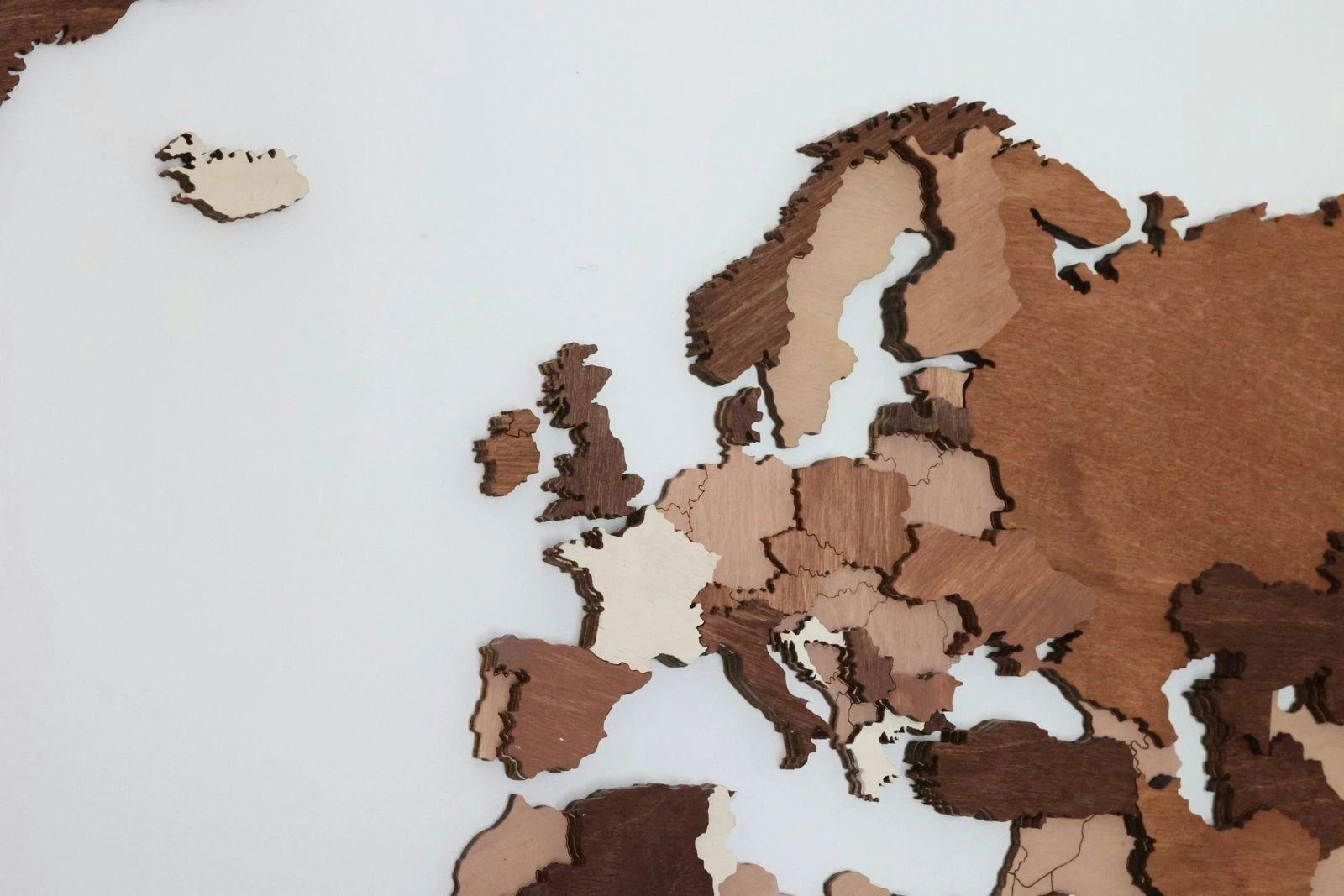
On a global stage, Europe is often seen as a community built on values such as the rule of law, transparency, and democratic accountability (Pech 2009). The EU presents itself as a model of governance, based on policies like anti-corruption frameworks, to judicial cooperation across member states. This image of Europe coexists with a much less visible reality, one where criminal organisations continue to operate and thrive across European borders, integrating themselves within local political structures, legal systems, and labour markets (Sberna and Vanucci 2015).
But for most, this conception of Europe is so remote that it does not directly affect their day to day life; many are often unaware of what organized crime looks like. Organized crime in Europe nowadays no longer looks like the cinematic stereotypes of isolated violence and secretive groups operating at society’s margins. As scholars Paoli and Fijnaut (2004) note, networks such as the Mafia, Balkan trafficking groups, and transnational financial crime syndicates have grown and adapted to European integration and globalisation, much like coexisting legal syndicates and organisations. They invest in legitimate businesses, profit from the free movement of capital and goods that are fundamental to the European economy, and exploit the gaps between national legal systems (Gounev and Ruggiero 2012). Their influence remains so hidden from everyone precisely because of the way they have integrated themselves into ordinary economic life, evolving and changing their ways to move with the tides of regulation and law.
What many Europeans fail to realize is not just the actual existence of such groups, but the extent to which their activities shape our social realities, from exploitation of labor and public procurement corruption to distortions in local economies (Mazza 2016). Looking at these less evident dynamics forces a deeper reflection on European identity itself: if Europe claims to be founded on legality and democratic integrity, how can it explain or justify the fact that criminal organisations continue to influence its societies and institutions?
This article argues that current organized crime in Europe is not a ‘marginal anomaly’ but a very present and integrated structural actor whose persistence unveils a tension between Europe's normative identity and the realities of European life.
Section one
European integration was made to aid the free movement of goods, capital, services, and people across the member states. All of these freedoms were fundamental and foundational to the European project (Krekeler, 1953). The same mechanisms that were used to enable economic cooperation also created frictionless opportunities for cross-border criminal networks to expand and facilitate their operations (EPP, 2022). Today, organized crime in Europe does not just operate within national territories but works across jurisdictions, exploiting legal asymmetries and institutional gaps between the member states (Deprez, 2021; Europol, 2025). The Schengen Area, open financial markets, and integrated transport systems have further increased mobility and economic efficiency within Europe (Ibid.). However, along with the benefits for legitimate European organisations, they have also lowered the logistical barriers for illicit trade significantly. Criminal organisations use Europe’s extensive transport and trade infrastructure to move counterfeit goods, narcotics, trafficked people, and illicit commodities with relative ease (Betti, 2001). Rotterdam, Antwerp, and Gioia Tauro are just some of the port cities that have been identified as ‘entry points’ for illegal shipments (European Union Drugs Agency and WCO Regional Intelligence Liaison Office for Western Europe, 2025). One of the networks that have become central actors in the trade of cocaine through both Dutch and Belgian ports are criminal groups from the Western Balkans (Global Initiative, 2024). They coordinate large-scale imports from Latin America while operating ‘collector’ teams, storage houses, and distribution networks across the Netherlands and beyond (Ibid.). According to the Council of the European Union (2021) ‘almost 70% of criminal networks are active in more than three Member states’ and above 80% of the reported networks were involved in various types of cross-border crimes. This is not to say that European governance is absent, but the scale of trade and volume of goods create structural vulnerabilities that these groups use to their benefit. As seen by Riehle (2023), the difference between the volume of containers that are handled each year (over 90 million), and the two to ten percent of containers that are actually physically inspected, makes detecting illicit goods extremely challenging and creates various opportunities for infiltration.
Modern criminal organisations no longer rely on violence and secrecy as their main tools of power and coercion, but instead operate as economic actors using the benefits European integration has to offer for their own gain (Europol, 2024). They invest capital and acquire assets. Rather than existing as a separate entity outside the legal economy, over the years they have increasingly embedded themselves within society (Ibid.). Through money laundering mechanisms, illicit profits are funnelled into legitimate businesses like construction firms, waste management companies, real estate developments, and renewable energy projects (Rae, 2024). Once they are properly integrated into the legal markets, their investments are used for a dual purpose. They first clean illicit funds, while at the same time expanding the group's economic influence (Rae, 2024; Europol, 2024).
Financial systems in Europe also play a very important role in this ‘transformation’ of sorts: the liberalization of European financial markets, paired with corporate structures and cross-border banking allows criminal networks to move funds more efficiently and rapidly across jurisdictions (Véron and Kirschenbaum, 2018). Shell companies, layered transactions, and offshore accounts hide ownership and origin of capital, making both aspects very difficult to track and monitor (Europol, 2024). In this sense, these organisations have adapted more quickly to financial globalisation compared to how regulatory institutions have adapted to monitor economic activity. More recent assessments suggest how digital infrastructures, cryptocurrencies, and AI-enabled technologies are further accelerating this imbalance, as they allow criminal networks to hide their illicit assets and operate with unprecedented capacity (Europol, 2025). Governance in Europe remains organized at the national level while criminal capital slips easily across borders (ECA, 2021).
These organisations also function as sources of employment and political influence. In regions with limited economic opportunities, they provide jobs, and very often exploitative ones, in industries such as agriculture, construction, and other informal labour markets (Barabanova and Todesco, 2025). This entails a structure of dependency that normalizes their presence within local communities. At the same time, infiltration in public procurement systems allows these criminal actors to influence infrastructure projects, municipal contracts, and development funds, all to further their interests (Mazza, 2016). By working in such ways, these criminal organisations work in a space where legality and illegality intersect. Such organisations have demonstrated a remarkable ability to evolve alongside, if not faster, European integration, posing a serious threat to the integrity of European governance (Europol, 2021a). Their operations mimic the very principles that define the European Union today: mobility, interconnected markets, and capital circulation (Ibid.).
Section two
The integration of criminal networks into European markets is probably most evident at the more ‘local’ level, especially in areas that rely on vulnerable labour (Rae, 2024). One example is labour exploitation, and more specifically within migrant agricultural work (Oxfam, 2024). Seasonal migrant workers in several European countries work under conditions characterized by informal, poorly made contracts, often confronting situations that violate basic rights of European labour law, such as withheld wages, unsafe housing or working conditions, and excessively long hours (Evidencity, 2025; Oxfam, 2024). While these specific practices are mainly attributed to individual employers, more investigation into each has shown that criminal networks mediate recruitment, transportation, and wage distribution (Barabanova and Todesco, 2025). In controlling parts of the labour supply chain, these criminal groups profit from people's vulnerability while keeping up the appearance of legality (Ibid.). The result of this is not one single criminal act, but a structurally embedded system based on exploitation that feeds into Europe’s broader food and agriculture markets (Corcione 2022).
In Italy’s agricultural sector, the ‘caporalato’ system shows how mafia-type organisations mediate labour in ways that seem informal but in the end feed into mainstream markets (Seifert and Valente, 2018). In these systems, there are intermediaries known as ‘caporali’. They recruit mainly migrant workers, arrange their transport, housing, and then subject them to extremely low wages, debt-like deductions for basic needs, and unsafe working conditions (Ibid.). As revealed by Gallotti (2020), a substantial part of Italy’s agricultural workforce is employed as such, with mafia-connected enterprises, with salaries of about two to four euros per hour.
Similar dynamics are found in service and construction industries, where cash payments, undeclared labour, and subcontracting chains create the perfect opportunity for illicit actors to insert themselves into the relevant legal sectors (ELA, 2023; Rae, 2024). Businesses that are controlled either directly or indirectly by such criminal groups undercut competitors by evading taxes, ignoring labour standards, or manipulating procurement processes (Ibid.). Legitimate entrepreneurs who actually comply with regulation face many structural disadvantages while consumers largely remain unaware that lower prices may be due to exploitative or illicit practices (ELA, 2023; Oxfam, 2024). Over time, because of this, any chance of fair competition is suppressed and local economies become distorted (Surdykowska et al., 2017).
The influence of organized crime also extends to informal economies in both urban and rural areas (Savona and Michele, 2015). Small corner shops, restaurants, waste management companies, or transport firms can be used as a way to launder money or gain more local influence (Europol 2021b). When criminal capital is normalized within these sectors, its presence goes largely unnoticed and becomes harder to detect.
Equally, if not more concerning, is the infiltration of such organisations into local governance structures. Criminal organisations are not always seeking out overt political power, but rather influence (Cataldo et al., 2025). This influence is then exercised through networks of dependency, informal pressure, and corruption (Ibid.). Access to public contracts, municipal development funds, and infrastructure projects can then be secured through collusion instead of competition (Mazza 2016). The environment subsequently created is one where local authorities become entangled with illicit actors, whether through complicity, coercion, or systemic weaknesses (Cataldo et al., 2025). This causes the line between ‘governance’ and ‘criminal influence’ to blur.
What emerges then is not two separate worlds of ‘criminality’ and ‘legal European activity’, but rather an interdependent economic and social system where legality and illegality are intertwined all while reality is presented to be neatly divided between values and corrupt systems (Marino et al., 2023). The shadow economy, then, is not just about hidden transactions but about the normalisation of practices that undermine the very principles the EU claims and strives to uphold (Europol, 2021a). Recognising the extent to which the two interests are connected is fundamental if the discussion regarding organized crime is to move beyond ‘sensationalized images’ and towards a more honest reflection of how much organized crime presents itself in our day to day lives. In the end, these forms of influence remain greatly unnoticed in Europe because, on the outside, they appear as ordinary employment, local entrepreneurship, or routine municipal decision making (Ibid.).
Section three
Taking all of this into account, if organized crime has become so economically embedded, a crucial question remains: why do Europeans still see it as peripheral? Part of the answer lies in cultural narratives and the narratives institutions tell themselves (Business Case Studies 2024). For many citizens, organized crime is associated with violence, cinematic portrayals, and geographically distant regions (Ibid.). Popular culture has shaped a lasting image of criminal organisations. The Italian mafia, for example, is seen as a localized and almost folkloric phenomenon consisting of dramatic, hierarchical, and territorially confined groups (Pitroso 2020). Criminal groups are usually associated with externalised phenomena like shootings, clandestine meetings, and visibly impoverished neighborhoods. This perception misrepresents the reality of current criminal networks who are financially sophisticated and well integrated into legal markets (Champeyrache 2023). Their operations are less ‘theatrical’ than they might have been before, and much more administrative, a good example of what the EU’s recent threat assessment described as a fundamental shift in the ‘DNA’ of serious and organized crime (Europol 2025).
This cultural blind spot overlaps with a broader political narrative. The EU often describes itself as a ‘normative power’, grounded in democracy, transparency, and the rule of law (Pech 2009). It promotes governance standards to other countries and monitors member states internally when core values are perceived to be under threat (Noureddine 2016). Within a structure like this, organized crime is often framed as an issue to be solved through cooperation, harmonization, and enforcement (Pingen 2021; Europol 2021a). However, this way of framing the problem can mask the structural paradox present in European integration itself (Ibid.). The freedoms that define the European project have had positive impacts on our society strengthening economic growth and political unity. At the same time, they have facilitated the circulation of illicit capital and mobility of criminal networks (Europol 2021a). This creates a tension between Europe’s stated ‘commitment to the rule of law’ and the structural limitation of its governance system. While Europe does promote transparency and democratic accountability as its core values, these systemic gaps in the system allow criminal groups to exploit them (ECA 2021). They know that enforcement is uneven across member states, that political landscapes will vary, and that anti-corruption mechanisms will differ (Ibid.). Still, organized crime does not thrive strictly because Europe lacks normative commitments, but because institutional coordination struggles to match the speed and scale of transnational capital flow.
At the same time, local organisations often help where institutional action proves to be insufficient. Grassroot movements, investigative journalism, and anti-mafia associations all help to expose corruption, to support victims of exploitation, and to promote transparency (Avdiu et al. 2021). Their presence represents public resilience, but also shows the vulnerabilities of institutional civic actors, as they frequently compensate for blind spots in enforcement rather than working alongside them (Ibid.). Some organisations that do this are Libera Italia, the OCCRP, Oxfam, and CHANCE.
The bigger issue then is not just the criminal activity in itself but the normalization of a narrative that puts organized criminal activity at the margins of European society. If European identity is to remain credible, both internally and externally, this ‘paradox’ needs to be confronted head on. Recognizing that organized crime is not a peripheral anomaly or in the margins of our society, but an embedded structural phenomenon is a necessary step to aligning Europe’s normative aspirations with their realities.
Conclusion
Europe’s identity has long been based in its legality, democratic accountability, and institutional coherence. At the same time, the persistence of organized crime within its economic systems and governance structures suggests a much more complex reality. These networks do not operate outside European society, but from within, adapting and benefitting from the structures that ensure European integration.
This does not suggest Europe lacks values, but rather reveals the tension between normative aspirations and an institution's experienced realities. As long as enforcement remains fragmented, and illicit capital flows faster and better than regulatory coordination, organized crime will continue to exploit this system (Europol 2025). Therefore, the challenge is not only to strengthen policing mechanisms but to actually confront the structural conditions that allow criminal influence to become so intertwined in legal markets and everyday economic life. If Europe were to truly uphold the rule of law as more than just a rhetorical commitment, it must address the contradictions within its own frameworks.
The question is not whether organized crime exists within Europe, but whether Europe is willing to acknowledge how deeply it is embedded into its economic systems and public institutions, and what that recognition demands for the future of its identity.
Bibliography
Avdiu, Plator, Shpat Balaj, Dina Barjamspahić, Imer Dulaš, Dragana Jaćimović, Miloš Jovanović, Magdalena Lembovska, Benjamin Plevljak, Redion Qirjazi, and Romario Shehu. 2021. “Mapping Civil Society Responses in Confronting Organised Crime in the Western Balkans.” Edited by Bojan Elek. Belgrade Centre for Security Policy. https://idmalbania.org/wp-content/uploads/2021/11/Mapping-Civil-Society-Responses-in-Confronting-Organized-Crime-ENG-1.pdf.
Barabanova, Elizaveta, and Chiara Todesco. 2025. “Conflict, Displacement, and Irregular Migration: A Structural Approach to Caporalato and Labour Exploitation in Italy’s Agricultural Sector - EST.” EST - European Student Think Tank. September 24, 2025. https://esthinktank.com/2025/09/24/conflict-displacement-and-irregular-migration-a-structural-approach-to-caporalato-and-labour-exploitation-in-italys-agricultural-sector/.
Betti, Stefano. 2001. “The European Union and the United Nations Convention against Transnational Organised Crime .” B-1047 Brussels: European Parliament. https://www.europarl.europa.eu/workingpapers/libe/pdf/116_en.pdf.
Business Case Studies. 2024. “Cultural Criminology (Media, Subcultures, Symbolism).” Business Case Studies UK. August 19, 2024. https://businesscasestudies.co.uk/cultural-criminology-media-subcultures-symbolism/.
Cataldo, Marco, Elena Renzullo, and Andrés Rodríguez-Pose. 2025. “Cohesion or Collusion? EU Funds in Places with Corrupt Local Institutions.” http://econ.geo.uu.nl/peeg/peeg2510.pdf.
Champeyrache, Clotilde. 2023. “Global Mafias.” International Journal on Criminology 10 (1). https://doi.org/10.18278/ijc.10.1.3.
Corcione, Elena. 2022. “Disconnecting Agricultural Workers’ Exploitation from Migration Policies: A Trend towards a Business and Human Rights Approach in the European Union.” European Law Open 1 (3): 699–710. https://doi.org/10.1017/elo.2022.37.
D’Angelo, Elena, and Marco Musumeci. 2016. “Organized Crime and the Legal Economy the Italian Case.” UNICRI. https://unicri.org/sites/default/files/2021-06/UNICRI_Organized_Crime_and_Legal_Economy_report.pdf.
Deprez, Martine. Letter to Jeppe Tranholm-Mikkelsen. 2021. “Proposal for a COUNCIL RECOMMENDATION on Operational Police Cooperation.” Council of the European Union, December 9, 2021.
ECA. 2021. “Special Report: EU Anti-Money Laundering Policy.” European Court of Auditors. European Union. 2021. https://www.eca.europa.eu/Lists/ECADocuments/SR21_13/SR_AML_EN.pdf.
ELA. 2023. “European Platform Tackling Undeclared Work: Undeclared Work in the Construction Sector.” European Labour Authority. https://www.ela.europa.eu/sites/default/files/2023-12/UDW-learning-paper_undeclared-work-construction-sector.pdf.
EPP. 2022. “EPP Group Position Paper on How to Combat Organised Crime in the European Union.” Eppgroup.eu. 2022. https://www.eppgroup.eu/newsroom/epp-group-position-paper-on-how-to-combat-organised-crime-in-the-european-union.
European Union Drugs Agency, and WCO Regional Intelligence Liaison Office for Western Europe. 2025. “Seaports: Monitoring the EU’s Floodgates for Illicit Drugs.” Luxembourg: Publications Office of the European Union.
Europol. 2021a. “A Corrupting Influence: The Infiltration and Undermining of Europe’s Economy and Society by Organised Crime (EU SOCTA).” Europol.europa.eu. Publications Office of the European Union. 2021. https://tacalliance.eu/wp-content/uploads/2021/04/socta2021_2-1.pdf.
———. 2021b. “Shadow Money: The International Networks of Illicit Finance.” Europol Spotlight Report Series. Luxembourg: Publications Office of the European Union. https://www.europol.europa.eu/cms/sites/default/files/documents/Shadow%20money%20%E2%80%93%20the%20international%20networks%20of%20illicit%20finance_PUBLIC_0.pdf.
———. 2024. “Leveraging Legitimacy: How the EU’s Most Threatening Criminal Networks Abuse Legal Business Structure.” Luxembourg: Publications Office of the European Union. https://doi.org/10.2813/7731594.
———. 2025. “European Union Serious and Organised Crime Threat Assessment: The Changing DNA of Serious and Organised Crime.” Europol. Luxembourg: Publications Office of the European Union. https://www.uni.lu/fdef-en/articles/eu-socta-2025-the-changing-dna-of-serious-and-organised-crime/.
Evidencity. 2025. “Labor Exploitation in EU Agriculture: A Persistent Challenge.” Evidencity Data Intelligence and Research. July 22, 2025. https://www.evidencity.com/labour-exploitation-in-eu-agriculture-a-persistent-challenge.
Gallotti, Giulia. 2020. “Exploitation of Migrant Workers in the Italian Agricultural Sector.” Human Rights Pulse. July 20, 2020. https://www.humanrightspulse.com/mastercontentblog/exploitation-of-migrant-workers-in-the-italian-agricultural-sector.
Global Initiative. 2024. “Western Balkan Criminal Groups Are Important Players in the Netherlands.” Globalinitiative.net. Global Initiative against Transnational Organised Crime. 2024. https://riskbulletins.globalinitiative.net/see-obs-018/01-western-balkan-criminal-groups-netherlands.html.
Gounev, Philip, and Vincenzo Ruggiero. 2012. Corruption and Organised Crime in Europe : Illegal Partnerships. 1st ed. London: Routledge.
Krekeler, Heinz L. 1953. “EUROPEAN INTEGRATION.” Proceedings of the American Society of International Law at Its Annual Meeting (19211969) 47: 166–71. https://doi.org/10.2307/25657300.
Marino, Domenico, Francesco Timpano, and Jaime Gil Lafuente. 2023. “The Competition between Legal and Illegal Firms in the Market: Theoretical Models and Empirical Evidence.” European Research on Management and Business Economics (ERMBE) 29 (3): 1–9. https://doi.org/10.1016/j.iedeen.2023.100228.
Mazza, Caterina. 2016. “How Criminals Infiltrate Public Procurement: Organised Crime and Corruption in Legal Markets and Public Sectors.” Central European Journal of International and Security Studies 10 (1): 10–29. https://cejiss.org/images/issue_articles/2016-volume-10-issue-1/article-01.pdf.
Noureddine, Raja. 2016. “Critically Assess and Analyse the Notion That the EU Is a Normative Power. | EEAS Website.” European Union External Actors. November 24, 2016. https://www.eeas.europa.eu/node/15687_en.
Oxfam. 2024. “Millions of Migrant Farm Workers Exploited in Europe’s Fields, Says Oxfam.” Oxfam International. June 4, 2024. https://www.oxfam.org/en/press-releases/millions-migrant-farm-workers-exploited-europes-fields-says-oxfam.
Paoli, Letizia, and Cyrille Fijnaut. 2004. Organised Crime in Europe: Concepts, Patterns, and Control Policies in the European Union and Beyond. Springer Science & Business Media.
Pech, Laurent. 2009. “The Rule of Law as a Constitutional Principle of the European Union.” Papers.ssrn.com. Rochester, NY. April 28, 2009. https://papers.ssrn.com/sol3/papers.cfm?abstract_id=1463242.
Pingen, Anna. 2021. “Commission Presents 2021-2025 EU Strategy to Tackle Organised Crime.” Eucrim.eu. 2021. https://eucrim.eu/news/commission-presents-2021-2025-eu-strategy-to-tackle-organised-crime/.
Pitroso, Giulio. 2020. “Mafia and the Representation of Italians.” Transactions of the Digital Games Research Association 5 (1): 45–76. https://doi.org/10.26503/todigra.v5i1.110.
Rae, Stephen. 2024. “How Europe’s Organised Crime Networks Use Construction, Hospitality and Logistics Sectors to Launder Dirty Money.” AML Intelligence. April 5, 2024. https://www.amlintelligence.com/2024/04/insight-how-europes-organised-crime-networks-use-construction-hospitality-and-logistics-sectors-to-launder-dirty-money/.
Riehle, Cornelia. 2023. “Criminal Infiltration of EU Ports.” Eucrim.eu. June 13, 2023. https://eucrim.eu/news/criminal-infiltration-of-eu-ports/.
Savona, Ernesto U., and Riccardi Michele, eds. 2015. “From Illegal Markets to Legitimate Businesses: The Portfolio of Organised Crime in Europe.” Organised Crime Portfolio. Trento: Transcrime – Università Degli Studi Di Trento. https://www.transcrime.it/wp-content/uploads/2015/04/executive.pdf.
Sberna, Salvatore, and Alberto Vanucci. 2015. “The Criminal Organisation of Political Corruption in Europe.” In Government Favouritism in Europe: The Anticorruption Report, Volume 3, edited by Alina Mungiu-Pippidi, 105–10. Verlag Barbara Budrich.
Seifert, Stefan, and Marica Valente. 2018. “An Offer That You Can’t Refuse? Agrimafias and Migrant Labor on Vineyards in Southern Italy.” Research Gate. Berlin: German Institute for Economic Research. https://doi.org/10.2139/ssrn.3180586.
Surdykowska, Barbara, Frédéric Turlan, Pablo Sanz de Miguel, and Laura Mankki. 2017. “Fraudulent Contracting of Work: Construction Sector.” Eurofound. December 2017. https://www.eurofound.europa.eu/en/publications/all/fraudulent-contracting-work-construction-sector.
Varese, Federico. 2020. “How Mafias Migrate: Transplantation, Functional Diversification, and Separation within and across Countries.” Crime and Justice 49: 289–337. https://doi.org/10.1086/708870.
Véron, Nicolas , and Joshua Kirschenbaum. 2018. “A Better European Union Architecture to Fight Money Laundering.” Bruegel | the Brussels-Based Economic Think Tank. https://www.bruegel.org/system/files/wp_attachments/PC-19_2018-241018_.pdf.