
Bulgaria’s Reception System
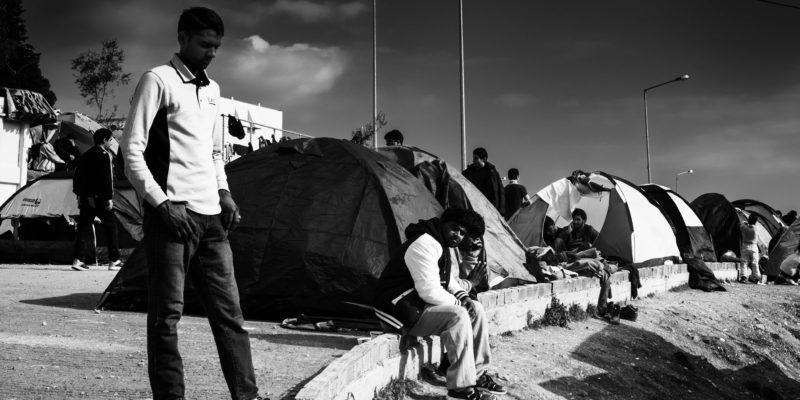
Since joining the European Union in 2007, and becoming part of the Schengen Area on January 1st, 2025, Bulgaria has formed part of the Union’s external border with Turkey, which has worked as a primary entry point for asylum seekers and migrants arriving along the Eastern Mediterranean route into the EU. Before 2013, Bulgaria’s geographical position had not generated significant pressure: the country registered only around 1,000 asylum applications per year, on average, a manageable number for its reception system to handle. The 2013 outbreak of the Syrian civil war, however, changed this significantly, spiking arrivals to above 11,000 in a year and forcing the country to improvise much of its reception and border infrastructure within months, which remains in place today (HRW, 2014; Otova & Staykova, 2019). Over the last few years, numbers have decreased substantially, mainly driven by factors external to Bulgaria’s own system, such as the fall of the Assad government in Syria, mass deportations of Afghan nationals from Iran, and intensified migration joint patrols with Frontex, rather than by improvement in the country’s system itself (Savova, 2026; Koroutchev & Peev, 2022). In 2024, Bulgaria registered circa 12,250 asylum applications, a significant decrease from 22,518 in 2023, and fell even more in 2025, with only 3,895 applications registered (BHC, 2026; Savova, 2026). Still, despite the apparent easing of pressure on the country’s reception framework, concerns regarding Bulgaria’s refugee reception infrastructure, the legal framework governing asylum procedures, and the treatment of asylum seekers within the system remain.
The Legal and Institutional Framework
As an EU Member State, Bulgaria’s legal framework governing asylum and reception is significantly shaped by EU and international law. Following the 1951 Refugee Convention, the country is bound by the principle of non-refoulement, which prohibits the return of individuals to a country where they would face persecution, torture, or inhuman treatment. This principle is also reflected in Articles 18 and 4 of the Charter of Fundamental Rights of the European Union (CFREU), which respectively guarantee the right to asylum and prohibit torture. The country must also guarantee asylum seekers’ fundamental rights. At the EU level, Bulgaria has implemented the Common European Asylum System (CEAS) directives and regulations (including the recast Asylum Procedures Directive (2013/32/EU), the recast Reception Conditions Directive (2013/33/EU), the recast Qualification Directive (2011/95/EU), and the Dublin III Regulation (604/2013), through its Law on Asylum and Refugees (LAR). However, with its entry coming into force in 2024, and its direct application across the Union from 12 June 2026, the EU Pact on Migration and Asylum has now superseded that framework (European Commission, 2026a). In line with the Pact’s entry into force, Member States were required to submit National Implementation Plans by the end of 2024, and to have their domestic systems ready by 2026, marking the end of the two-year transition period (Savova, 2026; Hanitzsch, 2025).
At the national level, two main agencies oversee asylum and migration matters in Bulgaria. The State Agency for Refugees (SAR), operating under the Council of Ministers, is the main administrative authority for registering asylum claims, operating reception centres, and providing social support to applicants (Savova, 2026). Meanwhile, enforcement, detention of irregular migrants, and removals are handled by the Migration Directorate of the Ministry of Interior (Savova, 2026; BHC, 2026). Oversight of the decisions of both the SAR and the Migration Directorate, as well as the possibility to challenge them, is left to courts and legal aid providers.
However, a lack of cooperation between the three actors, combined with an imbalance between them, best explains why Bulgaria has already missed the deadline set out in its National Implementation Plan for the Pact for adopting a new domestic Law on Asylum and Refugees, which was due by the end of 2025. This is because, even though an inter-institutional working group had agreed upon four chapters of the new law by May 2025, its work stopped after the government dismissed the SAR’s expert leadership in June 2025 with no public justification (Savova, 2026). Subsequently, an entirely different draft law was opened for public consultation in January 2026; however, the responses submitted opposed its adoption, stating that it failed to provide even the most basic guarantees required by the Pact (Savova, 2026; European Commission, 2026b).
Bulgaria’s Reception System
In Bulgaria, an asylum claim can be lodged in one of three places: on the territory before the SAR, at the border before the Border Police, or from inside a detention centre before the Migration Directorate (Savova, 2026). If either of the latter first receives the claim, it is legally obliged to refer the case to the SAR within six working days; however, a referral does not equal access to the procedure, as status determination cannot formally begin until the applicant is physically transferred to one of SAR’s reception centres for ‘personal registration’ (EUAA, 2024; UNCHR, 2026). Once registered, the applicant enters a single unified regular procedure under which a caseworker must draft and issue a decision within four and six months respectively. This deadline, however, is more-so indicative rather than binding, with a maximum threshold of twentyone months, alongside discretionary Dublin and accelerated phases a caseworker may invoke within that same procedure (EUAA, 2024; Savova, 2026). A resulting negative decision may be appealed before an Administrative Court with deadlines set at seven days for accelerated or Dublin cases, and fourteen for regular procedures (Savova, 2026).
Where an applicant is registered, and under what conditions, depends on a further distinction between the SAR’s open reception centres and closed facilities. During the process, most applicants are housed in one of the open reception centres present in the country: in Sofia (made of the Ovcha Kupel, Vrazhdebna, and Voenna Rampa shelters); one in Banya (central Bulgaria); another in Pastrogor (near the Turkish border); and Harmanli, with the largest site located in the south-east of the country, where residents may move more freely in and out during their procedure (EUAA, 2024; Koroutchev & Peev, 2022). Other than these open centres, the framework also includes a closed reception centre (reserved for asylum seekers the SAR decides to detain), as well as two pre-removal centre (Lyubimets and Busmantsi), holding irregular migrants and rejected asylum seekers under Migration Directorate authority (Savova, 2026). Border Police detention premises were first resorted to in 2013, when a peak of arrivals left the country’s only two reception centres at the time overcrowded, leaving the SAR with nowhere to house them other than detention premises. After a further crisis in 2016, which included a riot at the Harmanli centre leading to hundreds of arrests and the removal of 1,000 people, the LAR was amended to formally authorize the SAR to hold asylum seekers in dedicated closed reception centres during their procedures (Otova & Staykova, 2019; Savova, 2026). For almost ten years, this closed unit operated inside the Busmantsi detention centre; however, at the end of 2025, the SAR handed the ward back to the Migration Directorate and relocated the closed-reception function of its system to the Pastrogor centre (Savova, 2026).
A major issue with Bulgarian reception facilities, other than the discourse around the closed centres, has been the conditions of the open reception centres over the years. For instance, the claimed combined capacity of the centres formerly stood at 5,160 places, which was maintained by the SAR throughout most of the decade. However, in 2022, after an internal review, the number was found to be fictitious, as over a thousand places were unfit for occupancy, and, by the end of 2025, the reported capacity was reassessed at 3,125 places across the reception centres (Savova, 2026). Conditions inside the centres were not solely structural: an inspection ran in 2013 found two shelters with no doctor present, no heating, and extremely limited food options (Otova & Staykova, 2019). As of 2025, over a decade later, the underlying conditions are still similar, with only four doctors, one dentist, and five nurses serving the entire country-wide reception system (Savova, 2026). This is the result of the significant lack of investment by the country, with the SAR’s budget for repairs equalling zero in 2020, 2021, 2023, and 2024 (and in 2022, the budget was just 145,000 BGN); only in 2025, after the aforementioned change in leadership, did the agency receive roughly €2 million, a sum still insufficient to cover the expenses of the accumulated repairs, which had been estimated at approximately €5.6 million. The parallel drop in occupancy, from circa 1,579 residents at the end of 2024 to just 273 a year later, was not just a reflection of the decrease in arrivals. It is also evidence of the rising tendency among applicants to abandon the procedure altogether: faced with precarious conditions and asylum procedures unlikely to grant status, many choose to leave (Savova, 2026).
Border Enforcement
The Migration Directorate, handling border enforcement, has also raised concerns over the years, particularly from human rights organizations documenting non-compliance with the law. Indeed, over the 2013-2014 winter, Human Rights Watch documented 44 pushback incidents involving a minimum of 519 individuals, including violent mistreatments. The NGO also documented similar testimonies, including beatings, robberies, and stripping in freezing conditions, from Afghan men during the winter of 2021-2022 (HRW, 2014; HRW, 2022). These documentations were also supported by ECtHR rulings. Indeed, in July 2021, in D v. Bulgaria (App. No. 29447/17), the Court unanimously held that Bulgarian authorities had violated Articles 3, and 13 of the ECHR, as, in 2016, a Turkish journalist was returned to his home country without first assessing refoulement risks nor allowing him any means to challenge the decision (ECtHR, 2021). In 2024, a Council of Europe inspection found conditions inside the Busmantsi and Lyubimets detention centres to be extremely poor, overcrowded, and infested, with allegations from detainees of beatings by custodial staff. The inspection also found that Border Police had on numerous occasions registered unrelated children as though travelling with the adults they were detained with, in order to detain them despite laws prohibiting the detention of unaccompanied minors (Council of Europe 2025; Savova, 2026). Furthermore, in 2025 alone, the Bulgarian Helsinki Committee, which monitored the border under an agreement with Border Police and UNHCR, recorded 3,549 alleged pushback incidents, a number which had not changed significantly from the previous year. This was despite a 64% drop in overall interceptions, with only 1.7% of those apprehended, rather than pushed back, being granted direct access to the asylum procedure without first being detained (Savova, 2026).
The Courts and Legal Aid
The gap between what the SAR and the Migration Directorate actually do and what the law would require of them is, on paper, meant to be closed by actors such as courts and legal aid providers. Indeed, at first instance, state-funded legal aid is available to any applicant recognized as vulnerable, and every applicant may request a lawyer for an appeal within seven to 14 days (Savova, 2026). In practice, however, this rarely occurs. The National Legal Aid Bureau responsible for appointing lawyers operates solely from the capital and is severely under-resourced, and thus it cannot realistically appoint counsel within the short deadline required by law. For 30 years, the resulting gap was filled by NGOs, most notably the Bulgarian Helsinki Committee (BHC), the UNHCR’s legal implementing partner since the national asylum system was founded in 1994, which, however, closed its legal reception offices at the beginning of 2026 due to a global funding crisis (UNHCR Bulgaria, 2026). In its place, free legal assistance was made available through few NGO consultations, briefly replacing the BHC offices in the centres; however, this also ended on June 30, 2026, leaving asylum seekers with no realistic access to reliable free legal assistance for appeals at all (Savova, 2026).
Conclusion
Several developments in Bulgaria’s reception system, from the improvised use of detention premises in response to overcrowding in 2013, to the 2016 amendment allowing closed reception centres following the Harmanli riot, the change in leadership of the SAR in 2025, and the relocation of the closed reception centre from Busmantsi to Pastrogor in December 2025, share a common thread: they followed, rather than anticipated, a crisis or serious gap in the system. Considered alongside the persistent underfunding of the reception centres, the discrepancy between the stated and effective capacity due to poor conditions, the decline of independent legal aid, and the repeated documentation of pushbacks throughout the years, these developments suggest a system that has largely evolved reactively, in response to problems once they emerged, rather than proactively, on the basis of anticipated needs. The division of responsibilities between the SAR, the Migration Directorate, and the legal aid and court system further exacerbate this dynamic, as each actor is responsible solely for a specific part of the process, but no single body has been positioned to address the functioning and shortcomings of the reception system as a whole.
The EU’s new Pact on Migration and Asylum differs from these other developments in one important respect: rather than emerging in response to an unforeseen spike in arrivals or another identified shortcoming, it establishes a defined set of obligations with a clear implementation timeline for all Member States (although the country has already failed to meet one of said obligations within the required deadline). Whether its implementation of the Pact will follow the same reactive trajectory, or whether the predictable nature of these obligations will lead to a different approach, cannot yet be determined. However, what is apparent is that the underlying dynamics identified (divided institutional responsibility, chronic underinvestment, and a tendency to address such issues only once they can no longer be avoided), remain largely unresolved as Bulgaria enters a new phase in the development of its reception and asylum system.
Bibliography
(2014). Containment Plan: Bulgaria’s Pushbacks and Detention of Syrian and Other Asylum Seekers and Migrants. Human Rights Watch. https://www.hrw.org/report/2014/04/28/containment-plan/bulgarias-pushbacks-and-detention-syrian-and-other-asylum-seekers
(2021). Case of D v. Bulgaria (Application No. 29447/17). European Court of Human Rights.
(2022). Bulgaria: Migrants Brutally Pushed Back at Turkish Border. Human Rights Watch (HRW). https://www.hrw.org/news/2022/05/26/bulgaria-migrants-brutally-pushed-back-turkish-border
(2024). Operational plan 2023-2026 agreed by the European Union Agency for Asylum and Bulgaria - Amendment 1. European Union Agency for Asylum (EUAA). https://www.euaa.europa.eu/sites/default/files/EUAA_Operational_Plan_to_Bulgaria_2023-2026-Amendement_no_1.pdf
(2025). Visit Report Bulgaria September 2024, European Committee for the Prevention of Torture and Inhumane or Degrading Treatment or Punishment. Council of Europe. https://rm.coe.int/1680b6e029
(2026). Human Rights in Bulgaria 2025. Bulgarian Helsinki Committee (BHC). https://bghelsinki.org/wp-content/uploads/2026/05/bhc-human-rights-in-bulgaria-in-2025-en-issn-3033-2338.pdf
(2026). Legal Assistance. UNHCR Bulgaria. https://help.unhcr.org/bulgaria/2026/01/13/legal-assistance/
(2026). Statistics and Reports. State Agency for Refugees (SAR). https://aref.government.bg/en/%D0%B0%D0%BA%D1%82%D1%83%D0%B0%D0%BB%D0%BD%D0%B0-%D0%B8%D0%BD%D1%84%D0%BE%D1%80%D0%BC%D0%B0%D1%86%D0%B8%D1%8F/actual-information
(2026a). Pact on Migration and Asylum enters into application on 12 June. European Commission. https://ec.europa.eu/commission/presscorner/detail/en/ip_26_1285
(2026b). State of play on the implementation of the Pact on Migration and Asylum. European Commission.
Hanitzsch, C. L. (2025). Briefing: The CEAS Reform and its National Implementation. European Relations. https://europeanrelations.com/briefing/briefing-the-ceas-reform-and-its-national-implementation/
Koroutchev, R. & Peev, K. (2022). The Current Migrant And Refugee Crisis In Europe: Refugee Reception Centers In South-East Bulgaria. Journal of Liberty and International Affairs. https://www.doi.org/10.47305/JLIA2281067k
Otova, I. & Staykova, E. (2019). National report on the governance of the asylum reception system in Bulgaria. CEASEVAL Research on the Common European Asylum System. https://www.cidob.org/sites/default/files/2025-04/WORKING%20PAPERS.%20No.%2017.%20Country%20Reports.%20National%20report%20on%20the%20governance%20of%20the%20asylum%20reception%20system%20in%20Bulgaria.pdf
Savova, I. (2026). Country Report - Bulgaria. European Council on Refugees and Exiles (ECRE). https://asylumineurope.org/wp-content/uploads/2026/05/AIDA-BG_2025Update.pdf