
Energy Impact of Data Centers
Introduction
10 min read · 1,947 words
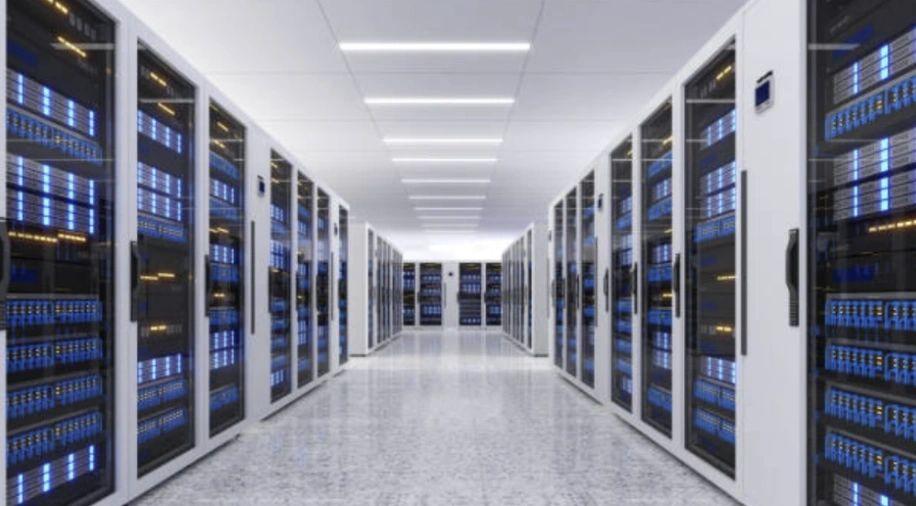
Microsoft's €10 billion investment in Portugal's data centre (DC) infrastructure at Sines appeared strategically sound: the region already hosts transatlantic telecommunication cables linking Europe and the United States, offering immediate connectivity advantages (Reuters, 2025) (T. Team, 2025). Yet, this investment arrives at a moment Europe's policymakers did not anticipate. The continent's energy transition roadmap, which was designed around electrification, renewable integration and decarbonization, did not account for artificial intelligence's explosive growth. Europe consequently faces an unprecedented DC boom. This boom is driven by AI and digital transformation, creating acute tensions amongst three competing imperatives: digital sovereignty, economic development and environmental sustainability.
Environmental Sustainability
Europe's DC expansion confronts immediate environmental limits. The electrical infrastructure crisis is acute. As Miguel Marques, inventor of an underwater DC cooling solution states bluntly: 'TSOs are blocking, they are not ready'. Dublin exemplifies severity by banning new DC construction after its transmission system operator refused further grid connections, unable to accommodate additional load (Euronews, 2024). Ireland's experience reveals the policy paradox in stark terms, demonstrating how short-term economic incentives can create long-term infrastructure traps that prove extraordinarily difficult to escape once established: tax incentives successfully attracted major investments including Microsoft's facilities, yet the country now faces grid capacity constraints that threaten both DC expansion and residential electricity stability.
Water constraints compound the crisis, particularly affecting drought-prone Mediterranean areas. Community resistance in Spain succeeded in blocking projects in drought prone regions such as in Lleida (Yadav, 2025), whilst Amsterdam imposed restrictions driven by similar resource concerns.
Economic Development
The development of DCs puts stress on other economic sectors such as agriculture. Land availability constrains development in ways that often receive less attention but prove equally binding. Concerns over agricultural land conversion for industrial data facilities have emerged across Europe, particularly in regions where arable land represents both economic and food security assets. Singapore offers an extreme example where severe land scarcity has driven highly restrictive DC policies (Kwan, 2025).
Digital Sovereignty
Europe's push for digital sovereignty through the General Data Protection Regulation (GDPR) with the goal to reduce its dependence on US and Chinese cloud providers (World Economic Forum, 2025), drives DC demand that existing infrastructure cannot support. Nevertheless, the absence of a dominant European cloud provider leaves the continent dependent on foreign firms.
Hence, Europe may be forced to choose between digital sovereignty and environmental sustainability. Alternatively, it must radically reimagine DC design to reconcile these goals. Current policy trajectories, however, suggest a path of collision rather than convergence.
What is being done now?
The Nordics region has cemented itself as a major DC hub, with live capacities exceeding 600 MW, making the region one of the largest DC hubs. This is no coincidence, as the cold climate coupled with low occurrences of natural disasters, along with political stability and cheap, green, and reliable energy provides an attractive market for investors and projects. (Saunavaara et.al, 2022). Cold ambient weather enables passive cooling through simply opening windows, which is indeed what Meta’s DC located in Luleå, Sweden does, while excess heat is recovered and used for heating. Energy Efficiency (EE) is a cornerstone in DC design allowing for great operation and energy cost reductions. A primary example is Google’s DC in Hamina, Finland which uses the cold seawater as a natural heat sink for its cooling needs, drastically reducing energy requirements.
Indeed, coupling EE and proper use of energy with renewable energy sources is one of the lowest hanging fruits. Strategically chosen locations for DCs coupled with advanced EE measures allows for reduced costs, and helps DCs reduce their energy consumption, as it is not always as easy to install renewable energy sources on-site, or to mandate renewable energy percentages. In fact, renewable energy credits (RECs) are never enough since an energy unit with a low carbon intensity, and an energy unit with a much higher intensity can be both matched by the same REC, though the damage is obviously not the same, making greenwashing claims very easy against companies, especially when RECs are not too expensive, and do not necessarily cover the gap in the cost of energy from the different sources. Indeed, RECs do not incentivize and are not enough to encourage new RE supply to meet the increased demand, especially when they are not reported nor used correctly (not discarded, just bought) meaning double counting can happen.
EU-Level Framework
The EU energy efficiency directive (EU/2023/1791) necessitates assessing heat recovery from DCs with an installed or planned IT power capacity of more than 1 MW, incentivizing increased EE and better use of energy. However, despite notable advancements in sustainability criteria for office electronics, only six countries (mainly in Europe), constituting 17 per cent of the total, have established specific criteria for DCs and related equipment, making the EU one of the few actors with such criteria. Nevertheless, the GDPR and data protection laws require data to be processed in the same region, which is what pushed many of the international companies to build DCs in Europe, according to these set standards (European code of conduct V15.1, 2024): recommending ASHRAE Class A4 equipment. Microsoft’s DC in Sines is a prime example of foreign companies building DCs in Europe, with a main consideration of the location due to the transatlantic connection with the US, and a main EE measure taken being the underwater heat exchangers in the Atlantic Sea.
National Constraints and Gaps
Electrical demand in many regions is increasing more than the local grid can sustain, causing possible DCs to be denied connection. Similarly, connecting offshore wind to the mainland comes at staggering prices, and with no EU policies targeting offshore DCs, having DCs offshore connected to these offshore renewable energy sources is currently not easily accessible. Having such policies would help cut costs for both the DC and the offshore wind farm, by providing a consumption entity at the source, reducing grid constraints, and connection capacity and utilization both for the produced energy and the DC consumption.
Potential Policy Solutions
A potential solution to ensure the better integration of DCs within European energy grids suggested by Miguel Marque, is focusing on ensuring energy efficiency rather than the imposition of blanket renewable mandates. This proposal is supported by the recent findings of the IEA, which reported that improving efficiency was the best way to contain electricity demand growth driven by the technological sector (IEA, 2023).
A concrete policy proposal, for example, is the implementation of regulations stipulating that cloud-providers must create load-shifting capabilities in order to reduce grid stress. Additionally, policymakers should support co-location with renewable generation, a trend supported by the expansion of corporate PPAs across the EU.
With increased water insecurity in a range of EU member-states, ensuring the responsible use of cooling liquids by DCs has become an increasingly important policy goal. Specifically, the European code of conduct (V15.1) from 2024 already recommends purchasing new equipment that can operate within ASHRAE Class A4, as it can operate at higher temperatures thus reducing cooling needs.
Yet, further steps should be taken to maintain a sustainable use of indigenous water resources by DCs, for example including greater transparency reporting requirements. Additionally, governments must be willing to stop the opening of new water-cooled facilities in regions experiencing water scarcity.
The current geographic concentration of DCs within Ireland, the Netherlands and western Germany is a further challenge to the future of DCs in Europe, as it prevents their scalability and creates unequal energy burdens across EU states (Financial Times, 2023). Potentially, the construction of DCs in regions with a high-level of energy security, such as the Nordic states, can create greater dispersion.
Finally, policy-makers should ensure that the approval of new DCs hinges upon concrete benefits to local communities in the form of greater development. In this way, states will avoid a “race to the bottom”: offering ever greater tax incentives for those constructing DCs. Additionally, ensuring the involvement of European cloud providers in the process is vital towards achieving digital sovereignty.
Comparative Policy Analysis
To understand the concrete differences between existing policy approaches it is important to compare the policies already implemented across EU member-states. Specifically, the policies of Portugal and Ireland, two states with experience in DC management, can be reviewed.
Ireland implemented aggressive tax incentives for new DC projects, which succeeded in attracting a range of investments by major cloud providers, most prominently Microsoft. However, the lack of proper planning and distribution led to a severe grid crisis and a half on new DC projects in Dublin (Data Centre Review, 2024).
Conversely, Portugal focused DC construction in the region of Sines: an area with low population density and which has infrastructural advantages due to the presence of the trans-atlantic connections. Ensuring proper planning has led to success in hyper-scaling Portuguese DC projects (Data Center Magazine, 2025). In fact, even the presence of regulatory obstacles, such as requirements for the use of less intensive cooling technologies, have not stopped interest from international tech companies (Reuters, 2025).
From a comparative perspective, it can be seen that strategic planning and management of DC integration with the national grid can generate greater interest from foreign companies compared to short-term economic benefits such as tax incentives.
Conclusion
With the rapid development of artificial intelligence, the decisive factor in establishing the pace of technological progress won’t be the question of purely scientific funding, but rather the presence of a physical infrastructure to sustain it. Unfortunately, current EU and member-state policy approaches have proved largely inadequate at creating the necessary environment for the integration of DCs within the national grid and their hyper-scaling.
Ultimately, mitigating the impact of DCs on energy consumption is vital to ensuring their political and economic viability, with improved energy efficiency, along with the expansion of renewable energy production being the most effective path to accomplishing that goal. However, accomplishing greater DC efficiency requires coordination and strategic planning that is only possible at the EU-level.
Looking forward, the rise of dynamic new technologies such as edge computing will provide a new challenge for the integration of DCs into the national grid. However, by anticipating, rather than reacting to such challenges policy makers can create a stable environment for the development of DCs. Specifically, the presence of predictable regulators and long-term strategies can make Europe an attractive option to global tech companies seeking a sustainable alternative to current DC operation practices.
Yet in order to reach this level, Europe must move beyond reactive policies and toward integrated infrastructure planning that balances digital ambitions with resource realities.
Bibliography
Amber Jackson. “SIN01: Inside Portugal’s new Sustainable AI Data Centre.” Data Center Magazine, 2025.
DataCentre Review, “Google’s Dublin data centre plans rejected amid energy concerns”, Data Center Review, 2024.
“European Code of Conduct for Data Centres (Energy Efficiency), Version 15.1.” European Commission, 2025.
“Data centres curbed as pressure grows on electricity grids”, Financial Times, 2024.
“Data Centres and Data Transmission Networks.” International Energy Agency, 2023.
Juha Saunavaara, Antti Laine, Matti Salo,The Nordic societies and the development of the data centre industry: Digital transformation meets infrastructural and industrial inheritance,Technology in Society,Volume 69, 2022,101931,ISSN 0160-791X,.
“Energy Efficiency Directive,” European Commission, 2025..
T. Team, “Microsoft invests $10B in AI infrastructure in Portugal,” The AI Track, Nov. 15, 2025.
Reuters, “Microsoft plans to invest $10 billion in Portuguese AI data hub,” Reuters, 11 Nov. 2025.
“Plans for Google data centre in Dublin rejected over energy concerns,” Euronews, Aug. 28, 2024.
N. Yadav, “Spain’s city of Lleida bans data centers,” DataCenterDynamics, Jan. 21, 2025.
J. Kwan, “Singapore lifts data center moratorium but sets conditions,” DataCenterDynamics, Oct. 16, 2025.
World Economic Forum, “Europe’s digital sovereignty,” World Economic Forum, Jan. 2025.