
Europe in Artemis: Only a Space Subcontractor
8 min read · 1,663 words
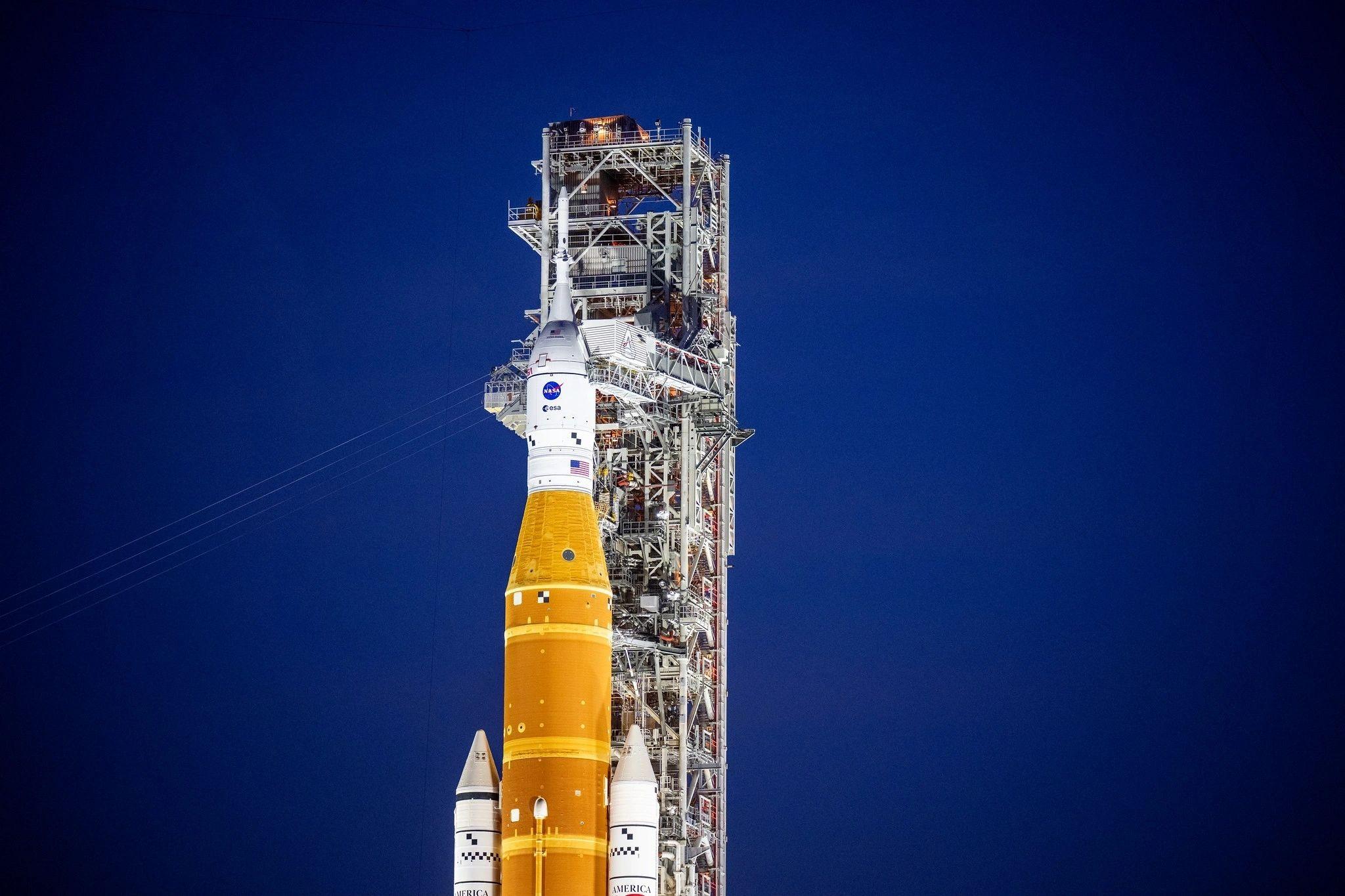
On April 10th, 2026, NASA’s Orion capsule splashed down off San Diego, ending a ten-day journey that carried four astronauts farther from Earth than any humans had ever travelled. The crew covered 695,081 miles, beating the distance record that Apollo 13’s astronauts had held since 1970 (National Aeronautics and Space Administration [NASA], 2026), and Orion’s heat shield came through in better shape than engineers had feared (NBC News, 2026). Artemis II, in NASA’s own telling, was the opening act in America’s return to the Moon.
In Bremen, the mood was more muted. The European Service Module that had kept those four astronauts alive for ten days, supplying their power, propulsion, oxygen, water, and thermal control, performed without fault. On any technical measure, Europe had just built one of the most demanding spaceflight components ever made on the continent. On any strategic measure, it had also confirmed how little leverage that achievement actually buys.
Just beneath NASA’s logo on the spacecraft sat a smaller European Space Agency logo, and the difference in size tracked a difference in power. The ESM was built by Airbus on behalf of ESA, drawing on work from 10 European countries, 20 main contractors, and over 100 suppliers (European Space Agency [ESA], 2026a). In return, ESA was promised crew seats and a share in the lunar Gateway station. On paper that looked like a fair trade. In practice the Americans set the terms. In March 2026, only weeks before launch, NASA moved to cancel the Gateway and wrote off hundreds of millions of euros in the process, with some modules already built and sitting in cleanrooms (SpaceNews, 2026). Europe was not consulted. It was informed after the decision had been made (The Space Review, 2026).
That is the underlying problem with a cooperation model that carries no enforcement mechanism: the moment American priorities shift, Europe’s investment becomes somebody else’s afterthought. Artemis II’s success makes the problem more pressing rather than less, because each mission that goes well reinforces the sense that the arrangement is working, and it is exactly that sense which keeps the deeper weakness out of view.
Keeping firms busy and technically sharp is not the same thing as being able to act on your own. Industrial policy has names for the two: the first is capacity, the second is capability. The ESM delivers plenty of the former and almost none of the latter. Europe still cannot put its own people into space without American permission, which makes the relationship less a partnership than a dependency with good branding. ESA’s contract system makes matters worse, since it hands out work in proportion to what each country pays in rather than on merit. That shelters incumbent contractors from competition and leaves Europe with an industrial base that is wide but not especially sharp, which is a real problem now that the benchmark is SpaceX, a company that iterates on rockets the way others iterate on software, and now that China is working steadily towards a crewed lunar programme of its own.
It is worth being plain about why this should matter to a European who will never go near a launch pad. Crewed flight is the visible tip of a much larger orbital economy, the navigation, weather, secure communications, and financial-timing services that now run on satellites, along with the launch capacity that puts those satellites up there. A continent that cannot fly its own astronauts is one whose access to space runs through providers it does not control, which turns what looks like a question of prestige into something closer to an economic safeguard, an insurance policy on the industrial base and the orbital services that European economies, and European taxpayers, already lean on every day.
The answer is not to walk away from cooperation but to stop treating it as a strategy in itself. France made roughly this point at the 2025 ESA Ministerial Council, and the record budget that followed, around €22.1 billion (ESA, 2025a), with Germany alone pledging just over €5 billion for 2026 to 2028 (SpaceNews, 2025), had the feel of a turning point. Yet money pushed through the same flawed structures only reproduces the problem on a bigger scale. A larger ESM programme is still an ESM programme, and a second European seat on somebody else’s rocket is still a seat on somebody else’s rocket.
What Europe actually needs is a dedicated commitment to its own crewed transport capability, something it owns and controls outright. Making that real would take four moves.
The first is a clear mandate at EU level. The European Commission’s proposed EU Space Act, published in June 2025 (European Commission, 2025), is mostly a piece of regulation, but it does signal that space is now being handled as a strategic sector, with around 10% of the European Defence Fund’s 2026 to 2027 budget set aside for it (White & Case, 2026). That logic should be carried over, in plain terms, to crewed flight. A standalone European Human Spaceflight Programme, sitting beside Galileo and Copernicus, would give the effort legal standing, a budget line free of ESA’s geographic-return arithmetic, and a political owner who could be held responsible for delivering it. The objection is obvious: a programme run from Brussels rather than through ESA would introduce real institutional friction between the Commission and an agency that has spent decades guarding its own turf. That tension is manageable, though, if the two are given distinct jobs from the outset, with ESA keeping the technical and operational lead it has earned on the ESM, and the Commission supplying the mandate and political accountability that ESA’s own structure cannot.
The second is procurement reform. The template here is not Apollo but NASA’s Commercial Crew programme, which paid SpaceX and Boeing fixed-price milestones to develop crew-rated vehicles the agency could then simply buy seats on. Europe already has the seeds of the same approach in the LCRS cargo return initiative and in the Commission’s €20 million grant for reusable launch innovation, announced in January 2026. The obvious next step is to take that contracting model into crewed transport: fixed-price, milestone-based, open to several vendors, with the EU and ESA jointly committing to buy rides rather than propping up particular national champions. PLD Space’s LINCE capsule, The Exploration Company’s Nyx, and any crew variant derived from Ariane ought to be competing on identical terms, not haggling over their slice of a pie that has already been carved up (European Spaceflight, 2025).
The third is to consolidate where consolidation helps and to keep things plural where it does not. The October 2025 memorandum between Airbus, Leonardo, and Thales to build a European space ‘champion’, covering everything bar launchers (White & Case, 2026), is a sensible answer to the fragmentation in satellite manufacturing. A single champion suits infrastructure that rewards scale. It does not suit the corner of the industry where the whole point is iteration speed and competitive pressure. Launchers and crew vehicles should stay contested, with several firms chasing the same contracts, for the simple reason that this is the dynamic that produced SpaceX in the first place.
The fourth is honesty about timelines and cost. ESM-5 and ESM-6 are already being put together in Bremen for missions running through 2028 (ESA, 2025b), and in the meantime Europe will go on flying its astronauts on American and Indian vehicles. ESA’s Sophie Adenot launched aboard SpaceX Crew-12 in February 2026 (ESA, 2026b), and ESA is still supporting ISRO’s Gaganyaan programme. None of that is wasted effort, but it is a bridge rather than a destination. A serious European crewed programme would need 15 to 20 years and tens of billions of euros before it produced a first operational vehicle, and pretending otherwise would only guarantee that the programme gets written off as a failure the moment its schedule inevitably slips.
None of this is an argument against Artemis. The mission that just ended was a real achievement, and the ESM is a real piece of engineering that Europe has every right to be proud of. The point is that doing impressive work as a subcontractor is not the same as holding capability as a sovereign actor, and the policy debate should stop letting the one stand in for the other. The Gateway cancellation should have made that distinction impossible to miss. Artemis II’s success threatens to blur it once more. The 2027 ESA Ministerial Council and the next phase of the EU Space Act are where the decision that matters will actually be taken. The ESM is a place to begin, not the end of the story, and treating it as the end is how Europe finishes up congratulating itself on being indispensable while the people who set the agenda sit 7,000 kilometres away.
References
European Commission. (2025, June 25). EU Space Act. https://defence-industry-space.ec.europa.eu/eu-space-act_en
European Spaceflight. (2025, June 19). The Exploration Company unveils proposed crew capsule. https://europeanspaceflight.com/the-exploration-company-unveils-proposed-crew-capsule/
European Space Agency. (2025a, November 27). ESA member states commit to largest contributions at Ministerial. https://www.esa.int/About_Us/Corporate_news/ESA_Member_States_commit_to_largest_contributions_at_Ministerial
European Space Agency. (2025b, November 10). European Service Module-4 is ready to sail. https://www.esa.int/Science_Exploration/Human_and_Robotic_Exploration/European_Service_Module-4_is_ready_to_sail
European Space Agency. (2026a, April 8). European Service Module mission control at ESTEC. https://www.esa.int/ESA_Multimedia/Images/2026/04/European_Service_Module_mission_control_at_ESTEC
European Space Agency. (2026b, February 13). Successful lift-off for Crew-12 on 13 February 2026. https://www.esa.int/Science_Exploration/Human_and_Robotic_Exploration/Successful_lift-off_for_Crew-12_on_13_February_2026
National Aeronautics and Space Administration. (2026, May 7). NASA welcomes record-setting Artemis II moonfarers back to Earth. https://www.nasa.gov/news-release/nasa-welcomes-record-setting-artemis-ii-moonfarers-back-to-earth/
NBC News. (2026, April 11). Highlights: Artemis II astronauts splash down safely after NASA moon mission. https://www.nbcnews.com/science/space/live-blog/nasa-artemis-ii-splashdown-time-astronauts-live-updates-rcna266591
SpaceNews. (2025, November 27). ESA raises more than 22 billion euros at ministerial. https://spacenews.com/esa-raises-more-than-22-billion-euros-at-ministerial/
SpaceNews. (2026, March 27). ESA to decide by June on Europe’s Gateway contributions. https://spacenews.com/esa-to-decide-by-june-on-europes-gateway-contributions/
The Space Review. (2026, May 11). After Gateway: The case for a middle power lunar consortium. https://www.thespacereview.com/article/5221/1
White & Case. (2026, March 26). Regulating space: A closer look at the proposed EU Space Act. https://www.whitecase.com/insight-our-thinking/regulating-space-closer-look-proposed-eu-space-act