
FCAS AND THE LIMITS OF EUROPEAN STRATEGIC AUTONOMY
Summary
14 min read · 2,795 words
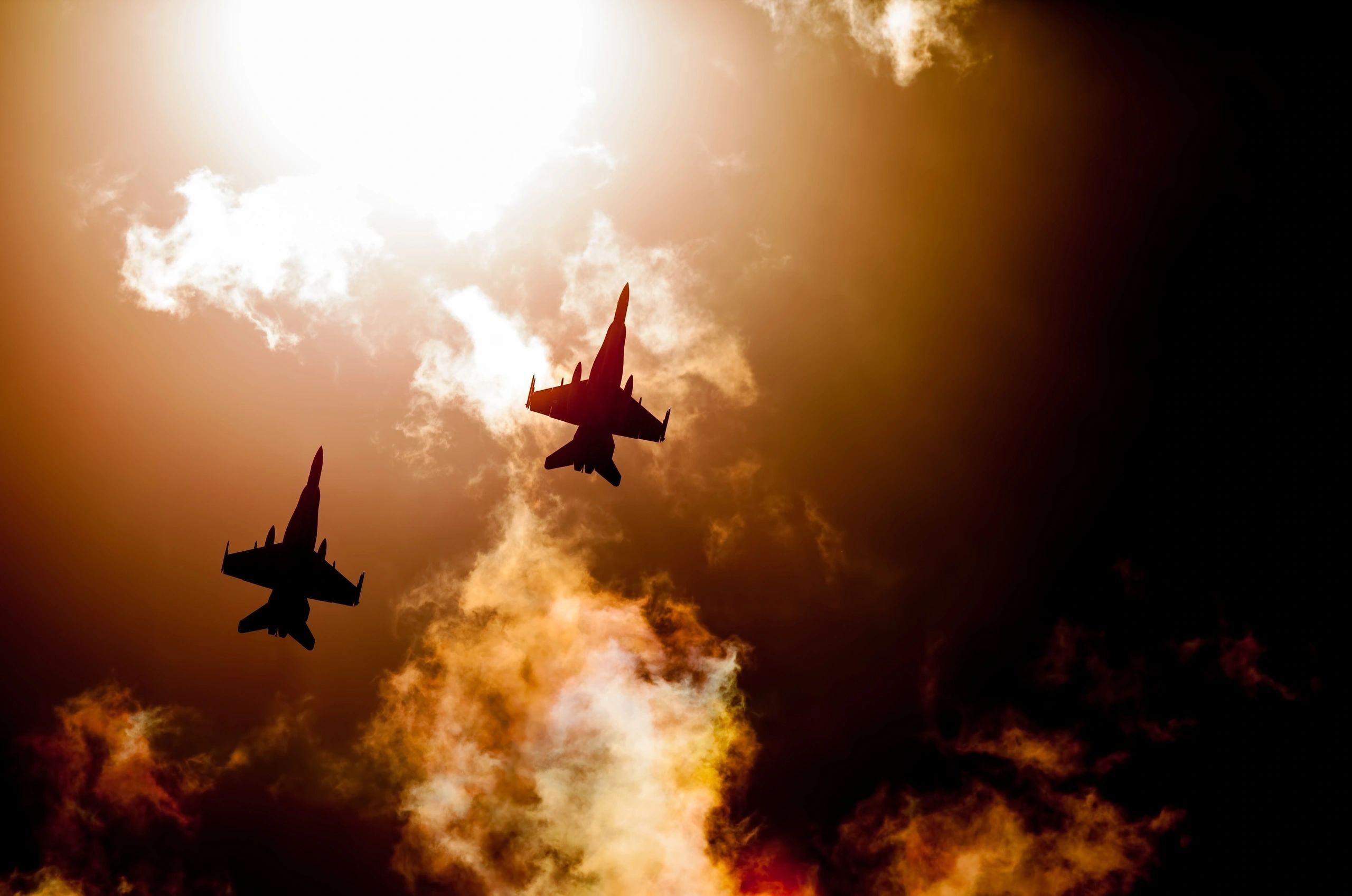
The Future Combat Air System (FCAS) programme is not just another joint armament programme; it is much larger in political and industrial significance. France, Germany, and Spain are collaborating to build 6 generations of fighter jets together by 2040.
So far, FCAS has revealed tensions between sovereignty, industrial cooperation and strategic autonomy. FCAS is structurally more conflict-prone because it is a ‘system of systems.’ Control over the programme is split across multiple technological pillars. The partners are not just sharing costs or workshare, they are bargaining over future industrial dominance, leading to unavoidable disagreements.
France sees FCAS as sovereignty and power projection while Germany relies on FCAS to anchor itself further in NATO and gain a greater industrial balance. The divergence between strategic cultures adds up to a legal mismatch where authority is split on paper but turns out to be hardly applicable in practice. This leads to a deadlock, which the programme has been suffering from for a couple of months.
Germany has been putting time pressure on France to ameliorate the agreement and placed a threat of exit of the programme. Meanwhile, Europe continues to buy armament from the US, deepening its dependency. The future of Europe’s defence sovereignty relies on FCAS, and it is essential for the programme to overcome national differences.
The Future Combat Air System (FCAS) programme is not just another joint armament programme; it is much larger in political and industrial significance. France, Germany, and Spain are collaborating to build 6 generations of fighter jets together by 2040.
So far, FCAS has revealed tensions between sovereignty, industrial cooperation and strategic autonomy. It is the largest defence industrial project on the agenda but there are clashing interests among the partners. France has pushed for a larger workshare but has faced reluctance to depart from the initial agreement. Following the Munich Security Conference in early February 2026, Merz signalled that national requirements remained divergent, while avoiding a direct public intervention at the conference itself. By contrast, Macron sought to accelerate the programme and pressed Germany for greater flexibility, leveraging his political influence.
FCAS struggles because it tries to reconcile incompatible logics, such as industrial, political, and strategic, and its outcome will shape Europe’s defence autonomy.
WHY FCAS IS IN TROUBLE?
FCAS is structurally more conflict-prone because it is a ‘system of systems’ built around the New Generation Fighter (NGF), Remote Carriers, and a Combat Cloud linking air, land, sea, space, and cyber assets.
Control over the programme is split across multiple technological pillars. The Phase 1B governance model is explicitly organized around pillars with different industrial champions, while Airbus, Dassault, and Indra also act as national coordinators.
The FCAS’ particular nature raises conflict in three ways: firstly, integration becomes the key prize, leverage is gained through control of strategic parts of the project. Secondly, the combat cloud and battle-management architecture are not peripheral, they help determine operational autonomy and later upgrade dependence, placing software and data as powerful assets. Thirdly, a specificity of FCAS is the concentration of value in various areas, rather than a classic division of work-share visible through physical components.
Moreover, FCAS is unstable because the partners are not just sharing costs, they are bargaining over future industrial dominance.
The real industrial issue is not only workshare in the narrow sense, but rather, it is about who controls intellectual property, design authority, and therefore introduces itself as a long-term dominant power.
The recurrence of Airbus-Dassault clashes suggests that the legal or contractual allocation of titles did not settle operational authority in practice. Officially, Dassault is the prime contractor for the NGF pillar, while Airbus is the main partner for Germany and Spain. However, ‘prime contractor’ status does not, by itself, settle all questions of interface, control, export implications, or future industrial ranking.
Various reports described mediation attempts and continuing deadlock over NGF leadership and workshare. So, practice only partially reflects the legal design; while pillar leadership exists on paper, cross-pillar dependence entails that no pillar is fully autonomous.
Furthermore, the legal design distributes cooperation, but it does not eliminate national veto power or industrial rivalry.
Governments set the intergovernmental framework and funding decisions. The DGA awarded the Phase 1B contract on behalf of the three governments. Paper authority therefore exists in intergovernmental authority over programme continuation and financing, contractual authority in specific phases, pillar authority for assigned industrial champions, and national-coordinator authority for domestic industrial consolidation and cross-pillar coherence.
The states did create a formal cooperative framework. France and Germany began planning in 2017 and that, after Spain joined in 2019, the three defence ministries signed a framework agreement on the mutual development of FCAS.
The industrial side also built a formal Phase 1B governance system signed before the 2022 Phase 1B contract notification. There is also a defence export controls agreement among France, Germany and Spain, signed in 2021, intended to facilitate industrial cooperation and reduce export-licensing burdens in cross-border defence projects.
Finally, the partners’ strategic cultures are fundamentally different. FCAS is especially sensitive for France because it touches core sovereign missions: FCAS aims to be the successor to Rafale, and play a possible role in nuclear deterrence, it is also the preservation of a national combat-aircraft industrial base led by Dassault. Nevertheless, when it comes to German defence policy, parliament plays a greater role than in the French presidential model.
Moreover, Germany’s position is shaped by a greater concern for alliance and interoperability considerations. Germany already values the combat cloud and integration of existing non-FCAS systems, including Eurofighter and F-35, quite highly but its political agenda with FCAS goes further than that. In fact, Germany relies on FCAS to anchor itself further in NATO and gain a greater industrial balance.
The outcome of this situation is that neither Paris nor Berlin is capable of imposing a stable FCAS outcome unilaterally, and the multinational character of the programme as well as the industrial fragmentation only add up to this issue.
WHY FCAS MATTERS BEYOND ONE PROGRAMME?
A main debate among the European community is whether Europe can truly build strategic autonomy if its most advanced airpower remains majorly dependent on the United States. No matter the amount of defence spending, force levels or scale of rearmament, the issue will persist as long as the reliance is that consequent.
FCAS sits inside a dual logic: Europe wants more sovereign capacity, but most governments do not currently seek a total break from NATO or the US. Therefore, FCAS is a hedge against the risks of over-dependence within a still-NATO-centred order.
A quality of US armament is that it is ‘off-the-shelf’ available. US systems are often already in production, fielded, and combat-tested. The EU 2025 White Paper itself recognizes that Europe must improve the availability and delivery time of European defence products and even proposes a pilot ‘European Military Sales Mechanism’ to improve delivery and availability from Europe. It also says Member States are buying far more equipment than a decade ago, ‘often from non-EU suppliers.’ It also stresses the need to increase sourcing from the EU industrial sector, reduce dependencies, strengthen security of supply, and build a true EU-wide market for defence equipment. Moreover, there is a perception that US equipment is best-practice or lowest-risk. The F-35 has often been purchased not only as a fighter but as a ‘go-to’ sort of common standard across Europe.
This is another reason why FCAS is so important for Europe. One of its main advantages is capability transformation: the NGF remains central because high-end combat still requires a crewed platform; but the crewed fighter is no longer the main object.
Remote Carriers are one of the clearest sixth-generation differentiators. FCAS envisions un-crewed systems teaming with the crewed fighter. According to Airbus, these Remote Carriers will have the capacity to support crewed aircraft with a higher autonomy degree, while remaining under human control nonetheless, and they could be launched from platforms such as the A400M.
Strategically, they matter because by distributing risk and expanding sensor rich they can change the core design and create mass without requiring an equal number of expensive crewed jets, complicating enemy targeting and air-defence problems. In short, they would cut costs and be more efficient.
The Combat Cloud is another one of the decisive reasons FCAS matters. Such an advanced project requires fast, secure, global communication through satellite constellations. Airbus explains that connected platforms will operate as sensors, effectors, and command-and-control nodes inside an open, scalable architecture
FCAS is designed to increase collaborative combat and accelerate decisions across domains. This matters because future air warfare is increasingly about networked battle-space management, not just the platform itself. FCAS shows that warfare technologies are no longer forces on platforms, but rather on networks, directly tying future combat aviation to space-enabled command, communications, and ISR dependencies.
In EU Space Policy, GOVSATCOM creates a common marketplace for secure governmental communications and IRIS² builds on that to provide improved secure connectivity. For FCAS, this allows the Combat Cloud to be ensured efficiency and places space infrastructure at the core of the operational spine.
The EU Space Strategy for Security and Defence explicitly states that space-based earth observation is a key enabler for security and defence. It points to the EU Satellite Centre’s role in the context of Russia’s war against Ukraine as proof of that value.
Moreover, Intelligence, Surveillance and Reconnaissance (ISR) systems increasingly shape targeting, situational awareness, and decision-making before aircraft are even deployed. Aircrafts are not solely isolated reconnaissance platforms anymore, instead they operate within a broader information ecosystem, heavily supported by space-based assets. All of this is enabled because of a departure from a classic combat environment for the introduction of networks.
COMPARING FCAS
As a first comparison let’s look at the Global Combat Air Programme (GCAP) regrouping the United Kingdom, Italy and Japan in a similar programme to FCAS but fundamentally different in its characteristics.
GCAP’s industrial structure is centralized through a single joint venture, Edgewing, created in 2025, which is composed of BAE Systems, Leonardo and JAEIC. It is explicitly responsible for design, development, and long-term design authority of the aircraft.
Moreover, the creation of the GCAP International Government Organization (GIGO) allows the three states to be equally represented and the programme to be managed collectively.
GCAP also has an explicit target, that is entry into service by 2035, whereas FCAS’ timeline is less stable. The advantage of GCAP is that coherence has been prioritized and given careful attention in its establishment, ensuring distributed benefits while FCAS is stuck struggling to reconcile sovereignty, equality, and industrial competition all at once.
Now turning over to Eastern/Northern Europe, it is interesting to note that most continental defence-industrial projects remain centred on Western/Southern Europe, which can give rise to some questioning as to why.
There is a structural divide in strategic priorities: Western/Southern Europe, i.e. France, Germany, Italy, Spain, focus on maintaining full-spectrum defence industries. Whereas Northern/Eastern Europe, i.e. Poland, Baltics, Nordics, etc., focus on rapid force reinforcement.
This can be linked to simple geography. Eastern and Northern states face direct proximity to Russia and are thus more exposed to eventual risk and are inclined to prefer immediate solutions for survivability, even if temporary, rather than investing on long-term projects.
The key idea is that the different regions perceive threat in a different manner, they have a different procurement logic, which they each think is best fitted for their characteristics. The divide is not accidental, it reflects different security environments, institutional capacities, and time horizons within Europe.
IS FCAS’ FUTURE IN DANGER?
Since the beginning of March 2026, Germany has been pressuring France to break the deadlock that FCAS has been suffering from for a couple of months. Originally, a deadline was set for mid-April, then extended by 10 days, since no agreement was reached. While Paris is assuring the project is still on track, Berlin is much more reticent to its continuing.
But what would be realistic in the event Germany was to retract itself? A Franco-Spanish continuation is politically conceivable because FCAS is not only a German interest. However, Germany remains one of the founding pillars of the current political bargain.
Moreover, Germany matters financially because FCAS is a very large programme, estimated at around €100 billion. France could try to absorb a larger share, but that would increase domestic pressure on programme design and priorities.
Industrially, continuation depends heavily on Airbus’s role. Airbus is a multinational company with major French, German, and Spanish industrial presence. On FCAS, Airbus is already deeply embedded beyond the German political role. So, industrially, Airbus could remain involved even if Germany chose to withdraw. But, if Berlin exits and Paris uses the moment to re-centralize leadership under Dassault, Airbus may resist remaining as a subordinate industrial participant.
Furthermore, Spain has stronger reasons to stay than to leave immediately, as it has already institutionalized its role through Indra as national coordinator and pillar actor. It has also continued funding despite the current dispute, suggesting Madrid sees FCAS as important for the future of Spanish combat aviation and industry.
Overall, the programme could survive but its nature would undergo an inherent change.
A German exit would open the question of whether Berlin prefers re-entry into another collaborative architecture, a national derivative path, or deeper dependence on existing US and European systems.
Germany could be tempted to join GCAP, a situation which GCAP partners are open to, as per recent reporting.
A state does not need to formally leave a multinational defence programme to weaken it. It can remain nominally committed while slowing budget decisions, contesting workshare, resisting governance reforms, or deprioritizing politically sensitive programme steps, a pattern to which FCAS is particularly vulnerable.
Moreover, underinvestment could emerge if participation is politically maintained but no longer strategically believed in. Then, delay is especially likely.
Finally, a partner may obstruct because obstruction preserves leverage. That is especially true in FCAS, where design authority today affects industrial hierarchy for decades. This is why compelled participation can produce a worse outcome than formal exit.
CONCLUSION
FCAS ultimately exposes a structural contradiction at the heart of European defence: the ambition for strategic autonomy without agreement on how to organize power, industry, and leadership. The importance for the future of a solid European defence base is coordination and political alignment. In fact, resources are present in Europe, whether it be intellectual knowledge or materials. However, the continuing discrepancies in terms of legal arrangements, and power avidities can only lead to corrosion of European defence solidarity long term and go against integration.
FCAS matters for the future, not only in its industrial essentiality but also in making the world believe Europe is capable of building true strategic autonomy.
Bibliography
Basic law for the Federal Republic of Germany. (n.d.-a). https://www.gesetze-im-internet.de/englisch_gg/englisch_gg.html
Burrows, E., Lee, M., & Moulson, G. (2026, February 13). Europe hopes to repair Trans-Atlantic Trust as Rubio attends key security conference. AP News. https://apnews.com/article/ed14276dfe3b957490521deee3d78414
Conesa, E., & Pinaud, O. (2026, February 19). The foretold crash of the French-german fighter jet. Le Monde.fr. https://www.lemonde.fr/en/economy/article/2026/02/19/the-foretold-crash-of-the-french-german-fighter-jet_6750643_19.html
The constitution of the fifth republic. elysee.fr. (2012, November 20). https://www.elysee.fr/en/french-presidency/constitution-of-4-october-1958
Defence, M. of. (2025, July 7). Global combat air programme joint statement: 7 July 2025. GOV.UK. https://www.gov.uk/government/news/global-combat-air-programme-joint-statement-7-july-2025
DEFIS, E. C.-. (2025, October 28). Secure connectivity: Iris2 and GOVSATCOM. EU Space Policy. https://eu-space.europa.eu/programmes/secure-connectivity-iris2-and-govsatcom
EU Space Strategy for Security and Defence. Defence Industry and Space. (n.d.). https://defence-industry-space.ec.europa.eu/eu-space/eu-space-strategy-security-and-defence_en
The FCAS nations will strengthen their partnership during Pacific Skies. The FCAS nations are consolidating their cooperation. (n.d.). https://www.bundeswehr.de/en/the-fcas-nations-are-consolidating-their-cooperation-5765642
Federal chancellor Merz at the MSC: Federal Government. Bundesregierung. (n.d.). https://www.bundesregierung.de/breg-en/news/speech-chancellor-msc-2407256
Free images of jet fighters - pixabay. (n.d.-b). https://pixabay.com/images/search/jet/
Future combat air system (FCAS). Airbus. (2024, July 10). https://www.airbus.com/en/products-services/defence/future-combat-air-system-fcas
Global Combat Air Programme Agency places contract with Edgewing. Edgewing.com. (n.d.). https://www.edgewing.com/article/gcap-contract-edgewing
Guardian News and Media. (2026, February 20). France and Germany agreed to build the fighter jet of the future. now they can’t agree who is in charge. The Guardian. https://www.theguardian.com/business/2026/feb/20/france-germany-fighter-jet-of-the-future-fcas
Hoyle, C. (2026, April 2). GCAP advances as Edgewing lands first joint contract from Partner Nations. FlightGlobal. https://www.flightglobal.com/defence/2026/04/gcap-advances-as-edgewing-lands-first-joint-contract-from-partner-nations/
Leali, G. (2026, April 24). France and Germany give themselves more time on joint fighter jet (once again). POLITICO. https://www.politico.eu/article/emmanuel-macron-friedrich-merz-france-germany-more-time-joint-fighter-jet-once-again/
Martin, T. (2026, March 19). Germany marks April deadline to rescue FCAS fighter project from collapse: Reports . Breaking Defense. https://breakingdefense.com/2026/03/germany-marks-april-deadline-to-rescue-fcas-fighter-project-from-collapse-reports/
National strategic review 2022. (n.d.-c). https://www.sgdsn.gouv.fr/files/files/rns-uk-20221202.pdf
Ordered to be printed 21 October 2025 and published 22 October 2025. (n.d.-d). https://publications.parliament.uk/pa/ld5901/ldselect/ldintagr/193/193.pdf
Ruitenberg, R. (2026, February 19). Airbus open to two-fighter option for FCAS to keep program alive. Defense News. https://www.defensenews.com/global/europe/2026/02/19/airbus-open-to-two-fighter-option-for-fcas-to-keep-program-alive/
Since 2018, Germany, France, and Spain are collaborating to develop the future. (n.d.-e). https://dgap.org/system/files/article_pdfs/DGAP%20Memo%202025-38_FCAS.pdf
White Paper for european defence – readiness 2030 | 1 white paper for. (n.d.-f). https://commission.europa.eu/document/download/e6d5db69-e0ab-4bec-9dc0-3867b4373019_en