
From Liberalisation to Delivery: Reforming EU Energy Governance for the Decarbonisation Decade
Introduction
11 min read · 2,252 words
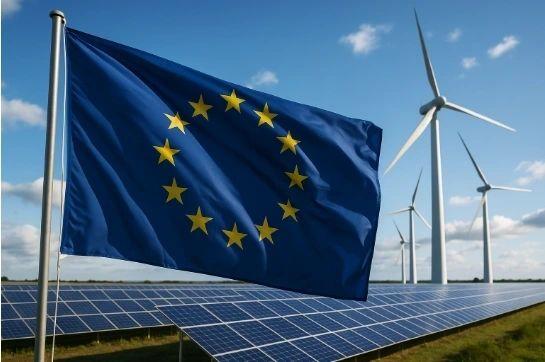
The European Union has long portrayed itself as a global leader in climate and energy policy. Through successive directives, regulations, and strategic frameworks, it has sought to transform how energy is produced, distributed, and consumed, and is often described as a “regulatory superpower” owing to its ability to shape standards that extend far beyond its borders.
However, as the energy transition moves from policy design to implementation, Europe is discovering that ambition and delivery are not the same. The past three decades have seen remarkable progress in legislation and targets, yet real-world progress is uneven. Bureaucratic bottlenecks, infrastructure shortfalls, social resistance, and fragmented governance now threaten to slow the pace of transition.
The question is no longer whether the EU can design an energy policy fit for a decarbonized future, but whether it can execute it.
Progress to date
The EU has built the most complete rulebook for a clean energy economy and has led from the front. It liberalized electricity and gas, created cross-border institutions, and raised targets repeatedly, signalling strong ambition. The results, however, are mixed. While significant gains are visible in electricity, with renewables producing roughly 47 per cent of EU power in 2024, progress in total energy use is much slower, where renewables accounted for only about 24.5 per cent of final energy in 2023. It appears that the policy machine is delivering laws faster than member states can implement them, particularly in areas such as permitting, grids, and new vectors like hydrogen. The key to enabling a successful transition in the next phase is about delivery discipline: faster permits, grid capacity, flexibility, demand-side electrification, and credible finance (Eurostat, 2025).
Low-hanging fruit
A quick review of the aforementioned policies shows that the curve of policy progress looks U-shaped: slow at the start, fastest in the mid-2000s, then progressively slower again as scope expanded.
The legislative rhythm of EU energy policy has followed the maturity curve of the sector itself. As the policy agenda moved from simple liberalization to full-economy decarbonisation, each new law required more negotiation, more modelling, and more coordination. What looks like bureaucratic delay is in fact the price of policy complexity.
Solar and wind are now the most cost-competitive technologies for electricity generation and have long been champions of the decarbonization of electricity. However, 2025’s solar deployment data suggest that this is the first year since on track for negative growth and is a point for concern (Solar Power Europe, 2025) “In 2025, on current predictions, the EU is set to install 64.2 GW, a decrease from 65.1 GW in 2024. The new installations do help to deliver the European Commission’s 2025 solar target of 400 GW – by the end of the year the bloc should host 402 GW.
In order to meet the 2030 target, and deliver the continent’s decarbonization and competitiveness goals, Europe must install nearly 70 GW per year through the rest of the decade. The current trend suggests that Europe will fall short of its goals, hosting 723 GW of solar PV by 2030, compared to the required 750 GW” Consequences of action/inaction
From Ambition to Action (gap and solutions)
The Russian energy crisis showed that when met with extreme adversity, it was possible to act with urgency, and the same sense of urgency needs to prevail if the EU is to achieve its upcoming targets.
To try to solve these issues, many proposals have been put forward, both within and outside the EU. These focus mainly on institutional reforms to speed up decision-making, increase transparency, and limit the scope for corporate or political obstruction. The following section outlines the most salient proposals currently debated among researchers, think-tanks, and EU institutions.
Shrink veto points in the Council where possible
A central structural cause of delay in the EU climate and energy governance lies in the unanimity rule that still governs several sensitive areas, most notably energy taxation, the energy mix, and land-use measures under Article 192(2) of the Treaty on the Functioning of the European Union (TFEU) (European Union, 2008). This rule allows any single Member State to block or water down legislation, often using its veto as a bargaining tool to extract concessions in unrelated policy fields (Centre for European Union, 2025).
According to the EU Council Monitor, the Council of Ministers adopted over 80% of decisions by consensus or quasi-consensus between 2010 and 2024, meaning that even when unanimity was not formally required, governments still avoided open dissent. In many cases, no formal vote is even recorded, as Member States pre-negotiate until all are comfortable. Even in environmental policy, where unanimity is rarely mandatory, only 30% to 50% of decisions were taken by consensus in 2023–2024, showing a gradual fracturing of the previous norm, but also a persistent tendency toward bloc behaviour.
To address this structural bottleneck, several scholars and MEPs propose activating the specific passerelle clause in Article 192(2) TFEU. This mechanism enables the Council of Ministers to adopt future climate and energy legislation by a single unanimous decision, thereby transitioning it from the special legislative procedure with unanimity to the ordinary legislative procedure with qualified-majority voting (QMV). Crucially, this change does not expand EU competences but merely alters the voting method.
Once this is activated, new climate and energy laws would be adopted under co-decision between the Council and the European Parliament, with Council approval by QMV (55% of Member States representing 65 % of the EU population). This would eliminate the veto of individual governments, democratize decision-making, and make legislative timelines more predictable. It would also align these policy areas with the procedural standard that already governs most internal-market, environment and transport legislation. Fields that have proved more resilient to delay.
Make trilogue outcomes more transparent
Another recurrent source of dilution lies in the opacity of trilogue negotiations. The informal three-party meetings, between the Commission, the Council and the Parliament, used to reconcile their positions. Originally conceived as an efficiency tool to speed up adoption, when both institutions have already adopted first-reading positions, trilogues have gradually become the default law-making forum for nearly all legislative files. Their closed-door nature, though, has raised concerns and undermines transparency and accountability. Negotiating texts, so-called four-column documents, are often withheld from the public until after adoption. The European Ombudsman and NGOs such as ClientEarth have repeatedly called for proactive publication of these documents and of the Council’s working-party positions (European Ombudsman, 2018 and ClientEarth, 2025). They argue that secrecy allows well-resourced lobbies to influence late-stage drafting, producing last-minute amendments that weaken environmental provisions or extend implementation timelines.
A reform coil makes trilogues subject to mandatory disclosure rules: all institutional positions and draft compromise texts should be published before final agreement, Council and Parliament rapporteurs should record meetings with interest representatives, and procedural timelines should be fixed to prevent endless reopening of near-final texts. Transparency would not slow decision-making; it would make compromises visible and contestable, reducing the scope for “technical” dilution that occurs beyond public scrutiny (Sandberg et al., 2022).
Cut down lobby asymmetry
Industrial actors, especially from high-emission sectors, are vastly overrepresented in Commission expert groups, Council working parties and stakeholder consultations.
According to Transparency International EU (TI-EU), the absence of harmonized standards for lobbying across Member States enables corporations and consultancies to exploit loopholes, particularly in countries with weak domestic transparency rules (Transparency International, 2024).
TI-EU has therefore called for an EU-wide legislative instrument on interest representation, which would establish binding and enforceable rules on lobbying at both EU and national levels. The proposal rests on four main elements. First, it calls for the creation of a common EU definition of “interest representation”, one that encompasses every organization seeking to influence public decision-making, irrespective of its legal status, size, or funding source. Second, it advocates the introduction of mandatory national registers linked to the EU Transparency Register, designed to provide harmonized, open-data disclosure of lobbying activity, financial flows, and clients. Each organization active in several Member States would receive a unique identifier to facilitate cross-border traceability. Third, the initiative would establish enforceable codes of conduct for lobbyists, monitored by an independent oversight body equipped with sanctioning powers to ensure compliance. Finally, it requires the proactive publication of all the interactions between public officials and interest representatives in open, machine-readable formats, allowing citizens and journalists to track influence across institutions.
Tighten enforcement, not just rule-making
Passing legislation is only half the battle. Many delays occur during implementation, when Member States postpone or selectively transpose EU directives. The European Court of Auditors has repeatedly found that infringement proceedings remain slow and opaque, sometimes lasting years before the Commission refers a case to the Court of Justice (ECA, 2024).
A credible reform would include public milestones and timelines for each infringement procedure, “naming and shaming” chronic laggards and publishing the Commission’s reasons for inaction. Strengthening networks such as IMPEL (the European Union Network for the Implementation and Enforcement of Environmental Law) and the European Network of Prosecutors for the Environment (ENPE) would also enhance national capacity and consistency (IMPEL, 2025).
Anchor climate governance in independent science and information integrity
Political cycles and lobbying pressure often outweigh scientific evidence or distort public understanding of climate action. To restore credibility, legislation should be anchored in independent science and transparent information ecosystems.
The European Scientific Advisory Board on Climate Change (ESABCC) provides quantified carbon-budget estimates for the Union, and recommends a 90% domestic emission reduction by 2040, in line with the Paris Agreement (European Scientific Advisory Board on Climate Change, 2023). Its analyses should become a procedural benchmark for EU institutions: when the Commission or Council propose targets that deviate from ESABCC advice, they should be obliged to issue a “comply-or-explain” statement grounded in quantitative reasoning. Such a mechanism would institutionalize scientific evidence as a constraint of short-term political bargaining.
At the same time, climate disinformation weakens public support and gives governments political cover to delay implementation. The Digital Services Act already obliges very large online platforms to assess and mitigate systematic disinformation risks (European Commission, n.d.), yet few have specific policies for climate content. Integrating the Code of Practice on Disinformation into DSA enforcement and mandating independent audits focused on climate misinformation would close this gap. Complementary investments in media literacy and fact-checking would further safeguard the knowledge base on which ambitious climate policy depends.
Conclusions: from ambition to delivery
Over three decades, the European Union has built the world’s most comprehensive framework for liberalized and decarbonized energy markets. It has progressively integrated climate objectives into its legal architecture, demonstrating that regulatory capacity can be a form of geopolitical power. Yet, as the Union enters the execution phase of the Green Deal, the limits of its governance model have become evident. Legislative ambition has outpaced administrative capability, and the multiplicity of veto points, opaque negotiation practices, and lobbying asymmetries threaten to erode credibility.
Reform does not require new treaties or institutions. It requires using the instruments already available: applying passerelle clauses to overcome unanimity, enforcing transparency in trilogues, harmonizing lobbying rules, and strengthening the enforcement of existing law. At the same time, policy must be grounded in independent science and protected from disinformation that distorts public debate.
The next phase of the European energy transition will not be defined by the number of directives adopted but by the capacity to implement them with speed, fairness, and legitimacy. Delivering on climate neutrality by 2050 will depend less on drafting new targets and more on executing existing commitments with institutional discipline. In short, the EU’s challenge is no longer legislative ambition but governance credibility, transforming rules into results.
References
BusinessEurope. (n.d.). Energy and climate transition: How to strengthen the EU’s competitiveness.
Carbon Brief. (n.d.). Policy.
ClientEarth. (2025, July 2). Transparency of the EU legislative process: Trilogues (Briefing).
Csáky, Z., & Grant, C. (2025, May 9). Does EU enlargement require voting reform? Centre for European Reform.
European Commission. (n.d.). Strengthening online platforms’ responsibility. Retrieved October 18, 2025, from
European Court of Auditors. (2024, December 17). Special Report 28/2024: Enforcing EU law – The Commission has improved its management of infringement cases, but closing them still takes too long (SR-28/2024).
European Environment Agency. (n.d.). Climate change mitigation: Reducing emissions.
European Ombudsman. (2023). Strategic inquiry — Transparency of the trilogue negotiation process (Correspondence No. 88698).
European Scientific Advisory Board on Climate Change. (2023, June 15). Scientific advice for the determination of an EU-wide 2040 climate target and a greenhouse gas budget for 2030–2050 (Catalogue No. TH-03-23-229-EN-N). Publications Office of the European Union.
European Union. (2008, May 9). Consolidated version of the Treaty on the Functioning of the European Union: Article 192 (ex Article 175 TEC). Official Journal of the European Union, C 115, 133–134.
Eurostat. (2025, March 19). Electricity from renewable sources reaches 47% in 2024. European Commission.
IMPEL. (2025, July 15). Memorandum of Understanding signed to strengthen cooperation between environmental networks.
International Energy Agency. (2024). World Energy Outlook 2024.
International Renewable Energy Agency (IRENA). (n.d.). Energy transition policy.
Leino-Sandberg, P. (2023). Transparency and Trilogues: Real legislative work for grown-ups? European Journal of Risk Regulation, 14(2), 271–291.
Nature. (2025). Climate and energy transitions analysis.
Organisation for Economic Co-operation and Development (OECD)/International Energy Agency (IEA). (n.d.). IEA energy policy reviews.
Reboot Europe. (n.d.). Energy and climate transition: How to strengthen EU competitiveness.
SolarPower Europe. (2025, July 24). New analysis reveals that EU solar stalls, 2025 projected to mark first year of market decline in a decade [Press release].
Transparency International EU. (2024, February). Lobby transparency across the EU.
United Nations. (n.d.). Affordable and clean energy.