
Identity and Strategy: The European Union Between the USA, China, and Russia
By Edoardo Nepi
10 min read · 1,966 words
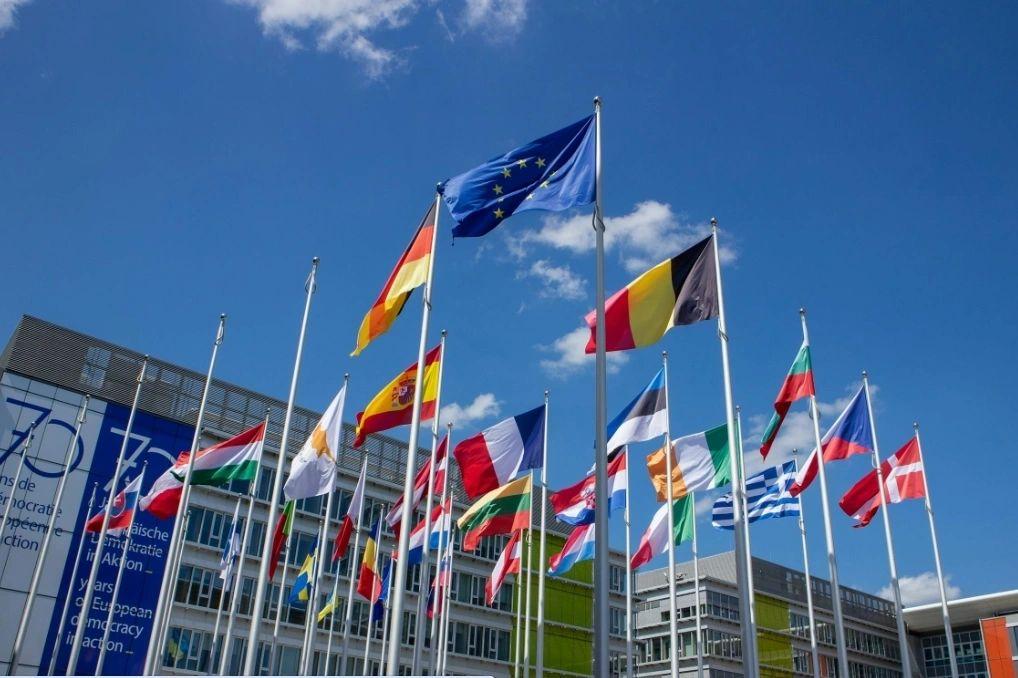
After the end of the Cold War, Europe has struggled to find a solid identity, balancing between the new bipolar world without seriously choosing a position.
At the time, the question that shook the minds of people was “which role is the EU going to play after the Cold War in a new world system?". The reality was that our Continent was not ready, not united. It was a “A Europe of states” as it was called (Calleo, 1995).
And if you think about it, in the entire globe there is nothing closely resembling the European Union; we are based on ideas, not on economic treaty or military acts, we find our strength in diversity and a set of shared values at the same time (Graziosi 2025). We don't have atomic bombs, don't have a unified and structured foreign policy; but we have freedom of the press, of opinion and these assets are almost as powerful as atomic bombs(Graziosi, 2025), and perhaps, more effective.
But let´s dive a little bit deeper into our history, to find out how we got to this situation, from British colonialism to the 18th/19th century, the Cold War, and how the EU, right now, positions itself in the world.
Since the 16th century, Europe’s richest nations have been scouting and conquering the world; creating a phenomenon called Colonialism; almost every country had its own colonies in almost every corner of the world, leading to a much more divided continent than it was before, since no one was able to achieve power and predominance over the others. (Calleo, 1995) This situation kept going for many centuries, until the 19th century came.
And one period in particular stood out during these years, and it’s referred to as Pax Britannica.
From 1815 to 1914, when the UK was at its predominance peak, it stipulated an act based on the Pax Romana, dating from 27 b.C. It is often described as one of the longest periods of peace during the Roman empire, also called the Pax Augusta.
In this act, free trade and gold standard value were the shared values; and everything was based on the British predominance over the world. The Pax Britannica act was made possible by several factors: first, the establishment of industrial and commercial primacy; second, the possession of the largest empire in history, which consisted of both formal colonies and areas of informal influence; third, the maintenance of British naval supremacy; and fourth, the projection of military power, provided mainly by the Indian Army (Watts, 2007).
It is important to recognize that the Pax Britannica was a cultural edifice underpinned by a number of ephemeral advantages, which evaporated towards the end of the nineteenth century. Watts’s observations (2007) are significant because they highlight a key pivoting point in global history: the need for European and non-European powers that challenged Britain’s hegemony. This period marked the first time European nations collaborated together for economic and trade purposes after the Napoleonic Wars (Carleton University 2015).
Britain established itself as the world’s imperial and industrial power, and tried to maintain its hegemony through control of global markets and colonies. However, the rise of new powers, such as Germany, the United States, and Japan, created anxieties within Britain’s reigning elite, who feared the slow fall of the empire (Carleton University 2015). These tensions shaped both domestic and imperial policies at the end of the 20th century.
30 years after the end of the Pax Britannica, the Cold War (1947-1989) struck between the USA and Russia, and Europe found itself geographically and geopolitically in between it.
Eastern European countries were linked with the USSR, Germany was split in two halves with the Berlin Wall; The UK, France and the USA were also deeply invested in European matters, creating a divided continent. (Carleton University 2015)
Our identity was divided, citizens were angry because of that, and the EU was once again under the influence of two giants such as the USA and USSR. EU crises have aided in the emergence of a European identity by “.” , the father of the European Economic Community and a supporter of European integration, was right in believing that the common European identity would form from responses to a crisis that would bring about awareness of values and would create a stronger EU. (Peak, 2021)
And in fact, in the early years of Cold War two really important Acts were defined: the 1951 treaty of Paris were the ECSC (European Coal and Steel Community) was created, and gave the bases for a first idea of a European Union; and then in 1957 came the Treaty of Rome, here six nations (Italy, France, West Germany, Belgium, Netherlands and Luxemburg) instituted the EEC (European Economic Community) with the target of creating a Shared Market (Calleo 1995). These normatives aimed at the day-to-day life of the citizens of the European continent, the treaty of Rome for example showed to people that you have to think beyond your country as a single political and economic community (Lodi 2011). This led to the abolition of custom duties with more competitive prices and easier exchanges between member nations and the decrease in price of food products and transportation (Lodi 2011).
However, the original integrative momentum that once gave Europe a straight direction to follow, now is in sharp contrast with the current European Identity Dilemma. While at the beginning, shared goals such as economic cooperation, peace and collective prosperity, today the EU struggles to find a common vision and strategic role in a fragmented global order. The member states are divided and combine that with a high external geopolitical pressure have weakened the sense of unity that once drove the European Project.
As a result, we are currently balancing between the USA, supporting its sanctions on Russia and maintaining a really cautious engagement with China; bridging rather than choosing a side, and that's the fundamental problem. Also, our nations are the ones that have the highest life expectancy, we have really old societies. Europe is facing a demographic aging and political disengagement among youth, no evolution is going on, teenagers are losing thrust in the authorities (since they do not feel engaged), ( A. Graziosi 2025)
As shown in Fig.1 the European Union is facing a serious chronic Atlanticism-Europeanism identity problem, due to its relationship with the United States of America, China, and Russia (Koops,Pardo, 2023)
The USA is Europe's best friend and security underwriter, tying its democratic ideals but slowing down its autonomy (Tocci 2021; Biscop 2019). China, however, poses the European Union with a challenge that measures economic rationalism against policy values: it is both a major trading partner and a strong competitor that advocates authoritarianism (Maher, 2016; Grevi, 2020). The EU's "de-risking" approach shows the will to keep being between engagement and independence, while maintaining its identity driven by shared values.
Russia is Europe's moral and historical "Other" , the contrast against which the EU forms itself as a guardian of peace and international law (Lucarelli & Manners, 2006). The 2022 Ukrainian invasion, however, made Europe dependent on the U.S. and NATO (Borrell, 2022). These are the relations that place the EU in a really close triangulation with the United States, dependence vs. independence; with China, pragmatism vs. principle; with Russia, consolidation vs. vulnerability (Fig. 1). The target for strategic autonomy is reflecting Europe's effort to bind its ideals with power politics, speaking, as Borrell (2022) writes, "the language of power, but with a European accent”.
To better explain the position of Europe and its Strategic Position, this table summarizes the EU type of relationship with USA, China and Russia; and how they shape the Identity, Dilemmas and Policy.
Fig. 1 - (Tocci 2021, Grevi 2020, Borrell 2022)
Right now, we are enclosed in a Triangular Trap that not only limits our strategic freedom progress but also shapes our global image.
Strategic autonomy encapsulate the will to transform its values into geopolitical actions, concrete decisions and coherent projects; and once Again, we have to balance ourself with strategy and identity, these two factors are deeply intertwined (S. Blockmans 2020)
On one side strategy focuses on security, policy, global leadership, digital transformation and geopolitical strength; while identity is rooted in core values such as human rights, democracy and world peace.
All these acts and normatives, have the task to show the European Union's will to have a larger piece of the cake, when talking about geopolitical strength, global self-immage and strategy.
The EU has the task of keeping the legacy that it created. We have a huge advantage over any other continent, finding completely different traditions and life styles in a couple of hours away from your hometown.
We are more than just, normatives, treaty, acts; our power cannot be understood only with these papers. We are talking about music, architecture, art, fashion, engineering; in a small continent like Europe, there are so many different peoples and traditions.
We have some of the best universities in the world, some of the best museums and still we are struggling to find something people can hang on to (Graziosi 2025)
In conclusion, in front of us a really complicated road unwinds between the USA, China and Russia. Right now the task that the EU is facing is the lack of real subject on which people can hang on to; the fundamental problem is that the single nations have more leverage and power over Europe, we have too much pride to give up, to formalize all the ideas and values that we share, on Paper; to recognize that the isolated european countries cannot compare themselves with other really really big nations, in economic, military and geopolitic matter (Graziosi 2025)
The legitimization of a common and vehicular language, would be an important step to take in order for us to start thinking as an unitary organism, and not as singular nations.
Bibliography
1- D. Calleo (1995) -Europe and the World Order after the Cold War
2- C. Watts (2007) -Pax Britannica
https://www.academia.edu/2013776/Pax_Britannica
3- Carleton University (2014) -Europe in the Cold War-Europe after WWII
https://carleton.ca/ces/eulearning/history/europe-after-wwii/europe-in-the-cold-war/
4- M. Peak (2021) -Op-Ed: A European Identity Through a Series of Crise-The Pardee Atlas Journal of Global Affairs
5- CVCE (2013) -Document on The European Identity published by the Nine Foreign Ministers on 14 December 1973, in Copenhagen
https://www.cvce.eu/content/publication/1999/1/1/02798dc9-9c69-4b7d-b2c9-f03a8db7da32/publishable_en.pdf
6- N. Tocci (2021). European Strategic Autonomy: What It Is, Why We Need It, How to Achieve It. IAI Papers.
7- S. Biscop (2019). European Strategy in the 21st Century: New Future for Old Power. London: Routledge.
https://www.routledge.com/European-Strategy-in-the-21st-Century-New-Future-for-Old-Power/Biscop/p/book/9781138384729
8- R. Maher (2016). “The Elusive EU–China Strategic Partnership.” International Affairs 92, no. 4 : 959–976.
https://www.researchgate.net/publication/304316852_The_Elusive_EU-China_Strategic_Partnership
9- G. Grevi (2019) Strategic Autonomy for European Choices. Brussels: EPC.
https://d1xp398qalq39s.cloudfront.net/content/PDF/2019/190719_Strategicautonomy_GG.pdf
10- Lucarelli, Sonia, and Ian Manners (2006) Values and Principles in European Union Foreign Policy.
https://www.routledge.com/Values-and-Principles-in-European-Union-Foreign-Policy/Lucarelli-Manners/p/book/9780415460026
11- Borrell, Josep (2022) European Foreign Policy in a World of Power Politics. Brussels
https://www.eeas.europa.eu/eeas/rethinking-%E2%80%98security%E2%80%99-world-power-politics-speech-high-representative-josep-borrell-eu-iss-annual_en
12- European Commision (2004) The European Neighbourhood Poliycy (ENP)
https://epthinktank.eu/2016/10/25/the-european-neighbourhood-policy/
13- European Parliament (2014) eIDAS Regulations -electronic identification and trust services-
https://digital-strategy.ec.europa.eu/en/policies/eidas-regulation
14- European Parliament (2019) The European Green Deal - To become the first continent with zero climatic impact
https://commission.europa.eu/strategy-and-policy/priorities-2019-2024/european-green-deal_it
15- S. Blockmans (2020) Why the Eu need a geopolitical Commission
https://www.ceps.eu/why-the-eu-needs-a-geopolitical-commission/
16- J. Koops, R. Pardo (2023) The Strategic Compass: Implementing the partnership dimension in the area of security and defence
https://www.europarl.europa.eu/RegData/etudes/IDAN/2023/702593/EXPO_IDA(2023)702593_EN.pdf
17- W. Raczka (1980) Dynamics of European Unification: a Conceptual Framework
18- A. Graziosi (2025) Apogee, decline, but what future for Europe? The lecture from Andrea Graziosi
https://youtu.be/rGN92kpZFfU?si=4t3ArLt2scDeFL5F
19- Interview with A. Graziosi, on the 10th of december about Europe, the lack of a real subject and how young people interface themselves with EU.
20- M. Lodi (2011) Dal trattato di Parigi del 1951, al trattato di Roma del 1957
https://gianophaps.it/parigi-1951-roma-1957/