
Industrial Alliances and the Future of European Airpower: Lessons from a Turkish-Italian Venture
Introduction
12 min read · 2,472 words
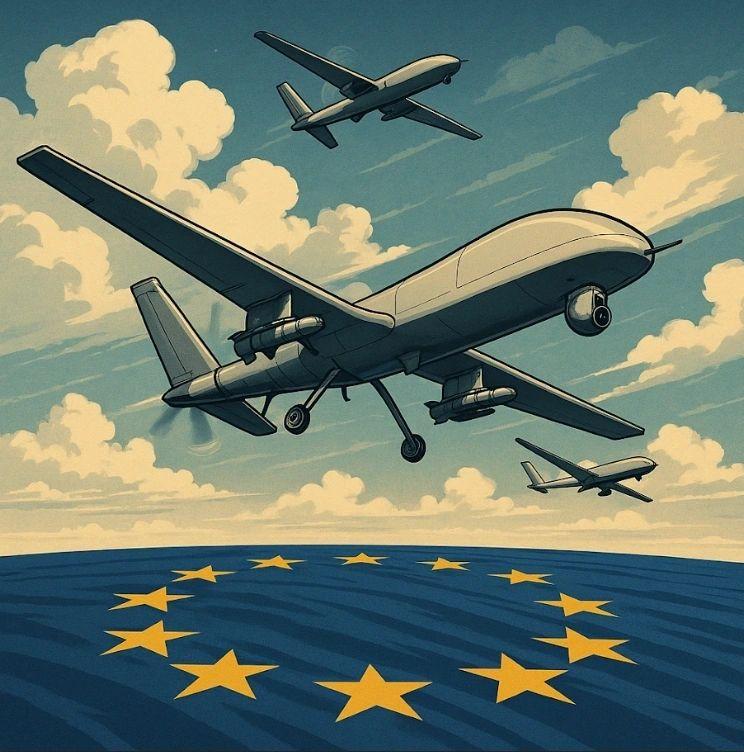
The White Paper for European Defence – Readiness 2030 identifies drones and counter-drone systems as one of the most pressing capability gaps Europe must address and urges the Union to take action (European Commission & High Representative, 2025). While acknowledging problems is the first step towards solving them, the EU’s industrial complex does not really seem to reflect this urgency, remaining fundamentally fragmented while these systems grow increasingly vital to modern warfare. Nonetheless, some encouraging steps are being taken in the right direction, offering a measure of reassurance. Among them is the announced partnership between Leonardo and the Turkish drone manufacturer Baykar to co-develop advanced drones systems. Before examining this collaboration in detail, however, it is useful to provide some context on the broader state of the market and Baykar’s rise to success.
The European Drone Market
To give a quick glimpse of the market’s fragmentation: Airbus is developing the Sirtap for Spain and the VSR-700 for France, which also operates Safran’s Patroller drones. The UK fields its Watchkeeper WK450, developed by Thales in cooperation with Israel’s Elbit. Leonardo has produced the Falco family for Italy, while Saab developed the Skeldar V-200 for Sweden.
The closest thing to an EU-level procurement programme, with funding and delivery schedules, is the Eurodrone. Launched in 2015, the project aims at developing a Medium-Altitude, Long-Endurance drone (MALE) designed for ISTAR missions (Intelligence, Surveillance, Target Acquisition and Reconnaissance). It involves France through Dassault Aviation, Germany and Spain through Airbus, and Italy through Leonardo. Notably, it will also be overseen by the European Organization for Joint Armament Cooperation (OCCAR), marking a long-awaited move toward greater coordination. Eurodrone is the first drone natively designed to fly in non-segregated airspace (Leonardo S.p.A., n.d.). Flying in non-segregated airspace implies that the platform can in no way afford to pose a risk to civilian aircraft or risk going haywire after being jammed. It must therefore comply with stringent airworthiness regulations, with certification under NATO STANAG standards (Airbus, 2025). However, with the first prototype flight scheduled for 2027, the programme is already experiencing delays due to issues between Germany’s Airbus and the French subcontractor Dassault. Apparently, costs are also expected to rise by 35.2% (Charpentreau, 2024).
The War in Ukraine and the Rise of Baykar
Meanwhile, the war in Ukraine has intensified pressure to rearm and underscored the importance of the so-called “attritable” drones, that is, cheap, expendable, and easy to replace. Essentially, reuse them if possible, lose them if necessary. It is at this point that a new player, the Turkish firm Baykar, entered the scene with its TB2 drone, with no plans to leave.
Baykar was founded in 1984 as an automotive parts manufacturer, but since the 2000s it has specialized in UAVs, C4I (Command, Control, Communications, Computers, and Intelligence), and artificial intelligence (Bavovna AI, n.d.). Today, it is likely second only to the United States in this field. The firm’s climb to success began when it was able to respond swiftly to Ukraine’s urgent operational needs, delivering scale in a short time with its Bayraktar TB2, a small and inexpensive tactical drone with angled wings and laser-guided bombs (Witt, 2022). At the beginning of the conflict, the TB2 proved so game-changing that the Ukrainian government released a folk song titled “Bayraktar”, which became an icon of national resistance. Although Ukraine has more recently shifted its focus toward smaller, domestically produced First-Person View (FPV) drones and loitering munitions, the TB2 continues to be employed in semi-permissive environments or in coordination with naval forces (Khomenko, 2025).
Since 2016, the TB2 has been exported to thirteen countries, and profoundly impacted the course of several conflicts, such as the war between Azerbaijan and Armenia over Nagorno-Karabakh (Witt, 2022). According to Selcuk Bayraktar, Baykar Chairman and son-in-law of Turkish President Erdogan, “For the past three years, Baykar has been the world’s largest drone company, currently three times larger than its nearest American competitor”, accounting for nearly 60% of the global UAV market. In 2023, Baykar generated as much as 90% of its revenue from international markets, with exports reaching $1.8 billion. The company also signed agreements with 34 countries for the Bayraktar TB2 and with 10 countries for its heavy Akıncı combat drones (Defence Industry Europe, 2024).
However, selling drones to countries at war in urgent need is one thing, while gaining access to the lucrative and heavily regulated European market is quite another, especially considering its strict certification requirements and capability specifications. Theoretically, drones over 600-700 kg should comply with STANAG 4671, the NATO standard defining UAV airworthiness, interoperability, and safety requirements. Yet, virtually no drone in the world is fully compliant, as most are designed for combat environments. Historically, drones have been used primarily by the United States, Israel, and other states engaged in asymmetric warfare, such as the US Reapers and Predators in Afghanistan against the Taliban and al-Qaeda, or in Iraq and Syria against ISIS. In all these cases, operations did not take place over national civilian airspace, leaving little incentive for certification. Europe, by contrast, primarily requires drones for patrol and surveillance missions, which often involve flights over civilian airspace. Partly for this reason, and partly because of its infatuation with rules and bureaucracy, the EU demands drones to meet strict certification standards. This is Baykar’s Achilles’ heel: its systems cannot be easily integrated into NATO and EU civilian airspace without major adjustments.
The Partnership
This is the context in which the joint venture between Turkey’s Baykar and Italy’s Leonardo was established. The initiative will take shape through a new company, LBA Systems, in which the two firms will hold equal shares (50% each) for the development of unmanned technologies.
First and foremost, this partnership should not come as a surprise, given the long-standing ties between Italy and Turkey in the defence sector. In December, Baykar acquired the Italian aircraft manufacturer Piaggio Aerospace, with the stated intention of establishing a European center of excellence for aircraft and engine maintenance, while also seeking to relaunch the Piaggio P.180 Avanti EVO (Piaggio Aerospace, 2025). Moreover, the company intends not only to maintain current employment levels at its Villanova d’Albenga and Genoa sites in Italy, but also to expand the workforce (Kington, 2025). All this is taking place within a broader context of intensified cooperation between Italy and Turkey, with the two countries signing memoranda of understanding in various sectors including defence and trade during the last Intergovernmental Summit (Associated Press, 2025).
The JV is going to leverage strong industrial synergies and will encompass the design, development, production and maintenance of unmanned aerial systems (UAS). Baykar will focus on platform design and development, while Leonardo will devote its efforts to advanced electronic systems and payloads, including Manned-Unmanned teaming and swarming capabilities. Most importantly, the Italian champion will shoulder the daunting task of qualification and certification.
The JV's first product will be based on Baykar's high-altitude, heavy lift drone Akinci, with the companies aiming to secure Italian/European certification and to begin deliveries in 2026 (Segreti, 2025) (Donald, 2025). The company will be headquartered in Italy, involving Leonardo sites in Ronchi dei Legionari, Turin, Rome Tiburtina and Grottaglie (Leonardo S.p.A., 2025). Notably, Ronchi dei Legionari will host the production of the TB3, a new light MALE class drone weighing around 1,500 kg and featuring foldable wings to enable operations from aircraft carriers. In addition, the Turkish firm has committed to producing its Akinci and TB2 platforms in Italy at Piaggio Aerospace (Kington, 2025).
Leonardo’s CEO, Roberto Cingolani, and Baykar’s Chairman and CTO, Selçuk Bayraktar, stated that the JV could, in the future, also contribute drones to the next-generation fighter jet developed by the GCAP consortium. It is not by chance that Bayraktar remarkably regarded the partnership not just as a simple collaboration, but as “a catalyst for what’s next”.
Cingolani also reassured European partners Airbus and Dassault that the new venture is compatible with, and will not compete against, Europe’s Eurodrone (Segreti, 2025). To sum up, this partnership is highly beneficial for both parties. For Leonardo, the deal secures access to a combat-proven product with an operational track record, while also ensuring considerable industrial returns on Italian territory. For Baykar, the agreement provides a long-sought bridgehead in Europe. In fact, Leonardo’s advanced technology, particularly in payloads and systems, will support the “Europeanization” of the product to meet European requirements. However, most importantly for Baykar, the partnership enables access to certifications, leveraging Leonardo’s long lasting collaborations with institutions such as EASA (European Union Aviation Safety Agency), ENAC/ENAV (Italy’s civil aviation and air navigation authorities), and ARMAEREO (the Italian Directorate of Aeronautical Armaments and Airworthiness).
Ultimately, through this joint venture, both companies will benefit by pursuing opportunities across NATO, European, and international markets, addressing Europe’s current weakness in the drone industry, and capitalizing on an estimated $100 billion gap in the UAV market over the next decade.
Integrating Ukrainian Industrial Base
As should be clear by now, this partnership is also beneficial for Europe, given its urgent need for drones. However, another partnership is also gaining ground, and it involves the Ukrainian defence industry.
As previously mentioned, Ukraine has been rapidly developing its drone capabilities since Russia’s full-scale invasion in 2022, evolving from modifying commercial drones to producing military UAVs, attack drones, and reconnaissance systems at scale. Ukraine now manufactures more drones domestically than any country in the world, with the possible exception of China and Russia.
In addition, Ukrainian companies have also begun mass-producing domestically key drone components such as electronics, controllers, cameras, and motors, in an effort to reduce excessive dependence on China. Chinese state-backed DJI, by some estimates, controls as much as 75% of the global drone market. Even manufacturers that assemble their own drones still rely heavily on Chinese suppliers for large-scale component needs.
And this challenge is not unique to Ukraine; American drone producers such as Skydio and Anduril have also felt the effects of China’s new trade restrictions on drone components. China could, in theory, paralyze the global drone industry for a year, possibly turning a supply-chain vulnerability into a major national security issue for the broader West. (Post, 2025)
However, while Ukraine is performing strongly in terms of drone development, financing remains a key challenge. President Zelensky stated that Kyiv has the capacity, though not yet the funding, to produce up to 8 million drones per year. He has repeatedly called on foreign partners to finance new projects and help match Ukraine’s rapidly expanding manufacturing potential (Fenbert, 2025).
Eventually, Europe began to rally to the call. Zelensky announced that Kyiv would soon start exporting defence technologies and opening weapons production lines in partner countries to internationalize Ukraine’s arms industry and increase pressure on Putin to negotiate. Denmark is leading this effort, signing a landmark defence agreement that allows Ukrainian defence companies to establish production facilities on Danish soil. Ukraine has already launched its first joint drone-production line in Denmark and plans to expand similar initiatives to other European countries. In 2024, Denmark became the first country to directly fund weapons production by Ukrainian industries, pioneering what has come to be known as the “Danish model” of defence support for Kyiv (Fenbert, 2025). The Danish approach involves channeling funds directly into Ukrainian defence companies rather than supplying donated equipment. The model was created in response to Ukraine’s urgent appeal for greater support, and has since been adopted by several partners, including Lithuania and the Netherlands (Howe, 2025).
Kyiv has also signed an agreement with the United Kingdom to jointly produce drones, and interest from other countries continues to grow. This approach shortens delivery times by enabling production closer to the frontlines, while also strengthening Ukraine’s domestic defence industry in the long term by reducing dependence on donated systems. For Europe, partnering with Ukrainian firms not only allows access to combat-proven platforms and technical expertise, but also translates into action its moral and geopolitical interest in supporting Ukraine (Fenbert, 2025).
Conclusion
To conclude, the time has come for both the public and private sectors to embrace an enlightened leadership marked by a European vision. Governments must provide the right incentives so that what benefits society is also profitable for firms, while companies must look beyond short-term financial returns, driving innovation and forging strategic partnerships that strengthen Europe as a whole. Encouragingly, this shift has already started.
The joint venture with Baykar represents far more than a simple transfer of technology, it marks the creation of a new industrial hub with solid foundations in Europe. Moreover, in today’s climate of geopolitical ambiguity, strengthening ties with Ankara is more important than ever for the West. Likewise, integrating Ukraine’s defence industrial base with our own is not just about economic returns. It is about Europe uniting to preserve the Western values, and to ensure security, resilience, and technological leadership in a time of global uncertainty.
*This piece is cross-published with Praesidium – Global Affairs and Security.
References
Airbus. (2025). Eurodrone. Airbus. Retrieved September 14, 2025, from
Associated Press. (2025, April 29). Turkey and Italy strengthen ties with trade and defence agreements. Retrieved from
Bavovna AI. (n.d.). Baykar. Bavovna. Retrieved September 7, 2025, from
Charpentreau, C. (2024, February 1). EuroMale drone program faces coordination hurdles during development. AeroTime. Retrieved from
Defence Industry Europe. (2024, December 15). Türkiye dominates global drone market with 65% share, says Baykar chief. Defence Industry Europe.
Donald, D. (2025, June 17). Leonardo joins forces with Baykar to pursue UAV opportunities. AIN Online. Retrieved from
European Commission; High Representative of the Union for Foreign Affairs and Security Policy. (2025, March 19). White Paper for European Defence – Readiness 2030 (ReArm Europe Plan). Retrieved from
Fenbert, A. (2025, September 5). Ukraine launches first joint drone production line in Denmark, Zelensky says. Kyiv Independent. Retrieved from
Howe, B. (2025, August 19). The Danish Model – a sustainable approach to supporting Ukraine. DSEI. Retrieved from
Khomenko, I. (2025, June 26). Ukraine’s Bayraktar TB2 returns to combat — Why now, and where has it been? The full story of a wartime legend. UNITED24 Media. Retrieved from
Kington, T. (2025, July 1). Baykar vows to produce military drones at Piaggio sites in Italy. defence News. Retrieved from
Leonardo S.p.A. (n.d.). Eurodrone. Leonardo. Retrieved September 14, 2025, from
Leonardo S.p.A. (2025, June 16). Leonardo and Baykar establish joint venture for unmanned technologies. Leonardo. Retrieved from
Piaggio Aerospace. (2025, June 30). Baykar completes acquisition of Piaggio Aerospace’s business complexes. Piaggio Aerospace.
Post, Kollen. (2025, August 15). ‘Little by little away from China’ — Inside Ukraine’s new mass-production of drone parts. Kyiv Independent. Retrieved from
Segreti, G. (2025, March 6). Italy’s Leonardo, Turkey’s Baykar to set up drone joint venture. Reuters. Retrieved from
Witt, S. (2022, May 9). The Turkish drone that changed the nature of warfare. The New Yorker. Retrieved from