
Is Nuclear Europe's Next Energy Revolution?
16 min read · 3,266 words
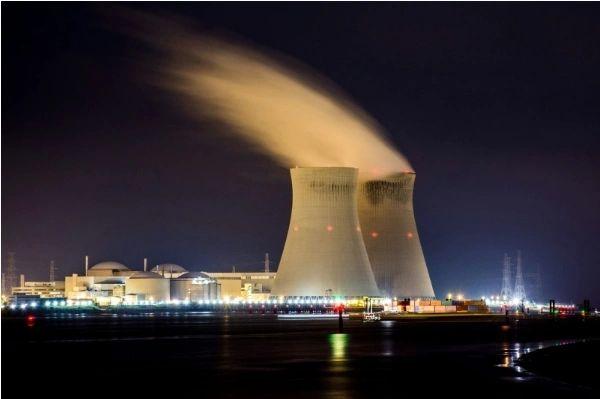
Today, nuclear energy has returned to the forefront of European leaders’ discourse. Yet, what does this renewed prominence really mean? Why was nuclear energy sidelined in the past, and why has it re-entered the conversation at this moment? Is it a solution to the energy crisis we are facing, as well as the answer to reducing emissions?
Why is there an energy crisis?
Europe is confronted with both an immediate energy crisis, triggered by Russia’s invasion of Ukraine, and a structural challenge of meeting steadily rising electricity demand. This growth stems from energy-intensive data centers but also from the broader electrification of transport, heating, and industry.
In the short term, because of Russia’s military aggression and weaponization of gas supplies, Europe was compelled to cut economic ties with Moscow, notably by becoming independent from its oil, gas, and nuclear energy supplies. This severing of ties significantly contributed to the surge in energy prices, compounded by other pressures on global energy markets; by 2024, the EU’s energy prices were five times higher than in the US (Carbon Equity, 2025). Elevated energy costs have hindered the EU’s competitiveness in the global race for clean technologies, leaving it strongly reliant on imported fossil fuels.
In May 2022, in response to Russia's invasion of Ukraine, the European Commission (EC) formally adopted the REPowerEU Plan, which aimed to rapidly reduce EU dependence on Russian fossil fuels. The plan recognized that nuclear energy would continue to play a role in ensuring security of supply and underlined the need for coordinated action to reduce reliance on Russian nuclear materials and fuel cycle services. Alongside important investments in renewable energy, the plan presented nuclear and renewables as complementary drivers of the EU’s decarbonization pathway.
According to the EC, significant progress has since been achieved, like gas imports falling from 45% to 19%. Yet, the Commission has also acknowledged setbacks: despite initial reductions, 2024 saw a rebound in Russian gas imports, and dependence on Russian nuclear supplies remains notable, with Russia still accounting for more than 14% of EU uranium imports (World Nuclear News, 2025).
Beyond the geopolitical urgency of reducing dependence on Russia, Europe also faces a structural challenge: the long-term adequacy of its electricity supply.
Technological innovations, most notably the rise of artificial intelligence (AI), are expected to drive sustained growth in electricity demand, with data centres emerging as a particularly energy-intensive component of Europe’s digital infrastructure. AI is a software that relies on continuous data absorption to reproduce patterns and optimize through iterative learning. Data centers currently account for about 3% of global electricity consumption, with demand projected to increase by approximately 15% annually, four times faster than the overall growth in energy use across other sectors (IEA, 2025). In the years to come, the proliferation of data centers with greater efficiency, shorter latency times, and higher performance terminals will generate unprecedented growth in electricity demand.
At this stage, Europe faces the urgent necessity to satisfy a steadily growing energy demand driven by geopolitical tensions that push the continent toward energy independence, and by the rise of intensively consuming technologies. European values push for environmental solutions to this energy deficit, with nuclear being the most viable, serving as a complement to renewables.
Indeed, renewables cannot be isolated from other sources of energy, given the challenge of intermittency. Renewables are unable to cover the entire demand of energy on their own, as they do not provide constant output and, overall, a stable supply of electricity. They can generate abundantly during daylight hours, often to the point of exceeding instantaneous demand. Yet storing this excess electricity for later use during the morning and evening peaks remains technically and economically difficult (Eurelectric, 2024). Oversupply can itself become problematic: if renewable output exceeds system capacity, the grid risks overload, making curtailment necessary. By contrast, shortfalls arise either when peak demand meets low renewable generation or when sudden demand spikes require fast backup capacity.
Overall, with low operating costs and short energy payback times, renewable technologies achieve a net positive emissions balance over their lifetime. Thanks to subsidies and supportive policies, renewables have achieved high penetration levels, providing around 44% to 47% of the electricity generated in Europe in 2024, excluding nuclear (Eurostat, 2025). The remaining share of electricity represents the segment traditionally covered mostly by gas or coal plants as a quick fix to cover short-term peaks.
However, a stable source is needed to ensure continuous coverage of base load demand. Nuclear fits into this niche because, for both economic and technical reasons, it operates most efficiently at constant output around the clock. Traditional large reactors are well-suited to this logic as they produce significant quantities of electricity, require relatively little space, and, under European regulatory standards, are held to particularly stringent safety requirements.
EU Nuclear Energy: What’s Next?
The Social and Political Constraints of Europe’s Nuclear Traditional Reactors
In practice, the majority of nuclear power plants operating today in Europe are based on large-scale fission reactors, most of which belong to the second and third generation of pressurized water reactors (PWRs). These conventional reactors are still being built or extended in countries such as France, Finland, Hungary, Czechia, and Slovakia. Their defining feature is the use of water under high pressure in a primary cooling circuit, which transfers heat to a secondary circuit where steam is produced to drive turbines. Alongside PWRs, some countries operate boiling water reactors (BWRs), which produce steam directly in the primary circuit above the reactor core. The basic architecture of these reactors follows a similar design logic.
At the core lies the fuel, consisting of uranium (usually enriched in U-235). Surrounding the fuel is the moderator, typically water but sometimes other materials, which slows the neutrons to keep the reaction self-sustaining. A coolant, in most European reactors also water, transfers the heat away from the core into a steam generator, where high-pressure water exchanges heat and produces steam. The reactor core and its systems are enclosed in a robust steel pressure vessel within a thick concrete containment, built to prevent radiation release even in case of accidents.
Yet, despite its functionality, nuclear power has remained one of the most divisive issues in European energy policy. Why do some states, like France, Finland, Czechia, Hungary, and Slovakia, continue to expand nuclear programs, while others, like Germany, Austria, and Luxembourg, have chosen to abandon them altogether? The reasons are not purely technical, but deeply social, political, and psychological.
As shown in a systematic review of the psychological consequences of nuclear power (Edwards et al., 2019), public perceptions have long been shaped by high-profile accidents (Three Mile Island, Chernobyl, Fukushima) and by unresolved concerns around radioactive waste. Common themes across studies include lack of trust in authorities, fear of invisible contamination, and feelings of powerlessness when confronted with expert-driven decisions. These experiences created strong anti-nuclear movements, especially in Germany, where Chernobyl’s fallout directly affected the population. In contrast, countries like France, where nuclear power was framed as a pillar of national independence, saw higher levels of acceptance.
Thus, the nuclear debate in Europe cannot be explained only by costs, construction delays, or technical efficiency. It is rooted in collective memory, cultural values, and risk perception, which differ markedly from country to country. This explains why nuclear is embraced in some states and rejected in others, even though the underlying technology is the same, creating a lot of limitations in the EU framework.
To address some of the most debated and critical questions surrounding nuclear power, we turned to an expert in the field: Professor Lluís Batet Miracle, a contracted full professor in the Department of Physics at the Universitat Politècnica de Catalunya (UPC). He leads the Advanced Nuclear Technologies (ANT) Research Group and has authored numerous studies in nuclear engineering.
Professor Lluís Batet Miracle, pointed out in our interview, while talking about the limitations surrounding nuclear: “Political, social, bureaucratic… it is a lot. And it can also be technical. Permitting is not easy to implement.”
Lately, despite the strong social and political opposition, the European Union has recently begun to reconsider nuclear energy from a more technical perspective. Much of the criticism surrounding nuclear today focuses not on safety alone, but on the high capital costs and very long construction times of new projects. However, these problems are less about the technology itself and more about Europe’s bureaucratic inefficiencies and the erosion of industrial know-how after decades without new builds.
The clearest example is Flamanville-3 in France, where the project suffered 12 years of delay and triple cost overruns.
On this matter, Professor Lluís Batet Miracle explained in our interview:
“You have to think that Europe has lost the know-how (...) At the same time, the very same reactor design was built in 8 years in China (...) the problem is not the technology itself. You must remember, the last reactor built in Europe was in the 1980s.”
Indeed, China offers two instructive examples. The Taishan-1 and Taishan-2 reactors, which are the same PWR design as Olkiluoto-3, were completed in about nine years each, roughly half the time taken in Europe and with far fewer cost overruns (World Nuclear News, 2018). This shows that the delays of the European projects were not inherent to the technology itself and demonstrates how a continuous construction pipeline, streamlined permitting, and retained industrial know-how can dramatically reduce timelines.
All this uncertainty cascades into financing. Long lead times and capital expenditure overruns translate into high project risk, which slows and thins the pipeline of nuclear investments. As Prof. Batet noted, Europe’s hiatus eroded know-how, while complex permitting and fragmented regulation add delay and costs. A partial step to de-risk financing came with the EU Taxonomy Complementary Climate Delegated Act (2022). It does not make nuclear “renewable” but, under strict technical criteria, it classifies specific nuclear activities as environmentally sustainable. This regulatory step has been particularly beneficial for France, which is now investing heavily in the refurbishment and lifetime extension of its existing reactor fleet as well as planning for new PWR builds.
Another challenge in the current nuclear debate concerns fuel imports. Even if reactors are built and operated within Europe, the question of fuel supply introduces a persistent element of external dependence. Natural uranium (U₃O₈) is imported from global producers such as Kazakhstan, Canada, and Namibia. It can be stock but must then undergo conversion and enrichment before being fabricated into reactor fuel. In 2023, around a quarter of the EU’s enrichment services were still provided by Russia, reflecting its dominant global capacity. On this issue, Professor Batet commented:
“The bottleneck of the problem is more on the refining and enrichment capacity. On these Europe has a lot.”
He clarified that the enrichment process is cheaper in Russia, due to its oversized plants, which helps explain why Europe still relies on Russian enrichment services even though it possesses domestic capacity. This highlights that, if the EU’s objective is truly to reduce dependence on Russia, then more effort will be needed to strengthen and fully utilize European enrichment capacity, even if this comes at a higher cost.
Another frequently cited concern is the so-called “crowding-out” effect, whereby investment in nuclear might come at the expense of renewables. Germany’s phase-out of nuclear was followed by a rapid expansion of renewables and a reduction in emissions, yet this came with renewed reliance on electricity imports from neighboring France and Norway, imports that included both nuclear and fossil-based power. Germany’s nuclear phase-out illustrates that renewables can grow fast enough to offset lost nuclear capacity and reduce emissions, with imports rising only modestly. Yet this model depends on strong interconnections and neighbor capacity, raising doubts about whether it can be replicated EU-wide as fossil fuels are phased out (Wehrmann, B., 2024). On this issue, Professor Batet emphasized that the challenge is not so much nuclear versus renewables, but the dynamics of renewables themselves:
“There comes a point when renewables cannibalize themselves.” Professor Batet uses the example of solar panels in Spain. In the case where sunlight is abundant, electricity prices crash while reliance on gas drives a sharp rise in prices. To sustain investment and stabilize the prices, the governments should introduce clear policies such as PPAs so that companies investing in nuclear can recover their costs (Peña, J., 2022).
SMRs and the Future of European Nuclear
At the center of European discourse on nuclear energy as a solution for the energy crisis we are facing is the promise of the Small Modular Reactors (SMRs). Europe, especially Poland and France, has heavily contributed to its research and development. Through the Euratom Research and Training Programme (2021-2025) and the European SMR Industrial Alliance, the EU has invested €1.38 billion in SMRs and expects the deployment of the first SMR projects by the early 2030s (European Commission, 2021, 2024). SMRs are small nuclear reactors with a maximum output of 300MWe and can produce up to 7.2 million kWh per day (European Commission, 2024). They are widely regarded as the next-generation nuclear substitute to fossil fuels, combining speed of deployment with affordability and enhanced safety.
“The Commission recognizes the potential contribution of small modular reactors to achieving the energy and climate objectives of the EU Green Deal, as reflected in its recommendation for the 2040 emission reduction targets.” (European Commission, 2024)
SMRs are considered the future of nuclear. First, because of their reduced costs and easy deployment. Because SMRs are smaller in size than traditional nuclear reactors, they require less space and cooling water, making them more attractive. The construction of SMRs is based on shipped factory parts, which ensures faster deployment (World Nuclear Association, 2025). Overall, the greater the production of SMRs, the higher the economies of scale in the long term, despite the high investments upfront. The risk of return on investment is lower than traditional reactors.
Second, SMRs are considered a solution for the future of nuclear due to their system integration, which provides stable low carbon baseload and flexibility. There are disparities in the geographical location and development of each European region. Not all are able to absorb the massive electricity output of traditional nuclear reactors due to their smaller electrical grids; SMRs are a solution as they produce less output. In the case where the SMRs do not meet the demand for energy in wider regions, they are easily scalable (World Nuclear Association, 2025). Overall, they are better suited for smaller or weaker grids, isolated regions, or specific industrial applications.
Finally, SMRs stand out for their built-in safety, with passive mechanisms incorporated into their integrated design. The lower core power enables larger coolant margins, providing operators with more time to respond effectively during emergencies; natural circulation alone is sufficient to maintain safety.
SMRs are not yet produced commercially. The EU lacks significant investment, expertise, and political mobilization for its regulatory implementation.
SMRs are expected to have higher capital costs per unit of capacity than conventional large reactors, reflecting lost economies of scale. Estimates place them roughly 20–40% higher per kW (Gao, Kuznetsova, Ma, & Miller, 2024). Their operating costs, however, may be competitive if modular mass production delivers efficiencies, although this remains to be demonstrated. Given the significance of the upfront investment, their long-term financial viability depends on maintaining consistently high capacity factors, operating nearly continuously. This could result in congesting the grid when renewables have an important output, unless there is an alternative energy storage or an integrated hydrogen production. If instead they are run intermittently to complement variable renewables, the fixed investment cannot be recovered, rendering them uneconomic. In this framework, gas turbines remain superior to nuclear as they are cheaper to build though more expensive to operate.
Moreover, the SMRs are not deployed at a commercial scale and are not expected to be until 2030. As we covered earlier, many nuclear projects such as Olkiluoto 3 and Flamanville, have suffered from significant cost overruns and tens of years of delay due to a lack of investment, deployment expertise and political prioritization. In 2025, only €18.72 billion was invested in nuclear, while renewables accumulated €162.19 billion (European Environment Agency, 2025). Nuclear innovation is not put at the forefront as a solution for the energy crisis.
SMRs are often presented as a potential breakthrough, yet their contribution to Europe’s energy transition remains uncertain. Professor Batet underlined that SMRs are essentially conventional reactors on a smaller scale, and none are yet commercially available in the West. For this reason, they cannot meaningfully contribute to the EU’s 2030 decarbonization objectives. Nevertheless, SMRs may prove valuable in the longer term for niche applications such as industrial clusters or powering large data centers, where their modularity and smaller capacity align better with demand profiles. Europe should therefore pursue SMRs strategically: not as a short-term solution or a substitute for renewables, but as a possible complement to the energy mix in the 2035–2050 horizon.
Conclusion
Nuclear is not a silver bullet. Indeed, it is a cheap and clean way to produce significant amounts of energy necessary to respond to the rising demand due to the energy crisis Europe is facing. Within this framework, nuclear power can play a role, but only if deployed strategically and in sectors where it adds clear value. Investments must be guided by technical evidence and long-term planning. It must be seen as one of many solutions to be adopted together, each complementing the other, as Professor Batet underlined during the interview. The cleanest and cheapest energy is ultimately the energy we do not consume, which is why demand reduction must remain a central pillar of Europe’s transition. At the same time, Europe’s energy security will depend on stronger interconnections and more efficient trade between Member States, so that supply and demand can be balanced across borders. Above all, the energy transition must be approached from a systemic European perspective. Only by coordinating across countries, technologies, and time horizons can the EU build an energy system that is sustainable and resilient.
Bibliography
Carbon Equity. (2025, January 15). Europe’s energy crisis could be its climate tech breakthrough. Carbon Equity. https://www.carbonequity.com/blog/europes-energy-crisis-could-be-its-climate-tech-breakthrough
World Nuclear News. (2025, May 9). EU seeks to end all energy imports from Russia. World Nuclear News. https://www.world-nuclear-news.org/articles/eu-seeks-to-end-all-energy-imports-from-russia
IEA. (2025). Energy and AI: Energy demand from AI. IEA. https://www.iea.org/reports/energy-and-ai/energy-demand-from-ai
Edwards, M. W., Schweitzer, R. D., Shakespeare-Finch, J., Byrne, A., & Gordon-King, K. (2019). Living with nuclear energy: A systematic review of the psychological consequences of nuclear power. Energy Research & Social Science, 47, 1–15. https://doi.org/10.1016/j.erss.2018.08.016
European Commission. (2021). Euratom research and training programme 2021–2025. https://research-and-innovation.ec.europa.eu/funding/funding-opportunities/funding-programmes-and-open-calls/horizon-europe/euratom-research-and-training-programme_en
European Commission. (2024). European industrial alliance on small modular reactors. https://single-market-economy.ec.europa.eu/industry/industrial-alliances/european-industrial-alliance-small-modular-reactors_en
European Commission. (2024). Small modular reactors explained. European Commission. https://energy.ec.europa.eu/topics/nuclear-energy/small-modular-reactors/small-modular-reactors-explained_e
Eurostat. (2025, March 19). Electricity from Renewables. European Commission. https://ec.europa.eu/eurostat/web/products-eurostat-news/w/ddn-20250319-1
Wehrmann, B. (2024, April 16). Q&A – Germany’s nuclear exit: One year after. Clean Energy Wire. https://www.cleanenergywire.org/factsheets/qa-germanys-nuclear-exit-one-year-after
World Nuclear Association. (2025, June 17). Small nuclear power reactors. https://world-nuclear.org/information-library/nuclear-fuel-cycle/nuclear-power-reactors/small-nuclear-power-reactors
World Nuclear Industry Status Report. (2018, July 2). A Double First for China as Taishan EPR and Sanmen AP1000 Connect to the Grid. Retrieved from https://www.worldnuclearreport.org/A-Double-First-for-China-as-Taishan-EPR-and-Sanmen-AP1000-Connect-to-the-Grid
European Environment Agency. (2025, September 29). European energy investment in clean energy and fossil fuels. https://www.eea.europa.eu/en/europe-environment-2025/thematic-briefings/climate-change/climate-action-financing/european-energy-investment-in-clean
Peña, J. I., Rodríguez, R., & Mayoral, S. (2022). Cannibalization, depredation, and market remuneration of power plants. Energy Policy, 167, 113086. https://doi.org/10.1016/j.enpol.2022.113086
Gao, B., Kuznetsova, K., Ma, Z., & Miller, K. (2024). Nuclear small modular reactors: Key considerations for deployment. International Energy Forum. https://www.ief.org/_resources/files/events/nuclear-small-modular-reactors-smrs-key-considerations-for-deployment/smr-report.pdf
Union of the Electricity Industry – Eurelectric. (2024). Electricity demand. Elda: Your electricity data assistant. Retrieved from https://electricity-data.eurelectric.org/electricity-demand.html