
Military Conscription in the EU as an Answer to New Age Insecurity? An Overview
By Damir Hasanović
8 min read · 1,620 words
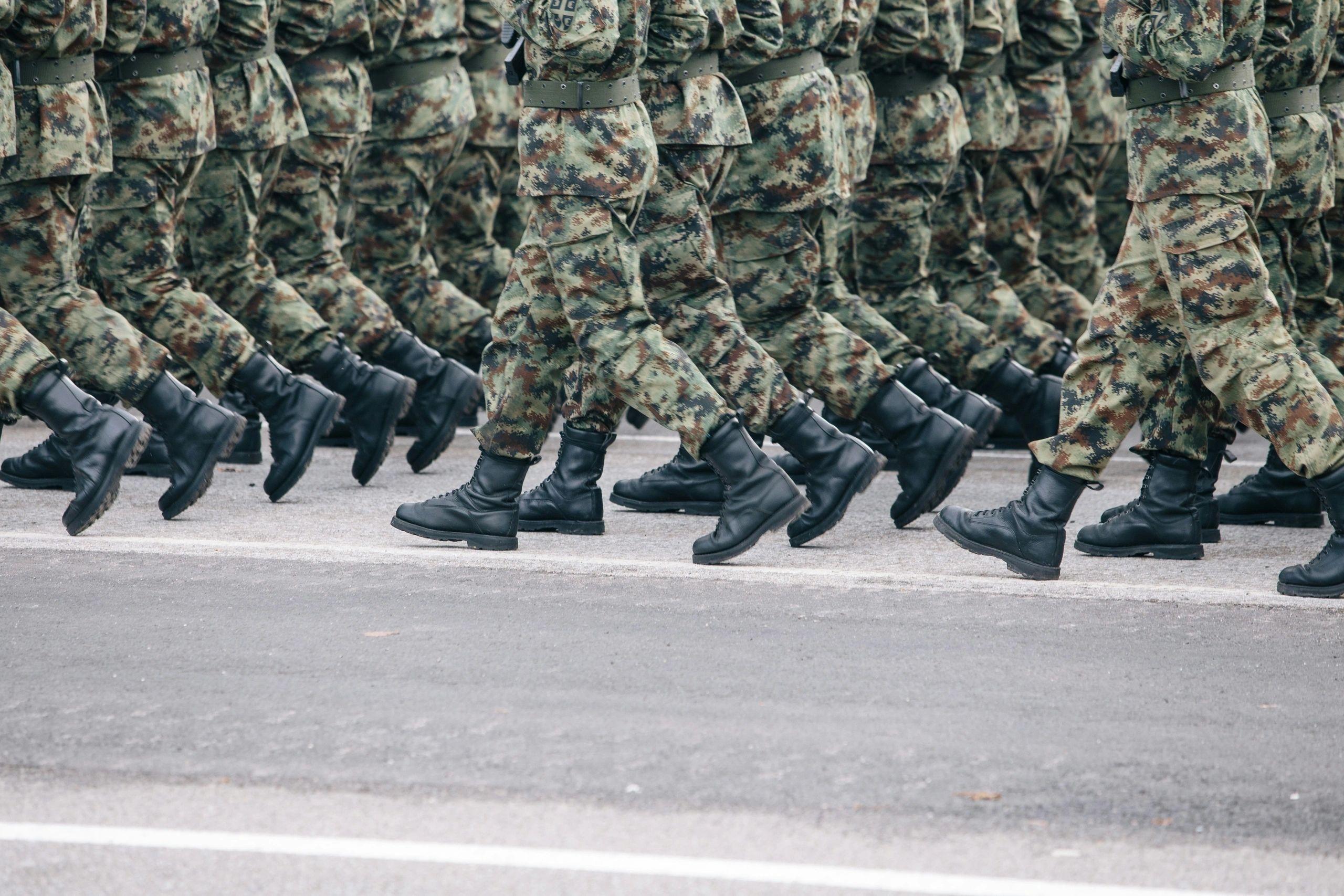
Tensions in Europe have been simmering, and they are slowly reaching a state that cannot be defined and analysed empirically. Amid increased regional risks unrelated to global changes, the debate over mandatory military service, once largely associated with the history books of the Cold War, has returned to the big stage. While several countries are seriously reconsidering conscription, others are already implementing it. The question arises, is this resurgence simply an old-fashioned way to bolster defense capacity, or is it a worrying indicator that a war is on the horizon?
Assesment
Although not a 20th century mechanism, military conscription was at its peak during the Cold War. The bipolar state of the global order caused the constant fear of a nuclear war breaking out, and in combination with the destruction the Second World War caused, it all eventually led down to countries, both from the western world and the Eastern bloc, instilling a national service of some sort. Young men, mostly at 18, would begin their service in the armed forces or other supporting civilian structures, where they would spend a certain period of time depending on the country, before moving into the reserves and contributing more passively to defense capabilities. With the collapse of the Soviet bloc and a reduction in direct military threats, numerous European countries reassessed the need for mass armies. The logic of expensive, maintenance-heavy standing forces lost its appeal during peacetime. As a result, many moved toward professional, volunteer-based armed forces, seeing them as more efficient and better suited for the asymmetric, technology-driven conflicts of the 21st century. Most NATO countries transitioned to professional armies, driven by a belief that modern conflicts required more specialized, volunteer troops than mass mobilization (Deutsche Welle, 2023). By the mid-2000s and into the 2010s, conscription had become obsolete or severely curtailed in many states. Countries like Poland, Italy, and Germany, phased out conscription entirely by 2012 in Poland, by 2011 in Germany, and earlier in Italy. (IISS, 2025). The draft increasingly felt like a relic of a bygone era, that once was tied to large-scale conventional wars and total mobilization scenarios. However, the security landscape has shifted dramatically. With the world order moving into a multipolar sphere and the renewed great-power competition and heightened threats, the argument for having a larger, ready reserve force has gained traction. Starting with the Nagorno-Karabakh conflict, and later the large-scale invasion of Ukraine in 2022 by Russia, European security assumptions jolted drastically among member states. Suddenly, the defence structures shaped in relative peace seemed insufficient for a Europe that might again face threats to its existence. A number of European countries have debatably reintroduced some form of mandatory or selective military service. Besides the possible Russian aggression on member states, several factors feed into this recalibration on European soil, with the majority being related to logistical downfalls and the downsizing of the armed forces throughout the last decade. In this context, conscription reemerged as a viable tool for building resilience and deterrence, but also for sending a message. In 2023, Latvia reinstated mandatory conscription for male citizens aged 18-27 due to the war in Ukraine and growing Russian presence in the Baltics, with the first service beginning in July 2023. The National Defence Service (NDS) requires male citizens to serve for eleven months, with alternatives for conscientious objectors. Women aged 18-27 can also join the NDS voluntarily (FPRI, 2025). Lithuania also suspended drafting in the mid-2000s, but reintroduced the conscription in 2015, as a reaction to the 2014 annexation of Crimea and ensuing regional instability. Across the Baltic sea, Sweden and Norway have a different system of conscripting potential soldiers. Although Sweden had suspended conscription in 2010, in 2017–2018, it reinstated a selective, gender-neutral system that picks the candidates based on preexisting criteria. All 18-year-olds must report for assessment, and only a portion (approx. 5–10% in recent years) are selected for service. The selection criteria is based on fitness, motivation, and strategic needs. (Krisinformation, 2025). The key takeaway of experts usually ties to conscription being a mechanism of foreign policy. Dr. Alexandr Burilkov, a researcher at the Leuphena University of Luneburg, argues for Euronews: “The more urgent thing is essentially having enough troops to hold the line. not necessarily to fight the Russians, but to send a strong deterrence message.” (Euronews 2025). In parallel, political leaders and electorates in several countries increasingly view conscription not only as a military necessity; but as means of reinforcing civic cohesion and national resilience. (ANSA, 2025)
When it comes to the Powder keg of Europe, once a term used to describe the geopolitical tensions of the Balkans before the Great war, it is not exempt from these changes. This region has been a hotspot for ethnic conflicts, coups and crises, which has deeply contributed to countries following in on the military trend of conscription, with Croatia reinstalling the conscription. On the 24th of October 2025, the Croatian parliament voted (84 in favour, 11 against, 30 abstentions) to reintroduce compulsory military service (Al-Jazeera, 2025). The new law establishes two-month basic training, starting from conscripts born in 2007, who will be called for medical screening and training beginning early 2026. The message behind the move, per Croatia’s Defence Ministry, is to equip young people with basic skills and crisis-response ability, contributing to national security and resilience. Across the Danube river, Serbia is also in the process of reinstalling military conscription, but few problems have appeared along the way. The proposed plan, where for 75 days citizens aged 19-27 would get basic and speciality military training in bases located in their hometowns. However, the current situation in Serbia is far from stable. Following the Novi Sad railway canopy collapse which killed 16 people and ignited nation-wide protests against the corruption of the Serbian Progressive Party (SNS) and its leader Aleksandar Vučić, has led to the initiative pushing past its original deadlines. Defence expert from Serbia Aleksandar Radić argues that the news of resumed conscription are purely an answer to the situation in Serbia, and is an attempt of the acting Serbian regime to postpone elections and deter the focus of the people onto something else (Insajder, 2025). Entering a more democratic and reformistic phase, Germany formally ended conscription in 2011. But in 2025 the government approved a new legal framework: from the 1st of January 2026, all 18 year old men will be required to register and undergo medical screening, with a questionnaire detailing willingness to serve. The declared model leans on voluntary enlistment first, offering incentives. However, if volunteer numbers fail to meet NATO and or ministry of defence targets, the legislation allows reintroduction of “needs-based compulsory service” under a separate law. (Reuters, 2025).
Conclusion and Possible Set-backs
Reintroducing or maintaining conscription is not without trade-offs. There are serious concerns and debates about its effectiveness, social impact, and fairness. Short-term conscripts often receive only basic training, which may not be sufficient for modern, high-intensity combat operations where technology, specialization, and professionalism matter. This has been further proven in Ukraine, where territorial defence forces were seen having problems during the initial phases of the invasion, and only when the western partners intervened and offered training to Ukrainian troops, did the situation drastically change. In addition to this, military conscription can have a direct impact on personal life, education and careers. The delayed entry into higher education, vocational training and the labor market, especially among youth, can be perceived as disruptive of their plans, which might lead to people resorting to skip the conscription by any means necessary. In an era of rapidly evolving threats, hybrid warfare, cyber threats, UAVs, special operations, conscripts may not provide the specialized skills needed. There is a risk of mismatched force structure if conscripts are used as a blunt instrument when specialization is required.
The wave of reintroduction and debate around military conscription across Europe is much more of a contemporary policy instrument, rather than a mechanism that enforces defence readiness. What makes today’s wave different is the flexibility and hybridity of the models: rather than mass drafts for long service, we see short-term basic training, selective call-ups based on need, voluntary-first systems, alternative civilian service, and reserve-based force design. These reflect both military pragmatism and social-political awareness of modern democratic realities.
For states in or around the Western Balkans, this evolution deserves close attention. Should regional security dwindle, conscription, may re-enter public debate. But for it to be effective and acceptable, it must be carefully designed while balancing defense needs with societal costs, individual rights, and the demands of modern warfare.
Bibliography:
Deutsche Welle. (2023) Is compulsory military service coming back?
https://www.dw.com/en/europe-is-compulsory-military-service-coming-back/a-65880469
International Institute for Strategic Studies - IISS (2025) Progress and Shortfalls in Europe’s Defense.
https://www.iiss.org/globalassets/media-library---content--migration/files/publications---free-files/strategic-dossier/pds-2025/complete-file/iiss_strategic-dossier_progress-and-shortfalls-in-europes-defence-an-assessment_092025.pdf
Foreign Policy Research Institute - FPRI (2025) Latvia’s Renewed Conscription turns Two.
https://www.fpri.org/article/2025/06/latvias-renewed-conscription-turns-two/
ANSA (2025) EU Countries debate bringing back military service.
Euronews (2025) Could Europe conscript 300,000 troops needed to deter Russia without US?
Al-Jazeera (2025) Croatia reintroduces mandatory military conscription after 17 years.
https://www.aljazeera.com/news/2025/10/24/croatia-reintroduces-mandatory-military-conscription-after-17-years
Krisinformation (2025) Total Defense Duty. .
Insajder (2025), “Probijanje rokova za vraćanje obaveznog vojnog roka - Radić: Proces ostavljen u limbu zbog dnevne politike.
Reuters (2025), Germany will agree on military service in time for 2026, minister says.
SHORT DESCRIPTION:
Europe is entering a period of renewed geopolitical strain, where conscription which was once viewed as a relic of the past, is returning to political and military agendas. This article argues that the resurgence of mandatory service reflects not nostalgia, but a strategic response to shifting security dynamics, manpower shortages, and great-power competition. Through examples from the Baltics, Scandinavia, Germany, Croatia, and Serbia, it examines how modern conscription models blend deterrence, civic resilience, and pragmatic defense planning.
PHOTO:
https://unsplash.com/photos/men-in-green-and-brown-camouflage-uniform-1LTunOck3es