
Mining the Future: EU Green Transition, Critical Minerals and the Legacy of Extractivism in Africa
Introduction
19 min read · 3,784 words
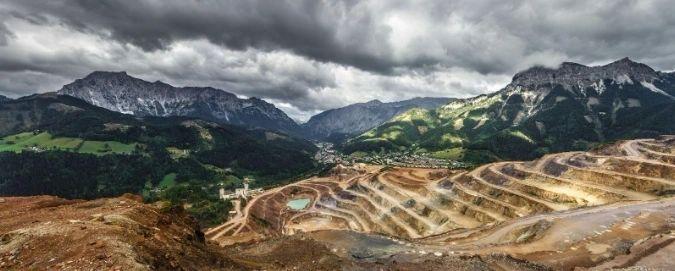
One of the most widely recognized and ambitious goals of our era is the fight against climate change [1]. Western countries remain central in this challenge, as they are among the main cumulative contributors to global greenhouse gas emissions [2], with Europe alone still responsible for 9.6% [3]. To shift this trajectory, the European Union launched its Green Transition, through initiatives such as the European Green Deal, Fit for 55 and, later, RepowerEU. The intention is to transform the sectors with the highest emissions: electricity and heat production (30.1%), transport (31.6%) and industry (14.2%) [3], mainly through large-scale electrification [4].
This transformation generates a rapidly growing demand for clean electricity and for the technologies that produce and store it: solar, wind and hydro generation, alongside batteries for electric mobility and storage [5]. As past energy systems relied on fuels, the current transition technologies rely on minerals such as copper, lithium, nickel and cobalt [6]. Their consumption could increase sixfold by 2050 [7], with a market value reaching US$400 billion and more than three billion tonnes of minerals and metals required to meet the Paris Agreement.
In this race for minerals led by Western nations, including the EU through the Critical Raw Materials Act, Africa has long been a central, though not always fortunate, actor. Many of the most essential minerals for the transition are located in African countries such as Zambia, Nigeria, South Africa and others [8, 9].
Yet, critical minerals also bring risks. If poorly governed, extraction and processing can lead to substantial greenhouse gas emissions, loss of biodiversity and pollution, and social abuses including child labour and harm to Indigenous communities. Supply instability further threatens to slow the transition, increase its cost or make it globally unequal, through volatile prices, geopolitical tensions, and pressure to expand mining into environmentally and socially sensitive regions [6].
To explore this topic, we had the privilege of interviewing two leading experts in the field: Dr Arnoldus M. van den Hurk, mineral geopolitics strategist at REMIO, and specialist in critical minerals in the energy transition, critical minerals and the energy transition [10], and Professor Iva Peša, Assistant Professor in Contemporary History at the University of Groningen, focusing on African and environmental history and Principal Investigator of the AFREXTRACT project [11].
From colonial extraction to the energy transition: reckoning with a history of exploitation in Africa
The mining of critical minerals in Africa did not emerge with today’s climate transition. Its architecture was built during colonial rule, when extraction was designed to fuel European industrialisation rather than local development. As Dr Peša recalls, ‘already in the 30s and 40s when copper started being mined on the Zambian and Congolese copper belts, this was to feed the demand in Europe… to electrify these countries,’ yet ‘the mineworkers who lived on the copper belt… continued to be lit by candles, even as they saw this big mining infrastructure all around them’ [13]. Such asymmetry was not incidental, but structural. Mining towns were deliberately engineered to reproduce racial hierarchies: African housing was sited downwind of smelters, while European managers lived upwind in cleaner and safer areas [12]. This reflects what Chibamba Chansa identifies as environmental racism [14], embedded in historical systems of “racial capitalism” [15, 16].
Colonial extractivism also relied on selective visibility of harm. Dr Peša notes the persistence of this mechanism: ‘accessing the company archives or the company documents of big multinationals [is] still very difficult… they are hardly willing to disclose their internal documents,’ and available technical reports maintain ‘a narrative of production above all else’ [13]. Even when independence brought formal regulatory change, deeper logic remained. The Smoke Damage Prohibition Act of 1934 prevented communities within five miles of the smelter from claiming damages and, as Dr Peša stresses, ‘this legislation remained in place until 1996’ [13], illustrating the remarkable endurance of colonial legal structures.
Today’s green transition does not automatically break with this past. Demand for copper, cobalt and other minerals is rapidly increasing, yet the distribution of benefits remains uneven. Dr Peša notes that in Zambia during the era of state-owned mines, investment in ‘housing, water provision, electricity, education, medical care, and even football clubs’ ensured that exported wealth ‘flowed back into these communities’. By contrast, she observes that today ‘people… feel that the wealth is just disappearing and benefiting other actors rather than them’ [13]. Technological upgrades also offer limited relief. The introduction of a new smelter in 2015 reduced sulphur dioxide emissions, but when sulphuric acid escapes ‘it becomes deadly’, as illustrated by the fatal 2013 incident involving district commissioner Beatrice Mtetwa [13].
African experts warn that without rigorous safeguards the global race for critical minerals risks repeating colonial extractivism under environmental rhetoric. As Dr Peša cautions, ‘what progress and modernity mean really depends’, and communities living with pollution ‘are still holding on to this vision that copper might one day bring them wealth… but at the same time they are living with toxicity on an everyday basis’ [13]. The fear, rooted in historical experience rather than ideology, is that Africa may once again supply the minerals powering global prosperity while absorbing the social and ecological costs [12, 13].
Analysis of demand of critical minerals for EU Green Transition
Critical minerals are commonly defined as raw-materials that play an essential role across strategic sectors, from renewable energy and electric mobility to digital technologies, healthcare and defence, yet face high supply risk. In practice, this definition is inherently political, rather than geological, because what a country deems “critical” depends on its industrial priorities and geopolitical dependencies. For the EU, these consist of 34 materials, including lithium, aluminium, cobalt, copper, natural graphite, nickel, manganese, and the famous rare earths [17].
Under the EU’s 2030 targets for strategic raw materials, the bloc aims to cover at least 10% of its annual consumption through domestic extraction, 40% through processing and 25% through recycling by 2030 [18]. To move in this direction, the Commission adopted in March of this year 47 Strategic Projects under the Critical Raw Materials Act. From these, 22 projects are for lithium, 12 for nickel, 10 for cobalt, 7 for manganese and 11 for natural graphite, all of which correspond to the main materials required for batteries, EVs and energy storage technologies, in other words, they are primarily aimed at supporting the energy transition [19].
This prioritisation of mining projects in favour of the energy transition, rather than other critical-mineral-intensive sectors, such as defence, is not arbitrary. Fueled by the European Green Deal, by 2050 lithium demand in renewables and e-mobility alone is projected to be roughly twenty-five times higher than today’s consumption across all sectors, while graphite, cobalt and nickel demand increase by about eight, five and two times respectively. Permanent-magnet rare earths used in wind turbines and EV motors also show strong growth, with dysprosium demand rising sixfold and neodymium roughly doubling, according to the Joint Research Centre’s medium-demand scenario [20].
According to Dr van den Hurk, the EU’s Strategic Projects disproportionately privileges lithium, despite it being relatively widely available and readily imported from countries such as Argentina, Chile, and Bolivia. He claims that the EU is neglecting minerals that are both geologically scarcer and strategically more valuable, such as tungsten, of which Spain holds some of the largest reserves in the world [21], yet only 3 of the 47 Strategic Projects concern tungsten. In his view, this represents a missed geopolitical opportunity: Europe should prioritize minerals where it has real comparative advantages, strengthening its bargaining position in international relations. This will only become more important as, while the EU seeks to reduce its dependence on fossil-fuel imports by shifting to renewable energy, it simultaneously deepens its dependence on mineral-rich countries.
This is because offshore, onshore wind and solar PV are far more mineral-intensive than conventional power plants, requiring roughly twelve, eight and six times more minerals per megawatt of capacity than natural gas, and around six, four and three times more than coal [22]. Electric vehicles follow the same trend, containing about six times more minerals than conventional cars. Yet, although these figures are already significant, Dr van den Hurk notes that they still significantly understate the real picture, and he highlights a methodological issue in how mineral intensity is commonly reported.
Both the International Energy Agency and the European Commission’s Joint Research Centre express material requirements in kilograms per megawatt of installed capacity (kg/MW) rather than kilograms per megawatt-hour of electricity produced (kg/MWh). While using kg/MW is a standard metric in the industry, in this case it gives an incomplete picture of the mineral footprint of renewables, since wind and solar operate at much lower capacity factors than fossil-fuels. As a result, Dr van den Hurk notes, kg/MW values make the transition appear less mineral-intensive than what it actually is, and underestimate the mineral dependence that countries , especially those in Europe, will face.
Although the Critical Raw Materials Act explicitly aims to diversify the EU’s import sources and reduce these strategic dependencies, diversification in mining is ultimately constrained by geology. And in this context, Africa plays a central role. As previously mentioned, the continent hosts some of the world’s largest reserves of cobalt, natural graphite, manganese, and platinum-group metals, along with significant deposits of other strategic minerals. This makes Africa crucial not only to the EU’s own supply security, but also to any realistic effort to reduce dependence on China, which remains the bloc’s dominant external supplier for several strategically important critical raw minerals.
While the EU has already signed strategic partnerships with several African countries, these are struggling to translate into concrete projects, putting its critical-mineral supply at risk. A recent brief from the European Council on Foreign Relations argues that Europe’s environmental, social, and governance (ESG) standards have become so strict in recent years that European companies are increasingly reluctant to finance or participate in mining activities [23]. The brief also notes that this ESG-centered approach fails to align with African governments’ priorities, such as job creation, industrialisation and infrastructure development. By contrast, partnership offers from China, the United Arab Emirates, Turkey, and Russia tend to match these priorities more closely, allowing them to expand their presence in African critical-mineral value chains at Europe’s expense.
This EU’s attitude is precisely what Dr Van Den Hurk criticizes. In his view, European institutions treat mining as a risk to be constrained rather than as a development opportunity, and by imposing rigid ESG expectations on African partners instead of focusing on their real economic needs, they end up blocking the very projects that could simultaneously generate local value and secure European supply. He argues that Europe must accept that mining is an unavoidable part of its own decarbonisation and energy security strategy, and that avoiding domestic extraction or over-regulating mining abroad simply shifts impacts elsewhere while restricting Europe’s ability to diversify away from China.
Sustainable technologies, strategies and alternatives in mining
Despite opposing and controversial aspects of mining, it is crucial to investigate, fund, and research sustainable practices within the sector to curb its impact, specifically through sustainable mining technologies, strategies, and alternatives.
Technological advancements have been continuously developing, with AI data analytics increasing resource efficiency and emission reduction [24], autonomous drones reducing human activity in dangerous zones [25], drills with pulsed power accelerating penetration at a lower cost and combined drilling and rock crushing to optimize time [26].
Over time, the extraction processes have sharpened their accuracy to minimize waste: selective ore mining selects only high grade ores; solution mining dissolves minerals of interest in water or brine to be pumped up to the surface without unnecessary rock waste; in-situ bioleaching in the orebody is able to avoid mining altogether in hard-to-reach abandoned pits [25]; while bio-mining employs microorganisms to separate minerals from rock rather than chemical processes [27].
Water consumption needs stem from mining operations such as excavation, dust suppression, and transportation [28], and mines are often in water-scarcity locations, thus making water usage reduction a fundamental issue to tackle. Technological innovations have allowed for lower water consumption through effective closed-loop recycling, filtration, seawater desalination [27], efficient tailings management, chemical treatments [28], smart AI mining solutions, leak management, and magnetic resonance analysis to separate high grade ore from low grade ore to reduce the amount of ore to process [29].
Transportation and power for logistics and management are also hotspots of GHG emissions. Indeed, electric trucks, excavators and loaders have entered the industry [25] and allow for increased air quality, lower temperatures, and higher ventilation [24]. Due to high demand for cooling, transporting, storing energy, and heating, power and electricity need to be provided, opening a possibility for further reducing such impactful hotspots [30]. Renewable energy offers a safe and clean alternative for off-grid mines, with many already relying on solar, wind, and energy storage [31].
Focusing on strategy and politics, it is clear that financial streams and policy compliance are linked, with higher-income countries pursuing sustainable frameworks and lower-income countries facing challenges in implementing environmental and social regulations, as is the case with Zambia, South Africa and Chile, each belonging to a different income bracket increasingly [32]. Indeed, large investments are required for Environmental Impact Assessments, environmental monitoring, regenerative plans, strict compliance with policy standards [33], as well as anti-bribery and corruption regulations [34].
Growing geopolitical frictions have intensified competition over critical minerals, as trade in semi-processed resources has become increasingly sensitive to political alignment after 2016 [35], with heightened tensions and policy shifts reshaping bilateral trade with China and reinforcing trends toward friendshoring, a supply chain strategy that involves relocating production to countries considered politically and economically stable allies [36]. In response, G7 partners have advanced coordinated mechanisms such as joint emergency protocols and technology-sharing agreements to stabilize supply chains [37]. These diplomatic efforts are essential given mineral scarcity, which raises concerns of global equity. Countries like Mongolia illustrate how “mining diplomacy” can balance regional integration with diversified partnerships to build more secure and inclusive supply chains [38]. At the same time, closing the copper gap (only 70% of demand will be met by 2035) requires strong policies to expand recycling and increase secondary supply [39/40].
Increasing institutional commitment to the SDGs is encouraging mining actors to adopt practices that generate greater socio-economic benefits for local communities, even though this trend results in African mining markets steering towards countries which prioritize job placement and infrastructure development rather than compliance with SDGs. Nonetheless, while women are disproportionately affected by mining [41], initiatives that expand female workforce participation and strengthen community projects help improve wellbeing. Yet, employment gains alone cannot offset harms such as displacement, loss of clean land and water, health risks, social divisions, and exposure to harassment [41]. Meaningful consultation, especially free, prior, and informed consent from Indigenous peoples, is essential to prevent negative impacts [41]. Post-mining measures, including land rehabilitation, ecosystem restoration, water purification, and local economic incentives further support long-term sustainability [25,27]. Civil-society actors like Oxfam also amplify community voices and promote environmental protection and corporate accountability [41].
Emerging mineral-light technologies are reshaping material demand by reducing dependence on critical minerals and lowering environmental pressures. In battery innovation, metal-ion alternatives such as sodium-, zinc-, magnesium-, calcium- and aluminium-based systems avoid reliance on lithium and cobalt, while offering competitive performance; sodium-ion batteries in particular provide lower costs, reduced extraction needs, and compatibility with existing lithium-ion production lines [42]. In solar energy, concentrated solar power (CSP) offers an alternative to photovoltaics, requiring only 4 cumulative tons of critical minerals through 2050 compared to 200 tons for PV [43]. Ultimately, it is important to always assess these technologies not against a “zero-mining” ideal but rather against the high material footprint of the fossil-fuel system they are replacing [44]. In the end, the most efficient way to curb the problem is shifting towards systems which allow for a reduction in mineral demand, as for example public transport can help achieve instead of extended personal EV mobility.
Critical mineral recycling is emerging as a central pillar of circular economy strategies, even though end-of-life waste will not be fully quantifiable before 2040. However, Van Den Hurk effectively illustrates that recycling can only curb 10% of the damage, besides cutting costs, making companies more competitive, hence increasing production, and reversing the desired trend. As previously mentioned, the EU’s Critical Raw Materials Act sets a target for meeting 25% of annual consumption through recycling, alongside improved collection of critical-mineral-rich waste and recovery from extractive residues [31]. Recycling is indispensable for supply security, reducing dependence on new mining and lowering investment needs; in the Announced Pledges Scenario, recycling reduces new mine development requirements by 40% for copper and cobalt and 25% for lithium and nickel, while also cutting overall mining investment needs by 30% [39,40]. Yet, falling shares of secondary supply for key minerals and very low collection rates in much of the Global South highlight the scale of the challenge [39]. Since recycling of lithium uses 90% less energy than primary extraction, efficiency gains are substantial [45]. Beyond recycling, circular design, modularity for disassembly, repair, reuse, refurbishment and Product-as-a-Service models can retain materials at higher value and reduce waste, including transforming mining waste into construction inputs [39,27]. Economic theory further suggests that cheaper or more desirable resources should meet demand first, with recycling becoming optimal when it undercuts virgin extraction [46]. Together, these strategies point toward a more resilient and resource-efficient critical minerals system.
Conclusion
The Green Transition is accelerating profound changes driven by sustainability imperatives, technological advancements, and changing geopolitical conditions, placing Africa and the EU in an increasingly complex geopolitical landscape. As the EU’s demand for critical minerals surges, it faces supply constraints and increasing dependence on mineral-rich regions, particularly in Africa. Without more strategic prioritisation of critical mineral applications and closer alignment with partner countries’ development goals, historic patterns of colonial extractivism risk being reproduced. Indeed, the EU’s ESG-first approach does not correspond to African countries’ current policy priorities, which are more focused on economic development. Sustainable mining technologies, circular economy strategies and mineral-light alternatives can ease pressure, but responsible extraction remains unavoidable. A just and resilient transition will depend on transparent partnerships that share value, strengthen supply security, and support long-term local development.
Ultimately, the point of contact that emerged from the two interviews is the hypocrisy of the EU in striving for net-zero climate impact while highly relying on carbon-intensive markets and energy sources abroad to reach such climate neutrality, with both professors agreeing on the necessity of rethinking our energy use.
Considering the large amount of information, opinions, and experiences related to the topic of the article, the writing commission has decided it is appropriate to deepen the research in a report in the near future.
Bibliography:
United Nations Security Council. (2021). Security Council Press Release SC/14445.
Center for Global Development. (2023). Climate and development in three charts (update).
International Energy Agency. (2024). Europe – Emissions.
Eurelectric. (2024). Climate change – In detail.
European Commission. (2024). Electrification – EU energy system.
United Nations Environment Programme. (2024). Critical energy transition minerals.
International Energy Agency. (2021). Clean energy demand for critical minerals set to soar as the world pursues net zero goals.
TESS Forum. (2023). Trading Africa’s green minerals at a crossroads: A call for regional coordination.
ECDPM. (2023). The EU’s ambitions need African resources for its green transition – Can it circumvent China?
Congreso CIAcc. (2024). Dr Arnoldus van den Hurk – profile.
University of Groningen. (2024). Dr Iva Peša – academic profile.
Peša, I. (2023). Toxic coloniality and the legacies of resource extraction in Africa. International Review of Environmental History, 9(2).
Peša, I. (2025). Interview with the VOYCE Energy Commission on extractivism and the green transition (Unpublished interview transcript).
Chansa, J. C. (2023). From Senta to acid fumes: Mufulira, Mopani Copper Mines and environmental pollution.
Robinson, C. (1983). Black Marxism: The making of the Black Radical Tradition. University of North Carolina Press. (Original work published 1983)
Pulido, L. (2016). Flint, environmental racism, and racial capitalism. Capitalism Nature Socialism, 27(3), 1–16.
European Commission. “Critical Raw Materials Act - Internal Market, Industry, Entrepreneurship and SMEs.” Internal Market, Industry, Entrepreneurship and SMEs, https://single-market-economy.ec.europa.eu/sectors/raw-materials/areas-specific-interest/critical-raw-materials/critical-raw-materials-act_en. Accessed 20 November 2025.
European Commission. “Critical raw materials - Internal Market, Industry, Entrepreneurship and SMEs.” Internal Market, Industry, Entrepreneurship and SMEs, https://single-market-economy.ec.europa.eu/sectors/raw-materials/areas-specific-interest/critical-raw-materials_en. Accessed 20 November 2025.
European Commission. “Commission selects 47 Strategic Projects to secure and diversify access to raw materials in the EU.” European Commission, 24 March 2025, https://ec.europa.eu/commission/presscorner/detail/en/ip_25_864. Accessed 23 November 2025.
JRC. “Critical Raw Materials for Strategic Technologies and Sectors in the EU.” European Commission, 2020, https://rmis.jrc.ec.europa.eu/uploads/CRMs_for_Strategic_Technologies_and_Sectors_in_the_EU_2020.pdf. Accessed 22 11 2025.
USGS. “Mineral Commodity Summaries 2024.” Mineral Commodity Summaries 2024, https://pubs.usgs.gov/periodicals/mcs2024/mcs2024-tungsten.pdf. Accessed 21 November 2025.
IEA. “Executive summary – The Role of Critical Minerals in Clean Energy Transitions – Analysis.” IEA, https://www.iea.org/reports/the-role-of-critical-minerals-in-clean-energy-transitions/executive-summary. Accessed 21 November 2025.
ECFR. “Too clean to compete: Why strict standards keep Europeans out of African minerals | ECFR.” European Council on Foreign Relations, 13 May 2025, https://ecfr.eu/publication/too-clean-to-compete-why-strict-standards-keep-europeans-out-of-african-minerals/. Accessed 22 November 2025.
Onifade et Al, “”, Green and Smart Mining Engineering, 2024
ESD, “”
iPulse, “Powering a Sustainable Future”,
K. Sawarkar, “”, Renewable Matter
L. Cavarra, “Reducing the Mining Industry’s Water Footprint Through Innovative Water Treatment Solutions, Renewable Matter, 2024,
Foster Fuels, “How to Reduce Water COnsumption in Mining Operations,
Li et Al, “Renewable energy in the mining industry: Status, opportunities and challenges”, Energy Strategy Reviews, 2024 https://www.sciencedirect.com/science/article/pii/S2211467X24003067 https://m-mtoday.com/news/7-ways-renewable-energy-is-transforming-the-mining-industry/
Pokhrel et Al, “Techno-Economic Trade-Off between Battery Storage and Ice Thermal Energy Storage for Application in Renewable Mine Cooling System”, Applied Sciences, 2020,
Wambwa, “Enhancing sustainable mining with effective design of financial assurance programs: A viewpoint on the various legal and regulatory frameworks of Zambia, South Africa and Chile”, Social Sciences & Humanities Open, 2023,
Farmonaut, “Regulatory Compliance in Mining: 7 Key 2025 Strategies”,
Aravo, “Reducing Mining Regulatory Risks, Achieving Third-Party Compliance”, 2016,
Farag et Al, “Allies and enemies: On the political determinants of trade in critical minerals”, Resources Policy, 2025,
Vivoda et Al, “A critical minerals perspective on the emergence of geopolitical trade blocs”, Resources Policy, 2023,
M. Hidayat, “Critical Minerals and Global Power: Rare Earth Diplomacy Challenges”, 2025,
B. Batdorj, “Mongolia’s Critical Mineral Diplomacy: Strategic Balancing between Neighbours “, 2025,
IEA, “Recycling of Critical Minerals”
IEA, “Critical Raw Materials Act”,
Oxfam, “Mining”,
UNCTAD, “Changing battery chemistries and implications for critical minerals supply chains“, 2025,
WorldBank, “Minerals for Climate Action: The Mineral Intensity of the Clean Energy Transition“,
H. Ritchie, “Low-carbon technologies need far less mining than fossil fuels”, Our World In Data, 2024,
Ellen MacArthur Foundation, “Critical Minerals”,
Ruan et Al, “Optimal strategies of critical mineral depletion and recycling”, Resources, Conservation and Recycling, 2024,