
Red Lines in the Grey Zone: Europe’s Airspace Under Pressure
22 min read · 4,340 words
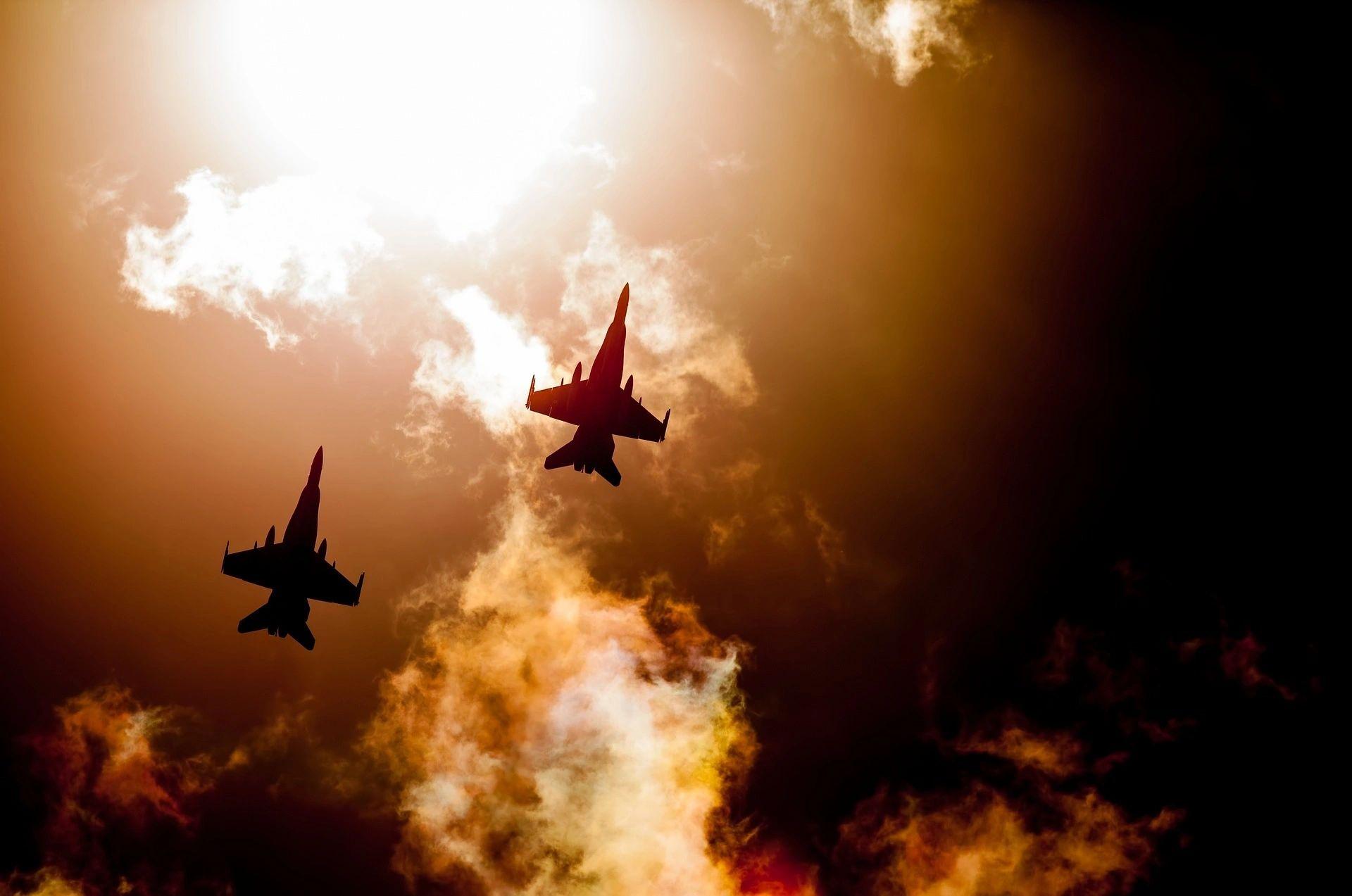
Russian drones have not needed to cause destruction to create disruption. In September 2025, they crossed into NATO airspace from Poland to Denmark, Romania to Estonia. They are unclaimed, unmarked, but unmistakably deliberate. Although attribution remains unconfirmed, European officials overwhelmingly suspect Russian involvement. These were not navigational errors but strategic probes, designed to test response times and expose hesitation. Europe's reaction has been forceful in rhetoric but cautious in practice. Fighter jets scramble, radars track, airports shut down. Some drones have been shot down, but crewed aircraft remain untouched. Fear of escalation runs deep, and for understandable reasons. But every act of restraint is also read as a signal, and Moscow is watching closely. For years, Europe tolerated provocations as background noise; September proved that this noise has become a deliberate grey-zone strategy. That tension defines the present moment. NATO calibrates its credibility to avoid war. The EU promises autonomy but struggles to deliver it. What these incursions make clear is that Europe's red lines are no longer abstract. Sovereignty is not just declared; it must be enforced.
Sovereignty breached again: the strategic context
September 2025 marked a surge in Russian airspace violations across NATO territory. On September 9th, nineteen drones crossed into Polish airspace, forcing Warsaw to scramble jets and shoot several down (Desmaris, 2025). Dutch F-35s, deployed to Poland only days later, made NATO history by downing Russian drones directly in allied airspace, the first such incident of its kind. One of the aircraft later bore a drone-shaped kill marking under its cockpit, a symbolic reminder that sovereignty was defended kinetically, even if only against cheap unmanned targets (Baker, 2025). Five days after the initial breach into Polish airspace, Romanian authorities confirmed that a Russian drone had entered their skies, with fragments later found on NATO soil (The Independent, 2025). On the 19th of September, three armed Russian MiG-31s crossed into Estonia, remaining over for ten minutes before being intercepted, an incident serious enough to trigger Article 4 consultations at NATO (NATO, 2025). Denmark faced waves of suspected drone incursions around airports and military sites between the 22nd and 28th of September, leading Copenhagen to suspend all civilian drone activity for an entire week (Jozwiak, 2025). Even Norway, long accustomed to routine Russian overflights from the Kola Peninsula, closed Oslo's airspace on September 23rd and reported drones near Svalbard, a sign that what was once tolerated as background noise is now framed as unacceptable (Urbancik, 2025). France and Germany also reported incursions, with drones spotted near a French military base in Mourmelon-le-Grand, which hosts Ukraine's training mission, and unidentified overflights in northern Germany (Desmaris, 2025).
NATO's collective response has been forceful in rhetoric but cautious in practice. The North Atlantic Council condemned the incidents as “dangerous and irresponsible” and announced Operation Eastern Sentry to reinforce the eastern flank (NATO, 2025). Yet, the military reaction has remained non-kinetic: jets scrambled, aircraft intercepted, but no shots fired. As Politico noted, Europe has responded firmly, but not decisively (Kayali and Jack, 2025). Moscow, meanwhile, denies any responsibility. Addressing the UN General Assembly on September 27th, Foreign Minister Sergei Lavrov insisted Russia had “never targeted EU or NATO countries with drones or missiles” and warned that any attempt to down Russian aircraft would meet a “decisive response” (Balmforth & Nichols, 2025). Days later, President Vladimir Putin dismissed Europe's airspace concerns as “hysteria to justify militarisation”, promising a “significant response” to EU rearmament. By framing NATO as already at war with Russia in Ukraine, the Kremlin sought to flip European deterrence debates into evidence of escalation itself (Tomslee, 2025). At the EU leaders' summit in Copenhagen on the 30th of September, Danish Prime Minister Mette Frederiksen and other leaders rejected Moscow's denials, pressing for stronger European responses. Von der Leyen stressed the need for rapid deterrence, while Rutte underlined the responsibility of allies to secure the skies (Parker & Kirby, 2025). For leaders on the eastern flank, ambiguity is not a shield but part of the provocation itself: incursions blur thresholds, probing how far NATO's restraint can be stretched before credibility gives way. The pattern exposes a broader question: if sovereignty can be violated repeatedly without a kinetic response, what does defending airspace mean in practice?
Sovereignty as capacity: not just territory
In the European imagination, sovereignty has long been tied to territorial control: the ability to secure borders and repel intrusions. Yet, the wave of Russian airspace violations in September has shown how fragile that vision can be when deterrence is exercised in a grey zone between war and peace. Sovereignty today must be understood less as the map's edge, and more as a set of capacities: operational, institutional, and technological.
Operational sovereignty asks a simple question: who can respond, and how quickly? In Estonia, the absence of national jets meant NATO's command structures had to take the lead. In Poland, by contrast, F-16s and Dutch F-35s engaged Russian drones directly. But the difference is not only material. Institutional sovereignty complicates the picture: whose authority decides whether to fire? NATO's rules of engagement are classified and consensus-driven, while national forces retain the right to act independently. This produces hesitation at precisely the moment when sovereignty is supposed to be demonstrated. For smaller states especially, acting alone risks escalation without guaranteed solidarity. This reveals why many incursions are met with intercepts but not with fire.
It is not only uncertainty over institutional roles; it is also political caution. Leaders know that to down a Russian fighter jet or drone may be to invite Moscow's retaliation, something electorates still see as incompatible with peacetime normality. As Fiott (2022) argues, autonomy begins “where capability meets political will”. Donald Tusk has long stressed that will is Europe's missing link. In March 2024 he warned that “war is no longer a concept from the past … the pre-war era [is] becoming more apparent every day” (Chiappa, 2024), a framing that returned at the Politico Competitive Europe Summit in Brussels on October 1st, 2025, where leaders debated whether Europe can achieve autonomy or risk being left behind. Europe has the tools: what it lacks is the convergence of resolve. Finally, technological sovereignty underscores the asymmetry at play. Detecting and neutralising drones is not beyond Europe's means, but the capacity to do so cheaply, quickly, and without risking escalation is still underdeveloped. The gap creates a sovereignty paradox: airspace can be formally “ours” but in practice, it remains vulnerable to cheap incursions and political hesitation.
The drone as political actor: cheap tools, expensive messages
Drones may be small and relatively inexpensive, but their strategic effect lies in their symbolism. Russia's incursions in September 2025 show that these are not random flights but political signals. They probe radar coverage, test NATO response speeds, and expose divisions between national and Alliance-level rules of engagement. As Nicolas Tenzer notes, these drones are not strategic weapons so much as political tests (Tenzer, 2025). For NATO, the asymmetry is stark. Shooting down a €10,000 drone with a €1 million interceptor missile is economically unsustainable. German forces intercepted several incursions without recovering debris, highlighting the difficulties of attribution (Kayali, 2025a). Denmark, facing repeated sightings near airports and military bases, temporarily shut down its airspace rather than engage kinetically, avoiding escalation but leaving the question of thresholds unresolved (Jozwiak, 2025).
This creates a dilemma central to deterrence theory. Traditional deterrence was built on clear thresholds: hostile action would trigger a proportionate response. But drones sit in the “grey zone” between war and peace, where every response carries risks of either escalation or erosion of credibility. Hybrid warfare, as the security literature argues, exploits precisely this gap (Kaldor, 2012; Hoffman, 2007). By keeping its provocations below the level of armed conflict, Russia imposes political and psychological costs at minimal financial risk. Constructivist insights also matter here. A drone is not just an object on a radar screen; it is interpreted politically. When Poland shoots one down, it demonstrates resolve. When Denmark closes its skies, it demonstrates caution. The act itself carries less meaning than the interpretation assigned by states and allies. In this sense, drones act as political agents, forcing decisions, shaping narratives, and testing institutional cohesion. Ultimately, the problem is not the doctrine itself but what it reveals: a credibility gap between NATO's rhetoric of deterrence and its constrained practice. As long as drones can provoke costly responses without triggering escalation, they will remain a preferred instrument of hybrid disruption.
NATO's calculus: credibility without escalation
The airspace violations of September 2025 exposed not only Russian opportunism but also NATO's enduring dilemma: how to respond firmly without provoking a direct war. The distinction between Article 4 and Article 5 is central. The former provides for consultation, as Estonia and Poland have now invoked twice in three weeks, but does not bind allies to military action. Article 5, NATO's collective defence clause, remains untriggered. This legal ambiguity reflects the alliance's desire to signal solidarity without committing to escalation. Rules of engagement (ROEs) remain classified, but uncertainty over thresholds is deliberate. As former NATO officials note, force is not automatically authorised in peacetime airspace violations unless an imminent threat is identified (Hoorman & Vincent, 2025). This is why, despite three MiG-31s loitering over Estonia, NATO scrambled jets but held fire. The precedent is instructive: in 2015, Turkey unilaterally shot down a Russian Su-24 after a 17-second violation, a decision Ankara took under national command and only informed NATO afterwards. That incident brought trade retaliation from Moscow, but Russian incursions over Turkey ceased (Tanis, 2025). Today, few allies are willing to repeat such a unilateral act.
The real stress point lies inside the alliance itself. Eastern flank states – Poland, Estonia, Romania – see airspace violations as existential tests, demanding sharper thresholds and faster responses. Western capitals, by contrast, weigh escalation risks more heavily. As German Chancellor Friedrich Merz put it in Düsseldorf, “we are not at war, but we are no longer at peace either” (Inverardi & Heine, 2025). The divergence is not only tactical, but strategic: for some members, sovereignty means deterrence; for others, it means avoiding war at almost any cost. Public statements reveal how exposed this divergence has become. During his presidency, Joe Biden had cautioned that Russian aircraft should only be shot down if an “imminent threat” was identified (Kayali, 2025a). President Donald Trump, however, has taken a far more uncompromising line. At a private fundraiser in September, he told donors: “If they're in your skies, shoot them down. I wouldn’t let them cross my fence, why would you? Putin isn’t who I thought he was anymore” (Bose, 2025). The juxtaposition underscores a sharp shift in U.S. messaging: Biden's conditional restraint replaced by Trump's assertive, and unpredictable, posture. Within Europe, Warsaw has warned that “some form of war with Russia has already begun”, pressing NATO for greater clarity and insisting it cannot face escalation alone (Chippa, 2025). Hungary's Viktor Orbán, meanwhile, has dismissed drone incursions as inconsequential, framing Ukraine as “not a sovereign country” (Denisova, 2025). Berlin has urged patience, cautioning against building “monuments instead of defences” (Jones, 2025). These positions illustrate that NATO's cohesion is strongest in rhetoric, but most fragile in operational consensus.
These divergences illustrate the structural tension in NATO: deterrence depends on both material capability and political will. As Mearsheimer (2001) argued, alliances endure only while national interests converge. NATO's current calculus reflects this: robust rhetoric, increased forward presence (Eastern Sentry), and reinforcement of air defence, but deliberate restraint against kinetic escalation. The result is a strategy of “credibility without escalation”: enough to reassure allies and signal unity but calibrated to avoid war. Whether this balance can be sustained indefinitely is uncertain. Each violation pushes the line further, forcing NATO to perform credibility while withholding escalation. That gap, between declaratory firmness and operational restraint, is exactly what Moscow probes. And that widening gap sets the stage for Europe's central dilemma: if NATO's credibility is calibrated around restraint, can the European Union truly claim strategic autonomy, or is sovereignty in the skies destined to remain conditional on American guarantees?
The autonomy gap: Europe's defence integration problem (and the drone wall test)
Strategic autonomy is not defined by declarations but by delivery. Europe talks of sovereignty in defence, but its fragmentation in procurement, intelligence, and operational command leaves it dependent on external guarantees. As Fiott (2022) notes, the EU's procurement system remains deeply fragmented, with parallel national programmes diluting scale and slowing deployment. Drone defence capabilities are concentrated in only a handful of states, leaving most members reliant on ad hoc NATO cover. Marrone (2021) similarly stresses that the Union still lacks genuine operational autonomy.
At the Politico Competitive Europe Summit in Brussels (October 1st, 2025), Andrius Kubilius, European Commissioner for Defence and Space, admitted that after the provocations against Poland, the “drone wall” had become acutely relevant, but also “psychological”, serving as much to reassure citizens as to deter adversaries. He warned that “we need to build real capabilities to show our people we are safe” and accepted that Europeans must “take responsibility for Europe”, as the United States increasingly shifts its focus elsewhere. Yet even he doubted the EU could manage this within 3-5 years, underlining the structural lag between ambition and implementation (Lunday, Kayali & Barigazzi, 2025). The Commission's proposal itself has run into resistance. German Chancellor Friedrich Merz criticised it in “very harsh” terms during the Copenhagen summit, while Italy's Giorgia Meloni and Greece's Kyriakos Mitsotakis argued defence projects should benefit the entire bloc, not just its eastern flank (Nicholls, 2025). Finland’s Petteri Orpo countered that solidarity must now mean security: “we have shown solidarity in Covid, in the economy, in migration. Now is the time to show it in defence”. That urgency was reinforced by Danish Prime Minister Mette Frederiksen when she declared bluntly: “from a European perspective, there is only one country willing to threaten us, and that is Russia, and therefore we need a very strong answer back” (Parker & Kirby, 2025). Here, Commission President Ursula von der Leyen sharpened the point, calling for deterrence “at scale and at speed”, while NATO Secretary General Mark Rutte warned plainly: “we have to keep our skies safe” (Parker & Kirby, 2025). German Chancellor Friedrich Merz added that Europe was “no longer at peace” and warned that failure to act decisively would expose deeper vulnerabilities (Inverardi & Heine, 2025).
The drone wall has become the most viable test case of this autonomy gap. Even the branding is contested. Kubilius has stressed that it is not a “new Maginot Line” but rather a layered network of radars and interceptors, though Macron dismissed the idea of a seamless 3,000 km wall as “not feasible” (Kayali, 2025b). Denmark's Frederiksen has likewise shifted the framing, preferring the phrase “European network for anti-drone measures”, to underscore that the strength lies in integration rather than illusion (Lunday, Kayali & Barigazzi, 2025). For Warsaw, Vilnius, and Tallinn, the wall is both urgent and symbolic: a way to demonstrate that sovereignty cannot be defended by rhetoric alone. But enthusiasm is not universal. Macron has questioned whether the wall offers real protection or merely a “costly EU-branded monument”, warning that “Europe must not mistake a wall for a strategy” (Kayali, 2025b). Berlin and The Hague echo that view, preferring to fold counter-drone defences into NATO's existing architecture rather than duplicating efforts at EU level. Ukraine, meanwhile, has precisely the experience Europe lacks. As Zelensky reminded leaders in Copenhagen, Ukrainian “professionals and technologies must become an important part of the EU's drone wall initiative”. Its battlefield innovations in countering Shahed drones could inform European defences, but political hesitations risk wasting that advantage (Sabbagh, 2025).
Former Danish brigadier Ole Kværnø warned that the next target “could be infrastructure like energy supply”, emphasising that hybrid warfare is designed to take Europe by surprise (Parker & Kirby, 2025). Industry has also rushed to frame itself as indispensable. Saab said it would be “happy” to contribute, Rheinmetall pushed cannon-based defence as the most cost-effective countermeasure, while BAE Systems reminded leaders that it already provides the “backbone” of NATO's air power (Meredith, 2025). Yet as one Swedish drone manufacturer warned, the risk is that the initiative drowns in bureaucracy and “regular European haggling over who calls the shots” (Meredith, 2025). The result is what has been described as Europe's “execution gap”: its weakness lies not in intent but in delivery (Olafsen, 2025). Yet, as some EU officials counter, the long and often frustrating bureaucratic process can also serve as a guardrail: by forcing negotiation and compromise, it may ensure that responses, when implemented, are both more legitimate and more resilient than rushed unilateral measures. As one Brussels speaker observed, “in today's climate, for things to stay the same, everything has to change”. Unless Europe can move from symbolism to execution, the drone wall will remain exactly what its critics fear, a monument, not a shield.
Strategic optionality: what can be done?
September's incursions made one thing clear: Europe has choices but none without consequences. The question is less about technical fixes than about what each choice signals, to Moscow, to allies, and to European citizens.
Tightening NATO's rules of engagement for drones would send the clearest deterrent signal: that allied airspace cannot be treated as a testing ground. But the clarity cuts both ways. Once thresholds are public, failure to act exposes weakness: enforcement risks escalation. The lesson of Turkey's 2015 shoot-down of a Russian Su-24 still looms: decisive action can halt violations but also invite retaliation. The Dutch F-35's downing of drones in early October has shown both sides of the dilemma: history-making as a demonstration of resolve, but also a costly use of high-value jets and munitions against €10,000 targets (Baker, 2025). This mismatch highlights the urgent need for layered, cheaper defences. Fast-tracking the drone wall is another option, offering frontline states a visible demonstration of EU cohesion. Yet the wall is years away, as Defence Minister Boris Pistorius conceded, making it a promise of future credibility rather than present security (Kayali, 2025a). Latvia's Prime Minister Evika Siliņa countered in Copenhagen that “we don’t need three years”, urging faster deployment (Nicholls, 2025). The exchange revealed Europe's east-west divide: urgency for those under direct pressure, caution for those further removed.
The risk is that Europe mistakes long-term infrastructure for immediate deterrence, allowing Moscow to exploit the gap. Analysts warn that even if built, a drone wall can only “catch the fingers” of Russia's threat. As reported by Lunday, Kayali & Barigazzi (2025), Christian Mölling argued that “to win you must target the head: command, logistics and production capacity”. Clarifying NATO's thresholds collectively would reduce hesitation and close the gap between rhetoric and response. But here politics intrude: Warsaw and Tallinn demand sharper lines, Berlin and Budapest resist them. As Danish Prime Minister Mette Frederiksen warned, “they are threatening us and they are testing us, and they will not stop” (Parker & Kirby, 2025). Her words cut to the heart of the problem: without agreed thresholds, every hesitation risks becoming an invitation to probe further.
The lesson is that Europe cannot rely on a single fix. Every option is a test of coherence under pressure. Deterrence lies not in the technology of drone walls or the wording of ROEs, but in whether Europe can act collectively, predictably, and credibly. Strategic optionality, in this sense, is not about multiplying paths but about narrowing doubt. And therein lies the unresolved problem: Europe's real weakness is not the absence of tools but the absence of enforced red lines. As Frederiksen put it, Europe is “in the most difficult and dangerous situation since the end of the Second World War” (Parker & Kirby, 2025). Unless choices are backed by action, optionality risks becoming another word for hesitation. And hesitation is the very space Moscow is exploiting.
Conclusion: Europe's red lines are being tested
The drone incursions of September 2025 may not have carried formal attribution, but few in Europe treat them as accidents of navigation. While Moscow insists it has “never targeted EU or NATO countries with drones or missiles” (Balmforth & Nichols, 2025), leaders in Warsaw, Tallinn, and Bucharest view the denials as part of the test itself, probing not only Europe's airspace, but its political resolve. The point is not destruction but disruption: to measure hesitation, test thresholds, and reveal how far sovereignty can be stretched without consequence. Europe's dilemma is therefore less about technical capacity than political will. The Union can build walls, procure systems, and integrate intelligence. But none of this matters if leaders hesitate to act when the skies are breached. Strategic autonomy begins not in declarations or procurement strategies, but in the willingness to enforce red lines when they are crossed.
For years, Europe tolerated low-level incursions as “background noise”. September showed the danger of that posture: what was once dismissed as routine is now a deliberate grey-zone strategy. The airspace above Warsaw, Tallinn, Bucharest, and Copenhagen is not only national territory, but also a frontline of credibility. The question is stark. If sovereignty can be violated without response, how much of it remains? If deterrence is never demonstrated, when does it cease to exist? Europe is not yet under attack, but it is being warned. The grey zone is no longer a buffer; it is already a battlefield where credibility is contested daily. Each hesitation signals not prudence, but vulnerability. The Dutch F-35's October kill marking captured that tension: sovereignty was enforced once, visibly and symbolically, but the broader question remains whether such responses can be scaled or sustained (Baker, 2025). If Europe continues to respond firmly but not decisively, it risks teaching Moscow that escalation is optional, and that silence has no cost. In today's strategic climate, neutrality is not safety: it is drift. Europe cannot afford to remain silent in the grey zone, or it may never speak on its own terms again. Whether the next incursion comes over Vilnius, Copenhagen, or the Black Sea, the dilemma will remain unchanged: Europe's credibility will not be measured by where drones appear, but by how consistently sovereignty is enforced.
Bibliography:
Baker, P. (2025). NATO F-35 marks history after Russian drone takedown. Business Insider. Retrieved from: https://www.businessinsider.com/nato-f-35-new-kill-mark-after-russian-drone-takedown-2025-10
Balmforth, T., & Nichols, M. (2025). Russia tells West: any aggression will be met with 'decisive response'. Reuters. Retrieved from: https://www.reuters.com/world/europe/russia-warns-nato-eu-any-aggression-will-be-met-with-decisive-response-2025-09-27/
Bose, D. (2025).Russia´s WW3 warning to West if Nato acts on threat to down Putin´s jets as tensions reach new heights. The Sun. Retrieved from: https://www.the-sun.com/news/15251336/russias-nato-drone-airspace-ww3-ukraine-trump/
Chiappa, C. (2024). War looms for Europe, warns Poland’s Donald Tusk. Politico. Retrieved from: https://www.politico.eu/article/polish-prime-minister-donald-tusk-warns-europe-pre-war-era/
Cohen, D. (2025). French army declares readiness to down drones entering airspace. Euractiv. Retrieved from: https://www.euractiv.com/news/french-army-declares-readiness-to-down-drones-entering-its-airspace/
Denisova, A. (2025). Orbán: Ukraine isn’t sovereign after alleged Hungarian drone incursion. Kyiv Independent. Retrieved from: https://kyivindependent.com/orban-says-ukraine-isnt-sovereign-following-alleged-hungarian-drone-incursion/
Desmarais, J. (2025). Which countries in Europe have spotted suspicious drones in their airspace? Euronews. Retrieved from: https://www.euronews.com/next/2025/09/30/which-countries-in-europe-have-spotted-suspicious-drones-in-their-airspace
Fiott, D. (2022). European strategic autonomy: Operational challenges and political will. European Union Institute for Security Studies.
Fornusek, M. (2025). Hungary would shoot down Russian drones violating its airspace. Kyiv Independent. Retrieved from: https://kyivindependent.com/hungary-would-shoot-down-russian-drones-violating-its-airspace-orban-says/
Hoffman, F. (2007). Conflict in the 21st Century: The rise of hybrid wars. Potomac Institute for Policy Studies.
Hoorman, D., & Vincent, L. (2025). NATO’s new engagement rules mark a turning point in response to Russian incursions. Le Monde. Retrieved from: https://www.lemonde.fr/en/opinion/article/2025/09/30/nato-s-new-engagement-rules-mark-a-turning-point-in-response-to-russian-incursions_6745924_23.html
Independent. (2025). Ukraine-Russia war live updates: NATO airspace violations. Independent. Retrieved from: https://www.independent.co.uk/news/world/europe/ukraine-russia-war-trump-gas-facilities-kharkiv-b2838480.html
Inverardi, G., & Heine, F. (2025). Europe no longer at peace with Russia says Germany´s Merz. Reuters. Retrieved from: https://www.reuters.com/world/europe-no-longer-peace-with-russia-says-germanys-merz-2025-09-29/
Jones, R. (2025). German defense minister skeptical about drone wall idea. TVP World. Retrieved from: https://tvpworld.com/89208249/german-defense-minister-skeptical-about-drone-wall-idea
Jozwiak, R. (2025). After Drone Sightings, Copenhagen To Host EU Leaders For 'Acute' Security And Defense Summits.. RFE/RL. Retrieved from: https://www.rferl.org/a/denmark-drones-europe-defense-security-ukraine/33545257.html
Kaldor, M. (2012). New and Old Wars: Organized violence in a global era. Polity Press.
Kayali, L. (2025a). German Defense Minister Boris Pistorius skeptical of drone wall. Politico. Retrieved from: https://www.politico.eu/article/german-defense-minister-boris-pistorius-skeptical-drone-wall-russia-airspace-violation/
Kayali, L. (2025b). Macron dosen´t love the EU´s drone wall idea. Politico. Retrieved from: https://www.politico.eu/article/france-emmanuel-macron-eu-drone-wall/
Kayali, L., & Jack, V. (2025). Finger on the trigger: How NATO is responding to Russia’s airspace violations. Politico. Retrieved from: https://www.politico.eu/article/nato-responding-russia-airspace-violation/
Lunday, C., Kayali, L., & Barigazzi, J. (2025). Von der Leyen’s drone wall plan collides with EU reality. Politico. Retrieved from: https://www.politico.eu/article/ursula-von-der-leyen-drone-wall-plan-crash-eu-reality/?reg-wall=true
Marrone, A. (2021). Europe’s defense integration: Capabilities and limits. Istituto Affari Internazionali (IAI).
Mearsheimer, J. (2001). The Tragedy of Great Power Politics. New York: W.W. Norton.
Meredith, S. (2025).‘We stand ready’: Defense giants welcome Europe’s push to build a drone wall to repel Russia. CNBC. Retrieved from: https://www.cnbc.com/2025/10/02/defense-bae-saab-and-rheinmetall-welcome-europes-drone-wall-plans.html
NATO. (2025). Statement by the North Atlantic Council on recent airspace violations by Russia. NATO Official Texts. Retrieved from: https://www.nato.int/cps/en/natohq/official_texts_237721.htm
Nicholls. (2025). With EU leaders discussing plans to counter Russian drones, what exactly is a ‘drone wall’. CNN. Retrieved from: https://edition.cnn.com/2025/10/01/europe/drone-wall-eu-leaders-counter-russia-intl
Olafsen, M. Europe´s strategic autonomy in a post-Atlantic world. Voyce. Retrieved from: https://voycecommunity.eu/our-work/f/europe%C2%B4s-strategic-autonomy-in-a-post-atlantic-world?blogcategory=Defence
Parker & Kirby. (2025). Danish PM calls for strong answer from EU leaders to Russia's hybrid attacks. BBC News. Retrieved from: https://www.bbc.com/news/articles/cp8jdene16ro
Rankin, J. (2025). EU to move forward with plans for drone wall amid Russian incursions. The Guardian. Retrieved from: https://www.theguardian.com/world/2025/sep/26/eu-drone-wall-russian-incursions-air-defences-ukraine
Sabbagh, D. (2025). Zelenskyy: Ukraine to help Europe counter drone incursions. The Guardian. Retrieved from: https://www.theguardian.com/world/2025/sep/29/zelenskyy-ukraine-help-europe-counter-russian-drone-incursions
Stur, T. (2025). Ukraine shares expertise in fighting drones with Denmark. European Interest. Retrieved from: https://www.europeaninterest.eu/ukraine-shares-expertise-in-fighting-russian-drones-with-denmark-zelenskyy-says/
Tanis, C. (2025). German and Swedish jets intercept Russian military plane over Baltic Sea. NPR. Retrieved from: https://www.npr.org/2025/09/21/nx-s1-5549406/russia-nato-plane-baltic-sea-germany-sweden
Tenzer, N. (2025). Drone incursions: 'Russia is testing the resolve of democratic societies to respond to its threats'. Le Monde. Retrieved from: https://www.lemonde.fr/en/opinion/article/2025/09/30/drone-incursions-russia-is-testing-the-resolve-of-democratic-societies-to-respond-to-its-threats_6745931_23.html
Tomslee, S. (2025). Putin promises “significant” response to European militarization, mocks Trump’s “paper tiger” comment. The Economic Times. Retrieved from: https://economictimes.indiatimes.com/news/international/us/putin-promises-significant-response-to-european-militarization-mocks-trumps-paper-tiger-comment/articleshow/124287879.cms
Urbancik, A. (2025). German defence minister condemns Russian drone incursions over NATO countries. Euronews. Retrieved from: https://www.euronews.com/2025/09/29/german-def-min-pistorius-russian-federation-is-the-greatest-and-most-immediate-threat-to-n
Viana, M. (2025). Europe debates responses to rising drone incursions. Mundo América. Retrieved from: https://www.mundoamerica.com/news/2025/09/30/68db9e9ee85ece24058b4596.html
Wiener, J. (2025). NATO allies accuse Russia of deliberate drone incursion to test readiness. Washington Post. Retrieved from: https://www.washingtonpost.com/world/2025/09/11/nato-russia-drones-poland-test/