
Rethinking EV Adoption: The case for Public Transportation
By Adavait Desai and Sofia Rufino Pilar
10 min read · 1,988 words
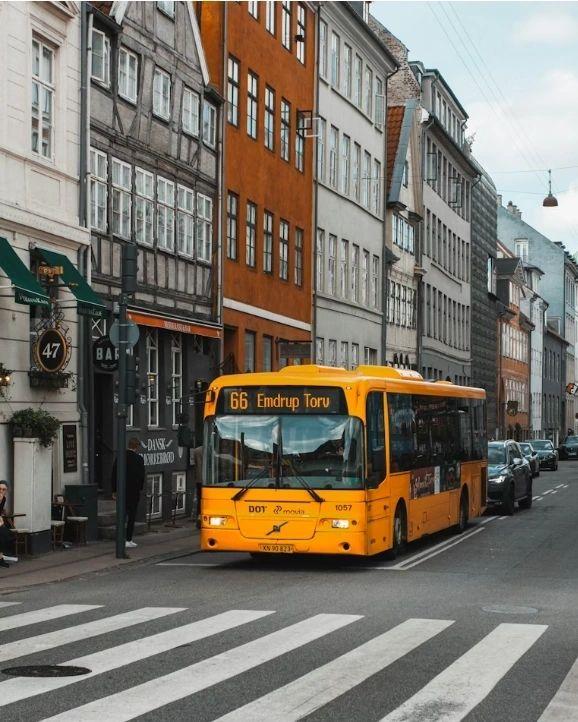
The global shift toward low-carbon mobility has accelerated the adoption of electric vehicles (EVs), which are widely promoted as a key solution to reducing greenhouse gas emissions from transport. Today, more than three million EVs are already on the roads worldwide, and annual sales continue to soar—growing by nearly 75% every year (Niri, 2024). Ambitious policies, especially in Europe, are driving this momentum. The European Union aims to have at least 30 million zero-emission cars in operation by 2030, and by 2050, nearly all cars, vans, buses, and heavy-duty vehicles are expected to be zero-emission (European Commission, n.d.).
This rapid expansion, however, comes with significant ethical, environmental, and geopolitical challenges. The global push to decarbonize transport has sharply increased the demand for battery materials. Between 2021 and 2050, demand for key minerals is expected to rise dramatically: lithium by 26x, cobalt by 6x, nickel by 12x, and graphite by 9x. Meeting this demand has intensified mining activities, often in regions where social protections are weak. Amnesty International and the World Economic Forum’s Global Battery Alliance warn that the extraction of minerals remains linked to child labour, unsafe working conditions, pollution, and persistent poverty. Miners, some as young as seven, work in deep hand-dug shafts for around USD $1 a day, facing severe long-term health risks from constant exposure to toxic dust.
Beyond human rights concerns, the environmental burden of EV production is far from negligible. Mining can cause major land-use conflicts, water contamination, and biodiversity loss. At the same time, the limited global supply of critical minerals and the difficulties of recycling spent batteries create serious uncertainties for long-term sustainability. Although governments and companies are investing in cleaner technologies and stronger regulations, high ESG risks persist, and a study (Niri, 2024) shows that current policies are insufficient. A robust global framework is still needed to ensure transparency, environmental protection, and social responsibility across the battery supply chain.
These challenges raise an important question: Are private electric vehicles truly the most sustainable pathway for decarbonizing transportation? The answer is complex; this article suggests that expanding public transportation systems may offer a more environmentally sound, socially just, and globally sustainable alternative.
Recycling Batteries vs Public Transportation
According to a study [1], one of the most promising strategies is closed-loop recycling, which involves recovering materials from end-of-life batteries and production waste so they can be reused in new battery manufacturing. By creating a secondary supply of minerals, this approach could significantly decrease the need for new mining. However, success in closed-loop systems depends on major improvements in metallurgical technologies and greater transparency and coordination in global data on recycling rates, material flows, and available secondary resources.
In the same theme, on 14 June 2023, the European Parliament adopted major updates to the EU Battery Directive, introducing new rules that require all batteries placed on the EU market to be repurposable, remanufacturable, or fully recyclable at the end of their life (European Parliament, 2022).
However, this policy might not be useful, since a recent study has shown that current recycling methods are unsustainable, environmentally harmful, and ineffective at handling mixed-chemistry LIB waste. These existing processes fail to properly recover or repurpose valuable and sometimes toxic materials. There is a strong need to improve current techniques or create new, sustainable, and effective recycling solutions (Golmohammadzadeh, 2022).
On the other hand, the Institute for Public Policy Research (IPPR), a leading UK think tank, argues for a shift in focus toward clean, affordable mobility options that improve quality of life without requiring private car ownership. They highlight that a narrow focus on EV adoption tends to favour wealthier households: around 90% of the highest-income households own a car, compared with only 33% of those in the lowest income group. Prioritizing EV ownership, therefore, risks overlooking the mobility needs of lower-income communities, who would benefit far more from affordable, reliable, and accessible public transport. Moreover, scaling up EV production to replace millions of petrol and diesel cars would significantly increase global resource pressures, intensifying demand for minerals and manufacturing capacity at a time when these supply chains are already strained (Institute for Public Policy Research, 2021).
They propose a larger focus on public transportation. A National Transport and Digital Connectivity Guarantee, ensuring that everyone can access essential services without needing a private vehicle. This includes providing seven-day public transport coverage for rural areas and designing towns and cities so that everyday needs can be met within a 20-minute walk, cycle, or transit trip. The think tank also recommends investing at least £6 billion in walking, cycling, and public transport infrastructure, alongside a “help to move” scheme supporting access to bicycles, e-bikes, scooters, and, in cases where needed, electric vehicles.
IPPR further suggests stronger fleet and procurement standards, such as ending public purchases of carbon-emitting vehicles and bringing forward the phase-out of combustion-engine fleets to 2025. Urban planning reforms are also essential: they call for car-free city centres by 2030, reallocation of road space to pedestrians and cyclists, expanded green areas, and tree-cover requirements for new developments. Overall, the goal is to ensure that car ownership peaks by 2030 and declines to more sustainable levels by 2050, creating cities and transport systems that prioritize people over private vehicles. In this view, public transportation—and not mass private EV adoption—is the path toward a socially just, resource-efficient, and truly sustainable mobility future.
Finally, using OpenLCA, informal research was conducted for this article to address the environmental advantage of investing in public transportation versus private transportation. This analysis examined the full production chain of lithium-ion batteries, focusing on the environmental impacts associated with mining, transport, manufacturing, and use within the European Union. Three scenarios were assessed. Scenario 1 modelled private electric vehicles (EVs), with raw materials mined outside the EU and batteries manufactured and used in Europe. Scenario 2 analysed public transportation EVs, such as electric buses, following the same global supply chain as Scenario 1.
The results clearly reveal significant differences in environmental impact across these scenarios. In Scenario 1 (private EVs), total emissions reached 4.4 tonnes of CO₂ per kilometre, driven largely by long-distance sea freight transport of raw materials and the reliance on coal or natural gas in certain stages of production. By contrast, Scenario 2 (public transportation EVs) showed emissions of just 0.8 tonnes of CO₂ per kilometre, reflecting the much higher efficiency and lower per-capita footprint of shared transportation modes. Resource demand analysis further strengthens the case for prioritizing public EV transportation. Scenario 2 required the least amount of critical minerals because fewer total vehicles are needed to serve the same number of passengers.
The transition to electric mobility, especially through public transportation, has the potential to dramatically reduce emissions. However, achieving these benefits requires holistic strategies that integrate sustainable supply chains, renewable energy, and strong public transport networks. By prioritizing shared mobility over private vehicle ownership, Europe can move toward a cleaner, healthier, and more sustainable transportation future.
Prioritizing Public Fleets in the Transition to Electric Mobility
From a utilitarian perspective, electrifying public and commercial fleets offers far greater environmental and economic returns than prioritizing private electric vehicles (EVs). High-utilization public vehicles distribute their embodied emissions across significantly more passenger kilometres, whereas private cars remain idle most of the time and therefore generate less value from electrification.
Private vehicles illustrate the inefficiencies of widespread consumer electrification. According to analysis by the RAC Foundation, the average car in the United Kingdom is parked for approximately 23 hours per day (RAC Foundation, 2023). This means that the emissions associated with battery and vehicle production are amortized over comparatively few kilometres of annual use. Consequently, the emissions break-even point for private EVs can take one to two years of operation, or roughly 17,000 kilometres of driving, before they outperform internal combustion engines on a life-cycle basis (International Council on Clean Transportation, 2025).
Public transport fleets, by contrast, operate intensively. A single urban bus can run for much of the day and carry thousands of passengers, allowing the embodied emissions of manufacturing to be offset far more rapidly. This fundamental difference in utilisation strengthens the case for prioritizing limited battery materials and manufacturing capacity for buses, vans, and heavy-duty vehicles.
Grid Constraints and the Value of Controllable Charging
Europe’s energy transition is placing growing pressure on electricity networks. Electrification of heating, industry, and buildings has increased demand more quickly than infrastructure can expand. As gridX reports, congestion management is becoming an urgent challenge for system operators (gridX, 2024). The rapid growth of private EVs, often charged during peak evening hours, risks exacerbating this strain.
Public fleets offer a more grid-compatible model. Depot-based fleet charging allows operators to schedule charging during off-peak hours and to integrate smart charging technologies that smooth demand. Public vehicles, therefore, place a more predictable and manageable load on electricity networks. Combined with the lower operational expenditure associated with electric drivetrains and the increasing share of renewable electricity, public fleet electrification delivers an efficient use of both energy and financial resources.
Across Europe, municipalities are recognizing the benefits of prioritized fleet transition. Cities with high public transport usage, such as Paris, stand to gain significantly from fleet decarbonization due to the large number of daily passenger trips replaced by cleaner vehicles. Many cities, however, still rely heavily on diesel buses with high emissions intensity per kilometre.
Twenty-seven European cities have committed to reaching fully zero-emission bus fleets by 2030 [9]. European Union regulations reinforce this trajectory by requiring that 90 per cent of new bus sales be zero-emission by the end of the decade, which aligns with natural fleet renewal cycles. Although electric buses may offer slightly reduced passenger capacity compared with diesel models, their emissions, noise, and air-quality advantages outweigh this limitation in dense urban areas.
Evolving Subsidy Regimes and Fiscal Considerations
The policy landscape surrounding EV incentives is also shifting. Germany’s withdrawal of EV subsidies in 2023 led to a significant decline in sales, prompting policymakers to reintroduce incentives in 2025. Fourteen European countries currently maintain some form of EV support, although many have signalled plans for gradual phase-outs. France has revised its programme by reducing its annual allocation from €1.5 billion to €1 billion [10].
These changes highlight broader fiscal concerns. Governments face declining fuel-tax revenues as consumers move away from petrol and diesel, while at the same time expanding public spending on charging infrastructure. The combination raises legitimate questions about whether subsidies for private EVs yield sufficient public benefit relative to their cost. By contrast, targeted investment in public fleets offers clearer and more immediate returns in the form of emissions reductions, improved air quality, and optimized use of shared infrastructure.
References
[1] Jannesar Niri, A., (2024). Sustainability challenges throughout the electric vehicle value chain: A critical review and analysis on the recycling of spent lithium-ion batteries. Renewable and Sustainable Energy Reviews, 191, 113034.
[2] European Commission. (n.d.). Mobility strategy: A fundamental transport transformation. Retrieved November 17, 2025, from European Commission website:
[3] European Parliament. (2022, March 3). New EU rules for more sustainable and ethical batteries. Retrieved November 17, 2025, from European Parliament website:
[4] Golmohammadzadeh, R., Faraji, F., Jong, B., Pozo‑Gonzalo, C., & Banerjee, P. C. (2022). Current challenges and future opportunities toward recycling of spent lithium‑ion batteries. Renewable and Sustainable Energy Reviews, 159, Article 112202.
[5] Institute for Public Policy Research. (2021, June 23). Shifting to electric vehicles isn’t enough: Public transport, walking and cycling need greater role in UK’s future. Retrieved November 17, 2025, from IPPR website:
[6] RAC Foundation, “Cars parked 23 hours a day,” 2023. [Online]. Available:
[7] International Council on Clean Transportation, “Electric cars: life-cycle analysis of emissions in Europe,” 2025. [Online]. Available:
[8] gridX, “What is congestion management and how it eases grid strain,” 2024. [Online]. Available:
[9] Sustainable Bus, “27 European cities target zero-emission bus fleets by 2030,” 2024. [Online]. Available:
[10] Rho Motion, “Europe’s EV subsidy landscape set for changes in 2025,” 2025. [Online]. Available: