
South Korea: Europe's Temporary Industrial Bridge
Link to interactive map: https://sk-arms-exports-interactive-map.netlify.app/
19 min read · 3,828 words
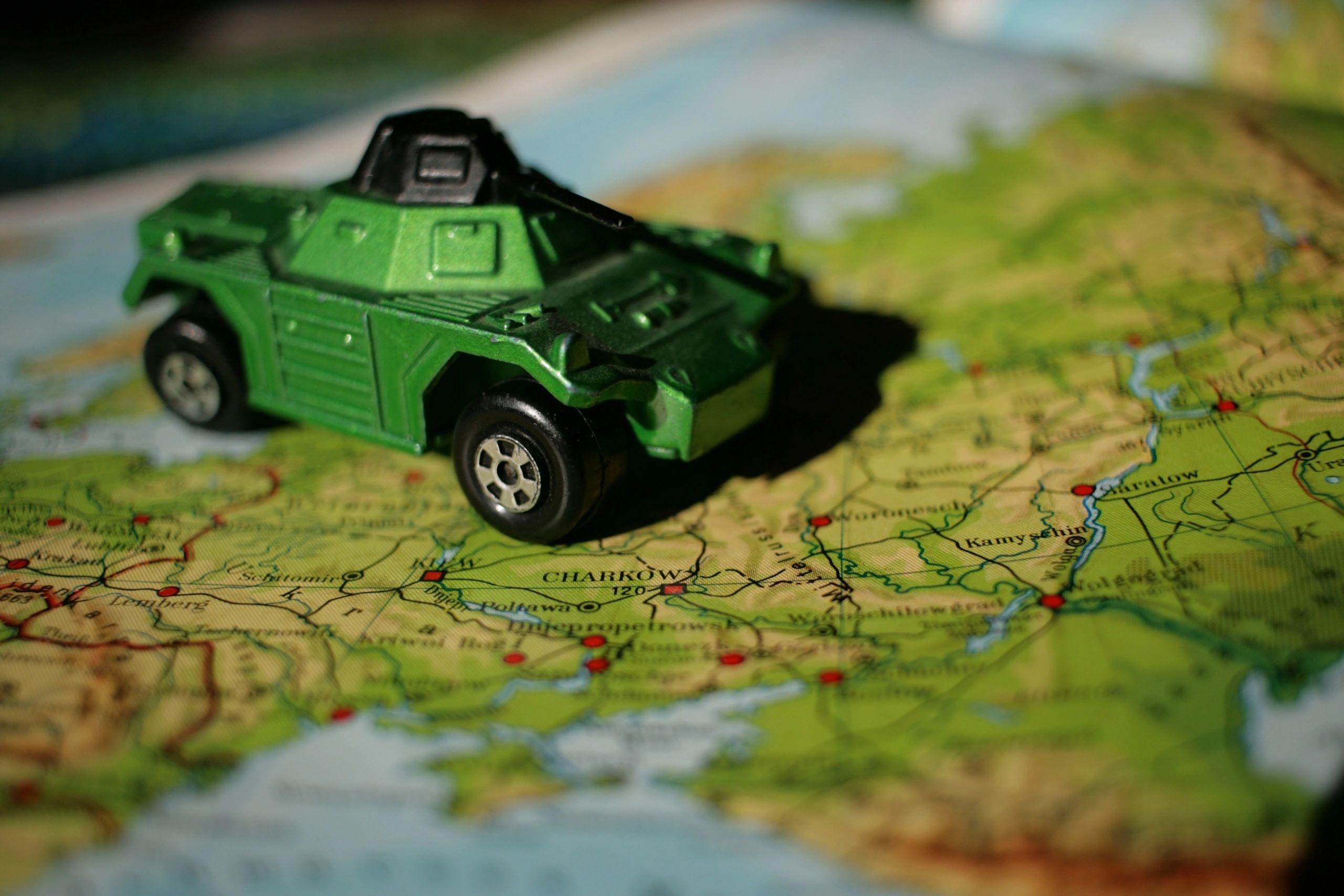
A Continent Paying for Its Own Choices
Since Russia's full-scale invasion of Ukraine in 2022, Europe has discovered that it cannot produce what it needs, when it needs it. The problem is not the lack of a technological base but is generated by a complete lack of industrial planning, disinvestment, and peace dividend-based complacency. For decades, factories were mothballed, supply chains fragmented, and skilled labour lost. This complacency has led to a situation where Europe either reindustrializes under the principle of si vis pacem para bellum or accepts the loss of international standing while the liberal international order comes under sustained pressure.
This situation establishes the paradox that serves as the backbone of this article. Europe, once an industrial giant, is now a victim of its own choices. That is where the Republic of South Korea enters: a partner eager to penetrate the European industrial base by offering speed, technology transfers, and mass production capacity. Europe is buying Korean weapons not because Korea is exceptional, but because Europe has dismantled its own capacity, particularly in the context of a paradigm shift in warfare that suggests a return to a rationale drawn from World War II, wherein quantity and industrial depth matter more than marginal technological sophistication. European NATO defence spending is forecast to increase from approximately $500 billion in 2025 to around $800 billion by 2030, with a compound annual growth rate of nine per cent (Hader et al., 2025), yet the industrial base required to translate that spending into deliverable systems remains structurally underprepared.
Ukraine has demonstrated that in a war of attrition, industrial base matters more than marginal technological sophistication. Europe designed its forces for short, high-tech conflicts; the reality has been otherwise. The Security Action for Europe (SAFE) and other industrial initiatives aim to restore the defence industry, but that reconstruction takes time Europe does not currently have. During this period of adaptation, South Korea will act as a bridge. This is a direct consequence of decisions taken since the end of the Cold War. The peace dividend bill has now come due. Before Crimea (2014), Korean defence exports to Europe were negligible. The first K-9 licensing agreement with Poland dates to 2014, not a coincidence. The scale of the shift since then is striking. The total value of defence contracts awarded to South Korean firms by NATO's European members rose by 198.59%, from $95.89 million in the period 2018 to 2021 to $24.26 billion between 2022 and August 2025 (International Institute for Strategic Studies [IISS], 2025). South Korean arms exports grew from an annual average of $3 billion between 2012 and 2021 to $17.3 billion in 2022 alone (Bowers & Kuang, 2024). This article examines a story of European self-inflicted vulnerability, and about who was available to fill the gap when the gap could no longer be ignored. South Korea is not a permanent solution. It is a bridge, and Europe must decide whether to use it wisely or resent it politically.
Why South Korea, and Why Now
Korea's industrial capacity is not accidental. It is the product of fifty years of state-directed investment under existential threat, which Europe chose not to replicate. Korea's development model rests on a tight integration between public and private incentives: the Agency for Defense Development (ADD) handles the burden of R&D and testing, private firms do prototyping and mass production, the Defense Acquisition Program Administration (DAPA) manages procurement and exports, and the Korea Trade Insurance Corporation (KTIO) covers export financial risk. This model ensures that private companies do not bear the capital-intensive cost of R&D, freeing capital for aggressive price and delivery competition. The underlying public support for industrial conglomerates known as chaebols has enabled them to maintain dual-use manufacturing capabilities across shipbuilding, automotive, semiconductors, steel, and electronics, a civilian base that directly underwrites defence capacity. South Korea's defence proposals enjoy domestic bipartisan political support and cross-party consensus that European defence spending has rarely enjoyed.
South Korea's situation is also the product of an absence of peace dividends. It sustained defence spending at approximately 2.5% of GDP consistently from 2000 to 2024 (Bowers & Kuang, 2024), stimulated primarily by the persistent North Korean threat. Events such as North Korea's nuclear test in 2006 exacerbated the need for credible deterrence. Seoul never had the political space to mothball factories or reduce supply chains the way European governments chose to over three decades. The result is uninterrupted mass production capacity through the exact years when Europe was dismantling its own. These capacities also enabled South Korea to partially decouple from the United States without formally breaking the alliance. In October 2015, the United States denied South Korea's request for an active electronically scanned array (AESA) radar system, and missile range controls persisted into the 2010s (IISS, 2025). That history of American reluctance forced Seoul to develop indigenous capability, a logic Europe is now debating regarding autonomous deterrence. Korea lived it first.
South Korea also built its export reputation before entering the European market. Notable contracts in Southeast Asia, among them the Philippines, Thailand, and Malaysia, and a growing presence in MENA gave Korean firms the localization experience and economies of scale that now underpin their European offer. Korea is not an improvised emergency supplier. It is a hardened global exporter that spent a decade preparing this expansion. Hanwha Group, South Korea's largest arms producer, earned more from exports than from domestic sales for the first time in 2024 (IISS, 2025). The combined arms revenues of Hanwha Group, LIG Nex1, Hyundai Rotem, and Korea Aerospace Industries increased by 30% in 2023 to 2024 (IISS, 2025).
This expansion has been accelerated by geopolitical conditions. The appearance of North Korean troops in Ukraine expands a regional conflict to a global dimension. The deepening of Sino-Russian relations over the past five years has reminded the West of the ramifications of China's military rise. The erosion of confidence in the United States as an unconditional security patron has created a new framework of middle powers, among them Korea, Japan, and EU member states, that share uncertainty about long-term US security guarantees, a strategic common ground that goes well beyond commercial interest. Underpinning all of this is the South Korean government's declared ambition to become one of the world's top four defence and aerospace industrial powers by 2030, backed by sustained R&D investment exceeding prior expectations (Bowers & Kuang, 2024).
What Korea Offers: Keys to Success
South Korea brings a combination of five factors that make its exports particularly attractive in the current European context.
First, price competitiveness. South Korea exports systems at a fraction of the cost of comparable American equivalents. The K-239 Chunmoo MLRS is approximately 40% more cost-effective than the US HIMARS system (Bowers & Kuang, 2024). This cost advantage is structural, rooted in state-subsidized R&D through ADD, economies of scale from sustained domestic demand, and a production model built for volume.
Second, delivery speed. The Korean government can redirect weapons produced for its own armed forces toward export contracts when strategically convenient, a flexibility European procurement systems cannot replicate. Poland received K2 tanks and K9 howitzers under timelines that Rheinmetall or US suppliers could not match. The same pattern held for Norway and Estonia on K9 procurement. When Europe's own industrial capacity could not supply sufficient 155mm ammunition to Ukraine, South Korea filled that gap.
Third, comprehensive MRO and lifecycle commitment. Korean firms offer robust, decades-long maintenance, repair, and overhaul systems for exported platforms. Keeping production lines open lowers replacement costs and shortens delivery timelines. This matters especially for countries that cannot afford dependence on a single provider for an entire platform lifecycle.
Fourth, NATO interoperability. As a holder of NATO's Individually Tailored Partnership Programme (IITPP) status, established at the Vilnius Summit in 2023 (North Atlantic Treaty Organization [NATO], 2023), South Korea has standardized its systems to NATO specifications, including 155mm ammunition and airworthiness certification aligned with Alliance requirements. This neutralizes the 'non-NATO system' objection that historically blocked non-Western suppliers.
Fifth, and most consequentially, generous industrial participation. Korea offers local assembly, technology transfers, and co-production arrangements that major Western exporters have historically been unwilling to provide. In contrast, the French arms export model has often prioritized protecting core technology, the UAE case illustrating the frustration this generates in buyer states. Hanwha Aerospace's Romanian subsidiary plans to receive 80% of assembly, integration, testing, and ongoing support activities for locally procured systems (Bowers & Kuang, 2024). In 2023, Hyundai Rotem formed a consortium with Polska Grupa Zbrojeniowa for a Polonized version of the K2 tank; in September 2025, Hanwha Aerospace and Poland's WB Group established a joint venture for localized production of CGR-080 guided missiles (IISS, 2025). This flexibility is what has transformed South Korea from an emergency supplier into a credible strategic partner.
Cases of Success
Central and Eastern European states have spent three decades modernizing away from Soviet-era equipment, often finding that their Western allies were willing to sell systems but not to transfer the technology or localization arrangements that would allow them to maintain and eventually produce those systems domestically (Bowers & Kuang, 2024; IISS, 2025). Korea offered both. Finland and Sweden's accession to NATO in 2023 and 2024 further accelerated rearmament across the eastern and northern flanks, creating urgent demand for NATO-standard systems with rapid delivery and local maintenance capacity.
Poland serves as the reference customer. It has acquired K2 Black Panther tanks, K9 howitzers, and K-239 Chunmoo systems, all with localization packages making it a regional manufacturing hub for Korean platforms. Warsaw rushed its own equipment to Ukraine after 2022 and needed rapid replacement at a speed European traditional suppliers could not meet. The broader implication is significant. Industrial cooperation of this depth will enable Eastern European countries to become substantial weapons providers over the medium term, directly challenging Russian influence across the region (Bowers & Kuang, 2024). That is a strategic dividend that goes well beyond the bilateral transaction.
The geographic pattern extends beyond Poland. Estonian, Finnish, Norwegian, and Romanian procurement of K9 systems traces a clear line along NATO's eastern flank and Nordic region. The K9 self-propelled howitzer has become South Korea's best-selling platform in Europe, with procurement agreements across all five countries (IISS, 2025). The pattern is not random. Korean success correlates precisely with urgency, threat proximity, and the absence of a strong domestic alternative, three conditions that define the eastern flank and Nordic states, and that are conspicuously absent in France, Germany, or the United Kingdom. The model's reach can also be seen outside Europe: In Peru, Hyundai Rotem constructed a $270 million assembly plant for K2 tanks and K808 armoured vehicles, securing exclusive rights to supply imported land systems, demonstrating that localization is a proven global strategy, not an improvised European concession (IISS, 2025).
This geographic concentration reflects a deeper structural pattern. Korean exports to Europe are land-systems-dominant: K2, K9, Chunmoo, K1A1, and ammunition. There is virtually no Korean presence in the aerospace or naval domains in Europe. Korea is attempting to close this gap through the KF-21 Boramae, a 4.5th-generation fighter, participation in the Golden Fleet initiative, and an export-oriented submarine programme. However, in mature markets where European providers have cultivated technological depth over decades, Korean firms will face fundamentally different political and institutional barriers. Their competitive position, built on speed and cost, will not easily penetrate markets organized around technological sophistication. The absence of advanced turbine engines for fighters, high-end avionics, nuclear naval propulsion, SAR, and EO/IR of the highest grade defines the natural limit of the current model (IISS, 2025).
This asymmetry is not a failure. It is a feature. It defines where complementarity between Korean and European industry is structurally possible, and where competition becomes political, and it sets the natural boundary of what the bridge can carry, and what Europe must eventually build for itself.
Risks and Limitations of the South Korean Model
The most structurally significant limitation of the Korean export model is the technology transfer boomerang. Turkey's Altay main battle tank was developed using technology transferred from South Korea's K2 platform under agreements dating to 2008 (IISS, 2025). It is now emerging as a direct competitor to the K2 in export markets. Technology transfer and industrial cooperation can backfire when the recipient has an advanced industrial base: the transfer accelerates indigenous design development and produces future competitors. Europe must ask whether Poland, Romania, or others, having absorbed Korean technology at scale, will eventually compete with Korean firms in the same markets.
For this reason, the Polish model cannot be replicated across Europe. The concessions made to Warsaw, in terms of technology transfer depth, localization scope, and hub status, are commercially unsustainable if applied universally. If Korea replicates Polish terms everywhere, it erodes its competitive position. If it does not, it loses political attractiveness in markets where domestic industrial participation is a procurement requirement.
Korea's structural technological ceiling further limits the domains in which it can substitute established European or American providers. The absence of advanced jet turbine engines, high-end avionics, and EO/IR systems at the frontier constrains Korean ambitions in aerospace and naval domains. Notably, Thales Alenia Space, a joint venture involving Thales, ADD, Korea Aerospace Industries, and Hanwha Systems, has supported South Korea's synthetic aperture radar military satellite programme, the Korea 425 Project, for over twenty years (Bowers & Kuang, 2024). Technological dependence in the defence relationship runs in both directions.
The geopolitical dimension also requires acknowledgement. Before the war, major Korean conglomerates operated factories in Russia. If Korea wants to be seen as a credible long-term European defence partner, it must maintain a firm posture supporting NATO vis-à-vis Russia, not just commercially, but politically. There is also a geographic ceiling: Seoul's own threat environment means that in a simultaneous crisis on the Korean Peninsula, European supply chain commitments would face pressure that no bilateral agreement currently addresses.
Finally, the developmental state model that enabled Korea's rise carries its own structural vulnerability. State-led R&D reduces private firms' incentive to build genuine innovation capacity beyond production methods. When global demand and technology priorities shift beyond the North Korean threat logic, Korean firms could face disadvantages in next-generation domains. Europe risks reproducing the same tension if SAFE and EDIP prioritize short-term output over long-term innovation capacity, a warning that applies as much to Brussels as to Seoul.
The Political Dimension: SAFE, Middle Powers, and the Reindustrialization Window
The industrial case for Korean defence procurement in Europe is, by now, difficult to dispute. Yet Europe is simultaneously welcoming Korean arms and designing financial instruments that structurally exclude Korea from the financing that makes those arms purchases possible. That contradiction is the normative core of this section.
In 2025, the European Commission launched the Security Action for Europe instrument, making €150 billion in loans available to member states for joint defence procurement (European Commission, 2025a), under the ReArm Europe / Readiness 2030 framework, which seeks to mobilize €800 billion across the continent's defence requirements (European Commission, 2025b). The initiative is historic. The architecture, however, contains a clause that deserves scrutiny: to qualify for SAFE financing, a minimum of 65% of the value of the weapon system acquired must be produced in an EU member state, Ukraine, or an EEA/EFTA country. The provisional agreement on the European Defence Industry Programme (EDIP) of November 2025 mirrors this logic, restricting financial assistance wherever non-EU content exceeds 35% (European Commission, 2025c). As one analyst has noted, behind the apparent openness of the 35% threshold, one can discern the outlines of a strategy aimed at placing the Union at the centre of a new regulatory pole in the defence industry sector (IISS, 2025). That goal may be strategically coherent by 2030. In 2025, it is operationally contradictory.
The contradiction becomes stark when set against the European Commission's own Defence White Paper, which identifies seven critical capability gaps that NATO must urgently address: air and missile defence, artillery systems, ammunition and missiles, drones and counter-drone systems, military mobility, AI and electronic warfare, and strategic enablers (European Commission, 2025d). South Korea can contribute directly and immediately to at least three, artillery, ammunition, and drones, and partially to a fourth in air and missile defence. European firms are, in principle, capable of supplying the same systems. The problem is not capability in the abstract; it is capacity, speed, and price in the present. The argument for Korean procurement is not that Korea is better. It is that Korea is available now, at scale, at a price European taxpayers can afford, in categories where the gap between declared urgency and actual European output remains embarrassingly wide. Designing financial instruments that systematically disadvantage the one supplier best positioned to fill those gaps, at precisely the moment the gaps are most dangerous, is a policy choice that demands a more honest justification than industrial protection alone can provide.
The strategic logic for a deeper relationship runs beyond procurement. The United States is no longer the unconditional patron it was. European allies face sustained pressure to spend more, persistent uncertainty about the depth of the Article 5 commitment, and a Washington increasingly focused on the Indo-Pacific. South Korea faces a structurally parallel problem: growing US pressure to assume a larger role in First Island Chain defence, a history of American reluctance to transfer key technologies even to close allies, and its own long-standing experience of building strategic autonomy without abandoning the alliance. These are not identical situations, but they share a common thread of thought: that of a capable mid-sized power learning to hedge against patron unreliability while remaining embedded in Western security architecture.
The institutional foundations for translating this into something durable already exist. The EU-ROK Security and Defence Partnership was signed in November 2024 (Council of the European Union, 2024). Korea joined the NATO Science and Technology Enhanced Partnership in March 2025 and holds Individually Tailored Partnership Programme status with the Alliance, established at the Vilnius Summit in 2023 (NATO, 2023). What is missing is not architecture. It is political will.
For Korea, that means moving beyond transactional practice and making genuine long-term investments in European industrial presence, localized production facilities, R&D centres, and MRO hubs that create technology spillovers on European soil. For Europe, it means accepting that the reindustrialization it is trying to finance will take time it does not currently have, and that rigidly excluding advanced, aligned partners from its financial instruments during that transitional period is not industrial policy. It is industrial self-harm dressed in regulatory language. Mechanisms worth considering include a structured EU-ROK two-plus-two ministerial dialogue on foreign and defence policy, and a NATO-Korea Defense Science Board to coordinate joint R&D and selective ISR co-development. These are not radical proposals. They are the logical next step from agreements already signed.
The reindustrialization window is real and finite. European firms, if adequately funded and politically supported, should be rebuilding genuine mass production capacity by approximately 2030. Until that capacity exists, the choice is not between Korean suppliers and European suppliers. It is between Korean suppliers and empty arsenals. Pretending otherwise is a luxury that the current security environment does not permit.
Conclusions
Europe arrived here because of its own choices. Two decades of budget cuts, factory closures, supply chain atrophy, and strategic complacency have shaped the current situation. The assumption that serious war in Europe was over proved to be the most consequential miscalculation of the post-Cold War era. South Korea, facing none of those luxuries, built and maintained what Europe dismantled. The result is a capability gap that Korean suppliers are now filling at competitive prices and at a speed that European suppliers cannot currently match.
The central dilemma is not whether to buy Korean. Europe is already doing so. The dilemma is whether European policymakers will legislate with the clarity to treat Korea as a temporary partner, a bridge, while lost capabilities are rebuilt, or whether political instinct will lead them to resent and regulate away the very supplier helping them survive their own industrial failure.
The 65% SAFE rule is legitimate as a long-term industrial policy instrument (European Commission, 2025a). Applied with full rigidity today, it is incoherent with the urgency the same documents that created it declare. Europe cannot simultaneously state that it faces the most serious security environment since 1945 and then design procurement instruments that systematically slow access to available, interoperable, NATO-standard systems. The question is not whether South Korea deserves a place in European defence. The question is whether Europe is serious enough about its own security to be pragmatic about who builds the bridge while the permanent infrastructure is under construction. South Korea did not cause Europe's industrial deficit. But it is, for now, one of the few actors capable of helping Europe survive it.
Bibliography
Bowers, I., & Kuang, H. (2024). South Korea's defense industry and arms exports. Center for Strategic and International Studies.
Council of the European Union. (2024, November). EU-Republic of Korea security and defence partnership. https://www.consilium.europa.eu
European Commission. (2025a). Security Action for Europe (SAFE) regulation. Publications Office of the European Union.
European Commission. (2025b). ReArm Europe plan / Readiness 2030. Publications Office of the European Union.
European Commission. (2025c). European Defence Industry Programme (EDIP): Provisional agreement. Publications Office of the European Union.
European Commission. (2025d). Defence white paper: Closing critical capability gaps. Publications Office of the European Union.
Hader, M., Baur, S., Grille, A., & Atzwanger, D. (2025). On the offensive: The rise of M&A in European defense. Roland Berger. https://www.rolandberger.com/en/Insights/Publications/On-the-offensive-The-rise-of-MA-in-European-defense.html
International Institute for Strategic Studies. (2025). South Korea as a rising defence exporter: Challenges and opportunities. IISS.
North Atlantic Treaty Organization. (2023). Vilnius Summit communiqué.
Abstract for publication
Since Russia's full-scale invasion of Ukraine in 2022, Europe has been forced to confront an uncomfortable truth: decades of deliberate deindustrialization have left it unable to produce what its own security requires, at the speed and volume that a war of attrition demands. The peace dividend is over, and the bill has arrived. Into this gap steps the Republic of South Korea, a state that never had the luxury of demilitarizing, that sustained defence spending at 2.5% of GDP through the years Europe was closing factories, and that has built a defence industrial model capable of delivering tanks, howitzers, and ammunition at prices and timelines that no European supplier can currently match. This article argues that South Korea is not a permanent solution to Europe's defence industrial deficit. It is a bridge, one that Europe must use pragmatically while it rebuilds the capacity it voluntarily dismantled. That argument carries an uncomfortable corollary: the Security Action for Europe instrument, with its 65% EU content rule, risks excluding the one supplier best positioned to fill Europe's most urgent capability gaps, at precisely the moment those gaps are most dangerous. Understanding what Korea offers, where its model works, where it does not, and what political decisions Europe must take to make the relationship sustainable, is no longer a question of strategic preference. It is a matter of operational necessity.