
Stalemate in the Sky: The Future of Europe’s Fighter Jet Market
12 min read · 2,400 words
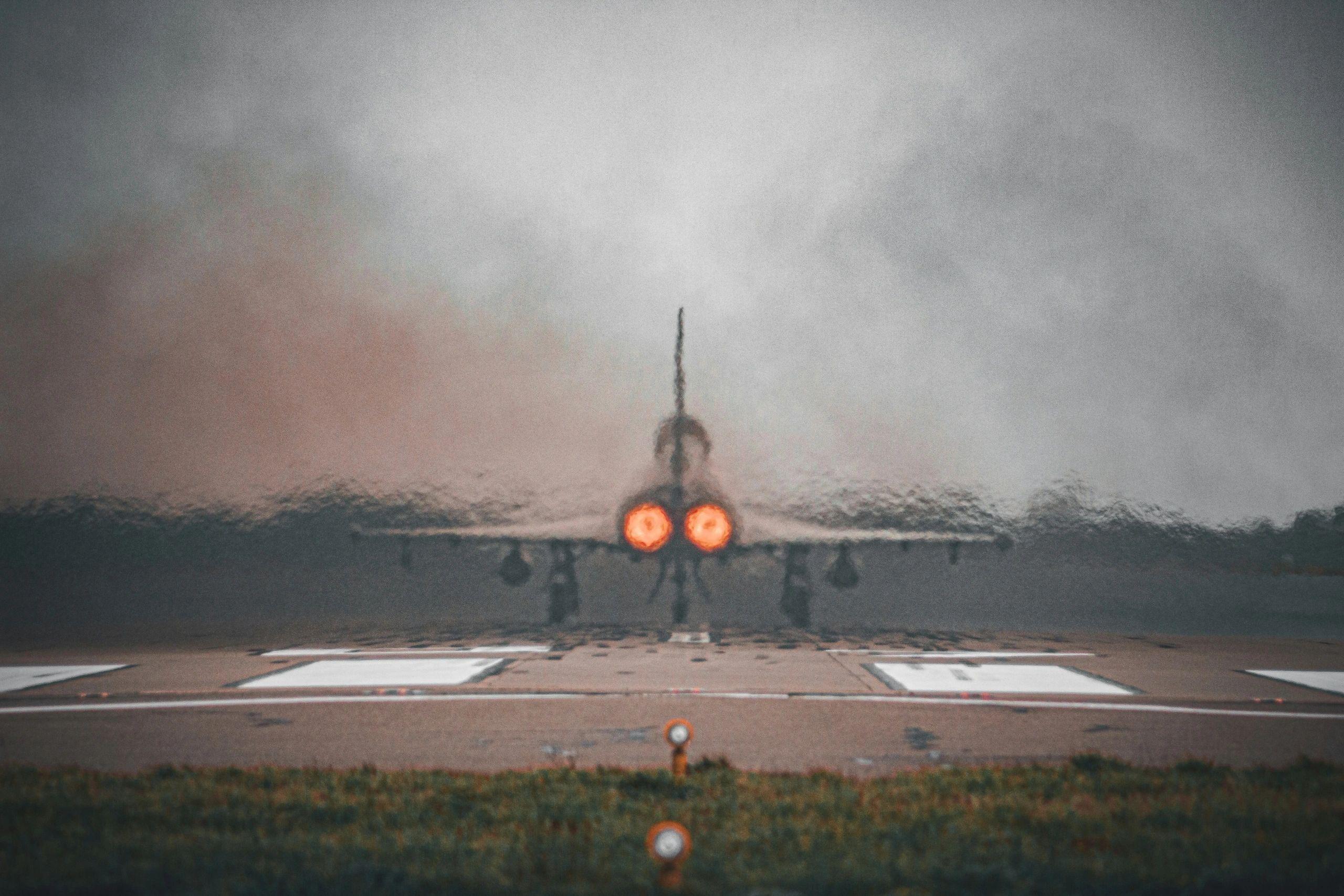
This article dives into the European fighter jet industry as well as its structure, history, and prospects. It explores how years of mergers and acquisitions have shaped it into a relatively consolidated market dominated by a handful of players, and yet one that remains fragmented along national lines and overshadowed by the enduring presence of the United States.
It also raises a timely question: as Europe faces growing pressure to rearm, should it aim for a more consolidated market, even if that means less competition, or for less concentration, despite the drawbacks in terms of scale?
As things stand, a few industrial titans master the market through joint ventures and cross-border collaborations, namely, Airbus SE, Lockheed Martin Corporation, BAE Systems plc, Leonardo S.p.A., Dassault Aviation and Saab AB.
Airbus stands out with a striking market capitalization of $136 billion, while Lockheed Martin ranks just below, holding a total market value of $110 billion. BAE Systems is currently valued at $69.5 billion and Leonardo at $30.5 billion. Dassault Aviation and Saab, though smaller, remain significant players, with equity values of $28 billion and $24.6 billion, respectively (Orbis, n.d.).
Companies’ Overview
Airbus holds the leading position in Europe and ranks second globally within the aeronautics, aerospace, and defense sectors with 17.3% of its net revenues derived from defense and aerospace systems. Its primary market is Europe, accounting for 40% of net sales, followed by Asia and the United States (MarketScreener, 2025).
The company is the product of decades of industry consolidation, bringing together European expertise and assets to compete with U.S. aerospace giants. It was formed through the 2000 mergers of France's Aérospatiale, Spain's CASA, and Germany's Dasa, which later rebranded as Airbus SE. The company is publicly traded, with a significant portion remaining state-owned: France and Germany each hold approximately 10%, while Spain holds about 4% (MarketScreener, 2025).
BAE Systems is the UK’s largest defense firm, yet only about 26% of its net sales come from its home country. The U.S. accounts for nearly half of its revenues, while Europe contributes only about 6%.
The firm has roots in virtually every major British aerospace company of the 20th century, being the result of the 1999 merger of Marconi Electronic Systems and British Aerospace (BAe), which itself was the outcome of nationalization and mergers of several other companies (BAE Systems, n.d.). BAE is publicly traded, with no government stake. Ownership is widely dispersed among major institutional investors, among which are Capital Group, BlackRock and Invesco, three of the world’s largest asset management and investment firms (MarketScreener, 2025).
Dassault Aviation is a family-founded French champion, generating more than 60% of its net sales from military aircraft including the Mirage 2000 and Rafale. Notably, nearly 70% of its net sales come from exports, as France, for instance, is leveraging Rafale orders as an instrument of foreign policy projection. Founded in 1917 by Marcel Bloch, the company was renamed Dassault after World War II. In 1971, it absorbed Breguet Aviation and became Dassault Aviation in 1990. Although publicly traded, it remains largely independent, with 66% of the company controlled by the Dassault family. Airbus holds a 10.5% stake, while the remainder is in free float (MarketScreener, 2025).
Lockheed Martin, a U.S. industrial colossus, was established in 1995 through the merger of Lockheed Corporation and Martin Marietta, resulting in the creation of the world’s largest defense contractor. The company specializes in aeronautical systems (40% of net sales) and air defense, and fire control systems (17%). More than 70% of its net sales are derived from the United States, while approximately 10% come from Europe. It is publicly traded with no government stake, and its major shareholders are large institutional investors. Notably, approximately 30% of the shares are held by the influential ‘Big Three’ asset management firms, namely, State Street, Vanguard Group, and BlackRock (MarketScreener, 2025).
Leonardo is an Italian company specializing in defense systems (40% of net revenues), helicopters (30%), and aeronautical equipment (15%). Italy accounts for less than 20% of net sales, while the rest of Europe contributes over 25%, the United Kingdom 12%, and the United States 23% (MarketScreener, 2025). Originally founded as Finmeccanica in 1948, the company consolidated Italy’s state-owned aerospace and defense assets. Over time, it integrated key subsidiaries such as AgustaWestland and Alenia into a single entity, ultimately rebranding as Leonardo in 2017. The company is publicly traded, with the Italian government being the largest single shareholder, owning approximately 30% through the Ministry of Economy and Finance (Leonardo, 2025).
Saab is a Swedish defense company, whose portfolio includes electronic defense systems (33% of net sales), aeronautical systems (26%), and weapon systems (22%). Sweden accounts for 41% of the company’s total revenue, while sales from the rest of Europe represent 24.8% (MarketScreener, 2025).
Founded in Sweden in 1937 as an aircraft manufacturer, Saab merged with ASJA in 1940 and has since expanded through acquisitions and the integration of other historic defense brands. The company is publicly traded, with its largest shareholder being Investor and Wallenberg Investments (Saab, 2025).
Other smaller yet crucial players in the supply chain include Thales Group, a leading supplier of avionics and sensors; MBDA, Europe’s primary missile manufacturer; and Safran, which specializes in aircraft engines. Also noteworthy are Germany’s HENSOLDT, Spain’s Indra, and the UK’s Rolls-Royce, a major supplier of aircraft engines.
Market Structure
The market is consolidated around multinational consortia, such as the Eurofighter consortium and the FCAS and GCAP initiatives, which are set to shape the industry landscape for decades to come through the development of next-generation fighters. The Eurofighter consortium brings together Airbus, BAE, and Leonardo, and the aircraft is operated by four partner nations, accounting for nearly 20 percent of the regional fighter fleet.
The Global Combat Air Programme (GCAP) is a trilateral joint venture between BAE Systems, Leonardo, and Japan’s Mitsubishi Heavy Industries, with each partner holding an equal 33.3% stake. In contrast, the Future Combat Air System (FCAS) is being developed by Dassault Aviation, Airbus, and Indra, and unlike GCAP, it is managed through a collaborative framework rather than a formal joint venture.
Nevertheless, despite the strength of these extensive cross-border collaborations, Lockheed Martin’s unmatched economies of scale still prove to be a tough competition for European defense firms, as the company alone generates nearly as much revenue (around €60 billion) as the entire EU defense industry sector (EUNews, 2025). It is no coincidence that the Lockheed F-16 Fighting Falcon is among the most widely used fighter aircraft in European air forces. Being operated by seven nations, it accounts for approximately 25% of the market segment.
Lockheed Martin also maintains a pervasive presence in the European market through the F-35, securing a substantial share of planned European orders and further increasing market fragmentation, particularly given the absence of a domestically developed fifth-generation fighter. The F-35 program, however, was designed as a US-led multinational effort, structured into three partnership tiers. While Lockheed Martin leads the initiative, BAE Systems, as a Level 1 partner, receives considerable industrial workshare, and Leonardo, as a Level 2 partner, plays a key industrial role, including operating a final assembly and maintenance facility in Italy that serves all of Europe (Olsson, 2021).
Another factor contributing to market fragmentation is the presence of strictly domestic programs, such as France’s Rafale and Sweden’s Gripen, which maintain smaller but sovereign market niches. The Gripen, produced by Saab, is operated by three European countries, accounting for approximately 8 percent of the market segment. Meanwhile, the Rafale, manufactured by Dassault, holds approximately 6 percent of the market share being operated by France, Serbia, Greece, and Croatia (Olsson, 2021). Last but not least, the EU's strict regulations surrounding mergers and acquisitions present significant challenges to further consolidation in the defense industry. While these regulations are intended to ensure fair competition and prevent monopolies or market distortion, they may risk hindering the industry’s ability to achieve the scale and efficiency necessary to meet the challenges ahead.
Barriers to Entry
However, while the industry may appear insufficiently consolidated, the market is, in fact, dominated by the six major players mentioned above. This raises the question of the barriers to entry, which are worth examining. Such barriers stem from at least four main factors: stringent regulatory requirements, advanced technological demands, significant financial commitments, and the degree of market concentration.
First and foremost, the sector is subject to a complex web of civil and military standards, including those mandated by the European Union Aviation Safety Agency (EASA), NATO, and the European Military Airworthiness Requirements (EMARs). In addition, stringent EU, national, and international export controls often act as a deterrent for new entrants. The reason is that many European defense firms rely heavily on exports to offset production costs, as domestic markets, whether national or EU, are generally too limited to sustain operations alone. Divergent national export policies can also hinder the formation of multinational consortia, as each participating country may impose different and even conflicting restrictions. Finally, strict industrial standards further reinforce entry barriers, effectively favoring established players with the compliance infrastructure already in place.
Among the most significant technological barriers are the immense R&D costs, one example being the multibillion-euro investments required to develop sixth-generation aircraft featuring stealth and artificial intelligence capabilities. Furthermore, incumbents like Airbus and Lockheed Martin maintain a competitive edge through proprietary technologies, such as the F-35’s advanced sensor suite or the Eurofighter’s radar system. The complexity of the supply chain also poses a major obstacle: the production of advanced components like engines and avionics relies on highly specialized suppliers, with the majority of critical subsystems controlled by prime contractors such as Safran and Leonardo. This concentration of technological knowhow and supply chain control reinforces the dominance of established firms and further raises the bar for new entrants.
Among the financial hurdles are the aforementioned program costs and barriers for SMEs. Small and medium-sized enterprises, particularly those involved in dual-use or defense technologies, form the backbone of supply chains and are crucial innovation actors for EU competitiveness. However, they face significant challenges in accessing equity financing and are often stifled by excessive regulation (European Commission, 2024). Moreover, the market’s oligopolistic structure and the tendency of cross-border programs to reinforce consolidation further marginalize non-aligned entrants. Lastly, reliance on non-EU suppliers - such as U.S. engines - exposes firms to geopolitical risks.
Seeking a Way Forward
To conclude, the European military aircraft sector seems to exemplify a paradox: despite being highly restrictive, with substantial barriers and dominated by a few players, it remains fragmented and inadequately consolidated, with several competing platforms in operation. It is sufficient to note that, in 2017, there were 20 different types of fighter aircraft in use across the European Union, compared to just six in the United States (Osservatorio CPI).
This fragmentation, in turn rooted in a lack of coordinated procurement, results in duplicated efforts and undermines scalability, interoperability, and overall cost-efficiency. In fact, while competition among numerous players is generally beneficial for fostering innovation and progress, the defense market in Europe may require further consolidation to achieve the scale necessary to effectively support the region, particularly given the current complex geopolitical landscape.
One possible solution could involve the aggregation of demand at the European level, alongside a specialization of industries. Effective demand aggregation requires a unified procurement strategy, enabling the pooling of resources needed to support more efficient investments and lower overall costs. Even when acquiring U.S. weapon systems, the collective bargaining power gained through joint procurement could help reduce expenses, facilitate the relocation of parts of the production process to Europe, and allow for system modifications tailored to European operational requirements.
While mechanisms for common procurement already exist, such as the NATO Support and Procurement Agency (NSPA), OCCAR, and the European Defence Agency (EDA), they must be significantly strengthened. Ultimately, the success of collaborative defense efforts hinges on the political will of the Member States to align national priorities and commit to a shared strategic vision. However, if successful, once demand is consolidated, EU firms could be encouraged to specialize in specific sectors, allowing each company to offer its specialized product to the entire European market.
This approach would shift the competition to a global stage, with European firms competing with industry giants like Lockheed Martin and Boeing, rather than competing with one another. Such a strategy would not only sustain innovation but also enhance interoperability and operational efficiency for a European defense force. At the same time, we should be careful not to consolidate too much, as the U.S. aircraft market shows how too few firms, like Lockheed Martin and Boeing, gaining too much power can result in inefficiency and high costs as well.
Upon reflection, it is clear Europe must free itself from its bureaucratic inertia and strike a balance between ideals and pragmatism, an effort that demands substantial institutional reform and deeper integration. The reality is that, in these challenging times, Europe has the responsibility to strengthen itself not only towards its member states, but also towards its allies in need, projecting its values as a beacon of guidance.
*This piece is cross-published with Praesidium – Global Affairs and Security.
References List
Orbis. (n.d.). Company report. Orbis. https://orbis-r1.bvdinfo.com/version-20250325-3-0/Orbis/1/Companies/Report
MarketScreener. (2025, May 8). Airbus SE: Shareholders, board members, managers and company profile [Company profile]. MarketScreener. https://www.marketscreener.com/quote/stock/AIRBUS-SE-4637/company/
Airbus. (2025, January 14). Our journey. https://www.airbus.com/en/about-us/our-history/our-journey
MarketScreener. (2025, May 8). BAE Systems plc: Shareholders, board members, managers and company profile [Company profile]. MarketScreener. https://www.marketscreener.com/quote/stock/BAE-SYSTEMS-PLC-9583545/company/
BAE Systems. (n.d.). British Aerospace UK. BAE Systems. https://www.baesystems.com/en/heritage/british-aerospace-uk
MarketScreener. (2025, May 8). Dassault Aviation: Shareholders, board members, managers and company profile [Company profile]. MarketScreener. https://www.marketscreener.com/quote/stock/DASSAULT-AVIATION-5215/company/
MarketScreener. (2025). Lockheed Martin Corporation: Shareholders, board members, managers and company profile. Retrieved May 9, 2025, from https://www.marketscreener.com/quote/stock/LOCKHEED-MARTIN-CORPORATI-13406/company/
Leonardo. (2025, March). Shareholders base. https://www.leonardo.com/en/investors/stock-info/shareholders-base2
Saab. (2025). Ownership. https://www.saab.com/investors/the-share/ownership
Olsson, P. (2021). The European defence market – unevenly fragmented (FOI Memo 7730). Swedish Defence Research Agency (FOI). https://www.foi.se/rest-api/report/FOI%20Memo%207730
MarketScreener. (2025). Leonardo S.p.A.: Shareholders, board members, managers and company profile. Retrieved May 9, 2025, from https://www.marketscreener.com/quote/stock/LEONARDO-S-P-A-162001/
Eunews. (2025, January 8). Lockheed Martin alone generates as much revenue as the whole EU sector; Europe defense is super-behind. https://www.eunews.it/en/2025/01/08/lockheed-martin-alone-generates-as-much-revenue-as-the-entire-eu-defense-sector-european-industry-is-completely-behind/
European Commission, Directorate-General for Defence Industry and Space. (2024, January 11). Study results: Access to equity financing for European defence SMEs. https://defence-industry-space.ec.europa.eu/study-results-access-equity-financing-european-defence-smes-2024-01-11_en
Università Cattolica del Sacro Cuore. (2025, 25 marzo). 13 tipi di carri armati e 14 tipi di caccia in UE: non sono troppi? Osservatorio CPI. https://osservatoriocpi.unicatt.it/ocpi-pubblicazioni-13-tipi-di-carri-armati-e-14-tipi-di-caccia-in-ue-non-sono-troppi