
THE EUROPEAN NAVAL VESSELS MARKET - MAIN STRUCTURE, PRINCIPAL ACTORS, AND FUTURE DEVELOPMENTS:
14 min read · 2,744 words
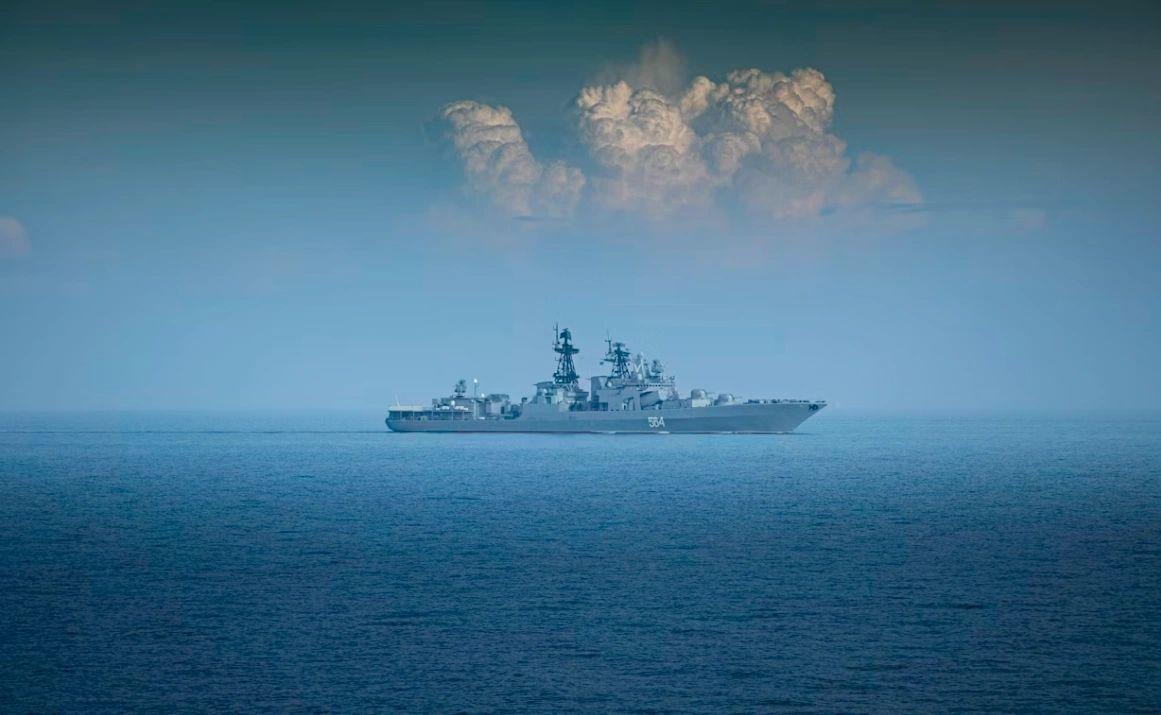
Global economy strongly depends on seas and oceans: a pillar in the life of almost half of humanity, open waters are often at the center of international disputes for a variety of reasons, mostly related to the resources they can offer (Marrone & Calcagno, 2023). The issue extends to transportation systems such as submarine gas and oil pipelines, sea transport and floating terminals of liquefied natural gas, fibre optic cables, and much more (Marrone & Calcagno, 2023). The increasing relevance of the latter elements for the economy of several states is prompting new security concerns and, alongside with them, modernization in the maritime security realm. The markets and their structures generally are classified following a spectrum going from fragmented, viz. those with a high competition in the absence of peculiarly dominant players, to consolidated, viz. those who are dominated by a number of players between one and five. In this respect, the European naval vessels market seems to be moderately consolidated, with a few main dominating actors (figure 1).
figure 1. Source: Mordor Intelligence
A large chunk of the European maritime security market is made up of surface combatants such as frigates, corvettes and destroyers. The developments of frigates and offshore patrol vessels in the European context started from the post Cold War period, when their demand was driven by factors such as the increased efficiency and lethality of vessels, incidents related to the phenomenon of immigration and drug trafficking in several Mediterranean countries such as Italy, Spain, or Albania, the need for countries to patrol Exclusive Economic Zones, and the update of the third United Nations Convention on the Law of the
Sea (Mordor Intelligence, n.d.). The most recent estimates are related to 2025 and fix the European Naval Vessels Market size to $39.06 billion in 2025, with a prospected sum of $63.51 billion by 2030 (Mordor Intelligence, n.d.). This growth is also bolstered by several technological novelties, such as the deployment of ships equipped with Aegis technology in the European naval fleet (Mordor Intelligence, n.d.). The missile, which possessed increased manoeuvrability and was designed to avoid being tracked down and to follow seaborne targets, was introduced in 1967, when the Israeli warship Eilat was hit by four Russian Styx missiles (Lockheed Martin, n.d). Further novelties include investments in robotics and digital technologies by local naval shipbuilders (Mordor Intelligence, n.d.). However, stringent rules and regulations to reduce emissions and pollution in the ocean are a challenge for naval vessel manufacturers.
The European naval vessels market is characterized by a series of important actors (figure 2) and is made up by resilient and armed items, is mainly divided along vessel types including: aircraft carriers, destroyers, frigates, corvettes, cruisers, submarines, and other vessel types (including amphibious warfare ships, littoral combat ships, cruisers, mine countermeasure ships, and patrol ships) (Mordor Intelligence, n.d.). Frigates (weighing 3.000 tons, larger than corvettes and smaller than destroyers, and with the capacity to carry out offensive and defensive attacks) are particularly important in the European naval vessels market: they can be used in patrol missions, to escort larger ships, to protect sea communication lines of communication or auxiliary components of strike groups (Mordor Intelligence, n.d.). One of the main reasons behind their importance in the market is in their nature: as they are very lethal but are not equipped with highly functioning detection systems, many procurement and replacement funds have been placed by several countries, Europe being one of the places where the most efforts are being carried out and where said efforts will probably grow in the future (Mordor Intelligence, n.d.). These efforts are being extended to destroyers and corvettes too. The United Kingdom, for example, is envisaging to increase the number of its frigates and destroyers to more than 19 by the year 2026 and acquire further 20 by the end of the decade (Mordor Intelligence, n.d.). Furthermore, Fincantieri, Naval Group, and Navantia created a consortium and proposed the creation of a European patrol corvette (EPC) in December 2021 (Mordor Intelligence, n.d.).
figure2.Source: SIPRI
The accelerating naval innovation also concerns the submarine domain, which saw the introduction of unmanned systems, quantum technology, hypersonic and conventional missiles, and directed energy weapons. Two fundamental actors are Russia and China, which invested in the creation of systems capable of engaging enemy ships over a wider range and of making adversary operational infrastructures non operational (Marrone & Calcagno, 2023). The United States Navy is actively trying to transform into a force with more smaller size vehicles such ships, aircraft and submarines, both manned and unmanned. In Europe, the French Navy (Marine Nationale) has to juggle the need for technological innovation, the limitations of a fleet committed over too large a geographical area, and the costs of operating an independent nuclear deterrent. Faced with similar constraints, the United Kingdom, on the other hand, is trying to seize the opportunities arising from flexibility and lethality. The German navy, for its part, may not benefit from the recent increase in the national defence budget. Italy has embarked on a major modernization process aimed at strengthening its capabilities in terms of both high intensity naval warfare and power projection.
The European naval sector’s few dominant actors start with BAE Systems plc, a global leader in the design, production and market of defence and aerospace systems and equipment whose activity mainly revolves around land based equipment, electronic communication, navigation, and simulation systems (Marketscreener, n.d.-1). The company’s net sales are divided among the United Kingdom (26.8%), Europe (6.6%), the United States (47.7%), Saudi Arabia (11%), Australia (4.4%), Asia/Pacific (1.3%), Qatar (1%), Canada (0.7%), and others (0.5%) (Marketscreener, n.d.-1). The sales in the maritime industry have passed from € 3.2 billion in 2020 to € 6 billion in 2024 (Marketscreener, n.d.-1).
Another important player in the European maritime security market is Fincantieri, a company based in Italy. Fincantieri is also active in the United States, Brazil, Norway, Romania, and India, among others. It operates in the industry and shipbuilding sectors (Marketscreener, n.d.-2). Fincantieri operates according to four main divisions: the Shipbuilding division, whose main role is to produce cruise ships, ferries, naval vessels, and yachts, alongside offering repairing, conversion, refitting, and refurbishment services; the Offshore division, whose main role is to design and build support vessels for oil/gas exploration and production; the Equipment, Systems and Service division, tasked with designing, creating and providing after sale services related to systems and apparatuses; the Other division, tasked with directing, controlling and coordinating the business (Marketscreener, n.d.-2). The company operates through Vard Promar, a huge shipyard located on the northeastern Brazilian coast (Marketscreener, n.d.-2).
A third fundamental player is Thyssenkrupp Marine Systems, which is part of the German industrial and technology company Thyssenkrupp AG. The latter operates in several sectors, among which marine systems (Yahoo Finance, n.d.). The latter segment in particular works in naval services, surface vessels, and submarine services (Yahoo Finance, n.d.). In the year 2023/2024, the company totalled €2.1 billion in sales in the maritime sector (Thyssenkrupp, n.d.). The company’s maritime production mainly consists of submarines (figure 3), naval services (including system and equipment courses, virtual ship simulators, and flight deck office simulator training), and naval vessels (figure 4).
figure 3. Source: Thyssenkrupp Marine Systems
figure 4. Source: Thyssenkrupp Marine Systems
A further actor is Navantia, a Spanish company mainly working in the military and civil shipbuilding industry. Navantia operates in the design, construction, repair and overhaul of high-technology military and civil vessels, control and combat systems, in technological transfers, in the provision of support to the vessels and systems’ Life Cycle, and in the production of diesel engines and turbines (SEPI, n.d.). Even though the company mainly produces for the Spanish Navy, it concluded agreements with local partners and with giants such as Lockheed Martin, Indra, Thales, and MTU (SEPI, n.d,). The year 2023 saw a total profit of €1.434 billion, with the order book reaching a sum of €8.214 billion (SEPI, 2024). This sum included €653.4 million in revenues from Shipbuilding, €310.5 million from repairs, €228 million from the systems and services unit, and €145.2 million from the construction of offshore wind and green hydrogen components (SEPI, 2024). 75% of orders are defence related (SEPI, 2024). This sum was increased throughout the years thanks to: key contracts such as the S80 submarine program and the F110 frigate program (completed for the Spanish Navy), the Avante 2200 corvette program (completed for Saudi Arabia); civilian ship repairs and defence services; the activity of international subsidiaries (namely Navantia Australia, which gained €49.9 million, Navantia UK, which gained €56.9 million, and Navantia Arabia, which gained €14.3 million) (SEPI, 2024).
Another important player in the European maritime security market is Naval Group, a French company with multiple capital owners (62.25% by the French State, 35% by Thales, 1.74% by the company’s staff and subsidiaries, 0.99% by Naval Group Actionnariat, and 0.02% by company employees), its main activities concern ships and the design, production, service provision, and dismantlement of submarines and surface vessels (Naval Group, 2024). Among the group’s main production achievements, it is possible to find the production of: ballistic missile submarines (such as the SSN Barracuda nuclear attack submarines, Scorpène-class conventional submarines) and submarine armaments (for example MU90 lightweight torpedoes, F21 heavyweight torpedoes and Contralto anti torpedo protection systems); naval surface vessel systems (including the aircraft carrier Charles de Gaulle, the FREMMs, the Mistral-class PHAs, the Gowind corvettes); mine warfare systems and drones; naval services (among which ship construction, maintenance and upgrading); crew training simulators (Naval Group, 2024). The last financial report published by the company dates back to 2023, counting €4.3 billion in revenues (30.3% of which was international in nature) and €3.4 billion in orders (Naval Group, 2024).
Lastly, Saab Kockums is a further important company working in the design, manufacturing, and marketing of defence and security systems in the military, space, and civil realm. Saab’s operations are divided into Aeronautics, Dynamics, Surveillance, and Kockums, the latter operating in the maritime realm (Saab, n.d.). Kockums mainly works on designing, building and supporting submarines and surface vessels, high speed patrol and pilot boats, and underwater systems (Saab, n.d.). Naval systems make up 12.9% of the company’s net sales and mainly include the production and sale of submarines, combat ships, and underwater mine detection systems (Marketscreener, n.d.-3). The company sales are divided between Sweden (41%), Europe (24.8%), North America (9.6%), Asia (8.4%), Latin America (7.1%), Australia (5.3%), Africa (0.3%), and others (3.5%) (Marketscreener, n.d.-3). Kockums’ earnings went from €3.03 billion in 2020 to €8.36 billion in 2024 (Marketscreener, n.d.-3).
To conclude, the European interest towards the naval vessels market has undergone important changes in the last few years, either due to historical events or to the significance of the Atlantic Ocean and the Mediterranean Sea, two waterways over which Europe has put important strategic considerations. As the total market size is expected to almost double by 2030, one might wonder which challenges and “helping hands” might influence the naval security sector in the next few years. A first point of consideration in this perspective might be the increase in European military efforts. In the first place, the announcement of the ReArm Europe Plan during last March could prove to be particularly beneficial to the industry as a whole: this proposed, among other things, a series of measures supporting Member States’ public funding in defence (which is expected to reach up to €650 billion across Member States) and a “new financial EU instrument to support Member States in boosting their defence investments” which would provide Member States with €150 billion and loans bolstering national investments in defence (European Commission, 2025). A further driver of the naval sector’s expansion is the important relationship between EU countries and alliances such as NATO, whose 2025 Summit in The Hague saw its Member Countries agreeing on raising their military commitment to 5% of their total annual GDP by 2035 (NATO, 2025). Maritime defence, being a strong contributing factor to the North Atlantic Alliance’s efficacy, the European naval vessels market might strongly benefit from this further increase in defence investments. Furthermore, the EU-NATO cooperative efforts have also been increased in the context of anti-submarine warfare and real time naval situation awareness, a fundamental addition in an ever changing geopolitical context (Mazzucchi, 2023, p. 2). This point is directly linked to a third possible catalyst bringing an increase in investments in the maritime security fields, namely international crises in which the involvement of the EU and its Member States would be deemed important: the Russo-Ukrainian example is a key example in this respect due to its broader implications even outside the military field, such as the “maritimization of European energy supplies” in response to the reduction in Russian hydrocarbons exports to the EU and the consequent need to provide better security to the rerouting of energetic partnerships with distant countries (Mazzucchi, 2023, p. 2). Last, but not least, a driver behind the expansion of the European maritime vessels market and related products will probably be “knowledge circulation”, namely the ability to exploit proficiencies from other countries or sectors to bolster domestic innovation (Arias et Al., 2020, p. 15). In this respect, European countries have already put in
place cooperative efforts such as the Organisation for Joint Armament Cooperation, an international organization tasked with coordinating cooperation in defence and equipment among Belgium, France, Germany, Italy, Spain and the United Kingdom (OCCAR, n.d.). The latter has coordinated projects such as the Logistic Support Systems Tanker program, whose aim is to supersede the deployment of long range European forces in the Indo-Pacific, the FREMM programme, and the The MMCM mine warfare system (Mazzucchi, 2023, p. 4).
On the other hand, while the European maritime security industry will probably be bolstered by a wide variety of factors, it will also be necessary to take a series of challenges into account, starting with unfair competition: the European market has found many difficulties in keeping the pace with key innovators such as China and South Korea, whose “unfair trade practices and massive state aid” are greatly jeopardizing the European technological edge (Arias et Al., 2020, p. 15). The difficulty to keep a comparative advantage is furthered by perceived instabilities and trade tensions among larger economies, a recent and relevant example being the US-China trade measures escalation, and by an increased demand of raw materials which might exacerbate already existing rivalries (Arias et Al., 2020, p. 15). These challenges are not to be seen as a paralyzing factor for the European naval vessels sector, but shall prompt a swift and coordinated action aimed at enhancing the competitiveness of European companies, removing important limitations to maritime interoperability and ensuring the European presence in strategically relevant scenarios.
REFERENCE LIST:
● Arias, V., Blanc, S., Hathaway, E., Kivela, S., & Valtanen, J. (2020). Forecasting trends & challenges for a 4.0 shipbuilding workforce in Europe: Report D2.4. Upskilling Shipbuilding Workforce in Europe Project, European Commission. https://ec.europa.eu/programmes/erasmus-plus/project-result-content/dd2f9769-c3e2-
41ec-913c-0aac048bd889/D24_Forecast_for_Shjipbuilding_40_Report.pdf ● Empresa Exterior. (2023). Navantia closes 2023 with an increase in revenue and hiring.
https://en.empresaexterior.com/art/93345/Navantia-closes-2023-with-an-increase-in-r evenue-and-hiring#:~:text=Navantia%2C%20the%20company%20belonging%20to,c ompared%20to%20the%20previous%20year
● European Commission (2025, March 12). Introducing the White Paper for European Defence and the ReArm Europe Plan- Readiness 2030. https://defence-industry-space.ec.europa.eu/eu-defence-industry/introducing-white-pa per-european-defence-and-rearm-europe-plan-readiness-2030_en
● Lockheed Martin. (2020, October 1). AEGIS, Shield of the Fleet. https://www.lockheedmartin.com/en-us/news/features/history/aegis.html ● Marketscreener. (n.d.-1). BAE Systems PLC. Retrieved from https://www.marketscreener.com/quote/stock/BAE-SYSTEMS-PLC-9583545/news/E arnings-Flash-BA-L-BAE-Systems-Posts-FY24-Revenue-GBP26-31B-49095384/?__ esi=non_logge-desktop
● Marketscreener. (n.d.-2). Fincantieri S.p.A. https://www.marketscreener.com/quote/stock/FINCANTIERI-S-P-A-16796084/ ● Marketscreener. (n.d.-3). Saab AB. https://www.marketscreener.com/quote/stock/SAAB-AB-6491624/
● Marrone, A., & Calcagno, E. (2023, March 10). Sistemi di combattimento navali: sviluppi e sfide. Documenti IAI, 23(05), 1-23. https://www.iai.it/en/pubblicazioni/c04/sistemi-combattimento-navali-sviluppi-e-sfide
● Mazzucchi, N. (2023, May 2). Naval rearmament, European perspectives. European Issues, 667.
https://server.www.robert-schuman.eu/storage/en/doc/questions-d-europe/qe-667-en.p df
● Mordor Intelligence. (n.d.). Europe Naval Vessels Market. https://www.mordorintelligence.com/industry-reports/europe-naval-vessels-market ● NATO (2025, June 27). Defence expenditures and NATO’s 5% commitment. https://www.nato.int/cps/en/natohq/topics_49198.htm
● Naval Group. (2024, April 11). Financial Report 2023. https://www.naval-group.com/en/financial-report-2023
● OCCAR (n.d.). About us. https://www.occar.int/about-us
● Saab. (n.d.). Company in brief: Organisation. https://www.saab.com/about/company-in-brief/organisation
● SEPI. (2024, July 12). NAVANTIA closes 2023 with an increase in turnover and contracts; the order book reaches 8,214 M€. https://www.sepi.es/en/press-room/news/navantia-closes-2023-increase-turnover-and contracts-order-book-reaches-8214-meu
● SEPI. (n.d.). Grupo Navantia. https://www.sepi.es/en/sectores/grupo-navantia ● Thyssenkrupp. (n.d.). TKMS. https://www.thyssenkrupp.com/en/company/corporate-structure/marine-systems ● Vard. (n.d.). Vard Promar. https://www.vard.com/location/brazil/vard-promar ● Yahoo Finance. (n.d.). Thyssenkrupp AG (TKA.DE) Profile. https://finance.yahoo.com/quote/TKA.DE/profile/