
The Ground Defence Market: Fighting US Domination
16 min read · 3,237 words
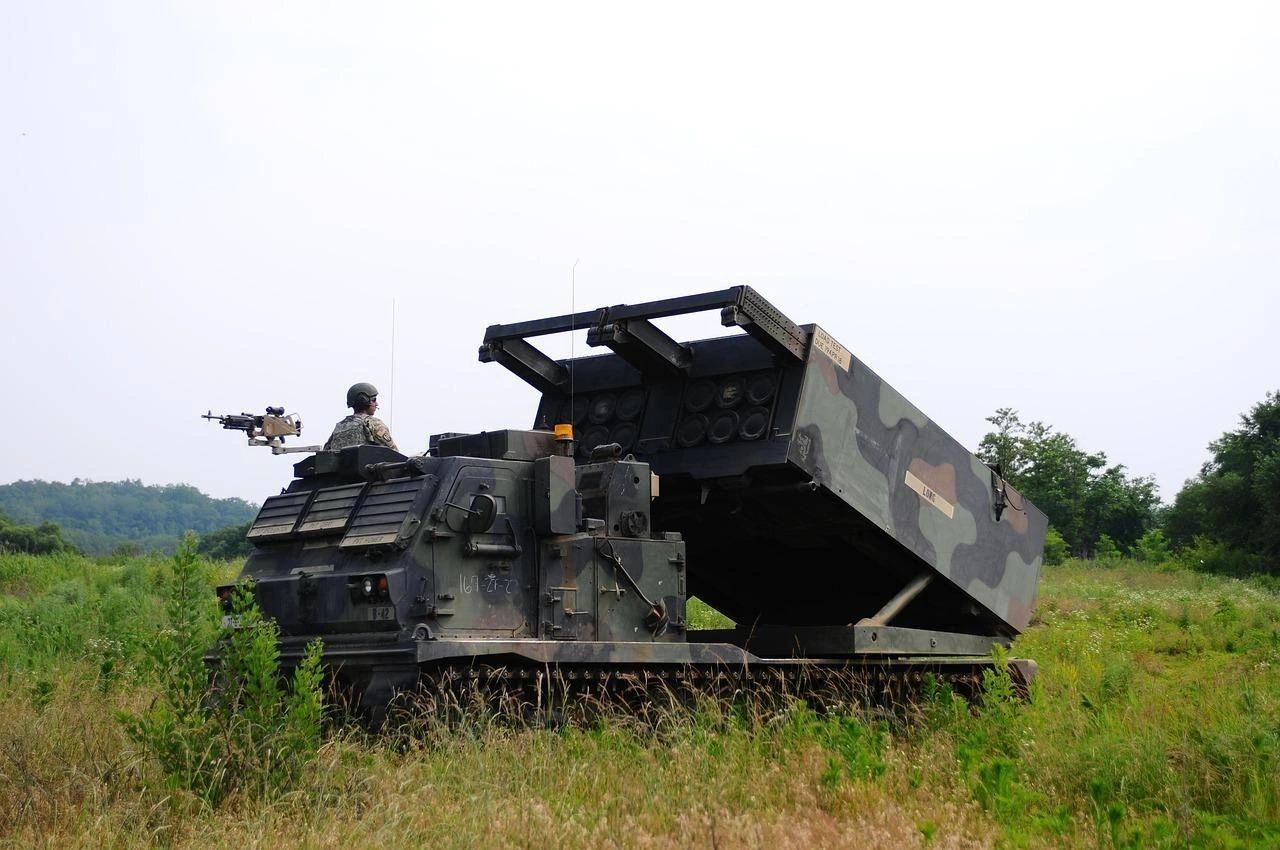
The ground domain defence sector in Europe, overall, is a concentrated market with a few key players. In response to the Ukraine War and the United States’ cutting of military aid for Ukraine, European nations across sectors have looked increasingly to these dominant European suppliers for defence products. This is seen most prominently with Artillery systems and Multiple Launch Rocket Systems (MLRS), a market currently dominated by US company Lockheed Martin. In this sector, European governments have become more open to European inter-state collaboration in an effort to move away from North American dependency. Significant increase in European nations’ defence budgets since the war in Ukraine has also been a significant factor, driving the ground domain market as a whole. This article will explore recent evidence of European nations drawing away from US reliance in the ground domain market, exploring key projects and collaborations specifically within Artillery systems, Ground Based Air Defence (GBAD) and Armoured Vehicles sectors, which may pave the way for a future of greater European agency.
Key Players
It is important initially to identify the key players in the ground domain defence market in Europe. These suppliers and manufacturers, in collaboration with European state governments, are leading the way in recent initiatives and products to bolster European defence capabilities and collaboration.
Rheinmetall is Germany’s largest arms manufacturer (Teng, 2025), a holding company engaged in the production of defence and automotive equipment, focusing on security technology and mobility solutions. It dominates the market for defence in the ground domain in Europe. Its key systems and products within the land sector include tracked and wheeled armoured vehicles, infantry equipment, protection and weapon systems, function sequence networking and simulation hardware and software and air defence systems (Forbes, n.d.). It is also the world’s foremost maker in CBRN reconnaissance systems both for military operations and civil defence (Rheinmetall, 2025). Rheinmetall reported a 46% year-on-year surge in sales to €2.3 billion in the first three months of 2025 alongside a 73% increase in its defence business with 70% of its sales generated abroad. This data can be identified as in line with the increased demand for defence systems and weapons in Europe following the suspension of US military aid in the Ukraine war. (Teng, 2025)
As of May 2025, Rheinmetall have also expanded their pre-existing partnership and cooperation with Lockheed Martin to launch a ‘centre of excellence’ for the manufacturing of advanced missile and rocket systems (GlobalData, n.d.). Lockheed Martin is an American defence and aerospace manufacturer which tops almost all military services companies’ global rankings, dominating the global market for ground domain defence across sectors. This is therefore a prominent collaboration joining a leading European system house with extensive European market access, with a leading international manufacturer of defence technology and mission systems (Rheinmetall, 2025). Rheinmetall frames this partnership as a way of strengthening the European defence industry in order to meet NATO commitments (Rheinmetall, 2025) directly demonstrating a motive of bolstering European defence capabilities to improve relations with the US regarding NATO defence spending. It is also a key acknowledgement of the current market climate consisting of Lockheed Martin and the US as global dominators.
Another key player is Thales, a French aerospace and defence corporation and a European leader in the manufacturing and marketing of electronic equipment and systems for the aerospace, defence and security sectors (Marketscreener, 2025). They are one of the world’s leading systems providers with a range of production in information, operational and communications tools for use in military land operations. Their C4ISR systems include, specifically for land forces: Optronics, communications and identification means for soldiers; vehicles and tools for vehicle support; weapons systems and munitions and, tools and systems to protect personnel, equipment and installations. They are also the leading supplier of C4ISTAR systems to NATO (Thales, n.d.). Thales’ total revenue is 20.58 billion Euros (Financial Times, 2025) and the company ranks 17th on The SIPRI Top 100 Arms-producing and Military Services Companies 2022 (Liang et al., 2023). They boast a ranking at number 1 in Europe for defence electronics and cyber security (Thales, n.d.).
Additionally, KNDS was formed in 2015 with the military land-systems merger of German private company Krauss-Maffei Wegmann (KMW), famous for making Leopard tanks, and French state-owned weapons provider Nexter. (Farr, 2025). Thus, KNDS is the product of a merging of two of the leading European manufacturers of military and land systems. Its products include main battle tanks, armoured vehicles, artillery systems, weapons systems, ammunition, military bridges, customer services, battle management systems, training solutions, protection solutions and a wide range of equipment. The company had a turnover in 2024 of 3.8 billion euros and it ranks among the most important industrial suppliers of the Ukrainian land forces (KNDS, n.d.). The company have opened a subsidiary in Kyiv, under the name KNDS Ukraine LLC, supporting cooperation between Ukrainian government institutions, the Ukrainian armaments industry and KNDS (KNDS, n.d.).
Leonardo S.p.A. is an Italian-based technology company and another European leader in the Aerospace, Defence and Security industry. It is active in mainly 4 markets, Italy, the UK, the United States and Poland and has a total Revenue of 18.26 billion euros. (Financial Times, 2025) Although its main focus is in the aerospace defence sector, it also produces technology for the land-based sector, such as the HITFIST 30 UL turret which provides firepower for armoured vehicles (Tamanna, 2025). The company’s high ranking and leadership in the defence sector as a whole (aerospace and naval included), warrants its consideration even when looking at the ground domain market specifically.
Finally, BAE Systems is one of the global leaders in designing and producing defence and aerospace systems. In the ground domain the company produces equipment such as combat vehicles, tanks, missile launchers, artillery systems and munitions and its total revenue is 26.31billion (GBP) with a net income of 1.96 billion (GBP) (Financial Times, 2025). Its Platforms and Services segment operates in the United Kingdom, United States and Sweden, manufacturing and upgrading combat vehicles, weapons and munitions, and delivering services and sustainment activities (Financial Times, 2025). In the SIPRI Top 100 Arms-producing and Military Services Companies 2022, BAE Systems PLC ranked 6th (Liang et al., 2023).
Artillery Systems and MLRS
The demand for long-range rocket artillery has increased tenfold with recent conflicts and the Ukraine war has demonstrated the extent of the utility and power of this weapon category in modern warfare. However, the market for these weapons is concentrated mainly to US vendors with Lockheed Martin as a dominating player. Lockheed Martin produced the Guided Multiple Launch Rocket System (GMLRS) which is currently in service in 16 nations, including 10 NATO countries with Ukraine being made the 17th operator due to donations from the United States and Europe. Lockheed Martin’s MGM-140 Army Tactical Missile System (ATACMs) is also currently in the inventory of 11 nations, including Ukraine, with 5 additional nations contracted for future procurement. Ultimately, ATACMs will be replaced by the Precision Strike Missile (PrSM) also being developed by Lockheed Martin which have significantly better performance parameters (Dean, 2025).
Many European nations utilise the M270 MLRS and/or the M142 HIMARS both of which rely on the GMLRS launcher or, to a lesser extent, the ATACMS for long range artillery and many have expressed interest in adopting the PrSM when it enters service. However, these nations are seeking to diversify their rocket artillery capabilities with several bi- and multinational projects currently underway to modernise these systems and develop launchers that can deploy a greater variety of rocket munitions. This would reduce reliance on US-designed and manufactured rockets and missiles. These nations are already looking to source some weapons systems from third-party vendors outside the United States with France, in particular, pursuing options being developed domestically (Dean, 2025).
Some examples of this diversification in Europe include Germany’s announcement in February 2025 that it would become the 4th European nation (after Denmark, The Netherlands and Spain) to procure the Precise and Universal Launching System (PULS) produced by Elbit Systems, an Israel based provider. Other European nations are also considering this system. In this new market, Elbit and its partner firms including KNDS Deutschland are integrating German command and control systems to produce the EuroPULS variant. PULS and EuroPULS can deploy a wide range of munitions reducing reliance on a single supplier. However, while Elbit has maintained that American rockets could be integrated with this Israeli launch system, Lockheed Martin’s leadership have voiced that the two systems are incompatible. If Lockheed Martin are correct, Germany could be forced to maintain two launch systems or be forced to discard all of their remaining GMLRS stocks (Dean, 2025).
France also plans to phase out its remaining M270 derivative Lance-Roquettes Unitaire (LRU) launcher systems (which no longer receive maintenance from Lockheed Martin) and replace them with domestically developed systems such as The Feux Longue Portée-Terre (FLP-T) programme. The Military Programming Law (LPM) 2024-2030 calls for the FLP-T programme to acquire 13 new missile systems by 2030 and 26 by 2035. Both the partnership of Arianespace and Thales as well as the consortium of Safran Electronics and Defence and MBDA France are currently competing for the contract to develop the new launcher and munitions (Dean, 2025).
These initiatives suggest a diversification in the global artillery systems and MLRS market moving away from the domination of North America and Lockheed Martin. The key players mentioned previously are the forerunners in investing in these projects, seeking partnerships with various European governments as there appears to have been a recognition of the limitations of depending on North American rocket launchers.
Ground Based Air Defence (GBAD)
Ground Based Air Defence (GBAD) systems have also become central in Europe’s attention to defence. Russia’s invasion of Ukraine has driven European nations to launch multiple initiatives to replenish their stocks and delivery systems (Auran, 2023). Europe’s GBAD market was valued at 6.5 USD billion in 2023 and Rheinmetall is the leading player (Akre, 2025).
The European Sky Shield Initiative (ESSI) is another prominent player and a prime example of increased collaboration between European nations in this sector. It aims to set up an anti-missile shield that combines different types of equipment including the IRIS-T, the PATRIOT system and the Arrow 3, designed to destroy ballistic missiles. 17 countries participated in the initiative although Poland, Spain and France have remained outside of the project. France, for example, have viewed the initiative as a breach of European sovereignty and an opportunity to relaunch the IRIS-T from an industrial standpoint (Auran, 2023).
It is important to acknowledge here that France’s response highlights the geo-political controversies surrounding European collaboration in the defence sector. Although the Ukraine War and US reduction in aid have in many ways encouraged greater cooperation, there is still hesitation shown by many European nations surrounding the extent they are willing to collaborate. A form of cohesive European or European Union defence is not an unanimously shared aim, the highlighted projects and initiatives in this article simply show a recent trend towards collaboration, not a decisive inter-state political plan towards it.
Armoured Vehicles
In light of the geopolitical controversies, this article recognises that, regarding types of defence products, the European defence market overall has long been characterised as highly fragmented. The 2017 Munich Security Conference (MSC), for example, found that 26 European Defence Agency (EDA) members used 178 types of major weapon systems compared to 30 types used by the US. This fragmentation is attributed to the way that the European defence industrial base and defence market are traditionally organised mainly along national lines with EU members having separate security policy priorities, making recent collaborations particularly poignant and progressive but also complex and controversial. (Olsson, 2021). As seen earlier in this article, this fragmentation does not account for all sectors with key manufacturers dominating the market in the majority of areas. The sector of Armoured Vehicles does highlight some fragmentation but what is particularly significant is the apparent lack of North American domination, with key products all largely sourced from European nations and manufacturers.
For example, No modern Infantry Fighting Vehicle (IFV) variation dominates the market segment but the Swedish CV90 is the most common, operated by 5 countries and making up 12% of the market. Next in commonality are the French wheeled VBCIs and the German tracked Pumas and Marders but these are only operated by their respective home countries. Other examples include the Polish Rosomak version of the Finnish AMV-360, Spanish Austrian ASCOD, Italian tracked Dardo and wheeled Freccia, all of which are used by their respective armed forces (Olsson, 2021).
Other areas do, alternatively, show a concentration. While the 27 European countries operate 12 different tanks, the European main battle tank (MBT) market segment is dominated by a single system and is relatively concentrated to a small number of producers, with the German Leopard 2 tanks having a clear market dominance. German Leopard 2 variants account for 38% of all European tanks, amounting to 70% of third generation MBTs. The only domestically developed third generation tanks are the French Leclerc and the Italian Ariete (Olsson, 2021).
Additionally, a new advancement is The Franco-German Main Ground Combat System (MGCS) programme which was launched as an initiative of the French and German governments in 2017 and aims to replace Germany’s Leopard 2 and France’s Leclerc MBTs by 2040. The MGCS programme aims to deliver a multi-platform ground combat system solution that incorporates manned and unmanned vehicles. In April 2025, KNDS Deutschland, KNDS France, Rheinmetall Landysteme and Thales legally incorporated the ‘MGCS Project Company GmbH’ and this new company will be the industrial prime contractor for the next phases of the programme (Felstead, 2025).
On April 22nd 2022, following the MGCS Project, The European Commission-funded Technologies for Existing and Future Main Battle Tanks (FMBTECH) project was officially launched, with Thales as the coordinator. The initiative brings together 26 companies from 13 European Union member states plus Norway, and aims, over the course of three years, to develop a fleet of more agile, intelligent and co-operative MBTs to address the limitations of the current MBT inventories in Europe. The FMBTech project was selected by the European Commission for funding under the European Defence Fund (EDF) in 2023 and has been allocated a total budget of EUR 19 million (Felstead, 2025).
These initiatives and dominant products in the sector of Armoured vehicles demonstrate a prominent desire for collaboration between the main private players and member states of the EU but also show how this sector in particular holds little US influence and is already predominantly run by European nations, even if in a fragmented form.
Conclusion
This article has focused on armoured vehicles, GBAD systems and artillery systems as key sectors within the ground domain defence market where increased European collaboration has been evident in recent years. A key factor driving this collaboration has been clear US domination in the global market and alarming geopolitical actions including the US withdrawing military aid to Ukraine as well as President Trump’s hardline approach to NATO defence spending. Rheinmetall’s continued partnership with Lockheed Martin demonstrates a direct response amongst key players to these recent developments whilst projects led by various European nations have shown a similar caution around dependence on US and Lockheed Martin artillery systems. The European Sky Shield Initiative in the GBAD sector similarly demonstrates a narrative of increased European collaboration to strengthen EU defence by combining the different types of equipment currently circulating to create a more standardised and flexible anti-missile shield. However, this project in particular has seen controversy amongst European nations, serving as a reminder of the political barriers to EU collaboration and issues concerning state sovereignty, particularly articulated by France.
Exploration into the sector of Armoured vehicles additionally highlights the areas in which the EU already dominates and collaborates. The armoured vehicles market in Europe sees little prominent interference from the US and could arguably be seen as a promising sign of EU strength and a potential for other sectors. Ultimately, in surveying these markets, the key question is whether what can currently be seen as increased collaboration in response to the current geopolitical landscape, will lead to more decisive political decisions in European inter-state governance and in the European Union in pursuing a cohesive European approach to defence?
References List
Akre, S. (2025, May). Global Ground Based Air Defense Gbad System Market Overview. Market Research Future. MRFR/A&D/30822-HCR
https://www.marketresearchfuture.com/reports/ground-based-air-defense-gbad-system-market-32620
Auran, J. (2023, July 28). European Ground-Based Air Defence Programmes. European Security and Defence (ESD).
European Ground-Based Air Defence Programmes
Dean, S E. (2025, March 13). Long-Range Rocket Artillery Munitions: A Market Overview. European Security and Defence (ESD).
Long-range rocket artillery munitions: A market overview
Farr, E-V. (2025, February 21). European Military Supplier KNDS Considers IPO as Defence Sector Booms, Sources Say. Reuters.
European military supplier KNDS considers IPO as defence sector booms, sources say | Reuters
Felstead, P. (2025, April 17). Joint Company Formed to Take Main Ground Combat System Programme Forward. European Security and Defence (ESD).
Felstead, P. (2025, April 22). Technologies for Existing and Future Main Battle Tanks Project Officially Launched. European Security and Defence (ESD).
Financial Times. (2025, May 12). Rheinmetall AG, RHMX:GER [Profile]. Financial Times.
Rheinmetall AG, RHMX:GER profile - FT.com
Financial Times. (2025, May 12). Thales SA, HO:PAR [profile]. Financial Times.
Thales SA, HO:PAR profile - FT.com
Financial Times. (2025, May 12). Leonardo SpA, LDO:MIL [profile]. Financial Times.
Leonardo SpA, LDO:MIL profile - FT.com
Financial Times. (2025, May 12). BAE Systems PLC, BA,:LSE [profile]. Financial Times.
BAE Systems PLC, BA.:LSE profile - FT.com
Forbes. (n.d.). Rheinmetall: Company Overview & News. Forbes.
Rheinmetall | Company Overview & News
GlobalData. (n.d.). Rheinmetall AG: Overview. GlobalData.
Rheinmetall AG Company Profile - Rheinmetall AG Overview - GlobalData
KNDS. (n.d.). Home. KNDS.
Liang, X., Scarazzato, Lorenzo., Béraud-Sudreau, L., Tian, N., Lopes da Silva, D., Choi, Y., Sild, E.K. (2023, December). SIPRI Fact Sheet: The SIPRI Top 100 Arms-Producing and Military Services Companies, 2022. SIPRI.
The SIPRI Top 100 Arms-producing and Military Services Companies, 2022
MarketScreener. (2025, May 12). Thales: Shareholders, Board Members, Managers and Company Profile [Company Profile]. MarketScreener.
Thales: Shareholders Board Members Managers and Company Profile | FR0000121329 | MarketScreener
MarketScreener. (2025, May 12). Leonardo S.pA.: Shareholders, Board Members, Managers and Company Profile [Company profile]. MarketScreener.
MarketScreener. (2025, May 12). BAE Systems plc: Shareholders, Board Members, Managers and Company Profile [Company profile]. MarketScreener.
Olsson, P. (2021). The European defence market – unevenly fragmented (FOI Memo 7730). Swedish Defence Research Agency (FOI).
https://www.foi.se/rest-api/report/FOI%20Memo%207730
Rheinmetall. (2025, April 29). Press Release: Lockheed Martin and Rheinmetall to join forces on centre for excellence for European Security. Rheinmetall.
Strategic cooperation | Rheinmetall
Tamanna, Y. (2025, March 6). 15 Top Defense Companies in Europe [2025]. StartUs Insights.
15 Top Defense Companies in Europe [2025] | StartUs Insights
Teng, T. (2025, May 8). Rheinmetall’s Sales Surge as Soaring Defence Deman Continues. Euronews.
Rheinmetall’s sales surge as soaring defence demand continues | Euronews
Thales. (n.d.). Land Forces. Thales.
Thales. (n.d.). Defence and Security. Thales.