
The Just Transition: Idealistic Vision or Practical Framework?
10 min read · 1,995 words
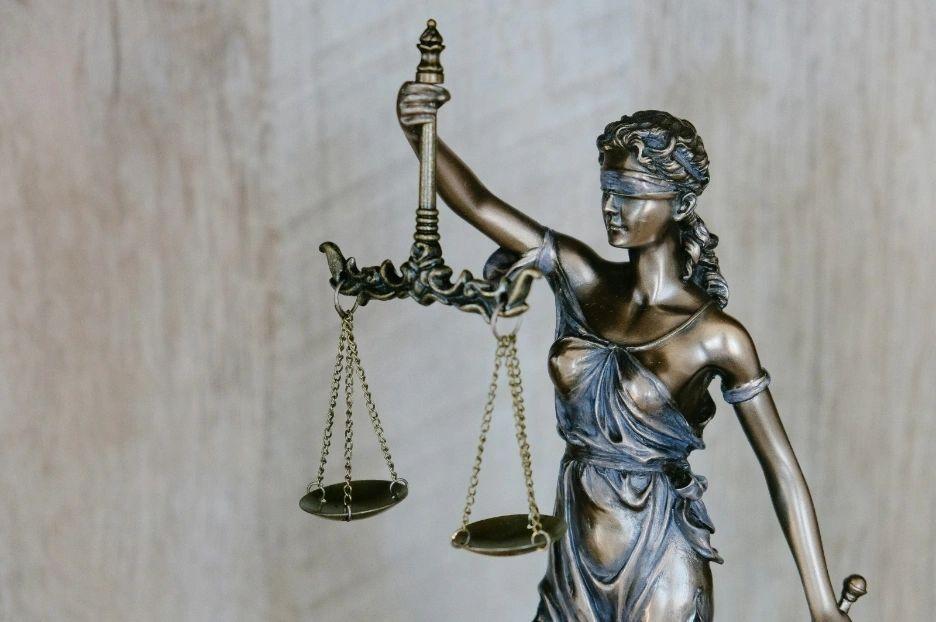
The concept of a just transition is one in which the risks and benefits of the energy transition are shared fairly, leaving no one behind (). In fact, the importance of a just transition, ensuring decent work and inclusive economic opportunities across different national realities,is referenced in the preamble of the Paris Agreement, the leading multilateral climate agreement ().
The concept has, in particular, evolved into justice contests between developed and developing countries, which face very different realities, both historically and presently. Before the explicit inclusion of just transition language in the Paris Agreement, the principle of Common But Differentiated Responsibilities (CBDR) principle was employed in the international climate change regime to address macro-level injustices through climate finance, technology and capacity-building support from developed countries to developing countries ().
The concept of justice is depicted in Figure 1.
Figure 1 - Inequality, Equality, Equity and Justice
It is widely recognised that there is injustice in access to clean, reliable, and affordable energy. Justice, in this sense, implies tackling the structural conditions that produce those injustices; changing the energy system itself, rather than treating fairness as simply equal access (equality) or targeted measures alone (equity).
Part of the debate is centred on the claim that countries, and other entities, including companies, are the most responsible for emissions driving climate change, and should be held accountable for their actions (). Since the Industrial Revolution in 1851, 57% of global cumulative CO₂ emissions came from developed countries. Within this, just the United States accounts for 47%, the United Kingdom for 25%, and the EU-27 for 22%. That is 94% of all historical emissions from developed nations (). This matters because CO₂ persists in the atmosphere for centuries, shaping today’s climate impacts. The responsibility of developed nations in the current crisis, the urgency of climate action, and the energy transition, is therefore difficult to dispute. In contrast, developing countries have contributed almost nothing to this historical burden. African nations, for example, have been responsible for just 0.01% of cumulative emissions (). Even as some developing countries’ annual emissions rise modestly, their contribution to the cumulative stock remains marginal.
Present-day energy consumption patterns reinforce this imbalance. In 2023, global average per-capita energy use stood at 77 GJ, while the African average was only 14 GJ (). With per-capita carbon emissions of 0.12, it would take an average Rwandese 129 years to emit the same quantity of carbon as an average American emits in one year (). Least developed countries (LDCs) accounted for only 3.3% of global emissions in 2019, despite comprising 13% of the global population ().
In addition, many countries with the lowest historical responsibility face a disproportionate share of climate impacts. Azubuike, Emeseh, & Amakiri () highlight how extremely small historical contributions by LDCs and small island developing states stand in stark contrast to their vulnerability to climate harms. This mismatch shapes perceptions of fairness.
Against this backdrop, where many developing nations still lack access to electricity, face high poverty rates, infrastructure gaps, and constrained fiscal space, the natural question is whether decarbonisation can be aligned with development outcomes, and with a vision of a ‘just’ transition that does not ignore these inequalities in both historical and present-day contexts.
Many industrialized countries built their wealth through what were, at the time, cheap coal, oil, and gas, and only later began to account for environmental impacts. Fossil-based development and industrialisation is therefore a proven historical pathway. Monyei et al. () coined the term “energy bullying” to describe what they see as attempts by developed countries to steer poorer countries toward preferred electrification options, often renewables-focused, through financing, aid, trade and policy influence, while wealthy economies continue benefitting from fossil-heavy systems and from the advantages of earlier development built on those systems.
Many developing countries therefore argue they have the right to continue burning and developing fossil fuels, given their small share of historical emissions and different development needs (). This is especially true when factoring in emissions caused by colonial rule.
Developing countries therefore maintain that economic development and poverty reduction must not be treated as secondary to climate measures designed around ‘western realities’ of technology adoption and energy system transformation. In such contexts, it can be difficult to envision economic transformation without rising energy demand, and under today’s systems, rising emissions. This is why decarbonisation is often experienced not as a solution, but as an additional constraint: an unfair burden to solve a crisis many did little to create.
Counter-arguments caution that the “hypocrisy” narrative can reinforce the claim that development must be sustained by a fossil economy ( Proponents of faster renewables-led transitions emphasize that renewables have become far more cost-competitive for new electricity generation in many contexts. Beyond price, they point to wider co-benefits: reduced pollution, improved health outcomes, lower exposure to imported fuel volatility, and new domestic value chains and job creation, if supported by adequate institution-building and policy.
A phased or delayed transition for developing economies paired with earlier, faster action by more developed nations is a proposal that has gained attention in the literature (). However, it also risks reproducing a “grow first, clean up later” logic, which echoes the very hierarchy Common But Differentiated Responsibilities (CBDR) was meant to address. Energy infrastructure lasts decades and therefore investments made now will set a path for decades to come. This approach would understate the opportunity that developing countries may have to build new systems that are, and will continue to be, cheaper to operate, less exposed to fuel volatility, and more aligned with future trade and investment patterns. Developing countries should not be condemned to replay the fossil pathway precisely because the technology landscape has changed ( ).
That said, the low-carbon transition is certainly not a magic elixir for a more “just” world despite its environmental and economic benefits (). As Sovacool et al. () note, the current wave of low-carbon transitions may “create new injustices and vulnerabilities, while also failing to address pre-existing structural drivers of injustice in energy markets and the wider socio-economy.” It is therefore imperative to move beyond a purely technology-focused understanding of transition and engage more directly with social justice (). As Williams and Doyon () argue, “we cannot achieve a sustainability transition without justice, indeed that an unjust transition is not sustainable”.
The green objectives of developed nations depend on minerals from less developed nations, as well as labour and ecosystems, yet current policies too often treat these nations as suppliers of materials rather than partners in development.
In addition, increasingly complex standards and reporting requirements from developed regions, such as the EU, can also become barriers to trade (). In practice, they may exclude developing countries from effective participation in emerging value chains, jeopardize exports, and widen technological divides, especially where compliance capacity and finance are limited.
Financing is central to the debate. Africa, for example, requires substantial investment to meet climate and development objectives, yet many countries face high debt burdens and limited fiscal capacity for green transitions (). The failure of developed nations to deliver on financial commitments, such as the pledge of $100 billion annually to developing countries, has further accentuated disparities and weakened credibility (). Furthermore, the international climate regime has not delivered capacity-building or technology transfer anywhere near the extent expected. The IEA indicates that of the USD 2.7 trillion invested towards renewable energy generation globally, only 2% has gone to Africa and of this, more than half to just South Africa ().
Conclusion
It is understandable that developing nations have expressed frustration that international cooperation for a global green economy is not delivering justice. Some have begun to question whether the language of “global green growth” can, in practice, become a new dimension of global injustice—where the transition is negotiated on terms that entrench poverty rather than overcome it ().
To address the multiple inequalities between wealthy and poorer countries outlined above, fundamental reforms of asymmetrical global structures are required; justice, we remind you, means changing the system. While the difficulties of reforming an international order driven by power and national economic interests are obvious, one should also reject the notion that moral norms of justice have no place in global politics ().
If we frame the issue in a global systems perspective, nobody is left outside the conversation. Justice becomes not only an obligation, but a framework under which collaboration is assumed and upheld. Rather than defaulting to protectionism, the system should prioritize cooperation. Ultimately, it is only through global collaboration for climate action and a shared vision grounded in cooperation, inclusive decision-making, and transparency, that the transition can be negotiated in a way that acknowledges different realities without losing sight of a more just system.
References
Gómez, C., Elliott, C., Pellerin, M., Singh, N., & Walls, G. (2025, May 1). What Is a ‘Just Transition,’ and Are Countries Really Making Progress? World Resources Institute.
IPCC. (2022). Climate Change 2022: Mitigation of Climate Change. Contribution of Working Group III to the Sixth Assessment Report of the Intergovernmental Panel on Climate Change [P. R. Shukla, J. Skea, R. Slade, A. Al Khourdajie, R. van Diemen, D. McCollum, M. Pathak, S. Some, P. Vyas, R. Fradera, M. Belkacemi, A. Hasija, G. Lisboa, S. Luz & J. Malley (Eds.)]. Cambridge University Press. https://doi.org/10.1017/9781009157926
Hizliok, S., & Scheer, A. (2024, February 20). What is the just transition and what does it mean for climate action?Grantham Research Institute, London School of Economics and Political Science.
Okereke, C. (2024). Degrowth, green growth, and climate justice for Africa. Review of International Studies, 50(5), 910–920.
Okereke, C., Mbeva, K., & Makomere, R. (2025). Introduction to the Special Issue: The North–South Politics of Global Just Transitions. Global Environmental Politics. Advance online publication. https://doi.org/10.1162/glep.a
Azubuike, S. I., Emeseh, E., & Amakiri, D. Y. (2024). Climate change, energy transition, and the Global South: Learnings from the international framework on the ozone layer. Journal of Energy & Natural Resources Law, 42(3), 255–277. https://doi.org/10.1080/02646811.2024.2345012
Powell, L., Sati, A., & Tomar, V. K. (2024, August 28). Fossil fuel consumption: Perspectives of the Global South and the North. ORF Expert Speak.
Monyei, C. G., Jenkins, K., Serestina, V., & Adewumi, A. O. (2018). Examining energy sufficiency and energy mobility in the Global South through the energy justice framework. Energy Policy, 119, 68–76.
Villegas, E. (2024, November 13). The Global South needs a just transition. What will it take? ThinkLandscape, Global Landscapes Forum.
Todd, I., De Groot, J., Mose, T., McCauley, D., & Heffron, R. J. (2019). Response to “Monyei, Jenkins, Serestina and Adewumi examining energy sufficiency and energy mobility in the Global South through the energy justice framework”. Energy Policy, 132, 44–46. https://doi.org/10.1016/j.enpol.2019.05.012
Wang, X., & Lo, K. (2021). Just transition: A conceptual review. Energy Research & Social Science, 82, 102291.
Sovacool, B. K., Martiskainen, M., Hook, A., & Baker, L. (2019). Decarbonization and its discontents: A critical energy justice perspective on four low‑carbon transitions. Climatic Change, 155(4), 581‑619.
Lee, J., & Byrne, J. (2019). Expanding the conceptual and analytical basis of energy justice: Beyond the three‑tenet framework. Frontiers in Energy Research, 7, Article 99. https://doi.org/10.3389/fenrg.2019.00099
Williams, S., & Doyon, A. (2019). Justice in energy transitions. Environmental Innovation and Societal Transitions, 33, 66–74.
SOLIDAR. (2025, January 22). Building a global just transition narrative: Challenges and approaches to turn a Global North concept into a common agenda. Retrieved December 4, 2025, from
Boateng, R. (2024, October 30). What makes a just transition just? – An answer from African workers. IPS Journal. Retrieved December 4, 2025, from
Adom, R. K., Mukoki, P., Ngwenya, N., & Simatele, M. D. (2024). Exploring the complications of climate change funding in Sub‑Saharan African countries. Mitigation and Adaptation Strategies for Global Change, 29(6), 1–16.
International Energy Agency. (2022). Africa Energy Outlook 2022: Key findings. IEA. Retrieved December 4, 2025, from