
The next generation of air supremacy
12 min read · 2,415 words
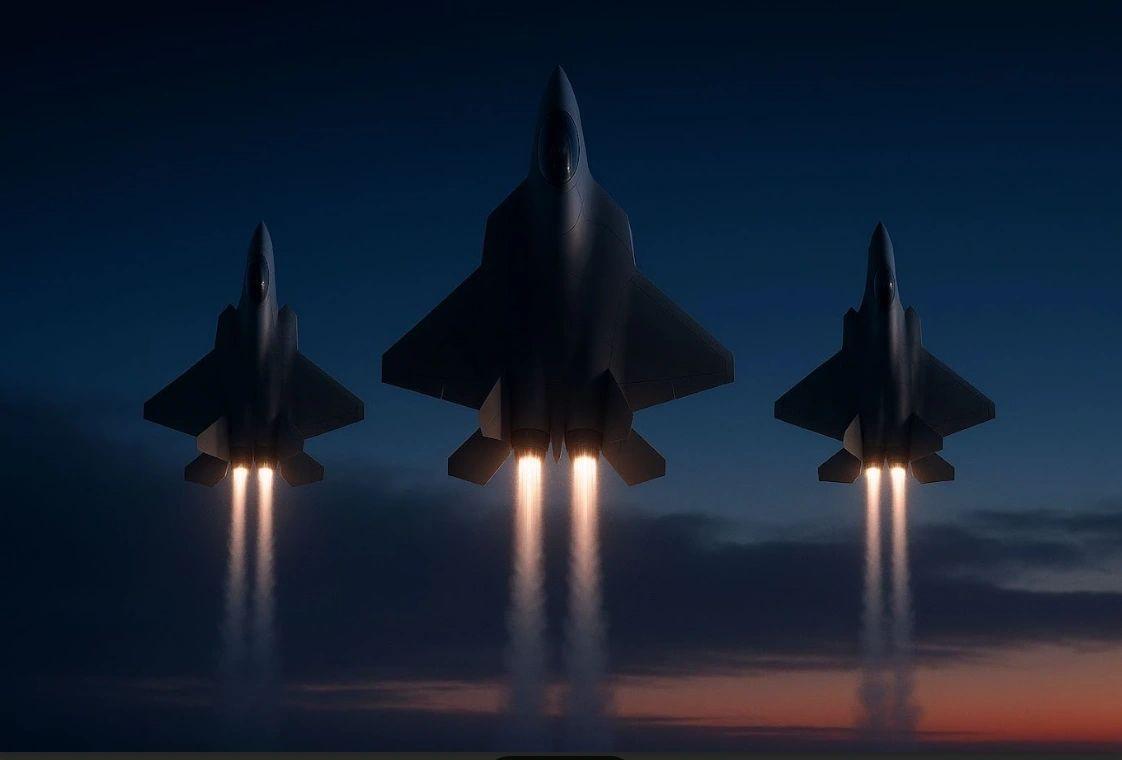
On 25 November, the Ministers of Defence of Italy, Japan and the United Kingdom met via video-conference to review the progress of their joint effort in the development of the next generation of combat aircraft under the Global Combat Air programme (GCAP) (Italian Defense Ministry, 2025). The trilateral partnership is only one of the several military and technological joint initiatives currently moving towards the new frontier of air combat and supremacy: multiple players have in fact mobilized in this race, highlighting the pivotal importance of advanced airpower in the realm of national security.
Strategic evolution of fighter jet deployment
Since the end of the Second World War it has been evident that any plan for military action depends fundamentally on the control of skies (Meilinger, 2016). As surface-to-air systems, interdiction technologies, and strategic doctrines evolved, aircraft design was forced to adapt just as rapidly to avoid obsolescence and to preserve strike and support capabilities. The post-war decades clearly demonstrate this assumption: from the imperative of long-range escorts for Allied bombers in the final years of the Second World War, to the development of faster and less detectable aircrafts during the Cold War, and later to the adoption of advanced stealth and precision technologies (mainly pioneered by the USAF) in conflicts from the Gulf War to Afghanistan, Iraq, and Serbia.
The use of aviation did not reduce itself to the direct application in war scenarios: it became a fundamental component to determine a country's sovereignty, defend its territory and intelligence and act as a formidable tool for deterrence, or provocation, as the repeated violations of NATO airspace by Russian UAVs and aircrafts have demonstrated since the expansion of the Ukrainian crisis (Bremer, Grieco, 2025). But what are the main features of warplanes today, and how do they adapt to the different military doctrines?
Through the decades, technological advancement fueled by strategic competition led to what, until the last few years, has been the frontier of technological advancement in the sector: fifth generation combat aircrafts. These models, first developed through the 90s and deployed in their first operations in the early 2000s, are characterized by sensible differences compared to the preceding generation, the main ones being enhanced network and stealth capabilities. As modern Integrated Air Defence Systems (IADS) have progressively created areas where fourth generation aircrafts could not operate effectively and survive anymore, technological advancement was aimed at implementing an efficient network of supports and accessibilities able to compensate each other, in order to create a new, stronger ‘man-machine teaming’. Enhanced features of the aircraft include multi-spectral low observable (LO) design (such as radar, infrared sensors, and visual situational awareness tools), along with self-protection and radar jamming capabilities that delay or deny enemy systems the ability to detect, track, and engage the aircraft; these aircrafts also include integrated avionics, which autonomously fuse and prioritize the fighter’s multi-spectral sensors and off board data, providing an accurate real-time operations picture for the pilot. All these measures comprehended simultaneously helped create a new way to conceive fighter jets and the missions in which they are deployed, defining a process that starts with strategic planning and continues even after mission completion, with the possibility to download data for post-mission analysis (Harrigian, Marosko, 2024).
The symbols of this decisive shift have been the products of Lockheed Martin engineering: the F-22A Raptor heralded a new way to conceive air superiority and stealth operations, followed by the F-35 Lightning, which now composes around 10% of the USAF, and is part of twenty partner states’ arsenal. For around two decades, these models set the benchmark for future innovation, and were accompanied by the efforts of competing powers to adjust to the new technological frontier, first by the Russian Sukhoi-Su 57 in the early 2010s, although its classification is debatable, particularly for the fighter’s deficit in stealth technology, a fundamental standard for fifth generation aircrafts. It was then the turn for the Chengdu J-20, that entered service for the People’s Liberation Army Air Force in 2017. It was at the peak of the innovation level that the need for a further layer of advancement emerged: as previously mentioned, developing fighter jets are almost immediately followed by Anti-Aerial Warfare (AAW) enhancements, keeping the race extremely tight and dynamic. The recent announcement by Leonardo’s CEO Roberto Cingolani of encouraging test results for the newly developed Italian Michelangelo Dome (Leonardo, 2025), supports this thesis. Michelangelo is going to be a complete architecture integrating terrestrial, naval, aerial and space sensors of the newest generation. It will also comprehend cyber defence platforms, command and control systems, AI and coordinated effectors, in an effort to establish a dynamic security dome, capable of detecting, tracking and neutralizing threats on all dominions of operation.
The European scenario
The mid 2010s saw the start of the race for an ulterior NGF development. A journey that led to the current situation, where no official release of aircraft has yet taken place, but every major power claims to be ahead of their rivals: last March, the United States Air Force announced Boeing as the winner of the contract for its Next Generation Air Dominance (NGAD) fighter programme, unveiling the sixth-generation F-47. Even before, the fusion of the Anglo-Italian “Tempest” project with the Japanese “F-X” led to the institution of the Global Combat Air Programme (GCAP) for the creation of a multirole stealth sixth generation fighter. An effort that has been going on since 2022, following the announcement in 2019 of the Future Combat Air System (FCAS) promoted by the joint efforts of Spain, Germany and France. This last programme has seen a series of delays, worsened by major clashes between Airbus Defence and Space, the company following the interests of the German component, and the CEO of the French Dassault, the latter calling for his company’s full industrial leadership on the project (Franke, 2025). A programme of 100 billion euros on which France and Germany are reflecting carefully, and whose crumbling would have a disastrous effect, also for the image of a concrete European attempt to determine real chances of becoming fully able to provide for its own defence in the future.
Assessment on competitors’ capabilities
The example provided by the FCAS case highlights once again the main issue standing between European countries and autonomy in the defence industry: the fact that industries as well as the national States they refer to are realizing they have the opportunity to exit the American dependence orbit, by stepping in as primary actors and not simple partners. However, nobody seems to have the intention to regress from the position they crave, not even inside the very same project, and geopolitical competitors of western countries are working on the development of their own version of New Generation Fighter. Although still in development, sixth-generation fighters share a set of features that can be of use when trying to define benchmarks for comparison among competitors in the process of developing similar technology: native AI integration, advanced multi-spectral stealth, high-capacity secure networking, and the ability to operate as the central node of a system-of-systems that includes unmanned platforms are the new frontier, and the direction where multiple actors are trying to head to. Russia has been dramatically delayed by international sanctions, even struggling to carry out mass production of the fifth generation Sukhoi-Su 57. As reported by the Kyiv Post, Russian company OKBM Afrikantov would be involved in the production of the Su-57 and of the upcoming PAK DA Poslannik strategic bomber, but still deeply dependant on imported CNC (computer-numerical-control) equipment to manufacture both aircrafts (Kyiv Post, 2025). As the link between OKBM and the Russian government was asserted, the European Union included the company in its 19th package of sanctions against Russia released October 23. Despite the repeated breaches of the sanction system documented (European Parliament, 2025), also due to the negligence of some western actors, the Russian development programmes seems to be deeply affected by the sanctions, pushing the development of NGFs (as the Mig-41 or the previously mentioned PAK DA) to a not specified range in the 2030s.
On the other hand, China seems to be in the first row among non-western developers, in a silent race with the American and European counterparts. This is relative to multiple experimental prototypes reportedly flying in the proximities of Chinese military bases, unveiling at least two distinct sixth generation models in testing phase: the Chengdu J-36 and the Shenyang J-50, produced respectively by the Chengdu Aircraft Corporation and the Shenyang Aircraft Corporation, both part of the state-owned Aviation Industry Corporation of China (AVIC). From the little information available, it would seem that the first aircraft is a new type of stealth bomber, while the second should be designed for air superiority operations, therefore acquiring air dominance of a strategic theatre minimizing interference from the enemy. Both the prototypes are related to the western development programmes for employing advanced stealth technologies, cloud integration and AI enhancement, in order to acquire real time feedback during operations, plus the support of drone swarms coordinated by the manned vehicle.
Comparing the models
The trajectory emerging from the analysis is clear: in the global race towards a sixth generation of fighter aircrafts, Europe appears once again to be slowed down not from technological deficit, but rather by a lack of structure, coordination and shared vision among national industries and governments. The GCAP and especially FCAS programmes show how European countries do have advanced competences in key sectors at their disposal, from sensor fusion, to multispectral stealth design, to the architectures for collaborative fight. What is truly missing is a model of governance capable of aligning these capacities into a unique strategic direction.
The confrontation with the United States and China delves into the scale of this weakness. Washington is pursuing its NGAD programme inside a rigidly centralized structure, based on interforce requirements defined by the US Joint Staff and a chain of industrial command where the prime contractor, in this case Boeing, has an indisputable authority on the mission architectures and on subsystem integration (Defense Acquisition University, 2021). The result is a cycle of experimentation which is coherent, with a stable roadmap and the capacity to invest in complementary domains (tactical cloud, AI and the other aspects already mentioned), without the need to negotiate every step among participating sovereign states.
China follows a model which is different, but equally effective: AVIC’s unified governance allows for an immediate transfer of technology among partners (e.g. Chengdu and Shenyang), reducing iteration times and focusing investments on the capacities that are truly considered pivotal by the PLA Air Force. It is evident how this model allows for a rapid progression in developing platforms like the J-36 and J-50 prototypes, integrated domestically with sensor fusion algorithms, modular payload and teaming capacity with UAVs (AMAHA, 2025) .
Europe, on the contrary, remains trapped in a decisional process in which every State defends its own industrial share more than a common priority. The result is a series of setbacks and delays that end up atrophying the development of the “system of systems” essential to compete in the new paradigm defined by the NATO’s ACT as multi-domain integration (NATO, 2025). The ambition declared by Bruxelles, aimed at building strategic autonomy, risks therefore to remain more a political statement rather than a credible industrial pathway.
European perspectives for advancement and sovereignty
It remains therefore to be defined what solutions could allow Europe to fill this gap. The first target should be defining a set of common operative requisites that is binding, in order to avoid duplications and conflicts among national industries. Moreover, if attributing to a unique European prime contractor the technical responsibility of the entire vehicle was possible, Europe would manage to go beyond the logic of a rotating co-leadership, that so far resolved in conflict. Yet, despite offering coherence and decisional clarity, such a model could also generate an excessive concentration of industrial power, with the risk of marginalizing smaller national actors and creating new technological dependencies within the Union. In defining a centrally led architecture, great attention should be dedicated in maintaining the flexibility required to integrate innovations developed across Europe. In political terms, too, the shift towards a unified industrial leadership may face resistance from Member States that perceive it as a loss of sovereignty or of their traditional industrial share, reintroducing the very arena of tensions the reform aims to overcome. That is why it is crucial to adopt a development model based on architectures open and modular, similar to the American OMSs, where the goal is ensuring standardized interfaces that allow rapid integration of new sensors, software, and mission systems without redesigning the entire aircraft or being limited by a single provider in a vendor lock-in setup.
Without such choices, Europe risks not only losing the technological window that is seeing the birth of the sixth generation, but also compromising its very ability to operate in environments dominated by advanced IADS, integrated AI, and collaborative warfare. Conversely, more unified governance and a truly continental industrial model could transform GCAP, FCAS, or a possible successor into a catalyst for technological sovereignty and strategic credibility, restoring Europe to a position of parity with the major global players in the air domain.
References list:
Ministero della Difesa (2025), Global Combat Air programme: meeting between Italy, Japan and the United Kingdom
Global Combat Air programme: meeting between Italy, ...Ministero della Difesahttps://www.difesa.it › eng › gl...
Philip S. Meilinger (2016), AIR FORCE Magazine, Supremacy in the Skies
https://www.airandspaceforces.com/PDF/MagazineArchive/Magazine%20Documents/2016/February%202016/0216supremacy.pdf
Maximilian K. Bremer, Kelly A. Grieco (2025), Four Things to Know About Hybrid Air Denial
https://www.lawfaremedia.org/article/four-things-to-know-about-hybrid-air-denial
Jeffrey L. Harrigian, Max M. Marosko III (2017), The Journal of the JAPCC, Fifth Generation Air Combat. Maintaining the Joint Force Advantage
https://www.japcc.org/articles/fifth-generation-air-combat/
Leonardo S.p.A. (2025), Michelangelo Security Dome: primo importante risultato con test di difesa aerea in Italia
https://www.leonardo.com/it/press-release-detail/-/detail/09-12-2025-michelangelo-security-dome-development-marks-first-achievement-with-successful-air-defence-test-in-italy
Ulrike Franke (2025), European Council on Foreign Relations, The trouble with FCAS: Why Europe’s fighter jet project is not taking off
https://ecfr.eu/article/the-trouble-with-fcas-why-europes-fighter-jet-project-is-not-taking-off/
Kyiv Post (2025), Kremlin Unable to Build Fifth-Generation Warplanes With Its Antiquated Tech
https://www.kyivpost.com/post/65959
Defense Acquisition University (2021), Manual for the operation of the joint capabilities integration and development system
https://www.dau.edu/sites/default/files/2024-01/Manual%20-%20JCIDS%20Oct%202021.pdf
Australian Military Aviation History Association (2025), China’s new J-36
ACT NATO (2025), Multi Domain Operations: Overview
Multi-Domain Operations - NATO's ACTNATO's AC
Thttps://www.act.nato.int › multi-...
European Parliament (2024), EU sanctions against Russia 2025: State of play, perspectives and challenges
https://www.europarl.europa.eu/RegData/etudes/BRIE/2025/767243/EPRS_BRI(2025)767243_EN.pdf