
The Security of Space Debris
By Nimi Sira
14 min read · 2,833 words
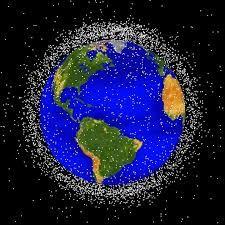
Humanity has left more than footprints in orbit. As of 2025, there are an estimated 1.2 million pieces of space debris, with over 50,000 being larger than 10 centimeters, posing serious concerns for the safety and security of operations. (European Space Agency, 2025; Larsen, 2018). Space debris refers to all non-functioning and man-made objects that are in the Earth’s orbit or re-entering the atmosphere (Klinkrad, 2006). Space security refers to the ability to “place and operate assets outside of the Earth’s atmosphere without interference damage or destruction” (Moltz, 2019, p.11.), which is essential for both military and commercial operations. Satellites are essential for everyday life, with almost every person and industry relying on the operations of satellites for both basic and complex uses (Clearspace, 2023). Although traditionally considered as a space environment threat, the space debris issue has been increasingly framed as a strategy problem by both military and commercial actors in the space sector. Indeed space debris is a growing space security threat as a result of the physical, political and strategic issues that it poses. However, the securitization of space debris also poses a risk of over-prioritizing military responses over the collaborative and cooperative measures necessary for the development of long-term solutions to the space-climate problem (Buzan et al, 1998).
Space debris as a physical space security issue
Space debris is a fundamental, tangible, and growing space security threat as both an environmental hazard and a challenge to the functionality and strategic stability of orbital space. As the proliferation of space debris grows, the danger to satellites and assets exponentially grows, creating a catastrophic chain reaction. These risks are no longer hypothetical. For example, in 2009, the operational US communications satellite collided with the Cosmos 2251, a long-time defunct Russian communications satellite, leading to its destruction (Kleso, 2009). This created an estimated 1,366 pieces of space debris, contributing to the growing pollution (Kelso, 2009). The danger was also displayed after the Yunhai 1-02 satellite collided with a rocket fragment, creating dozens more pieces of space debris and damaging its communication capabilities (Cui et al, 2024). The collision was a direct result of space debris, illustrating the dangerous and costly consequences of a polluted space environment.
Strategically, space debris poses a heightened risk due to ambiguity of attribution within space. Satellite damage can either be a result of accidental debris impact, or an intentional attack. This ambiguity can escalate geopolitical tensions and miscalculations, resulting in growing instability and cooperation in space (Dalal, 2024). This problem is further amplified through displays of destructive capabilities, such as Anti-Satellite (ASAT) tests. Despite being framed as defensive demonstrations, the tests conducted by China in 2007 and Russia in 2021 illustrated how space debris can be utilized as a tool for strategic signalling, creating long-lived debris clouds that pose a significant threat to all satellites in orbit and raise the risk of escalation. Critically, the growth of space debris creates both immediate physical risks and longer term sustainability of orbital access to the Low Earth Orbit (LEO). Further, even if launches of new material into the LEO were halted, we may have already passed the safe levels of collision risks due to space debris (Liou and Johnson, 2006). Without interference, this issue will further proliferate as debris continues to collide, as warned by Kessler’s syndrome. This hypothetical situation posits that space debris may trigger a collision chain, and once enough pieces have populated the LEO creating a self-sustaining loop, eventually rendering the LEO unusable. (Liou, and Johnson, 2006; Nomura et al, 2024). In this way, space debris poses an extreme security problem; its threat to critical infrastructure, undermining of strategic stability, and ability to limit access, even when unintentional, results in an unpredictable and volatile issue that creates a troubling space security threat.
The securitization of space debris
Traditionally synonymous with Cold War era military threats, space security has broadened to consider both the physical safety of space based assets and infrastructure, and the protection of national interests in space. There are two overlapping, yet distinct, concerns: i) safety from non-intentional threats such as orbital collisions, space debris, solar storms, and ii) protection from deliberate attacks. Not all threats in space are inherently hostile, and may not be a result of adversarial intent yet, they can still cause significant destruction. However, the growing overlap between the physical and strategic threats has allowed military and commercial actors to frame space debris as a political problem. In this way, an issue becomes a security problem once it has become dramatized and presented by a political actor, altering the justifiable nature of actions which can be taken. Framing the issue as an existential threat may allow the actor to claim the right to use extraordinary measures in response, potentially escalating tensions.
This questions whether space debris is an objective security threat, or if it is being strategically framed as one. Fundamentally, space debris is a material security threat. However, the process of securitizing debris is a risk, carries consequences, and is not a neutral act (Buzan et al, 1998). This shapes who defines both the problem, controls the response and whose interests are protected, as a political act that can be used to justify exceptional measures or protect interests (Peoples, 2010). The tension between both dimensions is always important to analyse, as escalating securitisation can divert attention away from the core objective of maintaining long-term space sustainability and accessibility.
This dynamic can be witnessed through the way that military institutions have developed their strategy concerning space debris. Particularly, the US has advanced Space Situational Awareness (SSA) via the US Space Surveillance Network (SSN), as a form of national security oversight, demonstrating the militaristic approach as part of a broader effort to boost space defense (Nardon, 2007). The militarization of space debris tracking and removal reframes debris within strategic and security logic rather than space climate protection (Nardon, 2007; Borowitz, 2023). Although SSA is essential for preventing collisions and tracking debris, the concentration of high-quality debris tracking data among a small number of military elites risks the sidelining of civilian agencies such as the European Space Agency and NASA, entrenching a global imbalance of power. Critically, securitizing space debris can lead to the legitimization of unilateral decisions, reducing opportunities for collaborative approaches concerning a shared environment.
The repositioning of space from a shared environment to a contested and competitive domain can escalate tension and conflict, with indicators appearing currently. Considering space to be a ‘warfighting domain’ by the US Space Force within the Space Capstone Publication, illustrates the shift from a shared cooperative space to a new domain for potential conflict and strategic rivalry (Dolman, 2022). This has also been emphasized within the US Space Force Space Warfighting Framework, a strategic doctrine highlighting intent to establish ‘space superiority’ embedding space operations within the warfighting paradigm and national security protection (U.S Space Force, 2025). This rhetoric has been further inflamed by the aforementioned ASAT tests undertaken by China and Russia. Despite being justified as national defence or strategic deterrence, the use of such tests reflects broader militarized doctrines and the perception of space as a securitized domain. Further, alongside creating large amounts of space debris, such tests are often interpreted as acts of aggression or deterrence, signalling future capabilities and military intent, entrenching debris in the conflict domain (Miller, 2021). This contrasts Europe’s more cooperative approach, indicated by the advancement of the EU Space Law, particularly surrounding space traffic management, maintaining space sustainability and protecting the resilience of EU space assets (Barbano, 2022). However there are some exceptions with France’s COSMOS command presenting a blend of military surveillance and defence initiatives, reflecting Europe's dual identity (Laudrain, 2019).
This securitization trend also extends to the commercial sector, with companies such as SpaceX becoming increasingly militarized and entrenched into the US national security architecture. Although originally intended for global connectivity, these commercial mega-constellations have been utilized in military conflicts, such as the Ukraine War, underscoring its strategic value (Bojor et al, 2024). This has been further entrenched by SpaceX Starshield, creating satellites tailored to provide the US and other allies greater space capabilities. This blur between civilian and military reflects the growing securitization of commercial actors as a part of critical infrastructure and national security.
The consequences of securitizing space debris
While the securitization of space debris can be useful for drawing attention to orbital congestion and space climate awareness, the shift towards securitization risks the proliferation of military-centric, unilateral responses at the expense of cooperative approaches. This risk is proliferated by the increasing use of Active Debris Removal (ADR) systems and On-Orbit Servicing (OOS) which utilize Rendezvous and Proximity Operations (RPO) (Alver, 2019). Critically, these technologies have dual-use capabilities to both carry out benign satellite maintenance operations and offensive military ASAT operations (Alver, 2019). The ambiguity of motivation created as a result proliferates mistrust amongst space-faring states, as the distinction between environmental efforts and strategic operations is blurred (Bowen, 2020). Consequently, this can cause states to limit transparency and coordination as a means to protect and advance national security.
Moreover, the securitization of space debris and space governance advances the agenda of technologically advanced countries that have a larger space presence (Lambach and Wessel, 2021). As a result, a space hegemony could form among powerful states and non-state actors. This concentrated power structure can result in a small number of actors gaining control over the definition of threats and solutions, access to space, and the ability to shape space governance to advance their own interests. The imbalance is further proliferated as actors in the Global South may be excluded from decision making, despite being equally vulnerable to issues such as orbital congestion and space debris (Raj, 2021). The exclusion also extends to civilian and scientific organizations, such as the United Nations Committee on the Peaceful Uses of Outer Space (UN COPUOS), that lack major space capabilities. Shifting towards securitization results in such organizations becoming sidelined within militarized space governance frameworks, increasing the dominance of military and commercial actors and entrenching inequalities of access and policy formation. Within this system, the cooperative forums risk being replaced by exclusive coalitions of powerful actors, leading to policy displacement and concentrated power structure that reduces accountability.
Critically, the securitization of space debris results in a decline of data sharing amongst nations. Under the guise of national security, space powers may withhold orbital tracking data, resulting in fragmented SSA programmes and an increased risk of collisions. As Lambach and Wessel (2021) posit, many governments do not share their tracking data, often resulting in a patchwork of debris data, undermining the cooperative efforts necessary to effectively tackle the problem. This issue is further complicated by the confidential nature of sensitive orbital data, as operators are reluctant to share data that could expose classified capabilities and other sensitive information, further complicating collision risk tracking and debris mitigation efforts (Lage et al, 2025).
Space debris as a global commons issue
Although space debris has been increasingly framed as a security issue, it would be constructive to frame it as a global environmental challenge, similar to climate change or ocean pollution. Rather than being characterized by unilateral decision making and militarized strategic solutions, approaches should reflect the inherent transboundary and collective problem of debris in the space domain. Fundamentally, space debris cannot be solved by a singular actor, and will have widespread long-term impacts across almost all aspects of modern life, including weather forecasting, GPS, banking systems, and communications, even if only a small number of key satellites are damaged (Nozawa et al, 2023). Therefore, this problem should be approached as a shared global challenge, using a cooperative security model that frames the space domain as an orbital ecology rather than a battlespace.
This could be achieved by encouraging and funding civilian-led SSA initiatives, as implemented by the European Space Agency, in order to share more transparent and equitable data than military-led initiatives. Furthermore, implementing a formal ban of ASAT testing could signal collective responsibility and entrench a clear commitment to reducing space debris (Swan, 2022). Spearheaded multilateral institutions such as the UN COPUOS, could foster a collaborative policy response and enforcement, helping to build trust through an enshrined and formal policy prioritizing the ecology of space. In doing so, the international community can shift from strategic rivalry to worldwide cooperation, promoting long-term sustainability for both existing and emerging space powers. Furthermore, initiatives such as Switzerland’s ClearSpace-1 space debris removal mission, and the European Union Space Situation Awareness space debris monitoring initiative, which represents cooperation and space sustainability over militarization.
To conclude, the framing of space debris is largely a political matter. Space debris is indeed a material threat, posing a risk to satellites, infrastructure, and space pollution. However, the securitization of this issue can pose political and ethical issues. Approaching space debris through a military or strategic lens can lead to the prioritization of security over the core problem; space debris. This can induce a lack of cooperation and transparency, entrenching inequalities in space governance and promoting a unilateral response over the collaborative response necessary for the long-term health of the space domain. Civilian-led SSA programmes and formal bans on ASAT tests could mark the shift towards a multilateral approach that can advance inclusive governance and signpost the re-framing of space debris as a global challenge. Ultimately, the framing and response to space debris will shape the future of orbital space and future governance, either leading towards rivalry or sustainable cooperation within the space domain.
Bibliography
Alver, J., Garza, A. and May, C. (2019) An Analysis of the Potential Misuse of Active Debris Removal, On-Orbit Servicing, and Rendezvous & Proximity Operations Technologies. The George Washington University.
Barbano, M. (2022) ‘Space traffic management and space situational awareness: The EU perspective’, Air and Space Law, 47(4), pp. 451–466. Available at:
Bojor, L., Petrache, T. and Cristescu, C. (2024) ‘Emerging Technologies in Conflict: The Impact of Starlink in the Russia-Ukraine War’, Land Forces Academy Review, 29(2), pp. 185–194.
Borowitz, M. (2023) ‘Exploring the Impact of Compliance with Maneuvering Guidelines for Space Traffic Management’, Proceedings of the Advanced Maui Optical and Space Surveillance Technologies (AMOS) Conference.
Bowen, B. E. (2020) War in Space: Strategy, Spacepower, Geopolitics. Edinburgh University Press.
Buzan, B., Wæver, O. and de Wilde, J. (1998) Security: A New Framework for Analysis. Lynne Rienner Publishers.
Cui, K., Lin, H. and Zhao, C. (2024) ‘Adjusting the catastrophic collision model using outer probability measure theory’, Acta Astronautica, 219, pp. 826–831.
Dalal, R., Boley, A. and Byers, M. (2024) ‘Space Debris and Nuclear Strategic Stability: Collision Risks and Attribution Potential in GEO’, Proceedings of the Advanced Maui Optical and Space Surveillance Technologies (AMOS) Conference.
Dolman, E. C. (2022) ‘Space Is a Warfighting Domain’, Æther: A Journal of Strategic Airpower & Spacepower, 1(1), pp. 82–90.
European Space Agency (2025) ESA Space Environment Report 2025. Available at:
Kelso, T. S. (2009) ‘Analysis of the Iridium 33-Cosmos 2251 collision’, Advances in the Astronautical Sciences, 135(2), pp. 1099–1112.
Klinkrad, H. (2006) Space Debris: Models and Risk Analysis. Springer.
Lage, S., Hörmann, F., Hanke, F. and Karl, M. (2025) Collision Risk Analysis for LEO Satellites with Confidential Orbital Data. arXiv preprint arXiv:2501.09397. Available at:
Lambach, D. and Wessel, L. (2021) ‘Securitizing Space: The Politics of Space Situational Awareness’, Space Policy, 58, 101447.
Larsen, P. B. (2018) ‘Solving the Space Debris Crisis’, Journal of Air Law and Commerce, 83(3), pp. 475–520.
Laudrain, A. (2019) ‘France’s space strategy’, The Military Balance, 26 August. Available at:
Liou, J.-C. and Johnson, N. L. (2006) ‘Risks in space from orbiting debris’, Science, 311(5759), pp. 340–341.
Miller, G. D. (2021) ‘Deterrence by Debris: The Downside to Cleaning up Space’, Space Policy, 58, 101447.
Moltz, J. C. (2019) ‘The Dynamics of Space Security: Existing Explanations’, in The Politics of Space Security: Strategic Restraint and the Pursuit of National Interests. 3rd edn, pp. 11–41.
Nardon, L. (2007) Space Situational Awareness and International Policy. Institut français des relations internationales (Ifri).
Nomura, K., Rella, S., Merritt, H., Baltussen, M., Bird, D., Tjuka, A. and Falk, D. (2024) ‘Tipping Points of Space Debris in Low Earth Orbit’, International Journal of the Commons, 18(1), pp. 17–31.
Nozawa, T., Yamaguchi, Y. and Nakamura, H. (2023) ‘To What Extent Will Space Debris Impact the Economy?’, Space Policy, 65, 101456.
Peoples, C. (2010) ‘The growing “securitization” of outer space’, Space Policy, 26(4), pp. 203–208.
Raj, S. (2021) TWAIL & CAIL: Decolonising Global Space Governance to Empower the Global South in NewSpace. Space Generation Advisory Council. Available at:
Swan, M. (2022) ‘Anti-satellite Tests: A Risk to the Security and Sustainability of Outer Space’, Liberty University Journal of Statesmanship & Public Policy, 3(1), Article 4.
UK Space Agency (2023) ‘Satellites: the power behind our modern world’, UK Space Agency Blog, 30 November. Available at:
U.S. Space Force (2025) Space Warfighting: A Framework for Planners. United States Space Force. Available at: