
UAVmania: The Current State of Drone Warfare
12 min read · 2,480 words
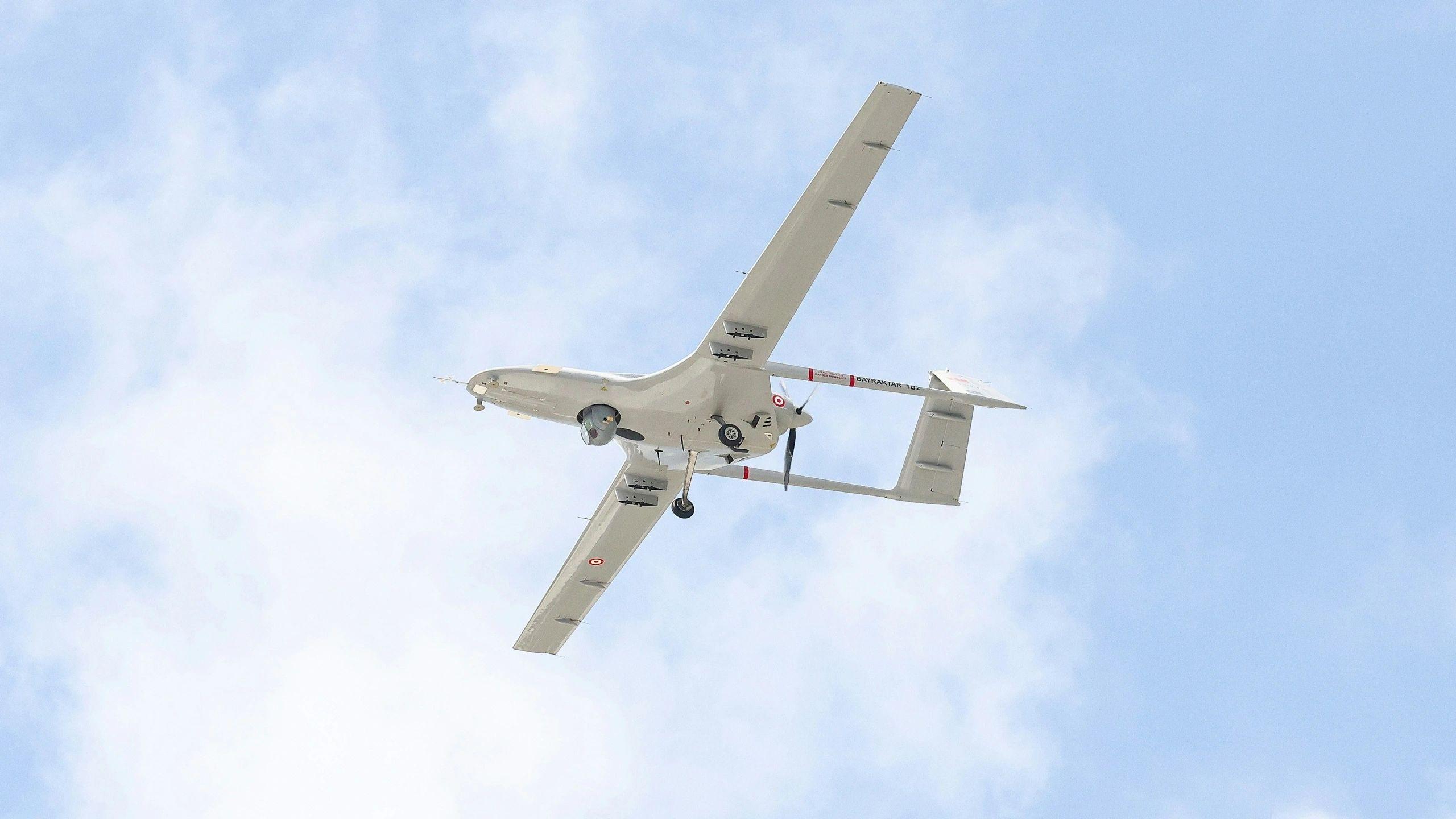
In the current age of unprecedented technological advancement, warfare is not left behind, instead it becomes the very stage where progress is being tested in real time. The geopolitical landscape continues to further complicate both conflict mediation and the science behind conflicts, and very few developments illustrate this more clearly than the rise of UAVs (Unmanned Aerial Vehicles) or a more colloquially used term, drones. Once considered niche surveillance tools, drones have moved to the centre of military strategy, becoming a core part of standard operating procedures, reshaping doctrine and the balance of power on the battlefield. Many questions arise, but the one that needs to be answered in order to guarantee prolific development: what is the current state of drones in conflicts and legislation?
Quick historic overview and individual state assessment
The overall concept of unmanned flight is older than many realize, and has been in use for more than a century. First experimental systems were tested during World War 1 by the United States and Britain, with examples of aerial surveillance pioneers such as the British Aerial Target and the U.S Kettering Bug. Their initial role was to conduct reconnaissance over enemy territory, that would not require a standard piloted aircraft or boots on the ground. Fast forward into more modern times, the next big breakthrough of drones that shed the light on how far unmanned vehicle technology came was in the U.S. The largely produced MQ-1 Predator became a symbol of military-grade drones, serving as a key element in support of counterterrorism operations throughout every major conflict theatre during the Global War on Terror. While it initially served as a long-distance surveillance and reconnaissance tool, the U.S saw the potential of drones and slowly transitioned them into a more offensive and striking oriented role.
The reasons behind the surge of drones are attributed to many factors to be covered later on, but the biggest one to be considered is the commodities surrounding drones for military use. If commodity and practicality are the end goal, fighter jets can only bring the contrary. Taking into account the acquisition cost of a modern fighter jet, which can be downwards of $30 million, the limitations in operations due to risk calculation and pilots that need to be highly trained, the return on investment is on the lower end. On the other hand, drones can be implemented in operations in large quantities and quickly replaced in the case of loss. Depending on the type of drone, it can cost anywhere from $300 to $20,000, which is significantly lower than the cost of acquiring a fighter jet (MarketsandMarkets, 2025). However, drones do not make fighter jets outdated and obsolete, yet, they just represent an alternative in higher-risk settings, where the loss of a drone would not bring as many problems as the loss of a fighter jet. This, in combination with proven utility of drones in conflicts, has led to many countries following in on the trend and investing in drone technologies, creating some of the best battle-ready systems, most notably the: Turkish Bayraktar TB2, Israeli Heron TP, Chinese CH-4 and the Iranian Shahed-136.
In the past, many NATO countries led an ad-hoc stance on drones and their implementation. Now, things are rapidly changing, as unit-level improvisation inspired by Ukrainian tactics is now a deliberate multi-layered programme of record activity (Allen, G.C. 2025). These newly formed strategies are directly influencing platoon-level quadcopters and FPV attack systems being standardized, militarized suppliers getting a fast-track certification in order to produce low-cost drones modeled by ones intended for civilian usage and procurement rules entering the process of rewriting in order to improve the speed of modernization. The shift is largely driven by three interlocking forces:
Combat-proven utility from the Russo-Ukranian war (Nefodova, L., Kushch, V., & Cherneha, T. (2024)
Cheap production and modularity
Political appetite to plug capability gaps with effectiveness.
These forces do not rely on theory and assessments that can be proven faulty, but on basic supply and demand from an ongoing conflict. The two branches in the United States military that are advancing the quickest when it comes to drone technology, the U.S. Army and Marine Corps, have already merged intelligence analysis into policy recommendations and institutional forms. The Army’s Short Range Reconnaissance (SRR) programme already boasts a tracking record of success (Tranche 2 deliveries of Skydio systems are public), where the service is actively pursuing separate FPV/attack drone programmes and tethered systems as formal capability lines (Vergun, D. 2025). Besides technical production, training and doctrine are both changing in parallel: special operations and conventional forces run courses that turn novices into FPV (First person view) drone operators, while the Marines have stood up attack-drone teams that experiment with munition drops and precision one way attacks, all while taking into account the current state and advancements of conventional warfare. At the same time, the Pentagon’s Blue UAS vetting process, as well as the SRR procurement, emphasize western-sourced and cyber-hardened platforms, intentionally moving away from banned or risky commercial vendors that can be possibly sourced by China and Russia. The U.S’s demand is positioned accordingly, and the upshot is a layered approach: certified ISR quadcopters for routine tasks, discrete FPV packages for tactical fires, and larger loitering munitions (LASSO / Switchblade family) for anti-armour and area denial.
France has undergone a significant transformation in its approach to unmanned aerial systems, shifting from the old habitual reliance on external suppliers, to fostering a robust domestic drone industry for both military and law enforcement. This strategic pivot is evident throughout several key initiatives and acquisitions. The French Ministry of Armed Forces has substantially increased its investment in the Novadem NX70 micro-drone. In 2024, a record order of 260 units was placed, bringing the total fleet to over 440 units (UASVision, 2024). This versatile drone, weighing just 1 kg, offers up to 45 minutes of endurance and a range exceeding 3 km, equipped with dual high-definition and thermal cameras. Moreover, in order to address the need for advanced loitering munitions, France launched the Colibri and Larinae programmes. The Colibri, developed by Delair and KNDS, is a short-range system with a 10 km range and 40-minute endurance, designed for tactical strikes (KNDS, 2025). The Larinae, a medium-range munition, boasts a 50 km range and is currently in the testing phase. Moreover, in a bid to enhance logistical resilience, France is trialing mobile "micro-factories" capable of 3D-printing FPV and attack drones on-demand at the front lines. This initiative aims to reduce dependency on centralized production and expedite the replenishment of UAVs in operational theatres.
Russia entered the war with Ukraine with a massively underdeveloped domestic drone industry. It was heavily reliant on imports and civilian platforms, which led to certain struggles in the first few months of the war. Since 2022, sanctions and the loss of access to Western electronics have forced Moscow to accelerate domestic production and expand partnerships with Iran (Höller, 2025). Russia was producing around 50–70 Shahed-type “Geran-2” loitering munitions per month in early 2023 (RussiaMatters, 2025), with output rising to hundreds monthly by late 2024 as production lines in Tatarstan became fully operational. The Russian government dedicated more than ₽243 billion (≈ $3 billion) from 2022–2025 for drone development programmes (Defensenews, 2025), and for the three-year budget, a further ₽112 billion are being allocated for drone research and development programmes and initiatives (DefenseNews, 2025). The state is prioritizing both tactical quadcopters and longer-range strike platforms, with officials claiming that unmanned systems accounted for 40% of new equipment delivered to frontline units in 2024.
Within the Russian drone manufacturing programmes, major companies include:
Kronshtadt Group: The producer of the Orion MALE UAV and the newer Sirius twin-engine system.
Zala Aero (part of Kalashnikov Concern): Leading supplier of reconnaissance drones and the Lancet loitering munition, which has become Russia’s most visible battlefield system.
Ural Civil Aviation Plant (UZGA) which is manufacturing licensed versions of the Forpost UAV, originally based on Israel’s Searcher II.
Special Technology Center (STC) in St. Petersburg, known for the Orlan-10, a mass-produced reconnaissance UAV that has logged tens of thousands of flight hours over Ukraine.
By Russian estimates, tens of thousands of Orlan-10 have been flown since 2022, underpinning artillery targeting and electronic warfare. The Lancet has also been widely deployed, with open-source analysis confirming hundreds of successful strikes against Ukrainian howitzers, air defence systems, and vehicles (Rakesh, A., 2025). All of this demonstrates the ability of Moscow to adapt under pressure: turning an initial technological lag into mass production of cost-effective, attritional tools. Unlike the United States, Ukraine and France, Russia emphasizes volume over product sophistication, aiming to sustain their forces on the frontlines with expendable drones, rather than pursue high-end stealth or strike UAVs.
Since Russia's full-scale invasion in 2022, Ukraine has rapidly transformed its industry from a grey secluded sector into a cornerstone of its defence strategy. Initially dependent on foreign UAVs, the first few months of the war were tough for Ukraine. However, in the midst of the chaos, creativity opened another door to drone warfare through the adaptation of civilian drones. Even in 2025, both Russian and Ukrainian forces still heavily rely on off-the-shelf consumer-grade quadcopters (mostly DJI models), as their versatility and modifiability have been something that was so convenient, it ended up transcending the expected timeframe. Currently, Ukraine boasts a robust domestic production capacity, significantly altering the dynamics of how they are fighting the war. In 2024 the drones used by the Ukrainian military that were domestically constructed were at a staggering 94% (Андаліцька, І. , 2024), where companies like Airlogix, Skyeton, Antonov and Vyriy are adapting to the demand of the frontlines. In 2025, the country aims to produce approximately 4.5 million drones in 2025, which represents a significant rise from 1.5 million in 2024, marking a threefold increase in just twelve months. Monthly production of FPV drones has escalated from 20,000 in 2024 to over 200,000 in 2025, reflecting a 900% growth (Kiev post, 2025).
In retrospect, four consequences matter and are common for the above mentioned countries. First, proliferation of low-cost lethality: the marginal cost to field a tactical FPV strike is now measured in hundreds or low thousands of dollars rather than millions. Second, industrial agility has become as important as unit doctrine. Mobile production, 3D printing and rapid-contract frameworks shorten the fielding cycle and favour nations that can iterate quickly. Third, force-design adaptation: brigades and battalions now plan for organic drone-fires and counter-drone defence in their Table of Organisation and Equipment. Finally, logistics and legal questions multiply: sustainment chains, cyber-secure supply, and export controls (Blue UAS lists) are now a core component of readiness. These systemic changes show not simply a tweak to equipment lists, but a reordering of how armies think about manoeuvre, fires and force protection.
Key takeaways from Recent Conflicts
Nagorno-Karabakh (2020): Azerbaijan’s effective use of Turkish drones gave an early insight on how UAVs can be a cheaper alternative to aircrafts in waging a conventional war. It raised a question early on on counter-drone strategies and the needed integration of unmanned systems into the armed forces.
Ukraine (2022–present): No conflict has relied on drones as heavily. Both Russia and Ukraine deploy thousands of systems, from long-range strike UAVs to improvised DJI Mavic Drones. They shape the tempo of combat, offering constant surveillance and rapid targeting. Ukraine’s domestic industry, spurred by necessity, has become a case study in wartime innovation (Georgetown SSR, 2025) , delivering cost-effective systems at scale. New trends, such as the Fiber optic drones, which allow for the jamming systems not to interfere with the flight of a drone, have further caused chaos on both sides.
Middle Eastern Conflicts: Beyond state militaries, non-state actors employ drones in their operations, such as the Houthis in Yemen against Saudi and Emirati infrastructure and Hezbollah in Lebanon against Israeli forces, which have warned about the advancements seen in Hezbollah’s drone programme. This occurrence shows the independence drones are coming with, as it allows non-state actors and groups without sufficient funding to still expand their drone programme for the fraction of a cost it takes a state military.
What does the future hold?
To conclude, as people advance, technology advances, which ultimately leads to warfare advancing. The current trajectory of drone warfare suggests not a temporary adaptation, but a structural shift in how state and non-state actors approach conflict through a technological lens. This shift holds several implications: drones are democratizing airpower while reducing the threshold for offensive operations; drones are indirectly forcing militaries to integrate aerial reconnaissance, drone operations and counter-drone measures at every respective level of planning. And as drones accelerate on logistical, industrial and doctrinal transformations, the next phase will likely see autonomous offensive swarms of drones, AI-driven targeting systems and on-demand domesticated production of drones.
At its core, drones no longer represent a supportive tool that can be used selectively, instead, drones have become a standard operating procedure that will only continue to branch out through the military ecosystem. In order to balance out technological innovation in the military and keep it up-to-date, policymakers and consultants need to discover trends much faster, and look to anticipate both the operational and the ethical consequences of widespread UAV development. This can include robust legal frameworks, ensuring compliance with international law and setting clear rules of engagement to prevent unwanted outcomes. Ultimately, drones have irreversibly added onto the evolution of warfare, shaping it in both character and conduct. Only time will show what technological advancements will contribute further to conflict, and everyone must be ready for it.
Bibliography
MarketsandMarkets. (2025, May). Military drone (UAV) market size, share & trends, 2025 to 2030 (Report No. AS6717). https://www.marketsandmarkets.com/ResearchInsight/military-drone-industry-evolve-by-2030.asp
Allen, G. C. (2022, May 13). Across drones, AI, and space, commercial tech is flexing military muscle in Ukraine [Commentary]. Center for Strategic and International Studies. https://www.csis.org/analysis/across-drones-ai-and-space-commercial-tech-flexing-military-muscle-ukraine
Nefodova, L., Kushch, V., & Cherneha, T. (2024). Global arms market transformation and the rise of drone warfare: Strategic lessons from Ukraine’s experience. Political Science and Security Studies Journal, 5(3), 62–67. https://www.researchgate.net/publication/391927466_Global_arms_market_transformation_and_the_rise_of_drone_warfare_strategic_lessons_from_Ukraine's_experience
Андаліцька, І. (2024, December 28). Виробництво дронів в Україні: у Міноборони розкрили приголомшливі цифри. УНІАН.
Vergun, D. (2025, July 16). Pentagon to increase low-cost drone production in U.S. [News article]. U.S. Department of Defense.
UAS Vision. (2024, June 19). Novadem gets order for 260 NX70 drones from the French Ministry of the Armed Forces. UAS Vision. https://www.uasvision.com/2024/06/19/novadem-gets-order-for-260-nx70-drones-from-the-french-ministry-of-the-armed-forces/
Struck, J. (2025, July 8). Ukraine’s drone output soars 900%, producing 200K UAVs a month. Kyiv Post. https://www.kyivpost.com/post/55897
Höller, L. (2025, July 31). Behind attacks on Ukrainian cities, Russia is building a drone empire. Defense News.
Russia Matters. (2025, August 22). Russia in review, Aug. 15–22, 2025. Russia Matters. Retrieved from https://www.russiamatters.org/news/russia-review/russia-review-aug-15-22-2025/
Rakesh, A. (2025, June 7). Russian Lancet drones claim over half of NATO-supplied M109 howitzers in Ukraine. DefenseMirror. https://www.defensemirror.com/news/39625/Russian_Lancet_Drones_Claim_Over_Half_of_NATO_Supplied_M109_Howitzers_in_Ukraine/
KNDS. (2024, June 19). KNDS makes record-breaking progress on loitering ammunition.https://knds.com/en/press-releases/knds-makes-record-breaking-progress-on-loitering-ammunition