
What is Failing in the European Project
19 min read · 3,830 words
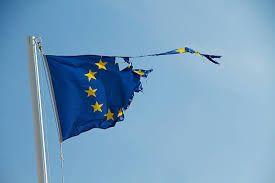
As Europe faces a rapidly changing world, with threats to its security and prosperity arising from both rivals and perceived allies such as the United States, the European Union and its project has sought to present itself as a symbol of moral decency and stability in such unstable times (Official Journal of the European Union, 2016). Yet, while European leadership may seem confident that this is how their image is portrayed, an outside perspective depicts a rather different picture, one of a union and project uncertain, if not devoid, of its own direction.
It is in our view, as British observers outside of the European Union and European Project, that this deficiency is centred on two core challenges. The first is the enduring struggle to achieve a genuine strategic autonomy across political, economic and security fields, coupled with an absence of any sense of a coherent industrial action. The second is the inconsistency in the upholding of the project’s guiding principles and values, displayed most apparently in its fragmented responses to matters of immigration and the conflicts in Ukraine and the Middle East. Such incoherence paints an image, both to the outside world and those within, that this is an organisation captured by differing national priorities and a lack of collective purpose.
As a consequence, this represents one final, overarching challenge. The EU, and its project, has gradually become an institution that merely persists, but ceases to inspire. It is simply here, with no clear direction or end goal.
This article, therefore, aims to further highlight these challenges in the hope that a crucial reflection and recalibration may take place, before we risk seeing the project’s founding ambition entirely fade away.
An Independent Europe - Lack of Autonomy
Emerging from the rubble of two World Wars, the European Project was conceived as an ambitious promise of unity, identity, and prosperity (Official Journal of the European Union, 2016). It sought to create not only an economic bloc, but a distinct European power capable of self determination in an increasingly polarized world. Yet today, the European Union’s aspiration to act as an autonomous global actor remains more rhetorical than real. From defence and energy to digital infrastructure and trade, Europe's dependency on external powers, namely the United States (US) and China, continues to erode its claim to true sovereignty. The dream of an ‘independent Europe’, as envisioned by the likes of Charles de Gaulle or Jean Monnet, appears increasingly constrained by structural dependencies and internal fragmentation (Vanke, 2017). The result is a continent caught between moral idealism and strategic impotence: a Europe that speaks the language of autonomy, but acts within the limits of reliance.
At the heart of this contradiction lies the issue of strategic autonomy, the EU’s ability to define and pursue its own unique interests without being subordinate to other powers. The 2016 ‘EU Global Strategy’ formally recognized the need for Europe to take greater responsibility for its own security (Damen, 2022). Yet, Russia's invasion of Ukraine in 2022 brutally demonstrated that Europe’s capacity for independent action remains deeply underdeveloped: the US, via Nato continues to provide the backbone of European defence with a report from the International Institute for Strategic Studies finding that Europe’s defence industry is unlikely to fully replace key U.S capabilities in the air and maritime domains in the next decade (Besch, 2025). Further, the US remains the single largest donor to Ukraine, having provided $122 billion in financial, humanitarian, and military assistance between January 24th 2022 and December 31st, 2024, compared to the EU’s $121.2 billion (Gutterman, Foltynova & Sijamija, 2025). Washington’s financial, logistical, and intelligence support have been indispensable in sustaining Ukraine’s war effort, exposing the uncomfortable reality that European security is still largely outsourced. While member states have announced record defence budgets, fragmentation and duplication persist across national lines, preventing the emergence of a unified, autonomous European military capability.
In this context, the rising tide of President Trump’s overt antagonism towards the European Union serves as a catalyst to Europe’s strategic weakness. Trump’s position, marked by snide comments, aggressive tariff threats, dismissal of multilateral commitments, and open skepticism of European defence contributions, has exposed European fragility on the global scale. For instance, the Trump administration has threatened tariffs of 50% on European imports, showcasing that Trump is not hesitant to impose economic sanctions on a once historic ally (Hagan, 2025). Similarly, Europe’s dependence on US security guarantees remains exposed. As experts note, the Trump administration regards many European allies not as partners but as ‘clients’, pushing nations to pay more or to be left out of the shield completely (Bergmann, 2025). In trade policy, Europe’s diplomatic responses appear inconsistent and display an unwillingness to stand up for the ideals of the project and its citizens. The Turnberry trade agreement set upon a 15% tax on European exports while American exports are duty free (Smith, 2025). This came after the EU was aiming for a balanced free trade agreement, and it threatened retaliation, but surrendered immediately, handing Donald Trump a victory. This disastrous notion was further perpetuated in the eyes of the public, with 77% of Europeans believing the agreement primarily benefits the US economy, 60% wanting Ursula von der Leyen to resign, and 52% feeling ‘humiliated’ (Lefebvre, 2025). This upshot of what was once a reliable alliance of shared values is now characterized by unilateralism and bargaining. Europe must come to grasp the harsh reality that its strategic environment can no longer assume American reliability. In this unpredictable Trump era, US foreign policy thus functions as a diagnostic mirror, exposing Europe's dependencies and bringing forth the reality that European autonomy is far from achieved.
Beyond security and economics, Europe’s political autonomy is undermined by its own internal contradictions. As political scientist Simon Rio defines: political autonomy is the ability to ‘identify desirable political goals’ and work towards their implementation (Rio, 2024). And building political autonomy would therefore mean working on the ability of European states to hold and maintain a common position on foreign and security policy matters (Rio, 2024). Yet based on this principle, the EU finds itself caught up in a double edged sword. First, a fragmentation of strategic culture across its 27 member states and second, a slow and ineffective decision making procedure that remains consensus oriented and therefore slow.
The most salient issue threatening Europe’s political autonomy is the diverging and often clashing geopolitical and national priorities across member states. Fueled by domestic and economic crises across the continent, political deadlock across the EU has become something common. This polarisation is especially true in regards to outlooks on Ukraine. For example, since the start of Russia's invasion of Ukraine, Hungary has consistently seized every opportunity to block support for Ukraine or obstruct sanctions against Russia whenever a unanimous vote among EU countries was required (Muller & Slominski, 2025). In Germany, Chancellor Scholz blocked $3.1 billion in aid, Poland avoided any discussion of peacekeeping troops in a possible US brokered deal, and Romania's ultra-nationalist candidate Cǎlin Georgescu parroted Putin’s line that Ukraine is an ‘invented’ country (Momtaz, 2025). This highlights how even in the face of a clear and existential security threat, the European Union remains divided by competing domestic agendas and conflicting political ideologies.
Moreover, the institutional architecture of the EU still reflects an intergovernmental bargain that prioritises national sovereignty over collective drive. Foreign and security policy often requires unanimity, national capitals retain vetoes, and the decision making process tends towards lowest common denominator outcomes. Yet the problem extends beyond decision making paralysis. The EU’s strategic autonomy agenda increasingly pushes through EU only regulations, without accounting for the economic diversity of its members. Policymakers frequently assume that the Union functions like a single homogenous economy with equal access to capital, skilled labour and comparable purchasing power, when in reality its member states are diverse in their industrial structures, development paths and regulatory readiness (Bauer, 2022). Larger Western economies, home to far bigger firms, are better equipped to absorb regulatory costs and to adapt to new technologies (Bauer, 2022), while smaller or newer member states often struggle to comply, deepening existing discrepancies within the single market. As the ECIPE 2022 policy brief notes, EU assessments are ‘typically silent’ on these uneven effects, widening intra-European inequalities (Bauer, 2022). The result is a governance model that both fragments political authority and amplifies economic imbalance, undermining the very autonomy and cohesion the European Project claims to advance.
In essence, Europe's claim to independence remains a work in progress, existing now as more of a vision than a reality. Despite decades of integration and institutional maturity, the European Union still finds itself bound by dependencies: military, economic, and political, that constrain its ability to act as a unified global power. The reliance on US military support, exposed by the war in Ukraine, underscores a deep strategic incapacity. The Trump era has magnified these vulnerabilities, revealing that Europe’s security, prosperity and international standing remain fragile and easily influenced by international actors. Internally, the Union’s fragmented decision making structure and diverging national interests continue to paralyse its capacity for coherent action, while regulatory overreach, often detached from the economic realities of its member states only serving to perpetuate internal inequality. Thus, if Europe is to achieve genuine autonomy, it must reconcile its normative ideals with the pragmatic demands of an increasingly volatile world order. That means developing the means to defend itself, crafting policies that reflect its internal diversity, and cultivating a political culture capable of unity in crisis. Without this transformation, the EU risks remaining a formidable economic power and moral voice, yet one whose sovereignty remains conditional upon the will of others.
A Lack of Coherent Principles - Immigration & Conflict, Values Under Strain
For much of the EU’s existence, great effort has been made to present the organisation as one which transcends national division and establishes itself as a shining beacon of principled moral authority, a defender of human rights and a vehement upholder of international law. Yet, in the recent years and decades, this image has become harder to maintain. A disconnect, between the values Europe rhetorically subscribes to and the actions in which they actually undertake, has become evermore apparent. This has been made most clear in two particular domains: its handling of the immigration and asylum issue, and its unequal responses to the conflict in Ukraine and the conflict in Gaza. These examples, long lasting but still fresh in the memories of citizens, paints an image of not just a failure of coherence by Europe’s leadership, but also of a deeper uncertainty about what the Union, and the European Project as a whole, truly stands for in a rapidly changing world.
The matter of immigration and asylum has long served as a test of the EU’s moral consistency, particularly in the past decade or so following the refugee crisis in 2015 (Spindler, 2015). From an official standpoint, the Union’s approach is based on the values set out in the treaties of the EU, with the core principles of respect for human rights and shared responsibility forming the central concept of its policy towards this matter, coinciding with a strong emphasis on the need to uphold international humanitarian law (European Commission, n.d.; Official Journal of the European Union, 2016). While the world witnessed these principles put into practice, with over a million refugees taken in by member states in 2015 during the crisis unfolding in Syria, we have gradually seen European action depart from such ideals (Pew Research Centre, 2016).
Though numbers entering Europe have dropped drastically since 2015, with the average volume of entries hovering around 200,000 each year, this issue has very much become a political matter, both domestically for member states and for the Union as a whole (Keane, 2025). With a rise of parties pushing for policies to better control migration, a distinct political impulse to shift towards migration control from a more accommodating policy has become increasingly entrenched in the public discourse. A 2024 Euronews & Ipsos poll provides a clear picture of a growing disillusionment of EU citizens with current policy and how the migration debate has drifted away from a matter of collective moral responsibility (Liboreiro & Genovese, 2024). The poll recorded approximately 51% of citizens viewing the EU’s policy in a negative light, with less than 20% expressing support for the Union’s current trajectory. As a consequence, EU leadership has begun pursuing a path to comply with this shift in attitude.
This was most overtly and recently expressed following the finalisation of the EU Pact on Migration and Asylum in 2024, which critics (such as Amnesty International and Save the Children) have both described and condemned as an 'ill-functioning, costly and cruel system' that prioritises more rapid deportations at the expense of fundamental human rights (Carbonaro, 2023). The pact specifically provides legal ground for extended detentions and the further outsourcing of responsibilities to other countries, such as Libya and Tunisia, which has seen notable criticisms due to reports of repeated violations of international humanitarian law.
It is with this apparent ‘rhetoric-reality’ gap that, from an outside perspective, there is a clear erosion of the EU’s image as a morally coherent institution (Amorim, 2022). To preach the importance of adhering to humanitarian law and moral values, while simultaneously instituting barriers and harsher policies that are out of step with such principles, depicts the EU as a group of convenience, rather than a long term principled community.
Yet immigration and asylum is not the only area where this deficiency is laid to bare. Within the past three to four years, Europe has found itself involved in varying capacities with conflicts on its border in Ukraine, and a tad further beyond in the Middle East. It is in comparing the reaction to these two conflicts that we again see not just a lack of coherent principles, but also a blatant double standard which greatly damages the credibility and moral ambition of the EU and the European Project as a whole.
We saw the EU’s values and principles acted upon rather immediately following Russia’s invasion of Ukraine in February 2022. Refugees were accepted, strict and severe sanctions packages were imposed and vast amounts of military and financial resources were pooled across the union and dispatched to support Ukraine’s efforts to defend itself (European Council & Council of European Union, 2025). Even to this day, Europe has acted in alignment with its values of respect for international law on the matter of Ukraine. However, when it comes to the dire humanitarian situation that took place primarily in Gaza over the past two years (and only recently seeing some hope to be resolved following the ceasefire agreement), a different story is once again told (Cornwell & Lubell, 2025).
As the conflict intensified following 7 October 2023, and the humanitarian situation became increasingly severe, the EU and relevant European leadership failed to present any form of decisive action that would uphold the moral values and authority that was confidently displayed not so long before. The mixed reaction to the issuance of ICC arrest warrants for Israeli leaders (alongside the Hamas leadership) highlighted this for observers both within and outside the EU (Paternoster & Dom, 2024). Many of the same European countries who praised institutions of international law like the ICC when it issued warrants for Putin’s arrest were now showing almost a 'lack of equal enthusiasm' when the same process was applied to a country (Israel) that was perceived to be an ally (EEAS Press Team, 2023).
Such a contradiction is apparent to the EU’s own diplomats, with the EU’s former Ambassador to Palestine, Sven Kühn von Burgsdorff, and former EU foreign policy chief, Josep Borrell, both stating that division amongst the EU states in addressing the humanitarian in Gaza and putting pressure on Israel to adhere to international law has led to a global perception of the EU as an organisation of double standards, and therefore damaging their image with the wide world, particularly with Global South nations where the EU hopes to establish strong partnerships (Vasques, 2025; Sanchez Nicolas, 2025). Borrell added, in quite a clear depiction of severity of the double standards, that the EU had a legal obligation to sanction Israel, and that European 'impotence and passivity' on the issue made it seem that to Europe, 'the life of a Palestinian would not be worth as much as that of a Ukrainian.' (Borrell, 2025; Bir 2024).
It is in these domains of both immigration and conflict, where a coherence of moral principles is most needed, that we see the EU repeatedly fail. An inability to conduct its responses to various challenges in a uniform way is gravely damaging to the ambitions of Europe and its project, for it presents itself as an organisation that merely talks values but acts selectively, only choosing to uphold stated morals only when it is convenient or beneficial. This is not a foundation in which the European Project can prosper, as an organisation or institution that cannot stand up for its principles under any circumstance does not have any principles, and therefore no guiding purpose to inspire support.
Conclusion
In conclusion, the examination of the European Project reveals, on one hand, a novel entity that has reshaped and pioneered how the world sees Europe. Yet, in recent decades, has increasingly functioned as a power that persists without a clear, inspiring purpose. Its foundational pillars, the aspiration of unity, global self-determination and moral leadership can all be seen to be undermined by the very challenges highlighted in this analysis.
First, the dream of a truly independent Europe remains far from achieved, faced with both external influences and internal fragmentation. The narrative of strategic autonomy rings hollow when exposed to the harsh realities of the global stage, particularly in light of the war in Ukraine and the unpredictability of the Trump Era. The reliance on the US as the backbone of European security, coupled with internal political deadlock and a lack of clarity in direction, betrays the principles which the EU forged upon. It risks becoming an object of geopolitical competition rather than an autonomous actor. Simultaneously, the lack of a coherent industrial strategy and a fractured decision making process prevents the Union from translating its economic might into tangible geopolitical sovereignty.
This strategic deficit is compounded by a profound failure of moral coherence. The shift towards harsh, exclusionary policies on immigration and asylum and the blatant double standards displayed in its response to conflicts in Ukraine versus the Middle East has severely tarnished the EU’s image as a principled global defender of human rights. This selective application of values suggests a Union driven by convenience rather than conviction, undermining its credibility with both the Global South and its own citizens.
Ultimately, the confluence of strategic dependency and moral hypocrisy has led to the final, overarching failure: the loss of inspiration. The EU risks becoming an institution solely dedicated to managing the status quo rather than an agent of change, merely existing with no true compelling vision for the future. To reverse this course, the European project must undertake an urgent and critical reflection, redeveloping the collective will that birthed the Union and striving for genuine autonomy and to reconcile its actions with its stated values. Without this transformation, the EU will remain a formidable economic zone, but one whose founding ambition has quietly faded away, leaving behind an entity that has ceased to inspire and imagine.
Bibliography:
Amorim, J. (2022). EU Migration Policy: The EU as a Questionable Actor and a Realist Power. [online] E-International Relations. Available at:
Bauer, M. (2022). The Impacts of EU Strategy Autonomy Policies - A Primer for Member States EXECUTIVE SUMMARY. [online] ECIPE. Available at: .
Bergmann, M. (2025). Transatlantic Relations Under Trump: An Uneasy Peace. [online] Csis.org. Available at:
https://www.csis.org/analysis/transatlantic-relations-under-trump-uneasy-peace.html
Besch, S. (2025). How must Europe reorganize its conventional defense? [online] Brookings.
Available at:
Bir, Burak. (2024). Europe’s responses to Ukraine, Gaza wars often seen as showing double standard: Borrell. [online] Anadolu Agency. Available at:
Borrel, J. (2025). By failing to sanction Israel, EU leaders are complicit in its crimes. They must act now. [online] The Guardian. Available at:
Carbonaro, G. (2023). ‘An ill-functioning, costly and cruel system’: NGOs condemn EU’s new legislation on migration. [online] euronews. Available at:
Cornwell, A. & Lubell, M. (2025). Details of the Gaza ceasefire agreement. [online] Reuters. Available at:
Damen, M. (2022). BRIEFING EU Strategic Autonomy Monitor. [online] Available at: https://www.europarl.europa.eu/RegData/etudes/BRIE/2022/733589/EPRS_BRI%282022%29733589_EN.pdf? [Accessed 21 Oct. 2025].
EEAS Press Team. (2023). Russia/Ukraine: Statement by the High Representative following the ICC decision concerning the arrest warrant against President Putin. [online] The Diplomatic Service of the European Union. Available at:
European Commission. (n.d.) Migration and asylum. [online] European Commission. Available at:
European Council & Council of the European Union. (2025). Timeline - EU response to Russia’s war of aggression against Ukraine. [online] European Council & Council of the European Union. Available at:
Gutterman, I., Foltynova, K. and Sijamija, M. (2025). Who Spends More On Ukraine Aid: The US Or EU? [online] RadioFreeEurope/RadioLiberty. Available at: .
Hagan, R. (2025). Trump agrees to extend EU trade talks after 50% tariff threat. [online] BBC News. Available at:
Keane, F. (2025). Migrant crisis: How Europe went from Merkel’s ‘We can do it’ to pulling up the drawbridge. [online] BBC News. Available at:
Lefebvre, M. (2025). Europeans and Trump: dishonour, impotence or influence? [online] Robert-schuman.eu. Available at:
Liboreiro, J. & Genovese, V. (2024). Half of Europeans disapprove of EU migration policy and demand stronger border controls, poll shows. [online] euronews. Available at:
Momtaz, R. (2025). Europe’s Broken National Politics Hamper its Geopolitical Power. [online] Carnegie Endowment for International Peace. Available at: .
Muller, P. & Slominski, P. (2025). Trading vetoes for money - how Hungary holds EU foreign policy hostage. [online] LSE Europe Blog. Available at:
Official Journal of the European Union. (2016). Consolidated Versions of the Treaty on European Union and the Treaty on the Functioning of the European Union. [online] Official Journal of the European Union. Available at:
Paternoster, T. & Dom, E. (2024). European leaders give mixed reactions on Netanyahu’s war crimes arrest warrant. [online] euronews. Available at:
Pew Research Centre. (2016). Number of Refugees to Europe Surges to Record 1.3 Million in 2015. [online] Pew Research Centre. Available at:
Rio, S. (2024). European Strategic Autonomy: How Realism Best Explains Why It Remains a Failure. [online] E-International Relations. Available at:
Sanchez Nicolas, E. (2025). Borrell speaks out on the EU’s ‘double standards’ on Gaza, and US tariff failure. [online] euobserver. Available at:
Smith, S. (2025). EU and US agree trade deal, with 15% tariffs for European export to America. [online] BBC. Available at:
Spindler, W. (2015). 2015: The year of Europe’s refugee crisis. [online] UNHCR UK. Available at:
Vanke, J. (2017). 6. Charles de Gaulle’s Uncertain Idea of Europe. Oxford University Press eBooks. Oxford University Press. doi:.
Vasques, E. (2025). EU credibility at risk over Israel stance, warns ex-ambassador. [online] euronews. Available at: