
A System Designed to Fail? The Limits of Asylum Reception in Spain
by Antonino Enrico Repaci
7 min read · 1,495 words
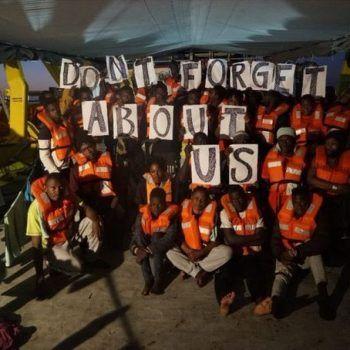
Following the 2015 European immigration and ‘refugee crisis’, a substantial influx of undocumented migrants reached the European borders, leading to a large-scale humanitarian and reception challenge that mainly affected Southern European countries, including Greece, Italy, and Spain. Ever since 2015, the Spanish asylum system and its associated refugee reception programs have gone through a period of intense volatility and structural strain (Iglesias et al., 2024; Iglesias & Bermejo, 2025). In this regard, while populist narratives often center on the ‘crisis’ as caused by a massive increase in applications, rising from 5,615 in 2014 to over 117,000 in 2022 (Iglesias et al., 2024), the existing empirical literature reveals that the systems failings are rooted in long-term structural deficits, a restrictive political-institutional paradigm and a fragmented governance model, with the latter operating as a ‘reception assembly line’ that prioritises deterrence and short-term emergency management over sustainable social integration (Bris & Bendito, 2017).
The primary driver of the Spanish asylum systems dysfunction is a restrictive institutional setup designed to limit and externalise the management of potential applicants (Iglesias & Bermejo, 2025). This model seeks to avoid the economic and political ‘burden’ of refugees, fearing that a well-resourced system would act as a ‘magnet effect’ (efecto llamada) for new arrivals (Gabrielli et al., 2021). Consequently, Spain has reinforced border controls and externalised migration management through agreements with countries like Morocco (Boza-Martínez & Pérez-Medina, 2019). For the same reasons, Spain has traditionally prioritised labor migration over the right to asylum, with the state maintaining a laissez-faire policy where migrants enter regularly (often as tourists), remain irregularly to provide cheap labor for intensive economic sectors and eventually regularise their status through the arraigo (settlement) mechanism. However, this ‘factory of irregularity’ effectively transforms potential refugees into informal economic migrants, as evidenced by rejection rates for international protection that reached 87% in 2021 and 92% in 2022, far above the European average (Iglesias et al., 2024).
As far as refugees and asylum seekers are concerned, the Spanish Reception System (SA) is theoretically structured into three phases: initial assessment, a six-month reception phase in centers, and a six-to-twelve-month autonomy phase (Garcés-Mascareñas & Moreno-Amador, 2019; Bris & Bendito, 2017). However, a ‘clot’ exists throughout this process: structural delays in formalising asylum applications mean seekers often wait months for an initial interview, during which they have no legal right to work or access formal reception resources, often forcing them into homeless shelters or exploitative living conditions (Iglesias & Bermejo, 2025).
Once inside the system, Iglesias et al. (2024) highlight a dissonance between the SAs rigid intervention model and the heterogeneous profiles of refugees. For instance, they report that Latin American applicants, who accounted for 87% of all applications in 2022, often possess strong established networks and linguistic skills that make the compulsory, supervised first phase counterproductive to their integration. Conversely, highly vulnerable refugees are often pushed into the ‘autonomy phase’ before they are psychologically or economically ready. This results in secondary displacements, where refugees abandon assigned spots in peripheral provinces to move to Madrid or Barcelona in search of job opportunities and ethnic support networks, effectively wasting previous integration efforts (Iglesias & Bermejo, 2025).
Delving deeper into immediate reception policies, Spain has developed a two-pronged management approach based on nationality, utilising different types of centers (Boza-Martínez & Pérez-Medina, 2019). Migrants from the Maghreb are typically funneled through police stations to Internment Centres for Foreign Nationals (CIEs) for rapid deportation, enabled by specific return agreements, while Sub-Saharan migrants are more likely to be held in Short-Term Assistance Centres (CATEs). The latter are a relatively new and controversial addition, functioning as ‘large outdoor prisons’ (Boza-Martínez & Pérez-Medina, 2019) managed by the police without a specific regulatory framework. While the government labels them as reception centers, empirical evidence highlights their nature of instruments of law enforcement where security criteria eclipse humanitarian aid. For instance, conditions in facilities at southern ports like Motril and Malaga have been decried for violating basic standards, with detainees sometimes sleeping on floor mats in unheated, overcrowded rooms. Following the 72-hour detention limit in CATEs, those not interned in CIEs may be referred to Assistance, Emergency and Referral Centres (CAEDs), which focus more on humanitarian needs but suffer from a lack of transparency and public oversight due to being outsourced to NGOs (Boza-Martínez & Pérez-Medina, 2019).
The living conditions of immigrants in reception centers are further worsened by the failure of multilevel governance, as the system is highly centralised under the State, yet implementation is almost entirely privatised/outsourced to NGOs (CSOs): in 2018, NGOs managed 94% of reception places, up from approximately 50% in 2015 (Garcés-Mascareñas & Moreno-Amador, 2019). This model creates a ‘negative protectorate’ where NGOs become the ‘executive and visible arms’ of restrictive state policies, often fearing to denounce the state because they rely on it for funding (Iglesias et al., 2024). Additionally, a persistent lack of coordination between the central state and regional/local administrations decreases the costs of non-compliance: municipalities like Barcelona have historically challenged this centralisation, even bringing the state to court to argue that social assistance is a regional competence (Garcés-Mascareñas & Moreno-Amador, 2019). This is often described as a ‘balkanisation’ of resources, where local governments create parallel emergency programs because the state system fails to provide long-term housing, leaving families on the street once their formal 18-month eligibility expires (Iglesias et al., 2024).
This situation is then particularly dire for unaccompanied migrant minors in Andalusian protection centers (Gómez-Vicario & Gutiérrez-Sánchez, 2024). Interviews with these youths reveal a climate of conflict and mistrust between residents and staff, with frequent situations of violence, psychological abuse, and the denial of religious freedom, such as educators beating minors during prayer or mocking cultural identity. Moreover, the analysis by Gómez-Vicario & Gutiérrez-Sánchez (2024) further reveals that many centers use a ‘token economy’ system where minors are stripped of basic privileges like phone use or outings for minor infractions without explanation, which triggers extreme behaviours and escapes. Institutional abandonment is further highlighted by reports of sexual abuse by staff and poor sanitary conditions, including roof leaks and rat infestations. These factors contribute to high mobility between centers, as minors are frequently moved between programs (RECEP, E/D, ISL) based on available slots rather than their best interests.
Consequently, the environment of the Spanish asylum system has a quantifiably negative impact on mental health (León-Pinilla et al., 2020; Paloma et al., 2025). In this regard, a study of CIE detainees found that 69% reached ‘clinical distress’ levels for anxiety and depression, with 19.5% attempting self-harm while interned (Paloma et al., 2025). Crucially, 71.3% of these symptoms began after entering the detention center, emphasising that the system itself is a traumatic experience (Paloma et al., 2025).
Social integration outcomes are equally poor (Iglesias & Bermejo, 2025). While healthcare and legal aid are relatively accessible through NGOs, finding employment, stable housing, and sufficient money remain the greatest barriers (León-Pinilla et al., 2020). More specifically, most refugees are occupationally segregated into low-wage, manual labor, earning 50% less than native-born Spaniards (Iglesias & Bermejo, 2025), and, although many refugees speak multiple languages (English, French, Arabic), they often lack the social support networks necessary to navigate the Spanish bureaucracy.
Bibliography
Boza-Martínez, D., & Pérez-Medina, D. (2019). New migrant detention strategies in Spain: Short-term assistance centres and internment centres for foreign nationals. Paix et Sécurité Internationales - Journal of International Law and International Relations, 7, 261–278.
Bris, P., & Bendito, F. (2017). Lessons learned from the failed Spanish refugee system: For the recovery of sustainable public policies. Sustainability, 9(8), Article 1446.
Gabrielli, L., Garcés-Mascarenas, B., & Ribera-Almandoz, O. (2021). Between discipline and neglect: The regulation of asylum accommodation in Spain | Journal of Refugee Studies | oxford academic. Journal of Refugee Studies.
Garcés-Mascareñas, B., & Moreno-Amador, G. M. (2019). The multilevel governance of refugee reception policies in Spain (CEASEVAL Research on the Common European Asylum System, No. 18). Technische Universität Chemnitz.
https://ceaseval.eu/publications/WP3_Spain.pdf
Gómez-Vicario, M., & Gutiérrez-Sánchez, J. D. (2024). The situation of unaccompanied migrant minors and young people in shelters and protection centers in Andalusia (Spain). Residential Treatment for Children & Youth, 41(1), 95–112.
Iglesias, J., Bermejo, R., & Bazaga, I. (2024). Beyond the asylum‐applications growth: The limits of the Spanish refugee reception program. International Migration, 62(2), 135–150.
Iglesias, J., & Bermejo, R. (2025). Welcome refugees? The asylum system in Spain. Latin American Perspectives, 52(2), 182–199.
León-Pinilla, R., Soto-Rubio, A., & Prado-Gascó, V. (2020). Support and emotional well-being of asylum seekers and refugees in Spain. International Journal of Environmental Research and Public Health, 17(22), 8365.
Paloma, V., Benítez, I., Agüero-Collins, A., López-Núñez, C., & Saavedra-Macías, F. J. (2025). Perceived detention environment and mental health of detainees in immigration detention centers in Spain. Journal of Racial and Ethnic Health Disparities, 12, 1446–1457.