
An Analysis of EU Visa Regime to Turkey: Who is to Blame?
By Egemen Aray
By Egemen Aray
12 min read · 2,305 words
Introduction
Passport unboxing is a relatively new social media trend among Turkish citizens. Resembling influencers' videos of unboxing PR packages, Turkish citizens now often record themselves unboxing their passport after Schengen visa applications to see whether they were rejected. During the past few years, Turks' frustration with the EU visa regime grew. In 2024, Turkey had the second most Schengen visa applicants with more than 1.17 million applications. Their ejection rate, though, increased from 4% in 2014 to 14.5% in 2024 (SchengenVisaInfo, 2022).
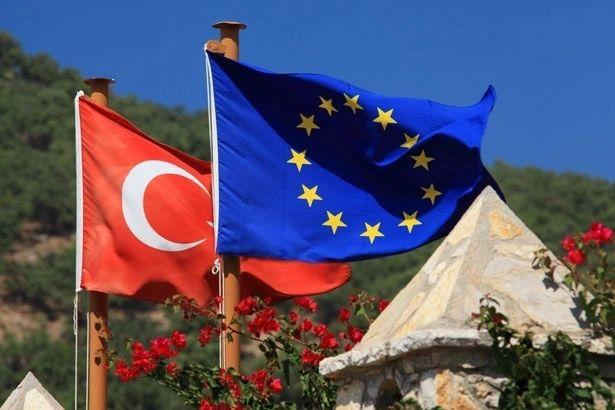
Turkey and the EU relations have always been unstable. Accession negotiations for Turkey’s full membership started in 2005. During the first AKP (Justice and Development Party) administration, there was some slow progress (European External Action Service, 2021). Out of 35 chapters Turkey needed for full membership, negotiations were started on 15 of them. France and Cyprus vetoed opening new chapters in 2007 and 2009 (Phinnemore and İçener 2016). At a point where progress stalled, the 2015 EU-Turkey Joint Action Plan was supposed to re-energize Turkey’s accession, grant visa liberalization and substantive financial support for Turkey to keep Syrian refugees out of Europe (European Commission, 2015). Even though Turkey kept its promise to host Syrian refugees, the European Union never granted the visa liberalization that it promised, citing six benchmarks that Turkey failed to comply with. Today, Turkey remains the only EU candidate country without visa liberalization.
The EU Side: Technical, Legal, and Political Compliance
The 2013 Visa Liberalization Dialogue sets out 72 criteria for Turkey to meet in the five key thematic areas of document security, migration management, public order and security, fundamental rights, and readmission of irregular migrants (Ministry of Foreign Affairs, Directorate for EU Affairs, 2013). Among those, Turkey has already satisfied 66, leaving six more criteria to meet (Turkish Minute, 2026). The negotiations stalled in 2016 after President Erdogan declared that Turkey wouldn’t amend its anti-terrorism law for the visa waiver deal (Pénzváltó, 2019).
Turkey's anti-terrorism legislation (Law No. 3713), adopted in 1991, has a very vague definition of terrorism that focuses on an organization’s political aims rather than by the specific conduct of an offender (Amnesty International, 2021). According to the provision and common interpretation of the law, a person can be prosecuted even when they haven’t committed a serious crime against the state. Following Turkey’s more authoritarian path in the aftermath of the failed coup attempt in 2016, the Turkish government excessively used the country's anti-terrorism mechanisms to target journalists, academics, civil society groups, and opposition politicians (Amnesty International, 2021). Official data show that more than 200,000 people were investigated for ‘membership in an armed organization’ in 2020 alone, with around 6,000 being prosecuted (OMCT, 2022). In 2024, Turkey detained 14 high school students aged 13 to 17, alleging their links to the religious Gulenist movement, which Nacho Sánchez Amor, the European Parliament’s rapporteur on Turkey, sharply criticized during the 81st EU-Turkey Joint Parliamentary Committee debate (SCF, 2024).
In addition to reforming anti-terror law, there are five more benchmarks that Turkey needs to address: strengthening personal data protection legislation, implementing anti-corruption measures, ensuring effective operational cooperation with Europol, providing judicial cooperation in criminal matters with all EU states, and aligning practices on organized crime and freedom of expression.
Comparative Cases: The EU Visa Regime in Other Candidate Countries
Currently, there are nine official EU candidate countries: Albania, Bosnia and Herzegovina, Georgia, Moldova, Montenegro, North Macedonia, Serbia, Turkey, and Ukraine. Serbia, Montenegro, and North Macedonia were granted visa-free status in December 2009, followed by Albania and Bosnia and Herzegovina in November 2010. Kosova citizens can travel to the Schengen area without a visa from January 2024. The EU also granted visa liberalization to Eastern Partnership countries, which are Ukraine, Moldova, Georgia, and Armenia (European Commission, n.d.). Armenia and Georgia are particular cases, since Armenia doesn’t officially hold a candidate status yet, even though the accession process was initiated in 2025 (Erdenir, 2025). Georgia, on the other hand, lost some of its privileges due to the country's sudden sharp authoritarian turn. Citing the democratic backsliding and adoption of the ‘Foreign Agents Registration Act,’ which seeks to limit free media and civil society by requiring individuals and organizations receiving substantial foreign funding to register as agents of a foreign principal, the EU partially suspended the visa-free travels for holders of Georgian diplomatic, service, and official passports (European Commission, 2026).
There are discrepancies in the EU’s approach to Turkey and the Eastern Partnership and Western Balkan countries. All the other countries, with the exception of North Macedonia, were granted visa-free travel before they officially became candidate countries, yet Turkey has been an official candidate for over 20 years (Erdenir, 2025). In addition, other countries weren’t as closely scrutinized as Turkey has been. The EU laid out around 40 to 60 benchmarks for the Eastern Partnership and Western Balkan countries. For Turkey, this number was 72 (Erdenir, 2025). Even though the Turkish government failed to comply with six of the benchmarks and repeatedly violated fundamental rights of its citizens, the situation in Serbia, Moldova, Georgia, and Ukraine hasn’t been much different in the context of democracy, corruption, and fundamental rights.
For example, the European Commission condemned ‘the ongoing discrimination, in particular against vulnerable groups such as Roma, persons with disabilities, and the LGBT population’ in Serbia the same year that it granted them visa liberalization (European Commission, 2009; Erdenir, 2025). More recently, the ruling Serbian Progressive Party (SNS) eroded civil liberties and political rights, consolidated its grip over the state institutions, and turned Serbia into a competitive authoritarian regime, resembling Turkey’s democratic backsliding during the 2010s (Freedom House, 2025; Vascotto, 2024).
In addition to democracy and rule of law related concerns, addressing corruption remains a top EU priority for the visa liberalization dialogue. However, Ukraine was granted visa liberalization despite its poor ranking on Transparency International’s Corruption Perceptions Index (CPI). In 2017, the year Ukrainian citizens were granted visa-free travel to the Schengen area, Ukraine was ranked 30th most corrupt country in the world, scoring worse than Turkey and Western Balkan countries (Transparency International, 2017). Even though Ukraine implemented anti-corruption measures, which positively affected the country’s ranking, a recent corruption scandal in late 2025 resulted in the resignation of President Zelenski’s Chief of Staff, Andriy Yermak (Hewson & Warsi, 2025).
In addition to candidate countries, the EU currently has a visa-free regime in place with 61 non-EU countries, including countries such as Venezuela and the United Arab Emirates (Regulation 2018/1806, 2018). These countries weren’t subject to the same standards that the candidate countries were, and most Latin American and Gulf countries would have scored worse, or at best similarly, in terms of corruption and democracy compared to the EU’s neighbors in the Balkans, Eastern Europe, and Turkey.
The EU’s emphasis on benchmarks related to democracy, corruption, rule of law, and human rights aim to push these countries to accelerate their progress on these reforms. However, the degree in which the EU imposes these benchmarks on certain countries has varied greatly, raising questions about the political nature of the visa regime that the EU maintains towards Turkey (Erdenir, 2025).
The Hidden Cost: Turkish Citizens Between Two Governments
It is important to note that the Turkish government and Turkish citizens are two different parties involved in this question, since the status quo is structurally convenient for both Erdogan and the EU whereas arbitrary visa processes disproportionately affect Turkish citizens. The Erdogan regime instrumentalized its relations with the EU as a useful scapegoat in domestic politics (Aydın-Düzgit, 2016). Especially after 2016, the government often adopted populist and securitized narratives towards the EU, increasingly portraying Brussels as a foreign threat. Notably, the EU and Turkey diverged on foreign policy, especially in Northern Syria, where Turkey viewed Kurdish forces as a security threat whereas Europeans viewed them as partners in fighting ISIS. Erdogan capitalized on this divergence, arguing that Europe's position sided with terrorism, which in turn provided political cover for his refusal to reform Turkey's anti-terrorism laws at home (Tastan & Kutschka, 2017). The government’s increasingly critical rhetoric toward the EU is reflected both in the evolution of public opinion towards the EU, which worsened after 2016 (Şenyuva, 2019).
While the EU seems to oppose Turkey’s democratic backsliding by not resuming the Visa Liberalization Dialogue, it still continues its cooperation with the Erdogan regime in other areas such as immigration and defence. The 2016 refugee deal and Brussels’ realignment with Ankara in the wake of the war in Ukraine are great examples of this. The EU framed Turkey as a strategic partner in Ukraine and deepened its diplomatic and defence cooperation. In his 2023 report on EU-Turkey relations, the EU’s former foreign policy chief Josep Borrell noted that Turkey is ‘a significant and assertive foreign policy actor that places security interests and strategic autonomy at the core of its actions’ (European Commission & High Representative of the Union for Foreign Affairs and Security Policy, 2023). Across the Bosphorus, Erdogan puts this more bluntly: ‘European security is unthinkable without Turkey’ (Zimianiti, 2026). Consequently, the status quo of EU-Turkey relations serves the interests of both sides. The Erdogan government faces limited pressure to reform its treatment of political dissidents so long as its strategic positioning remains valuable to European interests. In this scenario, the EU’s democratic conditionality on its visa regime to Turkey serves as a hidden sanction towards Turkish citizens only.
To travel to Europe, Turkish citizens are required to disclose private and detailed information on their finances, jobs, education, and family history, along with booking their accommodation and travel tickets in advance of visa application. However, applicants face long wait times to book an appointment and often get rejected without any reasoning. Visa issuances are delayed, and applicants are subject to mistreatment by the staff at consulates (Erdenir, 2025). Visa application is a costly process, both financially and mentally. Around 200,000 applications from Turkey were rejected in 2023 alone. In 2024, Turkish citizens paid around 93.9 million euros in Schengen visa fees, with 13.6 million euros of that amount wasted on rejected applications (Cingi, 2025).
Conclusion
The EU’s visa regime to Turkey has long been a controversial topic. While the Turkish government under President Erdogan showed little interest in accelerating the process and reforming his country’s institutions, the EU sought to selectively apply its criteria to candidate and non-candidate countries. Ankara’s refusal to move on with the remaining benchmarks is politically motivated; and the EU’s insistence on technical compliance with its own terms serves as a hidden sanction towards the Turkish public. What remains clear is that Turkish citizens are the only party in this issue that is paying the price of populist and volatile dynamics between the EU and Turkish governments. In an environment where the EU-Turkish relations evolved from a principled, European partnership to a strategic cooperation, Turkish people often feel trapped in between. A genuine resolution would require political will that neither government currently has an incentive to exercise.
References
Amnesty International. (2021). No end in sight: Purged public sector workers denied a future in Turkey (EUR 44/4269/2021).
Aydın-Düzgit, S. (2016). De-Europeanisation through discourse: A critical discourse analysis of AKP's election speeches. South European Society and Politics, 21(1), 45–58.
Cingi, M. C. (2025, August 12). Schengen reform: A small step for visas, a big leap for EU-Türkiye ties. Daily Sabah.
Council of the European Union. (n.d.). EU visa policy.
Erdenir, B. (2025). Schengen visa deadlock: The unresolved case of Turkish citizens. Uluslararası İlişkiler Dergisi, 22(85), 41–60.
European Commission. (n.d.). Visa liberalisation: Moldova, Ukraine, Georgia and Armenia.
European Commission. (2015, October 15). EU-Turkey joint action plan [Press release].
European Commission. (2026, March 6). Commission suspends visa-free travel for Georgian holders of diplomatic, service or official passports under the revised Visa Suspension Mechanism. European External Action Service.
European Commission & High Representative of the Union for Foreign Affairs and Security Policy. (2023, November). Joint communication to the European Council: State of play of EU-Türkiye political, economic and trade relations.
European External Action Service. (n.d.). European Union and Turkey.
European Union. (2018). Regulation (EU) 2018/1806 of the European Parliament and of the Council listing the third countries whose nationals must be in possession of visas when crossing the external borders and those whose nationals are exempt from that requirement. Official Journal of the European Union.
Freedom House. (2025). Serbia.
Hewson, J., & Warsi, Z. (2025, December 4). Corruption scandal rocks Ukraine as it fights for survival against Russia's invasion. PBS NewsHour.
Human Rights Watch. (2026, March 13). New OSCE report finds sharp democratic backsliding in Georgia.
Phinnemore, D., & İçener, E. (2016, May 14). Never mind Brexit scaremongering, Turkey is a long way from joining the EU. LSE European Politics and Policy Blog.
Republic of Türkiye Ministry for EU Affairs. (2013). The Visa Liberalisation Dialogue.
SchengenVisaInfo.com. (2022, September 12). High Schengen visa rejection rates jeopardize doing business in EU for Turkish exporters.
Stockholm Center for Freedom. (2024, November 29). EU Turkey rapporteur slams Turkey over terror charges against teen girls.
Şenyuva, Ö. (2019). Turkish public opinion and the EU: Erosion of trust [TEPSA Brief]. Trans European Policy Studies Association.
Tastan, K., & Kutschka, T. (2017). Turkey–EU counterterrorism dialogue: Different perceptions, different priorities. German Marshall Fund of the United States.
Transparency International. (2017). Corruption Perceptions Index 2017.
Turkish Minute. (2026, March 10). EP rapporteur says visa-free travel for Turks depends on Ankara, criticizes green passport workaround.
Vascotto, A. (2024, January 29). Backsliding in Belgrade: The state of Serbia's European future. European Council on Foreign Relations.
World Organisation Against Torture. (2022, June 13). Turkey: The instrumentalization of the counter-terrorism legislation and policies and their impact on HRDs.
Zimianiti, E. (2026, January 27). Europe on thin ice: EU-Turkey collaboration in defense and security. Strategy International.