
Architecture of Exclusion: The Banlieues
By Laith Keyan Roubaie
11 min read · 2,265 words
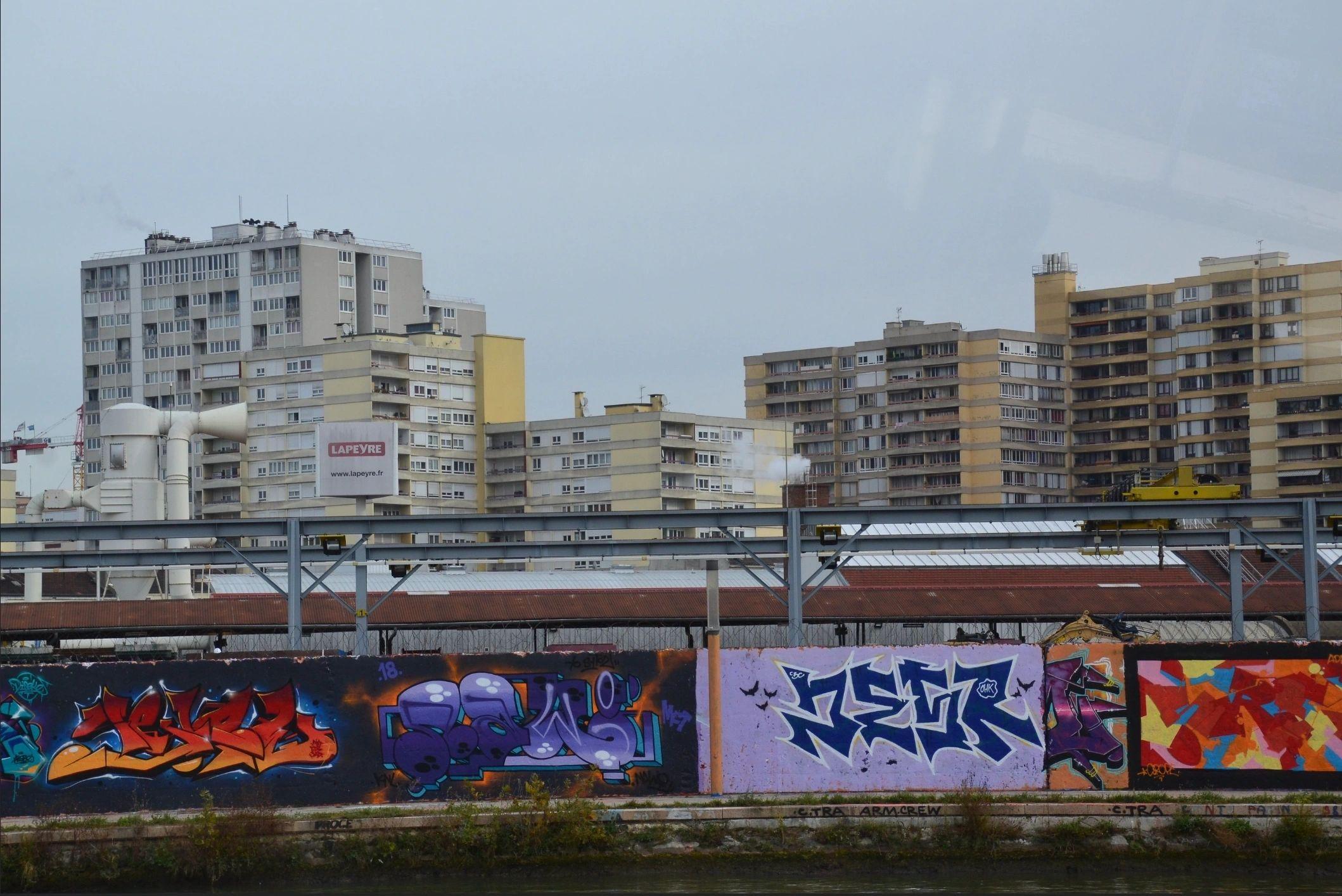
‘Banlieusards’ – An inhabitant of the French banlieues.
Urban studies literature has frequently examined the French banlieues as a case of how architecture may not operate as a neutral backdrop. Several studies have argued that built space may embody exclusion and reproduce historical inequalities, particularly when spatial design intersects with patterns of governance and social stratification. Rather than directly causing violence, studies highlight that the built environment of the banlieues interacts with state neglect and insecurity, colonial identity struggles, as well as pressures of survival, to contribute to the production of violence, which is both pervasive and persistent. By making visible the ways in which space produces exclusion, this discussion draws on existing research to highlight potential identifiable avenues that foster dialogue, inclusive planning, and policies that can bridge divides between the banlieusards and the inhabitants of the inner city.
David Harvey (2008) has noted that Baron Haussmann's urban redesign excluded the suburbs from Parisian social life, reinforcing inequality and leaving the peripheries as sites of marginalization. The postwar housing crisis intensified this pattern. In the 1950s, public pressure forced the state to sponsor rapid mass housing construction. The resulting grands ensembles, 10-storey concrete blocks built under the Logements économiques et familiaux programme, were intended as cheap, efficient solutions (Cupers, 2014). Yet their placement on the city's margins displaced lower-income populations further outward (Cupers, 2014; Angélil et al., 2012).
A world away from the Haussmannian architecture of major French cities, the banlieue rests on the other side of the Périphérique, soliciting expressive dissimilarities in lifestyle, governance, and opportunities for its citizens. The cité, conceived initially as a ‘vast prison camp,’ has come to embody confinement and systemic neglect, characterized by densely packed, utilitarian architecture and imposing high-rise concrete housing blocks (Hussey, 2014; Lambert, 2015a). The banlieue is often described in scholarship as epitomising exclusion, regarded as ‘life-sized laboratories’ primarily inhabited by French citizens of ex-colonial origin, where residents are relegated to the barren outskirts, facing inadequate transport, substandard housing and limited employment (Cupers, 2014). Scholars suggest the built environment is more than a backdrop to these conditions. It has been argued that the built environment can structure exclusion, amplify insecurity, and sustain colonial divisions that make violence a relentless feature of suburban life (Goodfellow et al., 2013; Elfversson et al., 2023).
State Neglect & Security
Urban studies researchers suggest that violence often emerges where institutional neglect intersects with spatial marginalization. The banlieues exemplify this dynamic: physical distance from the city centre, combined with inadequate public services, has been linked to residents’ reliance on informal practices that, in turn, heighten tensions (Beall et al., 2013; Pavoni et al., 2020). Scholars argue that state inaction or neglect creates a vacuum filled by non-state actors, some predisposed to violence or operating beyond state control (Gunning and Smaira, 2022).
Protest cycles highlight how built space can embody inequality. In November 2005, following the deaths of teenagers Zyed Benna and Bouna Traoré while fleeing the police, unrest spread across France. In Paris, protestors gathered at the Gare-du-Nord, a station marking the threshold between central Paris and the periphery, turning it into a symbolic frontier between prosperity and exclusion (Hussey, 2014; Tilly, 2000). Analyses of these protests suggest that the Gare-du-Nord, once a zone that reflected a transition between two worlds, has now become a front line in the banlieusards' battle against social inequality and injustice. Tourists arriving in Paris also traverse this frontier to get to the inner city, further underscoring the banlieusards' marginalization and reinforcing their symbolic inferiority to those who move freely across the urban divide. With this idea in mind, the inclination to 'illicit street life' can be seen as a transgression against authority but also as a protest against spatial and cultural inequalities which have persisted over decades (Angélil et al., 2012).
This mistrust is reinforced by repeated cases of police bavure (misconduct). Many residents perceive the police as extensions of a hostile state that contribute to the 'prison-like' conditions within the banlieues (Hussey, 2014). The killing of Nahel Merzouk in 2023 by police reignited nationwide unrest, showing how state violence transforms the built environment into a site of resistance (Salem, 2023). Similar dynamics appear elsewhere, such as in the Beirut suburb of Dahiyeh, where poor infrastructure and absent policing encourage reliance on informal and non-governmental systems (Gunning and Smaira, 2022). The parallel suggests that neglect entrenches insecurity and provokes confrontation, showing how space can amplify governance failures.
To bridge the gap between the banlieue and the inner city, researchers on urban integration argue that rebuilding trust between state institutions and suburban communities is essential. Without such efforts, security-based neglect continues to fuel deeper identity struggles rooted in France’s imperial past, where the police and other state actors are often perceived as representatives of imperial authority.
Ethnicity and an anti-colonial identity
Hussey’s research in The French Intifada shows how this tension is expressed in language and identity. Rioters often use slang or Arabic slogans to reject both the police and France itself: “Nik les schmitts” (“Fuck the cops”), and “Na’al abouk la France!” (“Fuck France!”). In these exchanges, some interviewees went even further, questioning the very idea of French identity; one noted, “I don’t feel French, so why should I pretend?”
Citizens of ex-colonial origin disproportionately inhabit the banlieues. Here, the built environment does more than reflect inequality; it materializes France's colonial legacy. Isolated cités reinforce a sense of being "out-there," spatially excluded from urban prosperity (Angélil et al., 2012). Researchers suggest that the physical distance between the two zones amplifies further the racial partitions between France and members of its ex-colonies, reinforcing feelings of inferiority, disregard and alienation. For second-generation migrants, this exclusion provokes an existential question: are we truly French, or forever subjects of a colonial project?
Just as colonial borders once enforced division, today's suburban peripheries symbolize alienation and inferiority. Algerian residents recall this history vividly. La Ligne Morice, the electrified fence built during the Algerian War to undermine support for resistance networks, mirrors the rigid boundaries separating inner Paris from its outskirts (Hussey, 2014). Although the Algerian-French chapter of violence has closed, tensions persist between members of the ex-colonies and the French authority, as urban restructuring and ethnic hierarchies continue to sustain spatial tensions (Murtagh et al., 2023).
This shared history also connects to Benvenisti's "double minority syndrome," which captures how groups in divided cities can experience both majority and minority status simultaneously, producing feelings of empowerment and vulnerability at once (Calame et al., 2009). In the banlieues, second-generation migrants embody this duality: as French citizens, they are part of the national community, yet spatially and socially, they remain excluded, relegated to peripheral cités. The built environment intensifies these tensions by concentrating populations in stigmatized estates, producing identity stress, mistrust, and confrontation. The banlieue thus becomes not only a site of exclusion but also a stage where the collectively "colonized" resist the "colonizer" (Angélil et al., 2012). More than deteriorating suburbs, these cités function as battlegrounds where the dispossessed heirs of colonialism assert defiance, an identity sustained by the very architecture that confines them (Coquery-Vidrovitch, 2011; Hussey, 2014; Elfversson, 2023). These dynamics have been interpreted in the literature as evidence that gaps in identity may contribute to clashes over political uncertainty and general resources; especially when the 'colonized' deem it appropriate to fight back, and large groups of young banlieusards feel that they can take on the world that oppressed and shunned them.
Research further highlights that narrowing these identity gaps, through inclusive policies, cultural recognition, and integrative urban planning, could reduce confrontation and help bridge divides between the banlieue and the inner city; before these factors feed directly into conditions of insecurity and survival.
Survival, Informality & Insecurity
In studies, neglected environments have been linked to intensified struggles for survival. Poor housing quality, abandoned buildings, and decaying infrastructure generate mistrust, weaken social cohesion, and normalize illicit practices (Moss et al., 2024). Everyday infractions, such as metro fare evasion or cannabis use, sit on a continuum with more organized criminal activity, from gangs to drug trafficking (Hussey, 2014; Angélil et al., 2012).
Exclusion from legitimate opportunities further entrenches reliance on informality. The banlieues exhibit higher high-school dropout rates, as unemployed teenagers from marginalized communities are often drawn to illicit activities, which offer greater prospects of meeting daily needs than the limited lawful opportunities within these deteriorating suburbs, highlighting the connection between restricted access to welfare and protection with the heightened potential for violence in such environments (Ruty, 2019; Angélil et al., 2012). The built environment has been described as reinforcing the precariousness of concentrated poverty and degraded infrastructures, with studies noting that this context may turn the banlieue into a space where survival depends on navigating insecurity, often through violence.
As Elyachar (2003) observes in the context of Cairo, informality thrives where institutions fail to provide security. In France, police misconduct adds to this instability, while political rhetoric, such as Sarkozy's call to "clear the streets of these thugs", fuels confrontation. Violence has been discussed as not only linked to poverty but also to spatial inequality: an environment that limits opportunity, reproduces exclusion, and normalizes survival through illicit means.
Conclusion
The banlieues illustrate how the built environment has been closely linked to social, political, and historical inequalities. Existing studies highlight how spatial neglect may entrench insecurity, how colonial legacies continue to fracture identities, and how deteriorating infrastructure can push residents toward informal survival strategies. Violence, in this context, has been discussed not simply as an outcome of poverty or racial grievances but as shaped in part by how the banlieusards are positioned, socially and geographically, on the margins of France’s major cities.
Rebuilding the suburbs alone will not resolve these tensions, since the struggles of the banlieusards long predate the concrete towers and cités they inhabit. However, research indicates that certain approaches may help mitigate exclusion: inclusive transport systems that better connect the suburbs to urban centres, participatory planning processes that bring residents into decision-making, expanded educational opportunities for less well-off communities, particularly in the banlieues, and policies of cultural recognition that address persistent identity gaps. These measures are presented in the literature as potential ways to reduce confrontation and encourage dialogue across the urban divide.
In this sense, the banlieues have been interpreted not only as spaces of marginalization but also as places where possibilities for integration can be imagined. Understanding the architecture of exclusion as part of a broader political and social landscape helps identify pathways toward bridging divides between the banlieue and the inner city.
Bibliography:
Angélil, Marc, and Cary Siress. "THE PARIS' BANLIEUE': PERIPHERIES OF INEQUITY." Journal of International Affairs, vol. 65, no. 2, 2012, pp. 57–67. JSTOR, . Accessed 10 Oct. 2023.
Beall, Jo, Tom Goodfellow, and Dennis Rodgers. 2013. "Cities and Conflict in Fragile States in the Developing World." Urban Studies 50(15): 3065–83.
Calame, Jon, and Esther Ruth Charlesworth. 2009. Divided Cities: Belfast, Beirut, Jerusalem, Mostar, and Nicosia. Philadelphia: University of Pennsylvania Press.
Coquery-Vidrovitch, Catherine. “Colonisation, Racisme et Roman National En France.” Canadian Journal of African Studies / Revue Canadienne Des Études Africaines, vol. 45, no. 1, 2011, pp. 17–44.
Cupers, Kenny. The Social Project: Housing Postwar France. University of Minnesota Press, 2014. JSTOR, . Accessed 19 Oct. 2024.
Elfversson, Emma, et al. "Contesting the Growing City? Forms of Urban Growth and Consequences for Communal Violence." Political Geography, vol. 100, Jan. 2023.
Elyachar, Julia. "Mappings of Power: The State, NGOs, and International Organizations in the Informal Economy of Cairo." Comparative Studies in Society and History, vol. 45, no. 3, 2003, pp. 571–605. JSTOR, . Accessed 11 Dec. 2024.
Ervine, Jonathan. "Challenging or Perpetuating Clichés?: Young People and the Police in France's Banlieues." Cinema and the Republic: Filming on the Margins in Contemporary France, 1st ed., University of Wales Press, 2013, pp. 85–110. JSTOR, . Accessed 23 Oct. 2023.
Gunning, Jeroen, and Dima Smaira. 2022. "Who You Gonna Call? Theorising Everyday Security Practices in Urban Spaces with Multiple Security Actors – The Case of Beirut's Southern Suburbs." Political Geography 98: 102485.
Harvey, D. (2008). "The Right to the City." New Left Review, 53, 23–40.
Hussey, Andrew. The French Intifada. Farrar, Straus and Giroux, 22 Apr. 2014.
Lambert, Léopold. "The Banlieue Battleground: Designing the French Suburbs for Police/Military Interventions." The Funambulist Magazine, 4 Sept. 2015, .
Lambert, Léopold. "The Weaponised Architecture of Paris Northeastern Banlieue Police Stations." The Funambulist Magazine, 26 Oct. 2015, .
Moss, Lolita, et al. "A Qualitative Exploration of the Built Environment as a Key Mechanism of Safety and Social Cohesion for Youth in High-Violence Communities." Journal of Urban Health, vol. 101, no. 3, 12 Apr. 2024, pp. 620–628, .
Murtagh, Brendan, Emma Elfversson, Ivan Gusic, and Marie-Therese Meye. 2023. "Urban Restructuring and the Reproduction of Spaces of Violence in Belfast." Peacebuilding 0(0): 1–24.
Pavoni, Andrea, and Simone Tulumello. 2020. "What Is Urban Violence?" Progress in Human Geography 44(1): 49–76.
Poyner, Barry. Design against Crime. Butterworth-Heinemann, 1983.
Rhein, Catherine. "The Working Class, Minorities and Housing in Paris, the Rise of Fragmentations." GeoJournal, vol. 46, no. 1, 1998, pp. 51–62. JSTOR, . Accessed 30 Oct. 2024.
Ruty, Erwan. “Les Banlieues, Laboratoires Politiques de La France.” Esprit, no. 458, 2019, pp. 103–12. JSTOR, . Accessed 10 Oct. 2023.
Salem, Lola. "The French Disorder | Lola Salem." The Critic Magazine, 3 July 2023, thecritic.co.uk/the-french-disorder/. Accessed 11 Nov. 2023.
Shreir, Daniella. "Utopia Deconstructed: Le Corbusier and the Banlieue." The Isis, 27 Apr. 2014, .
Tilly, Charles. 2000. "Spaces of Contention." Mobilisation: An International Quarterly 5(2): 135–59.