
Between Policy and Neglect: The State of Refugee Centers in Italy
By Antonino Enrico Repaci
7 min read · 1,461 words
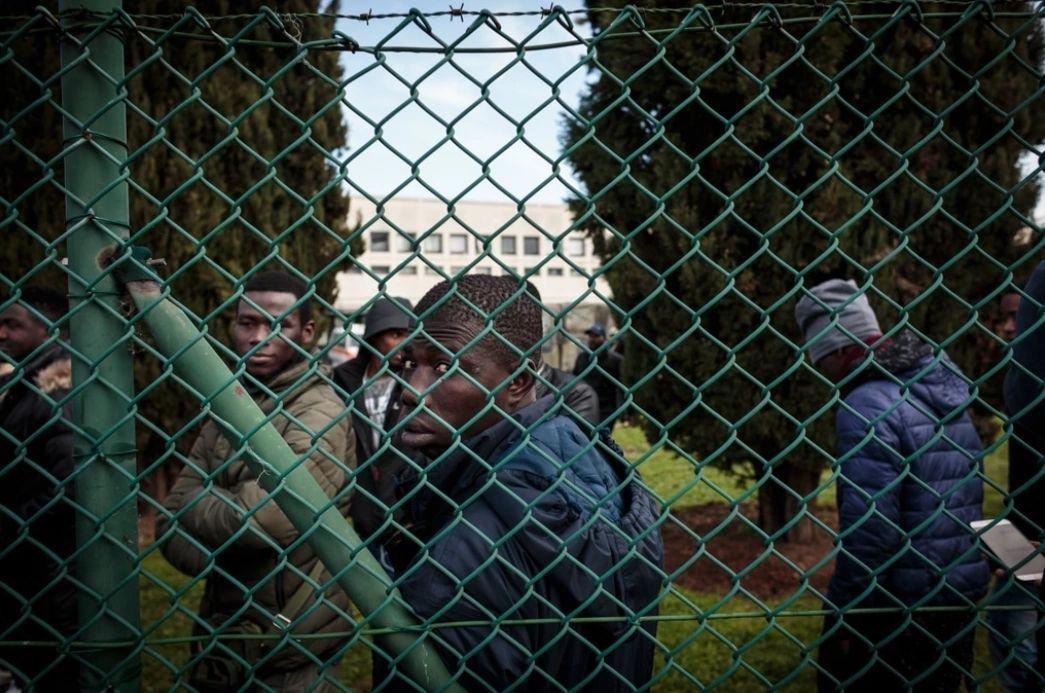
The term “refugee crisis” (further discussed in ) has often been deployed to describe the rapid increase of refugees and asylum seekers crossing the Mediterranean sea in search of assistance and protection (Petroff et al., 2018). The international response to this “crisis” has been very diverse, with Italy representing one of the main destinations for migration flows within Southern Europe.
More specifically, the South of Italy started experiencing large-scale irregular immigration by sea beginning at least from the 1990s, as a consequence of new restrictions on Italian visa policy, which mainly affected the route from North Africa (Pastore et al., 2006). During those same years, the Italian government adopted a lackluster approach to the management of refugees, initially focusing on external patrolling through bilateral agreements with North African countries (Petroff et al., 2018). In fact, although the 1947 Italian Constitution recognized the right of asylum in its article 10, and although the country ratified the Geneva Convention on Refugees in 1954, Rome lacked an ad hoc national legal framework to establish the norms related to refugees’ accommodation and reception (Caponio, 2004). Following the surge in immigration in the 1990s, however, the central government decided to delegate initiatives related to reception centers to local authorities (mainly regions), adopting an emergency approach that continues to be valid to this day (Caponio, 2004). The continuous strain on local reception structures eventually led to the creation of the so-called “National Asylum Programme”, or PNA (Programma Nazionale Asilo), in 2001. The latter, together with the “System for the Protection of Asylum Seekers and Refugees”, or SPRAR (Sistema di Protezione per Richiedenti Asilo e Rifugiati), introduced in 2002, institutionalized a multi-tier system of refugee centers and structures involving multiple governmental and private actors (Petroff et al., 2018).
Nevertheless, the SPRAR never managed to provide a sufficient number of places to host all the refugees arriving on Italian shores, since these structures normally require extensive time to build and rely on a complex bureaucratic organization and monitoring system (Petroff et al., 2018). To address these shortcomings, at least partially, the Ministry of the Interior created a new type of reception structure in 2014: the “Extraordinary Reception Centres”, or CAS (Centri di Accoglienza Straordinaria). These were organized by cooperatives and/or private actors under the supervision of the Ministry of the Interior and were intended as temporary hubs to host significant migration flows in the short term (Barbieri et al., 2016). Despite this initial design, CAS have become the main permanent reception centers, together with the so-called “hotspots” (designed to respond to the “refugee crisis” by ensuring the legal identification of all arriving migrants), the first of which opened in Lampedusa on 21 September 2015, followed by Trapani in December and Pozzallo in January 2016 (D’Angelo, 2016).
In recent years, the way migrants have been received in the country, especially in Sicily, has come under heavy scrutiny from multiple actors, including NGOs, human rights lawyers, and activist groups (Petroff et al., 2018). More specifically, reports have repeatedly drawn attention to various shortcomings, including the neglect of health and safety measures, poorly trained or underqualified staff, questionable financial interests among certain providers, and insufficient assistance for minors and other vulnerable populations (Amnesty International, 2016; Barbieri et al., 2016; Chiodo & Naletto, 2016; MEDU, 2016; Oxfam, 2017). Another source of concern within the Italian system lies in the long delays migrants experience throughout the asylum process, including during transitions between different types of reception centres. Although national law sets a 48-hour limit for what is defined as “administrative detention”, in practice the waiting period in closed hotspots often stretches far beyond this, lasting several days and, at times, even weeks (Suprano, 2016). Furthermore, although under Italian law migrants should be transferred from regional centers to second-reception centres within a maximum of 30 days (Ministero degli Interni, 2015), empirical evidence shows that people can spend well over two years living in these centers in a legal limbo, with extremely limited professional support (Petroff et al., 2018). Because of these consistent delays, most centers reached overcapacity just a few years after their establishment, forcing refugees to leave these official hubs to live in structures not legally suitable for their purpose, such as squats or camps (D’Angelo, 2016).
The state of refugee centers in Italy further worsened in 2018 with the introduction of the Salvini Decree, which significantly shifted Italian asylum policy by reducing resources for reception hubs and eliminating essential services, including language training, legal assistance, cultural mediation, and integration programs (Filippi & Giliberti, 2021). Consequently, the Decree weakened the SPRAR model of smaller, community-based reception centers, instead reinforcing the large CAS centers, which relied on passivity and prolonged waiting times. Moreover, the Salvini Decree abolished the most common legal channel for obtaining residence permits up to that point, humanitarian protection, which left thousands of migrants irregular overnight, forcing many to abandon reception centers and seek refuge in informal squats and camps (Accorinti & Spinelli, 2019; Amnesty International, 2020; Omizzolo, 2019).
Although overcrowding was the main justification for the Decree, the latter wasn’t enough to solve this issue within CAS centers, which were now, instead, deprived of clear institutional guidelines (Filippi & Giliberti, 2021). The problem became particularly evident during the COVID-19 pandemic, when strict isolation measures were imposed. In this regard, reports from intra-CAS hubs indicate that suspected COVID-19 cases were often left untreated, while migrants received little to no medical support, becoming victims of neglect (Filippi & Giliberti, 2021). For many asylum seekers, compliance with government health measures was practically impossible: overcrowded dormitories, often with five or more people sharing a single room and only one bathroom per floor, made social distancing unfeasible. Lunaria (2020) further notes that these conditions severely affected the mental wellbeing of refugees, as COVID-19 measures contributed to exacerbate experiences of racism and social exclusion, increasing marginalization.
In conclusion, the status of refugee centers in Italy appears to be fragmented and inadequate, as bureaucratic structures are often insufficiently forward-looking, local actors are not always consulted, and decisions are frequently made centrally with the political aim of cutting migration-related funding. As a consequence, reception hubs are frequently characterized by a lack of vulnerability assessments, linguistic or cultural mediation, and legal assistance, especially following the Salvini Decree, which, in turn, hinders access to key welfare services and to the legal processes required for obtaining Italian citizenship. Consequently, many refugees are forced to leave under precarious conditions and rely on the informal economy to survive (Asylum Information Database, 2025).
Bibliography
Accorinti, M., Spinelli, E. (2019). L’attività degli operatori sociali tra aiuto e controllo nel nuovo sistema di accoglienza. La Rivista delle Politiche Sociali 2, 103–120.
Amnesty International (2020). Decreti sicurezza: Modifiche urgenti contro ghettizzazione e povertà. Retrieved from .
Amnesty International (2016). Hotspot Italy: How EU’s flagship approach leads to violations of refugee and migrant rights. Amnesty International. Retrieved from .
ASGI. (2025). Short overview of the reception system – Italy. Asylum Information Database. Retrieved September 4, 2025, from
Barbieri, A., Calò, F., Cannella, G., Kiros Abraha, A., Dessì, A., Pagliazzo, S. and Vegna, V. (2016). Asilo Precario. I Centri di Accoglienza Straordinaria e l’esperienza di Ragusa, MEDU (Medici per i Diritti Umani). Retrieved from www.mediciperidirittiumani.org/pdf/MEDU_Rapporto_ CAS_26_aprile_FINALE.pdf.
Caponio, T. (2004). Dal Programma Nationale Asilo al Sistema di Protezione per Richiedenti Asilo e Rifugiati (2001-2004). Bilancio di una esperienza di governo territoriale dei flussi migratori. CeSPI (Centro Studi di Politica Internazionale).
Chiodo, S. y Naletto, G. (2016). Il mondo di dentro. Il sistema di accoglienza per richiedenti asilo e rifugiati a Roma. Lunaria. Retrieved from .
D’Angelo, A. (2016). Italy’s system of migration management has been called an ‘Illegality Factory’. This is how it works. Middlesex Minds. Retrieved from .
Filippi, D., & Giliberti, L. (2021). Italian reception policies and pandemic: From exclusion to abandonment. Dve Domovini / Two Homelands, 54, 131–142.
Lunaria (eds.) (2020). Cronache di ordinario razzismo. Quinto libro bianco sul razzismo in Italia. Rome: Open Society Foundations.
MEDU (2016). Asilo Precario. I centri di accoglienza straordinaria e l’esperienza di Ragusa. MEDU (Medici per i Diritti Umani). Retrieved from .
Ministero degli Interni (2015). Roadmap Italiana. Retrieved from http://www.meltingpot.org/IMG/ pdf/roadmap-2015.pdf.
Omizzolo, M. (2019). Essere migranti in Italia: Per una sociologia dell’accoglienza. Milan: Mimesis.
Oxfam (2017). L’inferno al di là del mare. Oxfam, Borderline Sicilia, MEDU. Retrieved from https:// .
Pastore, F., Monzini, P. and Sciortino, G. (2006). Schengen’s Soft Underbelly? Irregular Migration and Human Smuggling across Land and Sea Borders to Italy. International Migration, 44(4).
Petroff, A., Milios, G., & Pérez, M. (Eds.). (2018). Refugees on the move: political, legal and social challenges in times of turmoil (Focus on International Migration, 5). Bellaterra: Universitat Autònoma de Barcelona, CER-MIGRACIONS, Servei de Publicacions..
Suprano, A. (2016). Il sistema di accoglienza in Italia. Un cammino verso l’integrazione? Retrieved from: .