
Brain drain or brain gain?
8 min read · 1,654 words
Summary
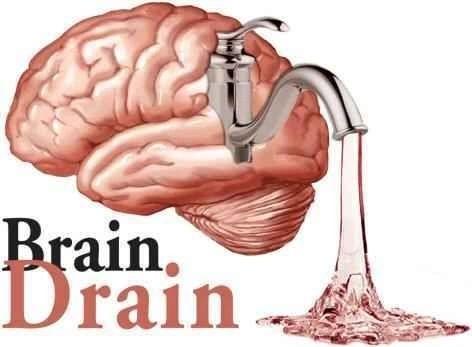
The term ‘brain drain’ refers to the emigration of highly skilled, educated, or talented individuals from one region to another, typically from less developed to more developed areas. This movement is often driven by the pursuit of better career opportunities, higher living standards, fewer bureaucratic barriers, or the need to escape political or economic instability. In contrast, ‘brain gain’ occurs when countries successfully attract such talent, benefiting from their expertise, innovation potential, and contributions to economic and social development. While brain drain can significantly hinder the growth of sending countries by depleting them of crucial human capital, brain gain strengthens receiving countries, making them more competitive and prosperous over time.
Which one is it for the European Union?
The Current Landscape
In 2023, net migration into the European Union reached nearly 2.9 million, meaning the EU attracted significantly more people than it lost (Europa.eu, 2023). While the exact breakdown of this inflow by education level is not available on a yearly basis, current demographic profiles and long-term trends allow us to approximate it. According to Eurostat, 32.1% of foreign citizens aged 25–64 residing in the EU have tertiary education. While this figure is lower than the average for EU nationals or intra-EU migrants (both averaging 36%), the trend is positive: the share of highly educated immigrants is rising. For comparison, in 2010, the tertiary education rate was just 23.1% for non-EU immigrants and 25.3% for EU-born citizens. The overall pace of growth has been steady, indicating that the EU is increasingly attracting better-educated immigrants over time (Idw-online.de, 2025).
However, while this trend indicates growing brain gain, the EU faces a persistent challenge in fully utilizing the skills of its immigrant population. In 2023, 40% of employed non-EU citizens aged 20–64 with a university degree were overqualified, meaning they were working in jobs that required only low or medium skill levels. By comparison, the overqualification rate was 31% for EU citizens working in another EU country and just 21% for nationals working in their home country. Overqualification among non-EU workers was highest in Greece (70%), Italy (64%), and Spain (56%). In contrast, it was lowest in the Netherlands (24%), Finland, and Sweden (each 27%). Among intra-EU migrants, the overqualification rate peaked in Italy (45%), Spain, and Cyprus (42%), with Luxembourg having the lowest rate at 6% (Eurostat, 2023).
Furthermore, it is important to consider the EU’s targeted programs aimed at attracting the global elite in terms of skill and talent. The most prominent of these is the EU Blue Card, a work and residence permit for highly qualified professionals from outside the Union. To qualify, applicants must hold a valid job offer of at least six months in a highly skilled position, meet a salary threshold above the national average (typically 1.2–1.5x), and possess either a university degree or a minimum of five years of relevant professional experience. The Blue Card also offers fast-track family reunification and allows holders to move and work in another EU member state after 12 months. In 2023, around 89,000 non-EU highly qualified workers were granted Blue Cards, surpassing the 85,000 issued under the U.S. H-1B program, its American counterpart.
In addition to employment channels, the EU also attracts international talent through education and research opportunities. In 2023, EU countries issued 451,000 residence permits for study and research purposes. The leading source countries were India (11%), China (10%), Morocco (5%), and the United States (5%) (Europa.eu, 2024). These figures reflect the fact that the EU is an attractive destination for the world’s most talented individuals, whether for study, research, or skilled work. This inflow supports innovation, boosts productivity, and helps fill labour shortages in critical sectors such as healthcare, IT, and engineering, enhancing the EU’s competitiveness.
Moreover, the EU has shown a strong willingness to attract scientists and researchers from the United States, particularly in response to cuts in federal research funding during the Trump administration. In April 2025, European Commissioner for Startups, Research and Innovation Ekaterina Zaharieva emphasized this commitment, stating: ‘This global landscape is an opportunity to show the world that Europe will remain a safe space for science and research,’ and ‘Europe can and should be the best place to do science, a place that attracts and retains researchers, both international and European’ (Politico, 2025).
However, it is not just statements. The EU has launched the ‘Choose Europe for Science’ program, where €500 million are to be allocated between 2025 and 2027 to strengthen Europe’s research landscape and attract international talent. The initiative focuses on offering long-term funding through so-called ‘super grants’ administered by the European Research Council, improving career prospects for researchers via the Marie Skłodowska-Curie Actions, and promoting academic freedom across EU institutions. The aim is to position the EU as a global hub for scientific excellence at a time when other countries, particularly the U.S., are experiencing greater uncertainty in science policy (European Commission, 2025).
Member states are also taking their own steps. In France, Aix-Marseille University launched the ‘Safe Place for Science’ program with a €15 million fund to host international researchers facing political or institutional constraints abroad. The initiative has already attracted scientists from top U.S. institutions like NASA and Columbia University, offering them fully funded three-year positions. Spain, for its part, has expanded national initiatives like the Ramón y Cajal program and the ATRAE scheme, providing generous research grants, relocation incentives, and long-term contracts for top international scientists, especially targeting those in strategic fields such as artificial intelligence, biotechnology, and climate science (WIRED, 2025).
A Looming Risk
Despite currently positive net migration trends, the European Union faces a significant long-term demographic risk. Persistently low birth rates across nearly all member states, combined with an ageing population, point toward a gradual but serious decline in overall population size, and a potential brain drain could exacerbate them, a recent report from the European Commission has shown. The report argues that if the EU were to lose its economic dynamism and global competitiveness over the coming decades, particularly in comparison to rapidly advancing regions such as East Asia and North America, it could face a large-scale emigration of highly educated and skilled workers. This scenario, referred to as a high-emigration scenario, is modelled on past empirical cases, such as Spain during the 2008 financial crisis, where emigration significantly outpaced immigration.
It has been demonstrated that such a shift would trigger a two-fold demographic and economic challenge. Firstly, the EU’s already shrinking workforce would be further depleted, especially of young adults, who are statistically the most likely to emigrate, thereby accelerating population ageing. Secondly, the remaining workforce would, on average, be less educated. The report finds that highly educated individuals are more likely to emigrate than less educated ones, leading to a 'brain drain' effect in which the EU not only loses its human capital but also suffers from reduced innovation capacity and economic competitiveness. According to the scenario, high emigration could lead to a population decline of over 150 million people by 2060 compared to 2015 levels (from 508.5 million to 353 million, a 31% drop), and the share of working-age adults with post-secondary education would be 10% lower than in a zero-migration baseline. This would reinforce a negative feedback loop of stagnation: fewer people, lower education levels, less innovation, and less economic output (Lutz et al., 2019). The report concludes that to prevent such an outcome, the EU must prioritize retaining its talent, attracting high-skilled migrants, and ensuring that its education and labour market systems are better aligned with future economic needs.
Conclusion
To conclude, the European Union is currently experiencing a period of brain gain, attracting skilled individuals from around the world thanks to its combination of personal freedoms, quality of life, and professional opportunities. It also has a rare opportunity to draw top-tier scientists and researchers from the United States, a long-time competitor in the academic and innovation space, and historically a major destination for Europe’s own brightest minds. However, this favourable situation could shift rapidly if the EU’s standard of living were to decline. Such a reversal would not only threaten its capacity to retain talent but would also severely exacerbate the demographic challenges the Union is already facing
Bibliography Europa.eu. (2024). Eurostat. [online] Available at: https://ec.europa.eu/eurostat/web/interactive-publications/migration-2024#attracting%20skills%20and%20talents [Accessed 10 Jul. 2025].
Daad-brussels.eu. (2025). ‘Choose Europe’: A new EU Initiative to attract global scientific talents. [online] Available at: https://www.daad-brussels.eu/en/2025/05/26/choose-europe-a-new-eu-initiative-to-attract-global-scientific-talents/ [Accessed 10 Jul. 2025].
González, F. (2025). As the US Cuts Scientific Talent, Europe Launches an Initiative to Attract It. [online] WIRED. Available at: https://www.wired.com/story/us-cuts-scientific-talent-europe.com [Accessed 10 Jul. 2025].
Department of Economics. (2025). The global race for talent: brain drain, knowledge transfer, and growth. [online] Available at: https://economics.unibocconi.eu/publications/global-race-talent-brain-drain-knowledge-transfer-and-growth [Accessed 10 Jul. 2025].
Idw-online.de. (2025). RFBerlin: Education Levels Among Immigrants in the EU Reach Record High. [online] Available at: https://nachrichten.idw-online.de/2025/06/23/rfberlin-education-levels-among-immigrants-in-the-eu-reach-record-high [Accessed 10 Jul. 2025].
Viarengo, M. (2017). Ad hoc Question prepared for the European Commission: ‘Brain Drain’ within the European Union from the perspective of investment in education. [online] Available at: https://eenee.eu/wp-content/uploads/2021/05/1AHQ_viarengo_2017-1.pdf [Accessed 10 Jul. 2025].
Europa.eu. (2025). Available at: https://ec.europa.eu/eurostat/databrowser/view/migr_emi5nxt__custom_17379401/default/table?lang=en [Accessed 10 Jul. 2025].
Europa.eu. (2025). Available at: https://ec.europa.eu/eurostat/databrowser/view/migr_imm12prv__custom_17379369/default/table?lang=en [Accessed 10 Jul. 2025].
Europa.eu. (2025). Available at: https://ec.europa.eu/eurostat/databrowser/view/edat_lfs_9911__custom_17390476/default/line?lang=en [Accessed 10 Jul. 2025].
Europa.eu. (2025). Migrant integration statistics - education - Statistics Explained - Eurostat. [online] Available at: https://ec.europa.eu/eurostat/statistics-explained/index.php?title=Migrant_integration_statistics_-_education#Source_data_for_tables_and_graphs [Accessed 10 Jul. 2025].
Aitor Hernández-Morales, Giedrė Peseckytė and Haeck, P. (2025). Europe to burned American scientists: We’ll take you in. [online] POLITICO. Available at: https://www.politico.eu/article/europe-exploit-dunald-trump-brain-drain-academic-research-progressive-institutions/ [Accessed 10 Jul. 2025]..
Europa.eu. (2024). Migrant integration statistics - socioeconomic situation of young people - Statistics Explained - Eurostat. [online] Available at: https://ec.europa.eu/eurostat/statistics-explained/index.php?title=Migrant_integration_statistics_-_socioeconomic_situation_of_young_people#Education [Accessed 10 Jul. 2025].
EMEA (2025). Turning Brain Drain into Brain Gain: Europe’s Opportunity to Lead a Brain-Positive Economy - EMEA. [online] EMEA. Available at: https://euromed-economists.org/turning-brain-drain-into-brain-gain-europes-opportunity-to-lead-a-brain-positive-economy [Accessed 10 Jul. 2025].
Viarengo, M. (2017). Ad hoc Question prepared for the European Commission: ‘Brain Drain’ within the European Union from the perspective of investment in education. [online] Available at: https://eenee.eu/wp-content/uploads/2021/05/1AHQ_viarengo_2017-1.pdf [Accessed 10 Jul. 2025].