
Climate Displacement and Recognition Under EU Refugee Law
By Agnese Coletta
9 min read · 1,862 words
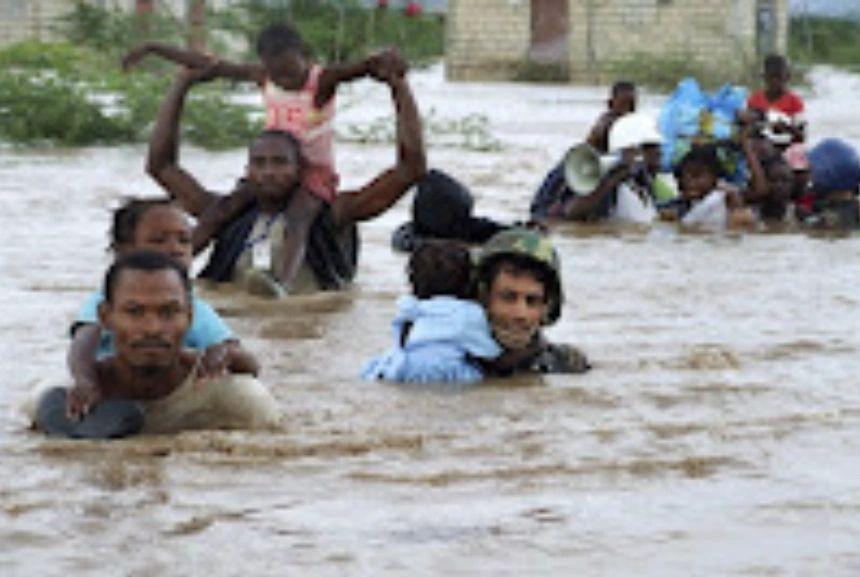
As the climate crisis intensifies, the scientific community agrees that it is generating significant risks for the Earth’s flora and fauna. Increasingly severe events such as wildfires, floods, droughts, and rising waters are making regions of our planet inhospitable and forcing individuals to flee their homes. In fact, data showed that in 2022 alone, 32.6 million people were displaced due to climate-driven events (Siegfried, K., 2023). Such displacement presents a new challenge for our legal systems and asylum laws. Traditional refugee frameworks were not designed with environmental and climate-driven causes in mind, and no internationally agreed definition of a ‘climate refugee’ exists, creating significant uncertainty. Whether individuals fleeing due to climate change reasons can or should be protected under existing refugee frameworks remains contested, with competing legal and policy arguments. What is instead clear is that climate change is rapidly altering habitable environments and forcing people to relocate in order to survive, making urgent solutions required.
Within the European Union, the framework for asylum and migration law and the institutions that enforce it do not have a clear, unified mechanism to recognize and/or protect people displaced primarily due to climate-related harms. This legal gap means that member states and EU bodies often react on a case-by-case basis, leading to inconsistencies and thus leaving displaced individuals without a reliable system and assured protection. There is a critical need for clearer definitions and regulatory mechanisms so that both affected individuals and states can be aware of their rights and duties, reducing confusion and ensuring predictable responses to a rapidly intensifying problem.
At the international level, the concept of environmental migration has been discussed, more or less intensively and seriously, for decades, yet, a formal definition and recognition within legal frameworks has been slow to develop. The term ‘environmental refugee’ was first formulated by Essam El-Hinnawi in 1985 through a United Nations Environment Programme (UNEP) report, where he defined it as ‘those people who have been forced to leave their traditional habitat, temporarily or permanently, because of a marked environmental disruption (natural and/or triggered by people) that jeopardized their existence and/or seriously affected the quality of their life’ (Hinnawi, E. E., 1985; Apap, J. & Harju, S. M., 2023). This definition is sometimes also used for other terms, such as ‘climate refugee’, 'environmentally displaced person', and 'climate-induced displacement', and often are used interchangeably in academic and policy settings. However, none of these terms are codified in existing international law, highlighting the uncertainty regarding the subject (Caligiuri, A., 2025). Article 1 of the 1951 Refugee Convention defines a ‘refugee’ as someone outside their country of origin with a well-founded fear of persecution based on race, religion, nationality, political opinion, or membership of a particular social group. The infeasibility of this definition for environmental-related displacement has been, in 2012, acknowledged by the former United Nations High Commissioner for Refugees (UNHCR), Antonio Guterres, who stated that ‘adopting the terminology of “climate refugees” or “environmental refugees” would only complicate and confuse UNHCR's efforts to protect victims of persecution and armed conflict’ (Kraler, A. et al., 2020). By definition, therefore, individuals fleeing environmental degradation or climate-induced harm are not included under the term ‘refugee’, unless such conditions can be linked to human-perpetrated persecution (Kraak, S., 2025).
Throughout the years, legal frameworks have been set up and have, to certain extents, provided guidance. For instance, the Nansen Initiative (2012-2015) developed a Protection Agenda for individuals displaced across borders in the context of disasters and climate change. It acknowledged a multitude of factors of environmental migration and emphasized the need for preventive measures, adaptation strategies, and temporary protection mechanisms. However, most of these frameworks are considered soft law instruments, meaning they are non-binding and depend on voluntary adoption by states, and thus cannot replace a binding international framework. Furthermore, despite these advantages, the Paris Agreement of 2015 only offered limited recognition of displacement issues, with Article 8 merely acknowledging the importance of ‘averting, minimizing and addressing displacement related to the adverse impacts of climate change’, without establishing concrete obligations or protection frameworks (Caligiuri, A., 2025; Pareti, S., 2015).
At the European level, the development of climate displacement policy has been similarly gradual and remains insufficient. In fact, the European Union’s Common European Asylum System (CEAS), including the Qualification Directive (2011/95/EU), strictly follows the 1951 Refugee Convention’s definition of ‘refugee’, and does not formally recognize environmental or climate induced migration as grounds for international protection (Kraler, A. et al., 2020).
Critics state that there are numerous legal frameworks, directives, and regulations at the EU level which could have, in theory, included references to climate migration or displacement, but fail to do so despite the obvious need for protection structures and legal basis. Examples include the European Climate Law (2021), which establishes the framework for achieving climate neutrality by 2050, but fails to make any explicit reference to climate migration or displacement, representing a significant missed opportunity to address this dimension of climate impacts. Another framework often discussed is the Temporary Protection Directive (2001/55/EC), which at first glance seemed to be a solution, since it can, in theory, cover wider types of displacement, as it provides for mass influx situations. However, the Directive has never been activated for environmental disasters and is designed primarily for conflict-related displacement (EMN, 2023). Furthermore, the directive offers only temporary protection, a residence permit up to a maximum of three years, after which return is expected, that would not present a long-term solution for climate-displaced individuals, as return is often not possible in the foreseeable future (Caligiuri, A., 2025). More recently, in 2024, the EU Pact on Migration and Asylum was adopted, which aims to harmonize procedures and solidarity mechanisms. Yet, even in this instance, there was no explicit provision for climate-induced displacement, leaving this issue in limbo rather than filling the gap (Hugues, E.A., 2024).
This legal vacuum forces individuals to seek protection via alternative routes, such as human rights law. For instance, some have argued that returning individuals to their home countries, made uninhabitable by climate change, violates their right to life (Article 2) and the prohibition of inhuman treatment (Article 3) of the European Convention on Human Rights (ECHR), invoking the principle of non-refoulement. In Teitiota v. New Zealand (2020) (CCPR/C/127/D/2728/2016), for instance, a Kiribati man argued that deportation from New Zealand would breach his right to life (Article 1) under the International Covenant on Civil and Political Rights (ICCPR) since sea-level rise in Kiribati was making his home unlivable, as it had led to violent land disputes that endangered life, and lack of freshwater supplies. The UN Human Rights Committee acknowledged that, in principle, climate change effects could engage non-refoulement obligations under the right to life. However, it ruled against Teitiota on the facts, stating that he had not shown an imminent risk of death upon return. As seen in the case, most attempts are in vain, and, without other explicit factors granting climate-displaced people the refugee status (e.g., human-perpetrated harm), individuals are left with faint hope, and far less legal options (Kraak, S., 2025; Scott, M., 2014).
Despite the lack of a unified framework, some member states have had innovative national and judicial responses, with countries such as Italy, Germany, and France increasingly recognising the environmental aspects of asylum and protection claims (Caligiuri, A., 2025). For instance, in 2021, a landmark ordinance was made by the Italian Supreme Court (Corte Suprema di Cassazione, ‘CSC’). The case originated after an applicant from Nigeria’s Niger Delta region was denied international protection by Italian authorities; upon appeal, the Ancona court upheld the denial. The applicant then appealed to the CSC, arguing that the lower courts failed to properly consider the severe environmental degradation in the Niger Delta as a ground for granting humanitarian protection. The CSC then granted humanitarian protection to the applicant, establishing that environmental degradation linking to human rights violations is grounds for humanitarian protection (Ordinance No. 5022/2021, I.L. v Italian Ministry of the Interior and Attorney General at the Court of Appeal of Ancona) (Vona, F., 2021; USCRI, 2025). Italy had already included a ‘calamity’ clause (Article 20 bis of Legislative Decree 286/1998, its immigration code) allowing temporary permits when return is impossible due to a natural disaster, but this Supreme Court ruling explicitly tied environmental degradation to human rights standards (EMN, 2023).
As climate impacts intensify, the number of individuals displaced due to climate-induced reasons will inevitably increase, raising the pressing challenge that the Union and EU law are not yet equipped to handle. Current EU asylum rules rigidly follow the 1951 Refugee Convention’s limited definition and no new asylum statute at the European level has explicitly added environmental factors. Likewise, international discussions and soft-law frameworks are yet to produce effective, binding protection and clear criterias. At this time, the overall result is a patchwork filled with inconsistency in approaches and general uncertainty. Climate change is not a distant future issue, it is already reshaping migration patterns. Experts argue that without legal reform and clear frameworks there is little predictability or fairness in how the European Union will handle climate-displaced individuals. It is urgent that the EU activates and develops a coherent and clear response that aligns with its commitment to human rights and climate leadership.
Bibliography
Hinnawi, E. E. (1985). Environmental refugees / by Essam El-Hinnawi. United Nations Environmental Programme (UNEP).
Apap, J. & Harju, S. M. (2023). The concept of 'climate refugee'. European Parliamentary Research Service (EPRS).
Caligiuri, A. (2025). Invisible in Law: Environmental and Climate Migrants and the Gap in International Protection. Questions of International Law (QUIL).
Kraak, S. (2025). Recognition without regulation: The protection of ‘climate refugees’. Leiden Law Blog.
The 1951 Convention and 1967 Protocol relating to the Status of Refugees. United Nations High Commissioner for Refugees (UNHCR).
Pareti, S. (2015). We're no climate refugees. Secretariat of the Pacific Regional Environment Programme (SPREP).
European Union (2011). Directive 2011/95/EU. Official Journal of the European Union (EUR-Lex).
Kraler, A., Katsiaficas, C. & Wagner, M. (2020). Climate Change and Migration. Legal And Policy Challenges And Responses To Environmentally Induced Migration. European Parliament.
Hugues, E. A. (2024). Waiting for Godot No More: The Climate Crisis and the New European Asylum Pact. Oxford Human Rights Hub.
Scott, M. (2014). Natural disasters, climate change and non-refoulement: What scope for resisting expulsion under Articles 3 and 8 of the European Convention on Human Rights? International Journal of Refugee Law, vol. 26, no. 3, pp. 404-432.
USCRI (2025). The 1951 Refugee Convention: Displacement Caused by Climate Change. U.S. Committee for Refugees and Immigrants (USCRI).
Corte di Cassazione (Sez. II civile) (2021). I.L. v Italian Ministry of the Interior and Attorney General at the Court of Appeal of Ancona (Ordinance No. 5022/2021).
Vona, F. (2021). Environmental Disasters and Humanitarian Protection: A Fertile Ground for Litigating Climate Change and Human Rights in Italy? The Italian Review of International and Comparative Law.
Siegfried, K. (2023). Climate change and displacement: the myths and the facts. UNHCR.
(2020). Ioane Teitiota v. New Zealand, CCPR/C/127/D/2728/2016, UN Human Rights Committee (HRC).
European Migration Network (EMN). (2023). Displacement and migration related to disasters, climate change and environmental degradation. EMN Inform.
United Nations High Commissioner for Refugees. (2012). Migration, Displacement and Planned Relocation. UNHCR.