
Do border restrictions really reduce immigration?
By Evan Rouxelin
6 min read · 1,126 words
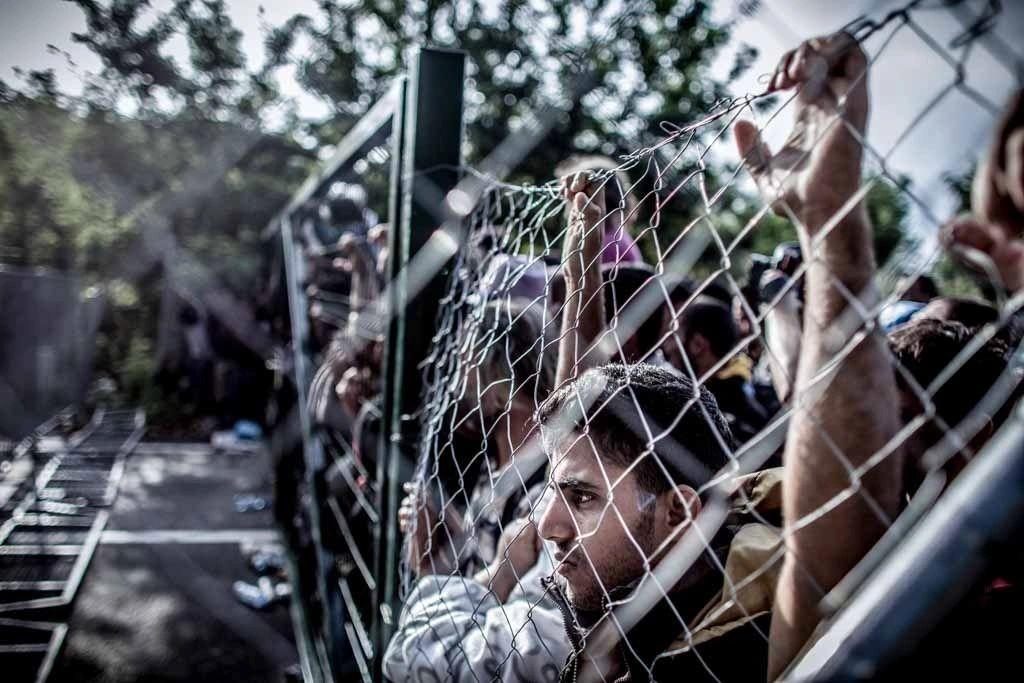
For the vast majority of us, the best way to reduce immigration would be to make it more difficult for migrants to come. This simple logic appears self-evident: the more borders are open, the more people will come, therefore the more barriers we erect, the fewer people will manage to cross them. Raise costs, impose visa requirements, build fences, and surely fewer immigrants will arrive. This way of thinking has driven decades of increasingly restrictive immigration policies, particularly across Western countries, from the cancellation of guest worker agreements following the 1973 oil crisis to today’s policies preventing Mediterranean crossings.
However, academic researchers argue that these border restrictions may even produce more immigration. They demonstrate that these controls often backfire through a series of unintended consequences that transform temporary, circular migration into permanent settlement.
First of all, in Europe, several examples prove that border restrictions can achieve the opposite of their intended goals. Despite the suspension of guest worker programmes and the introduction of visa restrictions since the 1970s, the non-European-born immigrant population living in Western Europe rose sharply, from 5.5 million to 26.4 million from 1970 to 2017 (De Haas, 2023). Research by Czaika and Haas (2013), analysing data from 38 Western countries between 1973 and 2011, demonstrated that visa restrictions decreased inflows by 67% but decreased return flows by 88%, producing an overall reduction in circulation of 75%.
The Brexit phenomenon fully exemplifies this paradox. Though it was mainly aimed at reducing immigration, Brexit achieved the opposite effect. UK legal net migration hit a record 504,000 in 2022, up from about 275,000 in 2019, the highest figure ever recorded. However, rather than inciting Eastern Europeans to return home, Brexit motivated them to stay put and secure their permanent residency rights. Indeed, by June 2020, no fewer than 609,000 Romanians and 185,000 Bulgarians had filed applications for the EU Settlement Scheme (De Haas, 2023).
According to De Haas (2023), this counterintuitive outcome emerges through four key mechanisms. First, the so-called 'waterbed effect' that diverts migration to alternative routes rather than stopping it entirely. For example, when France, Belgium, and the Netherlands introduced restrictions for Moroccan immigrants in the 1980s, migration simply moved to Spain and Italy, which maintained visa-free entry at this time. Therefore, European border enforcement has become caught up in a cat-and-mouse game, with migrants and mostly smugglers constantly trying to bypass border controls (Andersson, 2016).
Second, restrictions interrupt circular migration patterns by discouraging return. The fear of not being able to re-enter shifts temporary workers into permanent settlers. Research by Anderson (2021) has shown how European migration policies consistently create incentives for permanence rather than circulation.
Third, European border restrictions trigger what Haas calls the “now or never” migration surges. When potential migrants learn that rules might be tightened, they accelerate their plans, which creates sudden and consequent spikes in arrivals. These waves frequently overwhelm border and integration services, and once the new measures take effect, migration levels quickly subside only to build pressure for the next surge.
And finally, the fourth one would be that these specific restrictions drive migration underground and even encourage category switching. The continuation of immigration through the 1970s and 1980s from North Africa and Turkey to Western Europe was largely facilitated by a switch from labour to family channels in response to recruitment suspension (De Haas, 2023). Category switching occurs when migrants change from work-based visas, allowing them to enter for job purposes to family reunification visas, which permit relatives to join their family already in the destination country. Research by Lahav (2004) demonstrates how European states have struggled to control family reunification despite repeated attempts at restriction. This happens because family reunification is protected as a fundamental human right under European law, making it nearly impossible for governments to reduce this migration pathway even when they close off labour migration routes.
However, not all scholars agree with this narrative. Some economists argue that properly designed restrictions could effectively manage migration flows when systematically implemented. They argue that the failure of European border controls highlights inadequate enforcement rather than inherent defects in this type of policy. Research by Koopmans (2010) suggests that some European countries have successfully used integration requirements and welfare restrictions to manage immigration flows. He particularly mentioned Denmark and the Netherlands, where language tests and reduced welfare access appeared to reduce immigration rates and even encourage return migration for those who could not meet the requirements.
Furthermore, research on migration policy by Lahav and Messina (2005) demonstrated that public support for immigration restrictions remains wide across European democracies, which may suggest perceived effectiveness among European citizens. Similarly, Dustmann and Frattini (2011) observed that tougher border and welfare policies did lead to some temporary declines in certain migrant groups in the UK. Especially, after the introduction of job restrictions for new EU accession country nationals, even though they underlined that these effects were shaped by broader economic cycles. Finally, research by Kahanec and Zimmermann (2016) shows that employment opportunities and the national economy can have an impact on migration patterns. Indeed, after EU enlargement, restrictions temporarily deterred some migration, though it has mainly caused shifts in migration routes limiting their long-term effectiveness.
Despite these counterarguments, the weight of empirical evidence from European experience shows that border restrictions frequently produce outcomes opposite to their main intentions. As recent research by Anderson (2021) and Koopmans (2017) demonstrates, European immigration policies operate within complex systems where restrictive measures often create more problems than they solve. Ultimately, while border restrictions might temporarily reduce migration flows, their long-term impact tends to be more counterproductive, often encouraging more movements. This indicates that such measures are unlikely to produce a lasting reduction in immigration.
Sources:
Anderson, B. (2021). Rethinking labour migration: Covid-19, essential work, and systemic resilience. Comparative Migration Studies, 9(1), 1-18.
Andersson, R. (2016). Europe's failed 'fight' against irregular migration: ethnographic notes on a counterproductive industry. Journal of Ethnic and Migration Studies, 42(7), 1055-1075.
Czaika, M., & Haas, H. (2013). The effectiveness of immigration policies. Population and Development Review
Dustmann, C., & Frattini, T. (2011). Immigration: the European experience. CReAM Discussion Paper Series
De Haas, H. (2023). How Migration Really Works. Viking Press.
Kahanec, M., & Zimmermann, K. F. (2016). Labor Migration, EU Enlargement, and the Great Recession. Springer.
Koopmans, R. (2010). Trade-offs between equality and difference: immigrant integration, multiculturalism and the welfare state in cross-national perspective. Journal of Ethnic and Migration Studies
Koopmans, R. (2017). Assimilation or multiculturalism? Conditions for cohesive societies. Comparative Political Studies
Lahav, G. (2004). Immigration and Politics in the New Europe. Cambridge University Press.
Lahav, G., & Messina, A. M. (2005). The limits of a European immigration policy: elite opinion and agendas within the European Parliament. Journal of Common Market Studies