
Does the EU have a moral duty to welcome more immigrants?
By Evan Rouxelin and David Juricek
9 min read · 1,733 words
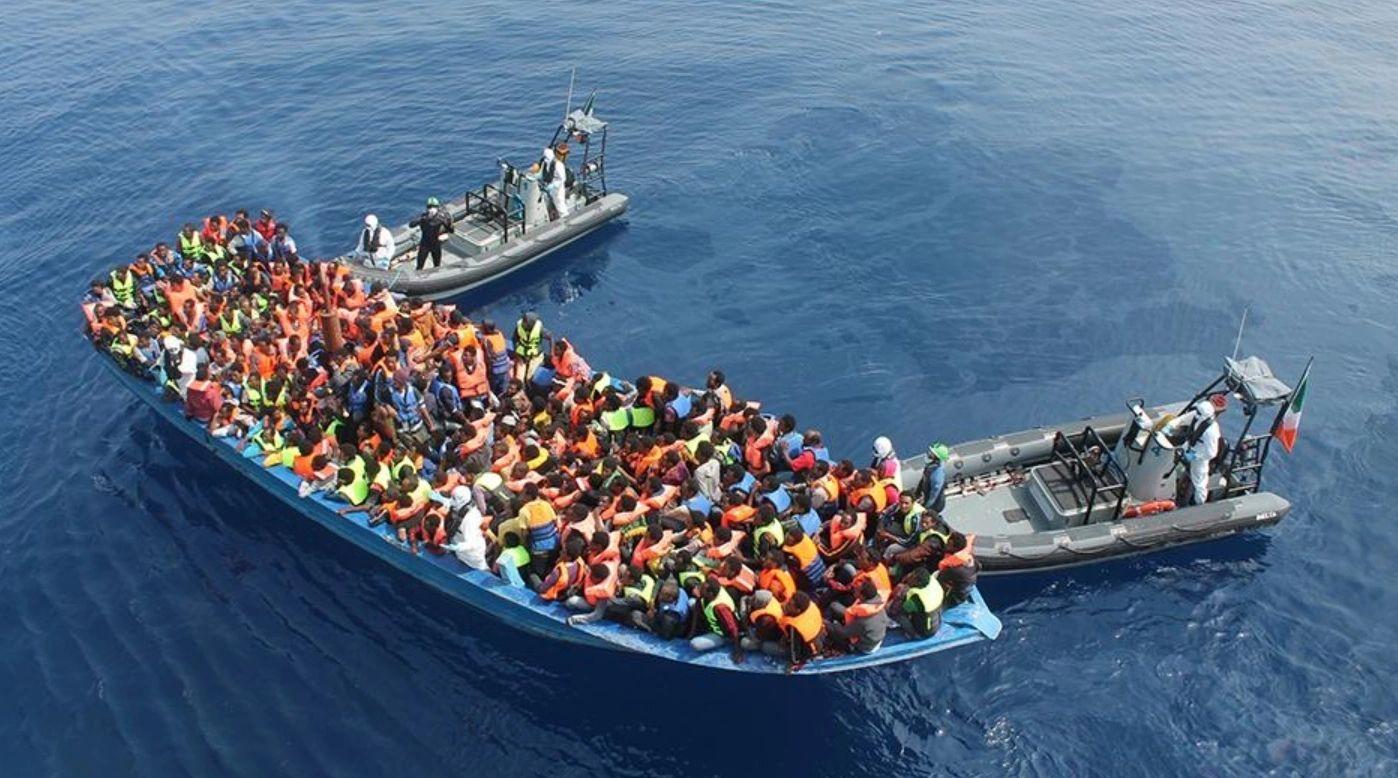
The debate over whether the European Union (EU) has a moral responsibility in welcoming more immigrants raises questions over ethics, international law, and the reality of policy implementation. Although the moral and legal obligations toward refugees, those fleeing persecution or disasters, are clearly defined in international law, the responsibilities toward immigrants are more ambiguous and even more contested. Moving voluntarily in search of economic opportunities or family reunification, immigrants do not benefit from the same legal protections. For this reason, their presence remains a challenge for the EU’s institutional framework.
While the EU presents itself as a community founded on principles of human rights, solidarity, and human dignity, its migration policies, somehow, present contradictions. Since the 2015 migration crisis, member states have faced a persistent paradox between upholding EU values and responding to the growing political pressure, such as rising public opposition to immigration or demands from political actors for stricter border controls. To this day, no unified approach on how to manage migration has been decided.
David: I do not believe that the European Union holds any collective historical or moral obligation to accept more immigrants. Unlike a single nation-state with a unified historical narrative, the EU is a political and economic union composed of 27 sovereign countries, each with its own distinct history, culture, and past. While it is true that some member states, notably Spain, Portugal, France, the Netherlands, Belgium, Germany, and to some extent Italy were colonial powers with legacies tied to exploitation abroad, this should not be extended as a shared moral burden across the entire Union. Many current EU countries, particularly those in Central and Eastern Europe, have no colonial past and should not be expected to assume responsibility for historical wrongdoings they were never part of.
Moreover, I believe immigration should be considered primarily as a policy tool grounded in mutual interest and shared societal goals, not as a means of reparative justice. In other words, people who wish to immigrate should do so with the intention of becoming part of the receiving society, contributing to its growth and prosperity, and embracing the rights and responsibilities that come with membership. Framing immigration as a form of historical compensation may risk creating an unbalanced dynamic, where host societies are expected to offer opportunities and services without the reciprocal expectation of integration or contribution. Such a dynamic can inadvertently foster resentment on both sides, and lead to a situation where neither the migrant feels fully welcomed nor the host society feels adequately respected. Sustainable immigration policies require a balanced and pragmatic approach, one that upholds dignity and fairness while aligning with each society’s capacity and values.
Evan: I am convinced that the European Union holds a moral responsibility to accept more immigrants. As an economic and political entity shaped by centuries of colonial expansion, exploitation and global intervention, Europe cannot detach itself from the consequences of its past. The EU's prosperity as well as its influence is closely tied to colonial history. Disrupting economies, societies and even borders, this colonial past still continues to influence migratory patterns. Recognizing this legacy means acknowledging that today’s migration flows are not a matter of chance or personal choice, they are in most cases a direct result of the historical imbalance created by Europe itself. Beyond history, I believe that if the EU claims to stand for human rights and embody principles of solidarity and human dignity, these values must be translated into concrete policies. Those seeking to build a better life within EU borders should receive a fair treatment, and be allowed to do so. If Europeans can live a better life in their own land, it is certainly due to the colonial exploitation of countries of origin. Welcoming more immigrants is not only an ethical requirement, but also a political necessity to uphold the Union’s credibility and coherence globally.
The EU has long maintained that “no human being is illegal”. In a 2010 speech, Former European Commissioner for Trade, Cecilia Malmström declared that “illegal migrants do not exist… no human being is illegal” (Malmström, 2010). The European Parliament even went further and in a 2004–2008 resolution, they urged all member states but most particularly EU institutions to avoid using the term “illegal immigrants” due to its stigmatizing connotations, and to use the phrases “irregular” or “undocumented” migrants. This illustrates an increasing consensus in EU policy discourse. Nevertheless this principle finds no place in EU treaties; it remains a moral statement that the EU has not yet enacted absolutely. Therefore, if the EU declares that no human person is illegal, it cannot then treat immigrants as if their presence threatens a pretended social order. Responsibility lies in aligning actions with values. Consequently, the EU should recognize immigrants as individuals entitled to rights.
David: The declaration that “no human being is illegal” is undoubtedly a powerful and compassionate statement, and it plays a valuable role in promoting a more humane discourse around migration. However, it seems more symbolic than legally actionable. Its primary function appears to be rhetorical, aimed at encouraging the public and institutions to adopt more respectful language and reduce stigmatization, rather than an attempt at redefining legal categories or obligations. The European Parliament’s resolution encouraging the use of terms such as “irregular” or “undocumented” migrants does indeed soften the discourse, making it less dehumanizing. Nevertheless, this shift in terminology does not alter the legal framework that distinguishes between lawful and unlawful presence in a country. In practice, the term “illegal” still reflects a legal status rather than a moral judgment about the person themselves. Therefore, while the intention behind this linguistic shift is commendable, it remains largely a matter of optics rather than a call for legal reform.
Evan: According to legal philosopher Efthymiou (2022), the EU does have a moral responsibility to take in more immigrants.
He rejects the idea that migrants must first “earn” their entitlements by contributing economically before being fully accepted. Instead, he puts forward a thought experiment inspired by the philosopher John Rawls: if EU countries did not know in advance whether they would be wealthy or poor, or whether they would be countries of origin or destination, they would likely consent to providing equal and fair treatment to all individuals. This reflects a principle of justice founded on shared humanity, rather than cost and calculations of cost and reciprocity.
More broadly, Efthymiou argues that denying EU migrants rights goes against the EU's own fundamental values of solidarity, equality, and free movement. In welcoming migrants and integrating them as equal members from the beginning, the EU not only fails to place an “unreasonable burden” on its systems, but it also secures the moral foundation of its integration project. In this sense, the EU's responsibility isn't legal or political but ethical. If the Union is to live up to the ideals it promotes, then taking in immigrants fairly is not an option but a duty.
David:
The thought experiment proposed by Efthymiou appears somewhat abstract and detached from the practical realities of policymaking. This is further underscored by Rawls himself, on whose work Efthymiou bases his argument, who, in his book The Law of Peoples, described international migration as follows: “The problem of immigration is not, then, simply left aside, but is eliminated as a serious problem in a realistic utopia” (Rawls, 1999). The key word here is utopia. Rawls is not offering policy recommendations or an analysis of current immigration challenges; rather, he is outlining an idealized vision of a world in which societies are just and people no longer feel the need to emigrate.
The hypothetical scenario where EU countries do not know their economic status or role as host or migrant countries is an interesting philosophical exercise, but it has limited applicability to real-world decision-making. Countries must make decisions based on their specific contexts, including economic conditions, demographic trends, and labor market needs. A country with an ageing population and labor shortages may see immigration as an opportunity, while another facing high youth unemployment and social tension may perceive it differently. These distinctions matter greatly. Policies that directly impact a nation's economy, social stability, and cultural development must be tailored to its unique circumstances to be effective.
Furthermore, the EU’s fundamental values of solidarity, equality, and free movement are primarily intended to govern the relationships among its member states and their citizens. Extending these values to potential residents from outside the EU, while noble in intent, may not align with the legal and practical frameworks.
Evan:
According to the historian Yuval Noah Harari (2018), the EU cannot continue justifying treating human mobility as a matter of political choice rather than moral obligation while, in our globalized world, goods, capital, and even information cross borders. Immigration remains one of the last areas where moral arguments cannot keep up with globalization. Founded on shared responsibility and common dignity, the EU cannot continue to picture the entry of migrants as a charitable act. Member states should have a moral obligation based on their shared humanity. The migration crisis, introduced by Harari as a “social contract”, illustrates the hypocrisy of asking immigrants to assimilate and integrate while host societies refuse their full inclusion and equal rights.
Furthermore, cultural requirements are prone to becoming a modern form of discrimination echoing racism called “culturism”, which discredits any path to integration. Therefore, if the EU wants to rely on the values of its Charter of Fundamental Rights (2016), it must not only welcome migrants but redefine immigration as an ethical commitment. Anything less would be a deception of the principles which the EU calls upon in its defence.
Bibliography
Efthymiou, D.E., 2022. EU Citizens’ Access to Welfare Rights: How (not) to Think About Unreasonable Burdens? Res Publica 28, 613–633.
https://doi.org/10.1007/s11158-021-09536-x
European Union., 2016. Charter of fundamental rights of the European Union. Official Journal of the European Union [Online]. Available at:
(Accessed 15 May 2025).
Harari, Y., 2018. What are the real debates surrounding immigration in an increasingly globalized world? World Economic Forum [Online]. Available at:
(Accessed 15 May 2025).
Malmström, C., 2010. Member of the European Commission responsible for Home Affairs The Future of Migration: Building Capacities for Change IOM (International Organisation for Migration). European Commission [Online]. Available at:
(Accessed 15 May 2025).
Rawls, J., 1999. The Law of Peoples: With “The Idea of Public Reason Revisited”. Harvard University Press, Cambridge, MA.
https://mercaba.org/SANLUIS/Filosofia/autores/Contempor%C3%A1nea/Rawls/The%20Law%20of%20Peoples.pdf