
From Gaza to the Banlieues: The Intifada as Europe’s Fault Line
14 min read · 2,732 words
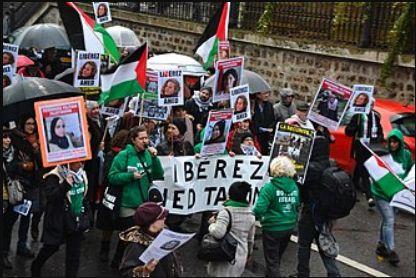
On 14 June 2025, several thousand demonstrators filled Paris’ Place de la République in a pro-Palestine march that felt less like a distant solidarity action and more like a mirror held up to Europe itself. As Iran and Israel exchanged missiles in the first days of their 12-day confrontation, the intensity of that conflict seemed to spill over into European streets, where the Israeli-Palestinian conflict had already unlocked old tensions about immigration, identity, and national cohesion.
At the foot of Marianne, France’s emblem of the Republic, protestors scrawled ‘Free Gaza’, ‘Free Congo’, ‘Kanaky Libre’, ‘Martinique Résiste’. The simultaneity of these demands mattered. Palestine had become a vessel into which Europe’s ethnic youth poured a wider sense of injustice and identity, a symbolic container for grievances that stretch far beyond the Middle East.
Since Hamas’ brutal attacks of 7 October 2023, this vocabulary has moved from the margins to the centre of Europe’s political argument. Protests multiplied; slogans hardened; and a word long rooted in Palestinian national struggle, intifada, reappeared on European streets with new force and new meaning.
A word with history - and baggage
In Arabic, intifada can be translated, although extremely loosely, as ‘uprising’ or ‘shaking off’ (Ganor, 2011; Hussey, 2014). Yet these English equivalents flatten its layered cultural and semantic connotations within the Israeli-Palestinian context, where the word has become inseparable from cycles of violent confrontation and national trauma. Intifada sits on a site of deep fears and irreconcilable narratives.
The First Intifada (1987-1993) emerged as a largely grassroots mobilisation defined by strikes, stone-throwing, boycotts, and mass civil disobedience. The Second Intifada, from 2000 to 2005, was far bloodier and more militarised, marked by suicide bombings in the bars, restaurants and cafés of Jerusalem, Haifa, and Tel Aviv (Cohen, 2013; Moghadam, 2003). Intifada connotes trauma, bloodshed and horror. Direct armed confrontations resulted in a brutal Israeli military destruction of Palestinian towns and lives, further breaking down any narrative of coexistence.
This is precisely why its reappearance on European streets has become so politically explosive.
Across Paris, Milan, Brussels, and Berlin, sections of Europe’s post-colonial youth, diverse in origin, ideology, and political intent but often united by experiences of marginalisation, have perceived the term as a message of solidarity and self-assertion, a language through which to express exclusion, policing, and the feeling of living at the edges of national life. For critics, it suggests something very different: evidence that Europe is importing the ideological conflicts of the Middle East into its already strained immigration debate.
In this way, Palestine and intifada are folded into an ‘us against the world’ narrative, as protests become animated by slogans such as “globalise the intifada” or “intifada here too.” For many participants, this does not register as an alignment with Islamist ideology, but as the use of a morally charged idiom whose origins have been blurred through its circulation in European protest cultures. The failure to recognise that genealogy is not politically neutral: it allows a vocabulary shaped by violence to be redeployed without reckoning the bloodshed and trauma it once legitimised.
The sensation that Europe might be experiencing a ‘local intifada’ is not new. In November 2005, riots erupted across France following the deaths of Zyed Benna and Bouna Traoré whilst fleeing police custody. For nearly a month, France confronted its deepest anxieties about its banlieues and their postcolonial populations as cars were torched and municipal buildings were vandalised (Cesari, 2005).
Journalists and politicians dubbed it the “Paris Intifada,” a term that many young rioters embraced (Hussey, 2014). The identification was metaphorical, even romanticised, but it revealed something important: that Palestine served as a symbolic mirror for second and third generation migrant youths feeling displaced within the French city-structure. Historian Andrew Hussey observed that the banlieue youth “glorified their own intifada,” identifying Palestinians as symbolic counterparts in a broader story of global justice and anti-imperial struggle.
Two decades later, after October 7th, the metaphor has taken a more literal turn. The chants are louder. The political meaning is clearer. And Europe’s long-running immigration divide has hardened.
Europe’s Fault Line
By late 2023, Europe’s immigration debate was already fraught. Questions around integration, parallel communities, and national cohesion had dominated public life for almost twenty years (Goodwin et al., 2017). The Hamas attack acted as an accelerant, pulling the Israeli–Palestinian conflict from foreign-policy pages into the centre of Europe’s immigration politics.
In late 2023, a video from a pro-Palestine march in Milan captured the chant “If nothing changes, intifada here too” (Appendix A; Carpani, 2025). It suggested not only solidarity with Gaza, but a conditional warning aimed at Italy’s own political class. For a segment of Italy’s post-migrant youth, intifada had become a language of domestic grievances - a way to articulate a sense of exclusion from the country’s political and economic route. For others, somehow inspired by the events of October 7, wearing keffiyehs and yelling slogans was part of a wider fight against global injustice.
The chant thus blurred the boundary between foreign conflict and local discontent, positioning Italy itself as a terrain of potential rupture.
By 2025, thousands of Italians were regularly mobilising around the Palestinian cause. During a national march that September, violence erupted inside the city’s Central Station. Images and videos of masked individuals, some in keffiyehs, clashing with police, breaking shopfronts, and vandalising kiosks spread across Italian media (Appendix B). The keffiyeh, worn by pro-Palestine activists, began to be interpreted by many Italians as a sign of ideological importation.
The clashes disrupted rail services, injured fifty police officers, and saw protestors burning Israeli, American, and EU flags. The divide widened again at Milan’s Malpensa Airport, where a small labour strike was overshadowed by pro-Palestine activists chanting ‘Intifada here too’(Carpani, 2025).
To conservative commentators, these were signs of a militant vocabulary hijacking domestic disputes, an intifada manifesting through Italy’s governing structure. For activists, intifada becomes an expression of the structural disadvantages faced by Italy’s uprising youth.
Whichever way the pie is cut, the immigration debate was clearly merging with concerns about public order and the integrity of Italy’s social fabric.
Brussels experienced its own turning point on May 28th, 2024, when an unauthorised march approached the Israeli Embassy in Uccle. The crowd, many in keffiyehs, waved Palestinian flags and chanted slogans of solidarity in a neighbourhood that reflected the institutional heart of the EU, whilst police deployed tear gas to disperse them (Belga, 2024). The images circulated across Belgian and European media, transforming a diplomatic flashpoint into a commentary on the health of Europe’s multicultural order.
This symbolism mattered as it brought the intifada to the diplomatic enclave of Brussels. For activists, the crackdown was evidence of a Europe quick to police global south movements while tolerating more disruptive actions by domestic and nationalist groups. In the heart of the EU’s institutional capital, the Gaza conflict became a test of Europe’s own political identity: how open, how plural, and how cohesive should it truly be?
In this sense, Brussels mirrored a broader European pattern: protests that were, for participants, expressions of transnational solidarity became, for critics, evidence that Europe’s social cohesion was increasingly fragile. Gaza had been absorbed into Belgium’s internal conversation about identity, security, and the limits of pluralism within an EU capital that has long prided itself on cosmopolitan tolerance.
Berlin’s experience exposed Europe’s most visible contradictions. Germany’s postwar identity, anchored in the doctrine of Staatsräson, elevates support for Israel to a matter of state principle (Jensen et al., 2024). This principle shaped an aggressive policing strategy after October 7: bans on demonstrations, arrests, and visa cancellations became common. University speakers lost appointments; cultural institutions cut ties; even social-media posts became grounds for professional consequences (Solanki, 2025).
Under this framework, expressions of Palestinian solidarity were often reframed not as political speech but as potential extremism or antisemitic agitation.
Complicating this landscape is the rise of the far-right Alternative für Deutschland (AfD) party. Despite its personal history of antisemitism, the party has experienced a renewed electoral boost, capitalising on broader social anxieties over migration, identity, and cultural change by reframing its anti-immigration message around the claim that Germany is (re)importing antisemitism (Schut, 2025). This narrative, however flawed, has found traction among voters unsettled by scenes of masked assailants causing mayhem in Berlin’s migrant-heavy districts like Neukölln. Even though Jewish organisations warned of the AfD’s long-standing anti-Jewish rhetoric, the political momentum was already shifting (Schut, 2025). This produced an uncomfortable convergence in which a party with antisemitic roots gained legitimacy by positioning itself as a defender of Jewish security.
In Germany, more than anywhere else, the Palestinian issue became a referendum on immigration itself.
The result was a paradox: both left-wing groups and migrant organisations saw repression in Berlin as part of a broader policing trend seeking to repress the Global South from fighting back. On the other hand, large parts of the right saw the same events as proof that Germany was importing antisemitism and therefore anti-Germanism, sparking a direct confrontation between both sides.
France is where these tensions crystallise most sharply. No other European country combines such a large postcolonial population with such a rigid universalist model, nor hosts a political landscape where radically transnational-oriented left-wing movements and an ascendant right-wing nationalist securitarian camp confront each other so directly.
This became clear during the Gaza flotilla mobilisations of 2024 and 2025. Rima Hassan, a Franco-Palestinian MEP, used her platform to denounce French policy on Gaza, support Hamas and Palestinian armed groups, and champion what she described as a necessary popular revolution. Tweets such as “La France a besoin d’une révolution” (France needs a revolution) is an emblematic example of the pro-Palestinian camp spurring a worldwide uprising against the current political order (Appendix C).
Hassan quickly became a focal point for the French right. For them, she symbolised a deeper anxiety: that immigration, identity politics, and transnational activism were eroding the civic foundations of the French Republic from within.
The conflict reached a peak when RN member Marion Maréchal, who also openly calls for a conservative revolution in France, sharply attacked Hassan’s position on Palestine and its entanglement with immigration politics in a speech at the European Parliament (Appendix D).
Referencing Hamas footage showing the execution of alleged collaborators, she noted that Hassan had replied to the video with the remark ‘one by one’. For Maréchal, this was not a careless incitement of violence but a revelation of political instinct, a sign that an elected representative of the French Republic, the figurehead of the pro-Palestinian camp in France, could appear to echo and encourage the actions that contradict European and democratic values.
Her rebuke was direct and deliberately provocative: ‘Madame Hassan, we have generously welcomed you and your family as refugees. You betray our generosity every day by sowing hatred. I have only one thing to say to you: leave. Leave and go back to where you consider home.’
It was a moment that exposed France’s internal fracture to Europe. The Palestinian cause, once channelled mainly through the country’s fractured, activist-driven left in suburban protests or student occupations, has now moved into the heart of national political life, provoking an equally forceful national and securitarian response from the right. The debate is no longer only about Gaza; it is about belonging, loyalty, and the future of a country marked by revolutions. While their ideological projects are radically different, both figures reveal how Palestine has become a proxy through which France’s unresolved questions of loyalty, belonging, and political legitimacy are now fought.
Across Europe, the Israeli-Palestinian conflict has become much more than a foreign crisis. It functions now as a mirror for Europe’s deepest anxieties about belonging, integration, and cultural cohesion. Security scholar Boaz Ganor notes that many second- and third-generation communities, whether in Europe or Palestine, share a structural position: better educated than their parents yet still facing barriers to advancement and increasingly detached from mainstream society (Ganor, 2011). It is within this space that the language of intifada gains emotional power, offering a sense of recognition with a universal cause.
This partly explains why Palestine has provoked a sharper cultural flashpoint in Europe than the war in Ukraine. Support for Ukraine reaffirmed Europe’s existing political order. Palestine, by contrast, collided with longstanding debates around Islam, migration, and identity - issues already inflamed long before October 7th. For many on the left, Palestine represents a universal Global South struggle and a call to upend entrenched hierarchies, both abroad and at home. Intifada becomes a metaphor for transformative justice, even revolution.
The right sees something different entirely: not a moral awakening but evidence that migration has imported foreign conflicts and increasingly radical vocabularies into civic life. What the left interprets as solidarity, the right interprets as a threat to social stability and national cohesion.
Immigration alone does not explain this divide. What drives it is the competing narratives about Europe’s future. One side demands structural change whilst the other fears the erosion of cultural and civic foundations. With the symbolism of the intifada now woven into European politics, the continent confronts a direct collision between these worldviews - a confrontation shaped by the pain of the Middle East and Europe’s own unresolved struggle over identity.
What does Intifada mean for Europe?
Seen in this light, the December 2025 Bondi Beach terror shooting that killed Jewish worshippers during the first night of Hanukkah, the October 2025 Manchester synagogue attack on Yom Kippur that left multiple worshippers dead and wounded, and the September 2025 antisemitic assault in Yerres where a 67-year-old man was beaten and threatened with murder because of his faith do not read as isolated aberrations but as warning signs of what happens when phrases like “globalise the Intifada” are mainstreamed. These examples illustrate how the importation of radical vocabulary into fragile social spaces has collapsed moral distance and transformed political rhetoric into real-world violence borne by Jewish communities far from the Middle East. This is not to argue that protest slogans mechanically produce violence, but that when historically violent vocabularies are normalised, they reshape moral boundaries and lower the threshold at which political anger can be translated into action.
If a word born of a conflict defined by civilian bloodshed can now circulate so casually across Europe’s streets and campuses, the question facing Europeans of all political persuasions is no longer where they stand on Israel or Palestine, but whether they are prepared to reckon with the social and moral consequences of turning a distant war into a domestic political language.
Bibliography
Belga Belga (2024). Gaz lacrymogène, canon à eau et SMUR: une manifestation devant l’ambassade d’Israël dégénère, le bourgmestre d’Uccle réagit (PHOTOS). DHnet. Available at: https://www.dhnet.be/regions/bruxelles/2024/05/28/gaz-lacrymogene-canon-a-eau-et-smur-une-manifestation-devant-lambassade-disrael-degenere-le-bourgmestre-duccle-reagit-photos-6IZP2LAYVVCBHHKWA7SFVAGWGU/
Carpani, F.J. (2025). ‘Intifada pure qui’. I pro Pal portano l’odio allo sciopero a Malpensa. ilGiornale.it. Available at: https://www.ilgiornale.it/news/nazionale/intifada-pure-qui-i-pro-pal-portano-lodio-malpensa-scioper-2543029.html
Cesari, J. (2005). Ethnicity, Islam, and les banlieues: Confusing the Issues. Items. Available at: https://items.ssrc.org/riots-in-france/ethnicity-islam-and-les-banlieues-confusing-the-issues/.
Cohen, H. (2013). ‘Palestinian Armed Struggle, Israel’s Peace Camp, and the Unique Case of Fatah-Jerusalem.’ Israel Studies, 18(1), pp. 101–123. https://doi.org/10.2979/israelstudies.18.1.101.
Edouard, O. (2025). Fumigènes, affrontements… Le concert de l’orchestre philharmonique d’Israël à Paris perturbé par "de graves..." BFM. Available at: https://www.bfmtv.com/police-justice/fumigenes-affrontements-le-concert-de-l-orchestre-philharmonique-d-israel-a-paris-perturbe-par-de-graves-incidents_AN-202511070245.html
Ganor, B. (2011). ‘An Intifada in Europe? A Comparative Analysis of Radicalization Processes Among Palestinians in the West Bank and Gaza versus Muslim Immigrants in Europe.’ Studies in Conflict & Terrorism, 34(8), pp. 587–599. https://doi.org/10.1080/1057610X.2011.582629.
Goodwin, M., Raines, T.G. and Cutts, D. (2017). What Do Europeans Think About Muslim Immigration? Chatham House. Available at: https://www.chathamhouse.org/2017/02/what-do-europeans-think-about-muslim-immigration?utm_source
Jensen, U. and Ramani, M. (2024). Why Did Germany Crack Down on Palestine Protests? Rosa-Luxemburg-Stiftung. Available at: https://www.rosalux.de/en/news/id/52364/why-did-germany-crack-down-on-palestine-protests?
Moghadam, A. (2003). ‘Palestinian Suicide Terrorism in the Second Intifada: Motivations and Organizational Aspects.’ Studies in Conflict and Terrorism, 26(2), pp. 65–92. https://doi.org/10.1080/10576100390145215.
Schut, B. (2025). Germany’s rising far-right AfD is split over Israel. Jews call party “a danger” either way. Times of Israel. Available at: https://www.timesofisrael.com/germanys-rising-far-right-afd-is-split-over-israel-jews-call-party-a-danger-either-way/.
Solanki, J. (2025). Germany’s Crackdown on Palestine Solidarity. Transnational Institute. Available at: https://www.tni.org/en/article/germanys-crackdown-on-palestine-solidarity?
Appendix (Media Sources):
a) YouTube. “Se non cambierà, intifada pure qua”. Gli slogan al corteo pro Palestina a Roma. Available at: https://www.youtube.com/watch?v=nbzM-9aL1Jg
b) YouTube. Pro-Palestinian Protesters CLASH with Police in Milan. (6 November 2025). Available at: https://www.youtube.com/watch?v=pnSSqj9_qyM
c) X (formerly Twitter). Post by Rima Hassan (2025). Available at: https://x.com/RimaHas/status/1945449292144988278
d) YouTube. «Marion Maréchal : "La France a besoin d'une révolution conservatrice"» à la Une du JDNews. Available at: https://www.youtube.com/watch?v=__jtShsfvIE